
Making Money

Posts about making money from a 60-plus perspective. This includes sideline earning opportunities of all types.

Guest post: The money-Making Apps You Need to Download Now

Guest Post: The Money-Making Apps You Need to Download Now

Today I am pleased to bring you a guest post from my fellow UK money blogger Bronni Hughes

In her article below, Bronni sets out a number of mobile phone apps you can download for free that can help you earn a useful sideline income, generally for little or no effort.

Over to Bronni then…


Phones can be expensive. After buying your handset and then forking out for your minutes, texts and data on a monthly basis, it can feel like you’re just throwing money away. This is why I think it’s important to use money-making apps to try and make some of it back.

Unfortunately, you’re not going to pay your rent with the money you’ll make from these apps, but you could get a tidy stack of Amazon vouchers to put towards Christmas. Not bad!

Jobspotter

If you don’t have this app yet, what have you been doing?! I must have made over £100 in Amazon vouchers since I first downloaded it.

It’s very simple to use, how it works is:

  • Download the Jobspotter app for Android or iOS.
  • Sign up for an account.
  • When you’re walking around town use the app to snap photos of any job adverts you can see posted outside businesses.
  • Earn Amazon vouchers.

Job Ads

It really is that easy! You need to take a clear shot of the job advert itself and one where you can clearly see the name of the business.

Jobspotter will then assess the photo and decide how many points it earns. One point equals 1 cent (USD) of an Amazon voucher. All ads earn points, but one for a chain cafe will earn a lot less than an ad in the window of your local takeaway. If someone’s submitted the job before it won’t earn as many points.

The most points I ever earned in one go was 144 from an estate agent in my local town. It honestly takes seconds to submit each one, and the money can rack up pretty quickly.

There’s no minimum you need to cash out, and the Amazon voucher arrives after about 48 hours usually.

Field Agent

Have opinions about what you buy in the supermarket? Who doesn’t!

Field Agent pays you to share that opinion. Download the app here. Jobs usually involve going to the supermarket and photographing certain shelves and saying which product you’d choose to buy. There are ones on the app right now for £10, and they don’t generally take any longer than 20 minutes to complete.

Bananas

You won’t qualify for every job – sometimes they’re looking for cat owners or people with kids, for example. There are often at home surveys paying £1 or £2 each too.

The app is free to use and download, so it’s worth trying out to see if you like it.

App-based banks won’t make you money, but they do make managing it a lot simpler. Read my review of the Starling joint account.

Shoppix and Receipt Hog

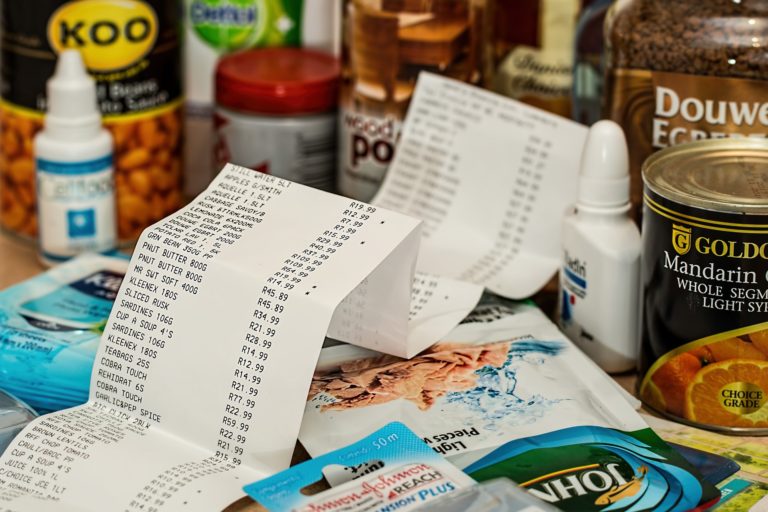
I’ve grouped these two apps together, because I always scan every receipt I get on both apps.

Shoppix is available on Android or iOS – download here. If you use the referral code 3PGPHDNK we both get 200 points.

You’ll get 30 points for a receipt snapped the same day, and 25 points for one submitted any later. You also get good bonuses for using the app every week too, plus extra points for filling out their very short surveys.

You need 3200 points to cash out £5 via iTunes, Amazon or PayPal. It usually only takes me two months of snapping to be able to cash out a full £20.
Receipt

Receipt Hog is a bit less generous than Shoppix, but as you can scan one receipt on both apps you may as well get it. It’s available for Apple or Android here.

How many points you get depends on how much you spend on the receipt. It’s 1,500 points to cash out £5 via Amazon or PayPal. Remember you’ll get bonus points for snapping every week too, as well as “hog slots” where you can win extra prizes.

Want more ways to make money? Find out how I added £10k to my house deposit.


Many thanks to Bronni for an eye-opening article. I’m definitely going to download all those apps to my own phone!

Do check out also Bronni’s stylish and informative blog at https://bronni.co.uk/ .

Don’t forget either MobileXpression, the app I wrote about on Pounds and Sense last year. I am still receiving £20 Amazon vouchers every few weeks like clockwork from this. All you have to do is download the app to your mobile phone, and every so often check in to the app to claim any points you have been credited.

If you know of any other good money-making (or saving) apps, feel free to post details below. And, of course, you are very welcome to post comments or questions, for me or Bronni, there as well.

If you enjoyed this post, please link to it on your own blog or social media:
Make Money Watching TV With The Viewers

Make Money Watching TV With The Viewers

Today I wanted to give you a heads-up about a market research company that is always looking for new members for its (paid) audience panel.

As the name suggests, The Viewers researches people’s TV viewing habits. They regularly run studies about this and pay participants in cash (via PayPal) or Amazon vouchers.

One type of study they run is focus groups. These are typically held in large cities. They generally last 90 minutes and involve discussing current and planned TV programmes in a small group led by a researcher. You can expect to be paid at least £40 (cash in hand) plus free refreshments for a 90-minute group discussion, and often more if the project involves tasks to complete before or after the discussion.

The Viewers also run online focus groups, which (obviously) you can do from the comfort of your own home. Payment is similar to the physical focus groups, though without the refreshments!

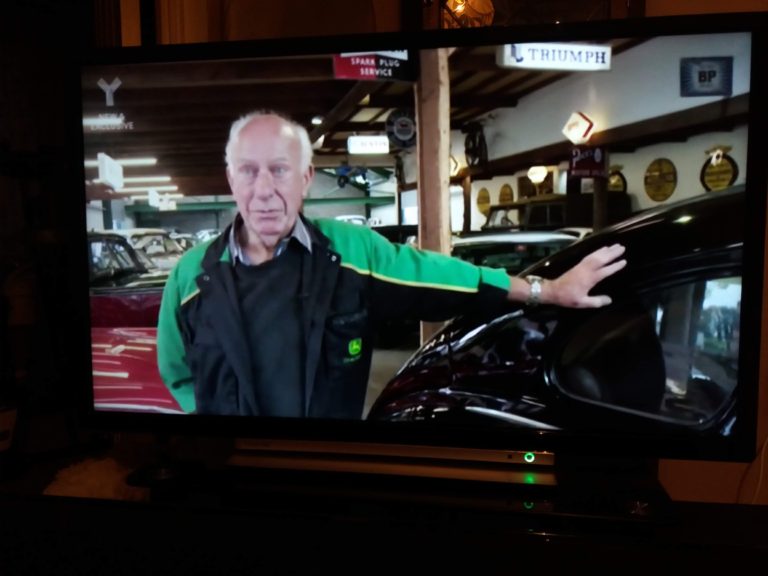
They also run a variety of other studies and surveys. A recent one I took involved tuning my TV to a number of Freeview channels and taking photos of what was on the channels in question, including the station logo at the top of the screen (see sample photo below). I used my mobile phone camera to do this, and uploaded the photos to the website as instructed.

This whole task took me about 20 minutes and I received a £5 Amazon voucher in payment (I could have opted for a slightly smaller amount in cash, but as I’m always buying stuff from Amazon, a voucher was just as good for me).

As well as these paid studies, The Viewers also run some shorter ones where payment takes the form of prize draw entries. Here’s one I was sent recently by email:

You could be suitable to share your thoughts on a TV actor or actress. Those taking part will initially be entered into a prize draw with some participants invited to an optional longer paid survey within the next week. If you would prefer not to hear about prize draw surveys, please update your research and communication preferences towards the bottom of this email.

Reward: Entry into this project’s prize draw with 1 x £50 flexi e-gift card and 10 x £10 flexi e-gift cards up for grabs. These can be spent at Amazon, Argos, Cineworld, M&S, Pizza Express, Tesco & more.

Additional prize draw: All taking part (including those who don’t qualify) will also be entered into our additional May prize draw which runs across all surveys with 1st prize of £100 amazon voucher, 2nd prize of £50 amazon voucher and 5 runner up £10 amazon vouchers!

Time required: 5 minutes (approx)

There is no obligation to do these (or any) studies, as there is no guaranteed reward. But if I’m not busy with other things I tend to, as they are usually quite interesting and take no more than five minutes to complete.

Obviously, if you never watch TV, The Viewers isn’t going to be for you. But you don’t have to be a telly addict either. On the website, they say, ‘ We want to speak to all manner of viewers, from ardent fans of a programme to those who just catch the odd bit of TV. Please just be completely honest when registering and you will be contacted when a project is right for you.’

Clearly nobody is going to make a fortune from The Viewers, but it can be a great addition to your portfolio of sideline-earning opportunities, and the studies are generally interesting and enjoyable as well.

To register with The Viewers, click on this link (or any of the links in this post) and click on the Join Now button. Enter your details and you will then receive emails from them any time they have a study you may be eligible for. In my experience, payments (or online gift vouchers) normally arrive within a week.

As always, if you have any comments or questions about The Viewers, please do post them below.

If you enjoyed this post, please link to it on your own blog or social media:
Make Money with Magazine Letters

As I Write This Letter – How to Make Money with Magazine Letters

Today I have a guest post for you from my writing colleague S. Bee (her pen-name) on the subject of making money writing letters and fillers for popular magazines.

This is a money-making sideline I have a soft spot for, as many years ago I started my writing career doing exactly this. I remember, for example, having a series of letters published in The Sun newspaper, for which I received the not-exactly-princely-even-then sum of £2 each. I treasured those cheques when they arrived, though!

It’s good to know that this opportunity still exists, even in this digital age.

Over to S. Bee then…


When I began writing seriously in 2011, I focused on the fiction market for women’s magazines.

As I became more involved in it, I discovered that several of these short story writers had also enjoyed publishing success with letters in national magazines.

More importantly, they’d been paid a small fee for their efforts. If there was no fee, a prize was offered instead.

I thought, Why don’t I have a go at that? So I did, and eagerly began to send letters in.

My spirits were high. Surely I’d see my name and piece in print somewhere? But no. Sadly, I didn’t get anywhere at all!

After a few months, I felt ready to try again. However, this time I carried out research first. I studied the tone and style of the magazine I intended to submit to, and what type of letter was likely to be picked for publication, plus the subject of it. For example, I learned that positive feedback about a previous feature was very popular.

I kept my submission short and snappy – and my hard work paid off. I was absolutely thrilled to see my very first letter published in What’s On TV magazine. I was delighted to receive a payment of £10 for little more than a paragraph.

Since then, I’ve had lots of letters published in Woman’s Weekly, The People’s Friend, Yours, My Weekly, Web User, Vegetarian Living, Take a Break and Your Cat. And lots more in What’s on TV – I even made Star Letter status once! (I was paid £25, instead of their usual £10).

How do I find ideas for letters? It’s easy – you need to think of what could appeal to readers.

For Woman’s Weekly, I once wrote about the tests I undertook for breast cancer. I urged readers not to ignore any call-ups. (Thankfully, I was okay.)

I’ve also been featured with several opinion pieces for the ‘You’re Telling Us’ page in Take a Break magazine. The ‘You’re Telling Us’ question can be found on the TAB Facebook page. They request a photo of yourself and your age, too.

TAB also publish call-outs for a true-life reader experience type of feature in the magazine. I’ve had ‘A letter to your younger self’ piece published and a ‘Christmas cringes’ one too. These can pay more – up to £100.

The TAB letters page, ‘We’ve Got Mail’ currently pays £25 and £50 for the star letter. They like photos with the letter.

TAB also have call-outs in the mag for paid photo opportunities, e.g. pets or kids in a messy/awkward situation.

Some publications offer a prize to the star letter only.

I attempt it, and often I don’t win the prize, yet I’m still pleased to see my piece published.

I’ve won a small beauty prize for my star letter in the free TESCO magazine, and being selected for Your Cat‘s star letter scooped me a range of cat toys and biscuits. Your Cat will pay for true life cat tales, too.

Update: Tesco now only award a prize to the star letter in their mag – it’s a £50 Tesco voucher. That’s bound to help with the grocery bill!

My prize letters in a monthly writing magazine netted me a free one-year magazine subscription – twice! (a fantastic saving of around £160).

If you have a hobby, e.g. computers, gardening, cooking – pick a suitable magazine that accompanies it. For instance, my hubby is a very good cook and baker. He’s had several recipes published in Take a Break‘s My Favourite Recipe magazine. (He was awarded £25 per recipe.)

It’s not just letters. Some magazines also publish short poems.

I’ve had several poems published in the fortnightly Yours magazine, and a weekly, The People’s Friend. These magazines like rhyming, upbeat, reader-friendly material.

TPF award a small prize (I’m not sure, but it used to be a tea caddy and a packet of loose tea) if your poem is selected for publication in their letters page – however, they pay £15 per poem if you target your poems to their other publications, e.g. their fiction special, annual or fireside book. The magazine has different email addresses for these slots.

Yours pay £10 in gift vouchers per poem. The vouchers can be spent practically anywhere. They pay a £10 gift voucher for a normal published letter too.

Yours regularly publishes call-outs in the mag for specific reader’s memory/nostalgia experiences. They sometimes require photos to accompany the feature, so you’d need to scan these in and send them with your article [or of course send digital photos – Nick].

Don’t forget that fillers such as top tips, funny photos, a ‘pet of the week’ type of feature, puzzles, jokes, beauty queries, travel articles (think about what’s interesting about about your town/city – photos required) and ‘items to be valued’ pieces are high in demand, too.

I’ve had my childhood teddy valued in Real People magazine (I earned £25). My cat has been featured in My Weekly (another £25) and I’ve had beauty questions featured in Take a Break. (They pay £25 for this.)

I’ve also made it to the TAB letters page, with their ‘What a laugh!’ slot. I was £50 richer for just a few lines of text!

A writer friend of mine likes to create her own word puzzles (not necessarily crosswords) and she has these published regularly in Real People magazine. If published, the fee for this is either £30 or £50.

I’m not a gardener, but my writing friends who are have hit the jackpot with letters and hints in gardening magazines. Prizes and cash are up for grabs.

Although you won’t be able to earn a regular salary with letters and fillers, the odd £10 here and there soon adds up.

Bear in mind that no matter how many letters you submit, you won’t be chosen every week. Consider the fact that the editor or team will become familiar with your name. However, saying that, they do appreciate regular contributors – just don’t swamp them!

Publications are always looking for well-written, entertaining, intelligent letters that fit in well with the editorial style of the magazine.

Always be cheerful and polite, don’t waffle, and make sure you follow the magazine’s submission instructions. It’s all done via email now.

Your subject heading should be: ‘Letter for consideration’.

Work can be edited, changed or even added to – to me, this doesn’t matter as I want to be published and I want to be paid.

Some magazines let you know beforehand if your letter/filler/poem has been selected, and some don’t. If you submit material regularly, this means a weekly scan of the magazines in newsagents or the supermarket to check if your piece is in.

Some prizes arrive completely out of the blue. One Christmas, I won a prize of a large jigsaw puzzle, yet I hadn’t a clue who had sent it or what publication my letter was in. All I had was a snail mail letter saying ‘Congratulations!’ from the makers of the jigsaw, which didn’t really help.

Later, I realised I must have been awarded star letter in Down Your Way, a Yorkshire-based nostalgic magazine. I quickly emailed the Ed and he confirmed it. (Update: I’ve won this prize a second time with a piece about phone boxes.) As it was approaching Christmas, it came in very handy as a gift for a family member who loves jigsaws.

So, what’s stopping you from having a go?

If I can do it, so can you! Get writing and good luck!

S. Bee


Thank you to S. Bee for an interesting and inspiring article. Paws For Thought

I would just add that you don’t need any special writing skills to win cash and prizes this way. It’s really just a matter of keeping your ear to the ground about current events and issues, and coming up with positive, upbeat angles on them.

S. Bee isn’t being paid for this article, but she asked me to mention a charity ebook she is promoting on behalf of the RSPCA (who receive all profits). It’s called Paws for Thought – 27 Tail Thumping Stories (see front cover, right). It’s for a great cause and only costs £2.99 from Amazon as a Kindle ebook. If you enjoy short stories – and especially if you love animals – why not check it out? 🙂

As always, if you have any comments or questions about this article, please do post them below.

If you enjoyed this post, please link to it on your own blog or social media:
Make Money and Help University Researchers with Prolific Academic

Make Money and Help University Researchers with Prolific Academic

Today I’m sharing a sideline-earning opportunity that will give your brain cells a workout as well 🙂

Prolific Academic is a website that provides a platform for academic researchers across the world to conduct online studies of all types. And the best thing is that participants get paid for taking part.

Anyone is welcome to sign up, and you are then shown studies you are eligible for. They are typically in the fields of business, science, psychology, and social science. Payments range from a few pence to £5.00 or more. Obviously, the longer the study, the higher the payment tends to be.

I guess for most people the money will be the chief attraction, but the studies themselves are interesting and varied. One I did involved injecting virtual mice with a virtual chemical, and then using a virtual loupe (magnifying glass) to see which ones “expressed a gene” (or more prosaically changed colour). You then had to answer some questions about what conclusions you could draw from each experiment.

Another one I enjoyed involved reading a transcript of an unfair dismissal hearing (I assume an imaginary one). You then had to decide whether the complainant had indeed been unfairly dismissed, based on legal information provided. This one took me back to the long-ago days when I worked for a while in a Citizens Advice Bureau and represented several people at tribunals myself.

Payment is made via the online payment platform PayPal. There is a low withdrawal threshold of just £5. At one time if you wanted to withdraw less than £20 they charged a fee, but you can now withdraw any amount from £5 upwards free of charge. As a matter of interest, I have just reached £350 in total earnings from Prolific.

Prolific Academic is based in Oxford, England, but as far as I know anyone from anywhere in the world is welcome to join.

Top Tips for Making the Most of Prolific Academic

Here are a few top tips based on my experiences as a PA participant…

  1. Select and copy your PA identity code at the start of the study. You can then simply paste it into the box at the end, to ensure you get paid.
  2. Watch out for attention-checkers. Many studies include these to ensure that you read the instructions carefully. Typically, the instructions may tell you to answer a question in a certain way and ignore the other options.
  3. Unlike consumer surveys, PA studies do generally require your undivided attention. Doing one while watching TV isn’t the best idea.
  4. Studies fill up quickly, so check on the site regularly throughout the day. Sometimes you will receive an email notifying you of a new study for which you are eligible, but by no means always.
  5. The box at the start tells you how long on average people take to complete a study (and how much this is as an hourly rate). This is important information, as you aren’t allowed to break off in the middle of a study and return to it later.
  6. Sometimes when you log in you will be asked questions on subjects such as your health, hobbies, beliefs, and so on. Although you won’t be paid for these, it’s always worth taking a moment to answer them, as they may qualify you to participate in additional studies.

If you have any questions or comments about Prolific Academic, please do post them below.

Note: This is a fully updated version of my original article about Prolific Academic dated December 2016.

If you enjoyed this post, please link to it on your own blog or social media:
The Raptor IFISA

Make Money From Precious Metal Mining With the Raptor IFISA

On Pounds and Sense I often talk about the importance of having a diversified investment strategy. And the investment opportunity I am spotlighting today will certainly help you towards achieving that aim!

Raptor is a platform that provides ordinary individuals with the opportunity to invest in the production of gold and precious metal mining. The product on offer is a three-year mini-bond with a tax-free IFISA wrapping. Raptor are currently offering a return of 8 percent per year on a minimum £2,000 investment.

What Is An IFISA?

For those who may not know, IFISA is short for Innovative Finance ISA. IFISAs allow anyone to invest tax-free in authorized ‘innovative finance’ platforms, including P2P lending and mini-bonds.

You can put any amount into an IFISA up to your annual ISA allowance. In the current 2018/19 tax year this is £20,000, which can be divided however you choose between a cash ISA, a stocks and shares ISA and an IFISA. So, for example, you could invest £10,000 in a cash ISA, £6,000 in a stocks and shares ISA and £4,000 in an IFISA. The ISA allowance for 2019/20 will be £20,000 as well, though after that it could change.

  • Note that under current rules you are only allowed to invest new money in one of each type of ISA in a tax year. It is though generally possible to transfer money from one type of ISA to another without it affecting your annual entitlement (although there may be platform fees to pay).

How Is Your Money Invested?

The money raised from Raptor IFISA investors is used to provide ‘Stream and Royalty’ finance for mining companies. This is explained in detail in the Raptor IFISA brochure, but briefly Raptor’s investment arm (Raptor Capital International, or RCI for short) makes payments to carefully selected development-stage mining companies to purchase part of their future production at a price below the market level.

The mining company therefore receives much-needed capital through immediately monetizing part of its future production, and investors get the opportunity to make a good return on their investment. Stream and Royalty Finance is still relatively new, and with many high-quality mining projects requiring financing there is an opportunity for investors to capitalize on this.

What Are The Returns?

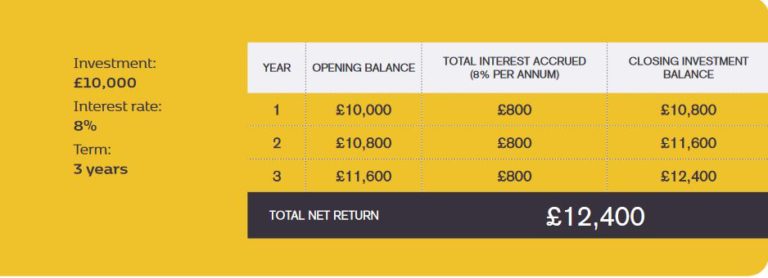
The Raptor IFISA pays 8% interest per year for the three-year term of each bond, with a minimum investment of £2,000. As it’s an IFISA, all profits are paid without any deductions for tax. There is also no charge for investing in the Raptor IFISA.

Returns are paid as simple interest, as shown in the diagram below, which has been copied from the Raptor IFISA brochure. All capital and interest is returned at the end of the three-year term (or earlier if the bond is repurchased/redeemed by Raptor before this point).

Raptor IFISA returns

What Are The Risks?

All UK IFISA providers have to be authorized by the Financial Conduct Authority (FCA) and HMRC. This doesn’t in itself protect investors against the failure of a platform, however. While savers with UK banks and building societies are covered by the government’s Financial Services Compensation Scheme (FSCS), which guarantees to reimburse up to £85,000 of losses, this does not apply to IFISA platforms (or stocks and shares ISAs, for that matter).

IFISA investors don’t therefore enjoy the same level of protection in the UK as bank savers. This is, of course, a major reason why the returns on offer are significantly higher. It’s therefore important to be aware of the risks and ensure you are comfortable with them before investing this way. It’s also important to invest across a range of asset classes and sectors, and not make the mistake of putting all your eggs in one investment basket.

In addition, the Raptor IFISA is not a liquid investment. Your money will normally be tied up for three years. Raptor say they will assist investors if they want to sell or transfer their bonds to another investor, but there is no guarantee that a buyer will be found. This opportunity is therefore not suitable for funds you might need back quickly and should be regarded as a medium- to long-term investment.

Finally, there is of course a risk that the underlying mining investments will not pay off. However, Raptor and RCI’s Advisory Committee say they will undertake extensive due diligence and engage third-party providers to assist in determining whether or not projects meet and qualify for financing in accordance with set criteria, for example:

  • There has to be at least a 200,000 ounce gold resource (or gold equivalent ounces).
  • Uncomplicated metallurgy, allowing simple, conventional, traditional extraction.
  • Payback of initial capital and interest within three years of production.
  • Access to mining company financial records.
  • Allow an RCI agent on site to oversee operations.

With all that said and done, there is no guarantee that you will receive the advertised returns. It is important that you understand and are comfortable with the risks involved.

Summing Up

If you are looking for a home for some of your money that can offer better interest rates than banks and building societies – and won’t incur any tax charges – the Raptor IFISA is worth considering.

As well as higher interest rates, Raptor bonds can add diversity to your saving and investment portfolio, helping you ride out peaks and troughs in the financial markets. The bonds provide an opportunity to profit directly from the returns to be made in precious metal mining, a sector under-represented in many people’s portfolios. The relatively low minimum investment of £2,000 and absence of any charges are further attractions. Just be sure that you are aware of the risks involved, and that you invest only as part of a diversified portfolio.

For more information, please visit the Raptor IFISA website. You can find out more about the investment opportunity there, and also download an informative 14-page brochure.

Disclosure: this is a sponsored post on behalf of the Raptor IFISA. All investments carry a risk of loss. Be sure to do your own ‘due diligence’ before investing, and speak to a qualified professional financial adviser if in any doubt before proceeding.

If you have any comments or questions about this post, as always, feel free to post them below.

If you enjoyed this post, please link to it on your own blog or social media:
Best Writing Forum

Get Feedback and Advice on Your Writing at Best Writing Forum

I know quite a few Pounds and Sense readers have an interest in writing, whether for pleasure or profit (or both). So today I thought I would share some information about an invaluable free resource for writers and aspiring writers.

Best Writing Forum is a discussion forum for writers that was set up by my old friend (and former publisher) Karl Moore a year ago. It was created in response to requests from members of My Writers Circle, another online forum I helped set up with Karl and managed for almost ten years.

In the last few years My Writers Circle has changed ownership several times and been rather neglected. So in response to members’ requests, Karl set up the new forum as an alternative place for writers to share their work and get feedback and advice.

Best Writing Forum uses the popular SMF messageboard software. Anyone who was ever a member of My Writers Circle will find it quite familiar, therefore. Of course, the board names and overall design are a bit different, but most people soon get the hang of it. And if you have any problems, there is a dedicated volunteer moderator team on hand to help you out.

If you have any interest in writing, I highly recommend that you check out Best Writing Forum. And if you like what you see, please do sign up. It’s free of charge and only takes a few moments. You will then be able to:

Now is a great time to join Best Writing Forum, as it’s still quite new and you really can play a part in helping guide its future direction. I’ll hope to see you there soon!

Note: this is an updated version of an original article about Best Writing Forum first published on my Entrepreneur Writer blog in December 2017.

If you enjoyed this post, please link to it on your own blog or social media:
Deal Arbitrage

Trade Your Way to Profit With Deal Arbitrage

Today I’m spotlighting an opportunity anyone can use to make a substantial sideline (or even full-time) income.

Deal arbitrage is a relatively little-used approach to online auction trading (although as I’ll explain you don’t necessarily have to use online auctions at all).

While most online auction traders buy in bulk from wholesalers (and hope they aren’t left with crateloads of unsellable products), deal arbitrage is a relatively low-risk method that proceeds (initially at least) one item at a time.

The method involves buying products being sold cheaply in sales and special deals, then selling them on at a higher price once the promotional period is over.

It’s a method that can work particularly well at this time of year, when merchants both online and offline are discounting to improve their balance sheets, make room for fresh lines and boost interest in their stores.

A wide range of popular products can be used for deal arbitrage. Those with the best potential include electronic goods of all kinds, fashion, footwear, jewellery, watches, mobile phones, cameras and computer games. Lower-priced products such as books, CDs and DVDs can also be used, though your profit per deal is (of course) likely to be lower.

I recommend focusing on one particular product category initially as you build your expertise in deal arbitrage, but once you’ve done this there is no reason why you shouldn’t diversify to other areas as well.

A Four Step Plan

Deal arbitrage is a very simple process. It can be broken down into four main steps. These are: (1) identify suitable deals, (2) check they can be sold at a profit, (3) buy them, and (4) sell them at an online auction site or elsewhere.

Let’s look at each of these steps in turn.

  1. Identify Suitable Deals

There are many places you can find deals. Starting in the real (physical) world, you could simply take a stroll down your local high street and make a note of any good deals you see advertised.

In general you shouldn’t buy there and then, but research the products online when you get home and see what prices they are selling for elsewhere. I will discuss this in more detail when we get to step (2), of course.

If you want to research which stores currently have sales and promotions running, a good place to start is the Money Saving Expert website, run by personal finance guru Martin Lewis. Click on https://www.moneysavingexpert.com/deals/high-st-sales-diary/ and a new page will open listing current (and forthcoming) high street sales, including  both online and offline stores.

Other websites with up-to-the-minute information about deals and promotions include Hot UK Deals and Offer of the Day.

Of course, you can also source some great deals from websites directly. Two I especially recommend are Amazon and the UK’s number one online auction site, eBay.

For sourcing potential arbitrage deals on Amazon, click on Today’s Deals near the top of the Amazon homepage. Pay particular attention to the ‘Lightning Deals’ advertised here, as there are some great discounts to be had. When I checked just now they were advertising the Tacklife Digital Tyre Inflator for £8.47, a 79% discount on the normal price of £39.59. Lightning deals only last a day or two, so you won’t have long to wait before you can put your purchase up for resale.

  • The Amazon Discount Finder on the Money Saving Expert website is another great tool for finding bargains on Amazon. Just enter the product you want to buy and the discount you are looking for and see what it comes up with.

There are lots of great deals to be found on eBay as well. Like Amazon it has its own dedicated deals page, which you can access by clicking on Daily Deals at the top left of the eBay homepage. Some of the discounts on offer here are better than others, but they include some real bargains with great profit potential.

In addition, there many ‘hidden treasures’ on eBay that casual browsers never see. These particular deals are not intentional special offers, but rather the result of errors made by vendors in their listings.

An example is where someone puts an item up for sale but misspells the brand name. This means visitors searching for that brand using the correct spelling won’t find it, and the item is therefore likely to sell for a lower price than it should.

A free tool I recommend for unearthing this type of deal is BayCrazy. This has a range of features to help you find products available on eBay UK at ultra-low prices.

For example, if you select Misspelt from the BayCrazy menu and enter a brand name, the site will display any listings with possible misspellings of that name. So when I entered Accurist, it came up with a listing for a luxury watch where the brand name had been misspelt Acurist. Not surprisingly, there had been no bids on the item in question.

BayCrazy also has search tools for other potential bargains. These include auctions ending soon with no bids, night-time bargains (where auctions end in the middle of the night when nobody is likely to be around), and local offers (where buyers have listed items for collection only, which means only people living nearby are likely to bid).

BayCrazy is an invaluable tool for deal arbitrage. It is well worth taking a little time to explore the site, and adding it to your Favorites list.

  1. Check Items Can Be Sold at a Profit

Before buying any item for deal arbitrage, you should of course check that you will be able to make a profit on it.

As it’s most likely you will be selling your product on eBay, your first step should be to search their current listings using the search box on the homepage.

Check how many results come up, how much interest the auctions generate, and what level the bidding typically reaches. If there are any Buy It Now auctions, make a note of the price being asked. This should help you assess what is considered a reasonable price for this particular product.

Of course, it won’t tell you whether the vendor actually achieves this price, so you should also search completed auctions. This is easy as well on eBay. Start by doing a general search as above, but then scroll down the left-hand menu until you reach the heading Show Only and click the box next to Completed. The results list will change to show completed auctions only.

These searches should give you a good idea of the ‘going rate’ on eBay, but many products can of course be bought elsewhere as well. So in addition it is important to check the best prices currently available to buyers using a shopping comparison tool such as Kelkoo. You can also search on Amazon to see if the item is sold there, and if so for how much.

Ideally, of course, what you want is a product that is in demand and regularly sells at a price which will allow you a decent profit. It should not be available for a cheaper price at Amazon or elsewhere, and neither should there be so many other sellers that it will be difficult to ensure that your own auctions stand out.

  1. Buy Items at the Best Price

If all is looking good, your next step will be to buy the item at the best (i.e. cheapest) price you can achieve.

If you’re buying from a store where the item is on a promotion, this is pretty straightforward, of course. Even so, you may be able to boost your margins a bit more by buying with a cashback credit card, where you get a small percentage of the purchase price back. You could also try haggling, of course.

For many online stores (and some offline) you can also get money back on your purchase by signing up with a cashback site such as Top Cashback and visiting the merchant’s website via a link from the cashback site.

If you’re buying through an auction listing, it’s a little more complicated. Here are a few quick tips to ensure you purchase at the best possible price.

  • Don’t bid till the last minute.
  • Work out the most you are willing to pay and bid this amount. You may still get it cheaper than this if nobody else bids.
  • Add a few pence to your top bid, e.g. £20.15. If someone comes in at the last minute and bids £20, those few pence will ensure that you still win the auction.
  • Consider using auction sniping software to place your bids at the last possible moment. There are plenty of free or low-cost services you can use. The Goofbid free sniping tool is a personal favourite of mine. You can access it at www.goofbid.com/free_ebay_sniper.html.
  1. Sell Your Purchase for a Good Profit

Finally, of course, you will want to sell your product for the best price you can get, which will hopefully generate a good profit for you.

In most cases your best bet is again likely to be eBay. With popular items especially, a bidding war can develop among buyers which pushes prices up.

Psychology also plays a part in this. Many people hate the thought of ‘losing’ an auction, so they end up bidding more than they could pay if they bought the item elsewhere!

Selling on eBay is a relatively straightforward process, and lots of advice is available on the site itself and elsewhere online. Here are some tips to get you started, though.

  • Always include a good-quality photo of the product, taken against a plain background.
  • Write a thorough description of the item (you can research this from other auction and online store listings). Double-check that you don’t misspell the brand name!
  • Ensure that the auction finishes at a sensible time, so there is plenty of competition among would-be buyers at the end. Early to mid-evening is usually best.
  • Start the auction at low price. You may think this is a risky strategy, but with popular items it will generate much more interest and potentially start a bidding war. The one exception is specialist items (e.g. antiques) which will only appeal to a small minority of individuals, but these are unlikely to be suitable for deal arbitrage anyway.

As I mentioned earlier, while eBay is likely to be the top choice for most arbitrage dealers, other options do exist.

For books, CDs and DVDs, you may get better prices selling as an Amazon merchant. I won’t go into detail about this here, but it is possible to set up as a merchant on Amazon free of charge, and your products will then be available via the relevant Amazon product page. Obviously, for this to work, you must be able to sell your item cheaper than Amazon and still make a profit.

One other option is to set up your own store and sell directly from that. One service you can use for this is the web-based, drag-and-drop Weebly service. Obviously you will have to work harder to convince buyers you are reputable than if selling via eBay or Amazon, but if you become a regular trader it is worth considering.

If your first few deals work out well, you may want to try buying multiple items while they are on promotion for resale later. This can boost your overall profits considerably.

In summary, deal arbitrage is a great way to make a useful extra income for minimum risk and little hassle. And because you can start with just one item at a time, it is very easy to try out and see if it appeals to you.

As always, if you have any comments or questions about this post, please do leave them below.

Disclosure: This post includes affiliate links. If you click through one of these and go on to make a purchase, I may receive a commission for introducing you. This helps cover the cost of running Pounds and Sense. It has no effect on the terms you are offered by the merchant or the product/service you receive.

If you enjoyed this post, please link to it on your own blog or social media:
Writing for Newsjack

Earn Some Extra Cash Writing for Newsjack!

Today I want to share an unusual opportunity to earn a bit of extra cash. It should appeal particularly if you are:

  • interested in writing
  • have a good sense of humour (especially the satirical type)
  • are interested in the news stories and issues of today

The BBC’s satirical radio comedy show Newsjack is back for a new run. They describe is as, ‘The scrapbook sketch show written entirely by the Great British public’ and anyone is welcome to submit short topical sketches and one-liners for it.

This is primarily an opportunity for UK residents, though if you live outside the UK (and understand the British sense of humour!) there is nothing to stop you submitting work as well.

Submissions are open now, with a weekly deadline of noon on Mondays for sketches and noon on Tuesday for one-liners. Last submissions for this series are Tuesday 12th March 2019.

More information, including the format for submitting work and downloadable templates you can use, can be found on the Newsjack website at http://www.bbc.co.uk/programmes/articles/1hDdvFLfWClPHW7zT3sq01S/submit-a-sketch. You can also view example sketches and one-liners on this page.

And there are more tips on writing for Newsjack in this BBC Blog post from 2015.

This is, as mentioned, a paying opportunity. Payments are as follows:

£45.50 per minute for sketches
£22.75 per 30 seconds for sketches
£22.75 per one-liner

They say this fee will take in all rights for the work on a non-exclusive basis (so no repeat fees, unfortunately!).

Obviously there will be a lot of competition, so it’s important to study the guidelines carefully and listen to the show itself (it’s broadcast at 11 pm on BBC Radio 4 Extra). Although it’s primarily a bit of fun with a chance to earn some cash and have your work (and name) broadcast on national radio, this can also be a good entry-level opportunity for anyone hoping to get into radio comedy writing. If you consistently submit work that gets noticed, you may be invited to join the show’s team of commissioned writers, which in turn will present all sorts of further networking opportunities.

It’s also an opportunity I have a soft spot for, as many years ago I had a number of sketches and one-liners accepted by the long-running predecessor of Newsjack, Weekending. I was invited to meet the show’s producer and was sounded out about joining the writing team, but in the end decided against as it would have meant relocating to London.

Good luck if you decide to try submitting work to Newsjack. Please do leave a comment below if you are successful!

If you enjoyed this post, please link to it on your own blog or social media:
Review: How to Smash Affiliate Marketing by Emma Drew

Review: How to Smash Affiliate Marketing as a UK Blogger by Emma Drew

How to Smash Affiliate Marketing as a UK Blogger is an online course by my colleague Emma Drew, one of the UK’s most successful bloggers. I recently reviewed Emma’s comprehensive blogging course, Turn Your Dreams Into Money, in this blog post.

How to Smash Affiliate Marketing as a UK Blogger is – as the name indicates – a more specialized course than Turn Your Dreams Into Money. It is aimed specifically at UK bloggers, and reveals how they can boost their income from blogging by means of affiliate links and relationships. The course is hosted on the popular Teachable platform.

Emma kindly allowed me reviewer access to How to Smash Affiliate Marketing as a UK Blogger, so here’s what I found…

How to Smash Affiliate Marketing as a UK Blogger is a multimedia course organized in 10 main sections, as follows:

  1. Getting Started
  2. Affiliate Marketing Disclosure
  3. How to Find Affiliate Programs
  4. How to Serve Your Audience and Get Them to Buy From Your Affiliate Links
  5. Different Ways to Advertise Your Affiliate Links
  6. The Money is in the List
  7. Tools That Have Supercharged My Affiliate Earnings
  8. Other Important Information About Affiliate Marketing
  9. Creating Your Affiliate Marketing Strategy
  10. Affiliate to This Course

Each section is further divided into anywhere from one to eight parts. Each part contains instructional text (with graphics where relevant), and in most cases a video as well. The videos cover the same ground as the text, but may be a better option for those who learn best by looking and listening rather than reading.

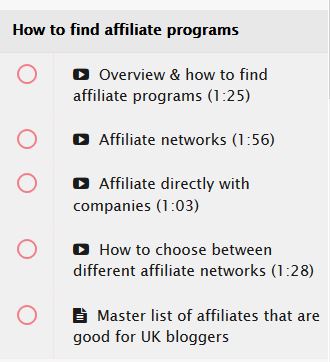
For example, the section titled ‘How to Find Affiliate Programs’ is in five parts, as shown in the screen capture below:

How to find affiliate programs

As you will notice, the first four parts have timings in brackets after them, e.g. 1:56. These refer to the length of the video in the part in question. The videos generally consist of Emma talking to camera. She speaks clearly and not too rapidly, and the sound and picture quality are excellent. I thought the written content was of a high professional standard as well.

Another feature I particularly liked is the PDF workbook for students to print out and complete. This is a great way to ensure you take on board Emma’s advice and apply it to your own blog.

How to Smash Affiliate Marketing as a UK Blogger takes you through everything you need to know to make money from affiliate marketing as a blogger. It’s all useful stuff, though as a long-time blogger myself (I started my original freelance writing blog over ten years ago) I was familiar with the basic concepts already. I did though find the section ‘Tools That Have Supercharged My Affiliate Earnings’ especially interesting. There are some great resources listed here, several of which (e.g. Easy Azon) I hadn’t come across before. It is very informative to see which tools Emma uses herself and have proven to be successful (and profitable) for her. I found her advice on arranging affiliate relationships with companies directly eye-opening as well. That is something I probably need to do more of.

A further benefit of signing up is that you get access to Emma’s private Facebook group for students on the course, where you can discuss all aspects of affiliate marketing with fellow students (and Emma herself).

How to Smash Affiliate Marketing as a UK Blogger costs £49 at the time of writing. For a limited period, however, I can offer readers of my blog a £5 discount if they enter the coupon code SENSE when ordering. This should change the price showing to £44 (if it doesn’t work, please let me know).

And as an extra bonus for anyone buying via my link, I am giving away a 2500-word report by yours truly titled Affiliate Marketing for Profit! This report looks at affiliate marketing from a broader perspective than just blogging (although it does also cover blogging) and includes more top tips and resources for making the most of this powerful money-making method. To receive my bonus report, just message me with your receipt/order number for How to Smash Affiliate Marketing as a UK Blogger. I will then send you the report by email 🙂

As always, if you have any comments or questions about How to Smash Affiliate Marketing as a UK Blogger, please do post them below.

Disclosure: This post includes affiliate links. If you click through and make a purchase, I may receive a commission for introducing you. This will not affect the terms you are offered or the price you are charged.

If you enjoyed this post, please link to it on your own blog or social media:
Matched Betting: Start Preparing for Cheltenham!

Matched Betting: Start Preparing for Cheltenham!

I’ve talked about matched betting on various occasions on this blog. To recap, it’s a way of making risk-free (and tax-free) cash by taking advantage of bookmaker special offers and promotions, in conjunction with the facility to ‘lay’ bets offered by betting exchanges.

Matched betting is perfectly legal and (done properly) it’s not gambling. You can read my introduction to matched betting here, and why I believe it is such a great money-making sideline for older people in particular here.

I am writing about it again now because in a few weeks (12-15 March 2019) the Cheltenham Festival will be upon us. This is arguably the best week for matched betting in the entire year. Last year I made around £500 profit taking advantage of bookmaker offers. Others I know made thousands.

For those who don’t know, the Cheltenham Festival is one of the highlights of the racing calendar, with large, top-quality fields competing for some of the biggest prizes in racing, culminating in the Cheltenham Gold Cup. And the bookmakers pull out all the stops at this time to attract new clients and get current and former clients fully involved. I expect to see a stream of offers in the coming weeks, increasing to a torrent during the Festival itself. This gives us the potential to make substantial tax-free profits by applying matched betting principles.

If you’re already a matched bettor, therefore, now is the time to ensure you have plenty of money in your exchanges (I mostly use Smarkets for its low commission fees but others prefer Betfair). And keep watching your email for offers sent by bookmakers you have accounts with.

If you’re new to matched betting, I strongly recommend joining up with a matched betting advisory service. As well as providing tutorials to get you up to speed, these services provide essential online tools, including odds-matching software and calculators. They will also alert you to a wide range of money-making opportunities, and offer support and advice if needed.

There are various advisory services you can use. I cut my teeth with Profit Accumulator and still recommend this very popular service. It’s suitable both for those brand new to matched betting and for experienced matched bettors. You can join PA free initially and they will provide details of two bookmaker offers you can take advantage of. These should make you around £45 in net profit. If you wish to proceed further, you can then pay to become a Platinum member and get access to the full range of offers and services. Platinum membership currently costs £17.99 a month, with the first month half-price.

Currently I am subscribed to MatchedBets.com, a new service with some cutting-edge features (as long as you can tolerate the rather garish colour scheme!). You can read my in-depth review of MatchedBets.com here.

Joining MatchedBets.com currently costs £18 a month or a best value £99 a year. You can also sign up for a 14-day trial for £1, which gives complete access to all tools and information on the site during that time..

If you think matched betting may be for you, I highly recommend that you sign up with either of these services today. You will then be perfectly placed to take advantage of the many money-making opportunities the Cheltenham Festival 2019 presents.

As ever, if you have any questions or comments about matched betting, Profit Accumulator or MatchedBets.com, please do post them below.

Disclosure: As well as being a member of Matchedbets.com and former member of Profit Accumulator I am also an affiliate for them. If you join and become a paying member after following any of the links in this post, I will receive a commission for introducing you. This does not affect in any way the cost of the service to you or the benefits you receive.

Note: this is an updated repost from 2018.

If you enjoyed this post, please link to it on your own blog or social media: