A quickie today to let you know about a special promotion that is currently being run by the online payment platform Circle.
Anyone is welcome to enter their Education or Every Nation promo, whether or not they have an account with Circle already (if you don’t, you will need to sign up for free).
Everyone entering goes into a draw for a prize of a round-the-world trip or getting their university fees paid off – your choice. Luckily for me, I went to uni in the days students got grants rather than loans, so I asked for the world trip 🙂
But in addition, you get a guaranteed mystery cash prize of anywhere from 50p to £50 credited to your account. I got £0.61, but a colleague received £2.67. You can also introduce friends and relatives to this promotion (once you have entered yourself). For each one who signs up via your referral link – which is provided once you enter – you will get an extra prize draw entry and another mystery cash prize.
If you are a member of Prolific Academic – one of my favourite sideline earning opportunities – you may well have a Circle account already. It is a bit like PayPal, except the fees are lower!
Finally, please note that this is a limited-term promotion. I will aim to update this post as soon I know that it has closed, but to avoid disappointment I recommend entering as soon as possible.
Today I want to share a sideline-earning opportunity that may be of interest if you have a bit of time available during the week or at weekends.
A company called Viewber is recruiting people to conduct property viewings on behalf of local estate agents who don’t have any staff free to do it themselves.
As a Viewber (the name is also used by the company to describe its viewing agents) you will be asked to attend a property at a specified date and time to show a potential buyer or tenant round.
You will therefore need to obtain the key beforehand (or get it from a key safe), welcome viewers when they arrive, and let them in. You then follow at a discreet distance while they look round, answer any questions they may have (or refer them to the estate agent), show them out, and secure the property again.
You are also asked to report in writing to the estate agent afterwards with any information you have gleaned about the viewers that might be useful to them, e.g. if they are cash buyers or have looked at a lot of other properties already.
Who Can Do It?
In principle anyone can be a Viewber. You need to be reasonably smart and professional looking (as with estate agents generally). And, of course, you will need a polite and friendly manner and good communication skills.
The job is popular with retired and semi-retired individuals (like many readers of this blog) who are looking to supplement their income. It also attracts quite a few people who are ex-military or police, as well as former teachers, estate agents and other professionals. But any experience working with the public will be relevant and should assist your application.
Having your own transport is clearly desirable (though you can specify how far from home you are willing to travel). You will also need a mobile phone to contact the estate agents when required.
Although this asks about experience and qualifications in the property field, this is definitely not a requirement (I had neither but was accepted without quibble).
You are also required to upload a photograph of yourself so that the company can see you don’t look like an escaped convict.
You can expect to receive a reply to your application within a few days. Mine came by email. I was accepted on the basis of my application and photo, without any need for an interview.
You will then have to go through the company’s vetting procedure. This involves providing a copy of your driving licence or passport and a recent utility bill or bank statement showing your name and address. You will also need to provide bank details, so they can pay you.
Once you’re fully approved, you will be able to log in to your personal dashboard on the Viewber website. Here you will be able to view a range of information, including details of any jobs you have completed so far. You can also enter on a calendar any periods you are unavailable (e.g. on holiday).
Then it’s simply a matter of waiting for invitations to arrive by email. You aren’t under any obligation to accept these if you’re otherwise engaged – but if you do want to accept, you will need to do so quickly, before the job gets taken by someone else.
What It Pays
The basic pay is £20 for a single viewing of up to 30 minutes. Additionally if you have to travel by car there is a mileage allowance of 25p a mile, or £4 travel allowance in London.
If you are conducting multiple viewings at the same time or an ‘open house’ you will be paid more, up to £135 for a full day.
Additional fees are payable for taking (non-professional) photos of the property if requested and other services such as performing a property inspection.
Top Tips
Here are a few more tips on making the most of this opportunity.
Both viewers and agents can rate Viewbers, and this can affect the type and number of opportunities you are offered. It’s important to provide the best service you possibly can, therefore.
You will be sent information about the property concerned beforehand, so read this carefully and make a note of any particular things a viewer might want to know about.
There is also an online manual for Viewbers, so again read this carefully. It’s only a few pages long but covers most of the things you need to be aware of.
Greet viewers by name and be prepared to answer any general questions they may have, e.g. about the area if you’re familiar with it. For more detailed questions about the property, though, refer them to the estate agent. If possible, phone the agent there and then on the number provided.
Viewber is still new, which means there are currently more opportunities in some areas than in others. However, that does mean now is a great time to apply and start gaining experience, with the prospect of more work in the coming months as the service gains traction among estate agents.
In my view, if you want an interesting and varied sideline income stream – and enjoy meeting people and looking round houses – applying to be a Viewber has a lot to recommend it!
If you own an Android smartphone, here’s a great risk-free opportunity to win cash and prizes from it.
Lucky Leftovers is an Android app that takes advantage of your monthly text allowance. Nowadays most people get ‘unlimited’ texts on their mobile contracts, but unless perhaps they are teenagers they may only send a few texts a month. Lucky Leftovers allows you to put this mostly wasted allowance to good use.
Once you are signed up with Lucky Leftovers – which is free – you can enter any of the giveaways listed. You can enter just once or (better) daily. Once you have chosen the contests you want to enter, the app (in conjunction with your phone) will submit entries for you every day, with no other input required from you.
Just to make clear, these are not the type of contest where you are charged a fee per text (which I don’t recommend at all). So long as you have an inclusive monthly or prepaid contract and stay within your allowance, you will not be charged anything for entering these contests.
If you are lucky you will win a prize, but even if not you will get a point for every entry. The points can be converted to Amazon vouchers or cash in your PayPal account once you have earned £5 or more (see What Are Points Worth? below).
The prizes aren’t spectacular, but they aren’t bad either. Here is a screen capture showing some of them…
Other prizes on offer at the time of writing include Bluetooth speakers, headphones, a trip up the London Shard, two Lion King tickets, a remote-controlled drone, a PlayStation 4, and plain old cash. If you win a prize but don’t want it, you can usually request a cash equivalent.
As you may have noticed, many of the giveaways are also raising money for charities.
What are points worth?
I’ll resist the temptation to say “What do Points Make? Prizes!” (rest in peace, Sir Bruce).
Each point on Lucky Leftovers is worth £0.001p. In other words, 10 points are worth a penny, 100 are 10p, 1000 are £1, and 5000 are £5.00.
£5 is the minimum threshold to request a payment. You might think it will take a long time to accumulate 5000 points, but actually if you submit 5000 prize-draw entries a month, that would give you £5 every month (plus any prizes you win, of course).
That’s not the whole of it, though…
Extra ways to earn points
As mentioned, you get one point for every entry, including automated entries.
There are other ways to earn points as well, though. You can do so by watching short videos (typically promoting games) via the app. You seem to get anywhere between 10 and 30 points per video you watch, so this can boost your total quite quickly.
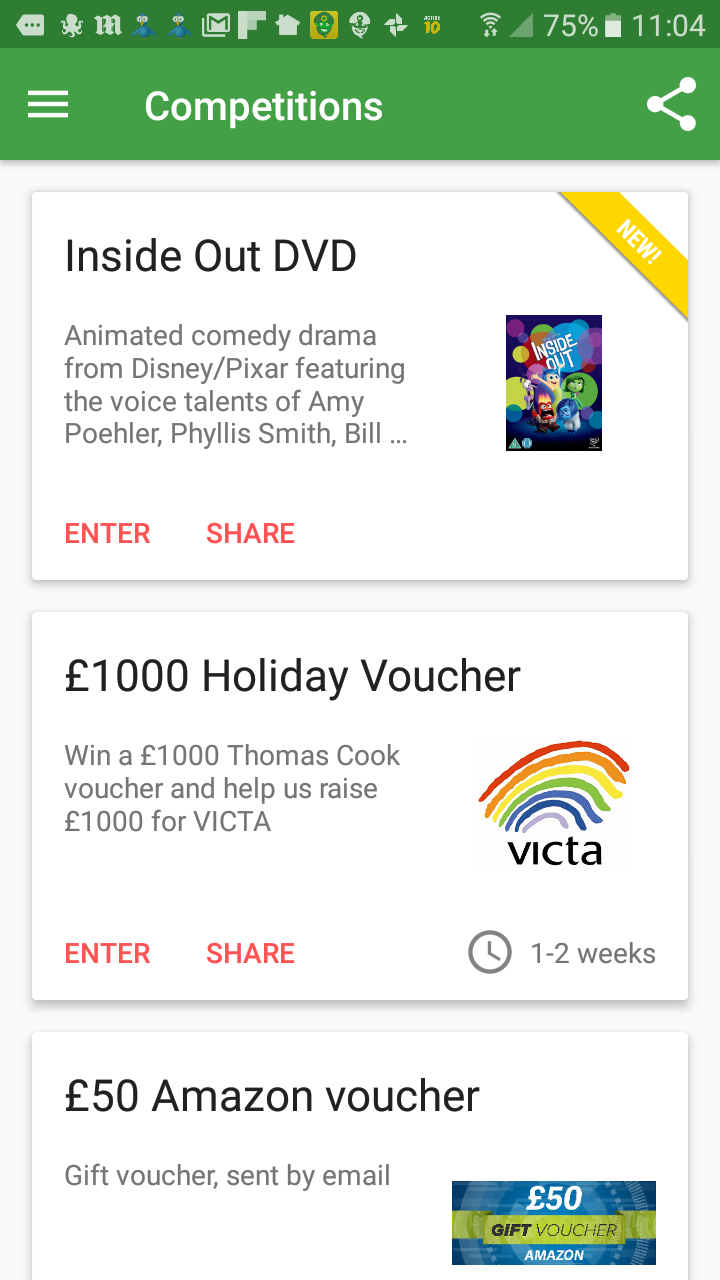
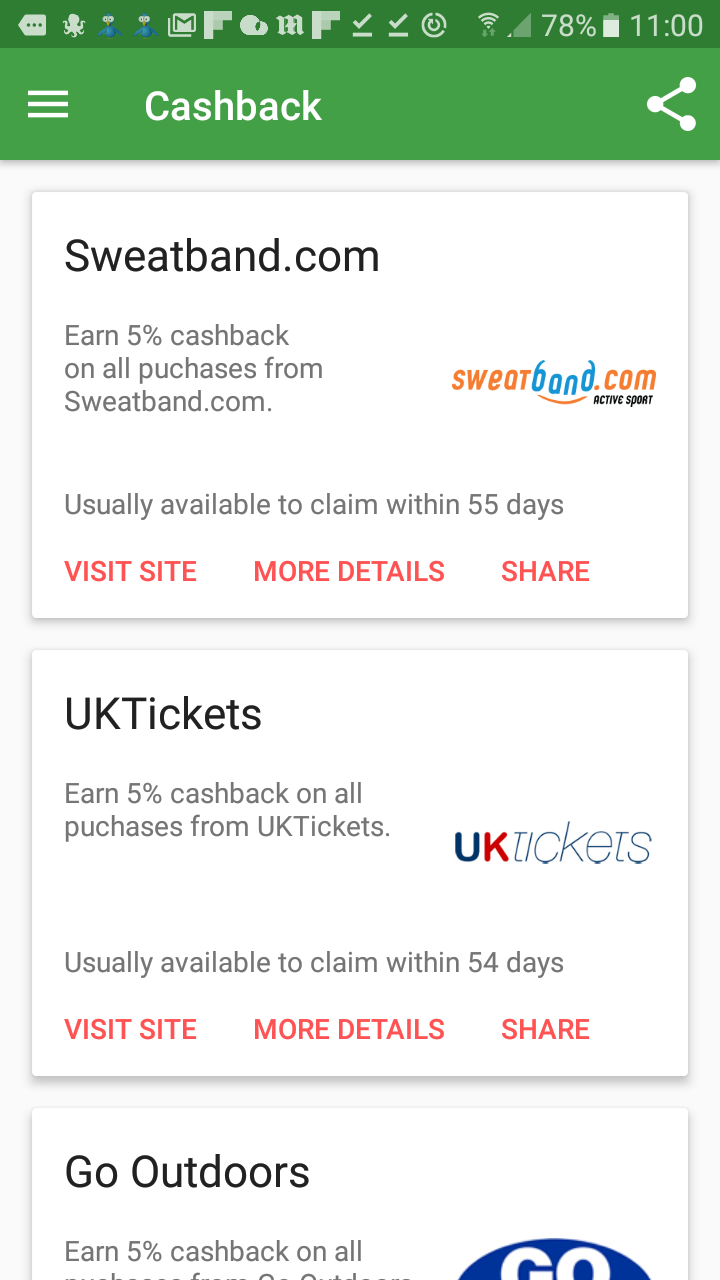
In addition, you can earn points by purchasing via selected retailers listed on the app (see screen capture below). You get ‘cashback’ on these purchases, which is paid to you in the form of points.
Finally, you can get extra points by referring other people or joining via someone else’s referral link. More about this below!
Watch your limits
I said earlier that most people nowadays have an ‘unlimited’ texts allowance, but that doesn’t apply to everyone. If you are on a cheap deal there may be an upper limit every month, and you don’t want to exceed this or you will start being charged extra. You should also to allow for the fact that you may want to send some text messages to friends and relatives yourself, so you need to leave a few in reserve!
Even if you do have an ‘unlimited’ allowance, so-called fair usage restrictions typically apply. A common one is an upper limit of 5000 texts a month. Again, you don’t want to exceed this. Check with your provider if you are unsure what your monthly limits are.
The good news is that Lucky Leftovers allows you to set maximum daily and monthly texting limits on your Settings page. You can start low to test the water if you like, and increase the numbers as you gain confidence. That’s what I did, incidentally.
Will you be spammed?
This is obviously a concern with any app of this nature, but my experience so far has been entirely positive. I have not received a single spam text or phone call as a result of using the app. This has also been the experience of others using the app longer than I have.
Get 500 points through me!
As mentioned earlier, Lucky Leftovers has a referral scheme that lets you earn points by referring others. So here is my referral link. If you click through this and install the app, you will be credited with 500 points (worth 50p), and so will I. That’s a nice little bonus to start you on the way to your first £5!
Good luck if you do decide to join up with Lucky Leftovers. I hope you win lots of points and prizes.
If you have any comments or questions, as always, please do leave them below.
If you enjoyed this post, please link to it on your own blog or social media:
Some older folk have a modest income but are lucky enough to have a decent-sized garden (and yes, that includes me).
If that applies to you too, there are a few ways you could profit from your garden, either directly or indirectly. One possibility would be to rent all or part of it as an allotment.
There is a big demand for allotments in many areas, a situation which has been exacerbated by councils selling off land to developers. Of course, that then creates demand from people who would otherwise have to wait years for a plot to come up.
You won’t make a fortune this way. On average, council allotments in Britain cost around £30 a year, so you won’t be able to charge much more than that. Nevertheless, if you can divide your garden into three or four plots, that would be £90 a year or more for no effort. What’s more, your garden will be tended on your behalf, and you’re quite likely to be offered produce your tenants can’t consume themselves.
If you’re not bothered about making money directly but would be willing to let someone grow crops on your land in exchange for a share of the produce (and maybe doing a few chores), the non-profit Lend and Tend organization may be able to help you. They put people with land in touch with others who might like to grow fruit and vegetables on it. They don’t allow landowners to charge fees, but plenty of other arrangements are possible. Here’s what they say on their site:
Got space to spare? Can’t garden? Find out who can!
Is your garden going to waste? 1000s of people are on waiting lists for an allotment and many people live in flats without a garden who are keen to garden. So, if your garden is looking unloved and you’ve no time or can’t garden, let someone else love it instead.
Share your garden so a Tender can grow some produce, you may end up with an abundance of edibles where weeds are currently thriving. Share your skills with a keen garden Tender and teach them how to get your garden blooming again. Share the burden of garden work with a Tender so they can benefit from enjoying a garden too. Lend and Tend, make gardening friends.
It sounds a great idea and you can register as a would-be garden lender (or tender) via the website. There is no charge for using the service, but as they have some operating costs, the organization does say that donations are appreciated. If money is tight, however, they are happy to accept help publicizing the service as well!
Another possibility if you live in an area attractive to tourists – or near festival sites, racecourses, and so on – is offering your garden as a campsite.
Campinmygarden.com claims to be the world’s first website advertising private gardens as “micro-campsites”. They operate world-wide. You can advertise your garden for free on the site, including pictures and a description. You can also set a fee of your choice. Around £10 a night is typical, though if you can offer additional services (e.g. bed and breakfast) you could charge more.
The website has various interactive features, including a link allowing would-be campers to ask landowners any questions they may have. There is also an eBay-style reviews and ratings system.
Here’s an example listing for ‘Vic’s Place’ in Camborne, Cornwall:
We live between Camborne and Helston in a peaceful rural location. Our camping area is rustic and basic, in a lovely secluded setting which has a magnetic, soothing quality! A standard camper van can access our place but the gates are not wide so best check the width if you plan to come in a van.
Well behaved dogs and children are welcome. There are several water sources on the property so families with younger children must take extreme care. We only accept parties of four or fewer, in the interests of peace.
Just up the road there is a natural spring from which you can get water (or we will supply tap water) and there is a shared composting toilet available. A delightful stream runs by the camping ground. There is a fire pit and you are welcome to collect kindling and small amounts of wood from around and about.
The nearest pub is a mile and a half away by road or a twenty-five minute walk across fields. There is a small shop selling basic supplies in the same location.
In this recent post I looked at the pros and cons of writing a book, perhaps in fulfilment of a long-cherished ambition.
I said then that while writing a book has many attractions, it can be a major project, and there is no guarantee you will find a traditional print publisher. Even if you do, unless you are very lucky and/or talented, you are highly unlikely to make a fortune.
An intriguing alternative, though, is to publish an e-book. Perhaps surprisingly, this can be a lot more straightforward. The huge popularity of Amazon’s Kindle device (and rival ebook readers such as the Kobo and the Nook) means that more e-books are sold nowadays than traditional ones. And Amazon has made it easy for anyone to publish and sell their own e-book by means of Kindle Direct Publishing (KDP for short).
Publishing a Kindle e-book is a simple process. Essentially, all you have to do is create your book in Microsoft Word or a similar application, save it in HTML (web) format, and upload it to Amazon via the KDP website.
Unlike traditional books, Kindle e-books can as short as a few thousand words, so there’s no need to create an epic. You can write fiction or nonfiction as you choose. A little time spent browsing the Kindle Store should give you plenty of ideas!
Once your Kindle e-book is published, anyone will be able to order it from Amazon. You can set your own price, and you will then receive a royalty of up to 70 percent on sales. That compares well with the 10 percent typically paid to traditionally published authors.
Some Top Tips
A few quick tips for new Kindle authors include:
Keep the formatting as simple as possible. Complex layouts are unlikely to survive conversion to ebook format.
Create an eye-catching description of your book for the Kindle Store. You’re allowed to use up to 4,000 characters, so make the most of it. Check out the sales pages of some Kindle bestsellers for inspiration.
Price your title between £1.99 and £9.99 – this will ensure you qualify to receive Amazon’s highest (70 percent) royalty rate. Books priced outside this range receive only the standard 35 percent royalty.
Make sure the first few pages of your e-book hook the reader. People can see the first 10 percent of your book free in the store. If the opening pages don’t grab them, they will soon move on to something else.
Create an attractive cover image for your ebook. This can make a big difference in converting visitors to your sales page to buyers. You can use the KDP free cover-maker tool, or try Fiverr.com, where there are people offering to create ebook covers for just $5 (about £3.80).
Spread the word about your e-book on any social networks you belong to, including Facebook, Twitter, Google Plus, and so on. It can also help to create a blog, website or dedicated Facebook page for your e-book, and mention it on any forums you belong to (though do this sensitively, to avoid accusations of spamming).
Aim to get a few reviews of your e-book up as soon as possible. Consider giving away free or discounted copies via social networks, forums, your blog (if you have one), and so forth. Not everyone will end up leaving a review even if you ask them to, but hopefully some will.
Amazon has plenty more advice for would-be Kindle e-book authors on the KDP website. And for anyone wanting an in-depth introduction to Kindle publishing, I highly recommend Geoff Shaw‘s comprehensive Kindling course (that’s a link to my review of Kindling on my Entrepreneur Writer blog).
Or, if you would like a lower-cost alternative, I also recommend Self Publishing on Amazon 2017, a Kindle e-book by Dr Andy Williams that I have been reading recently. This covers both Kindle e-book publishing and DIY print publishing using Amazon’s Createspace platform. It costs only a few pounds and provides in-depth advice from someone who is a highly successful Kindle author himself (mainly of non-fiction e-books).
And yes – thank you for asking – I do have a few Kindle e-books of my own published. In particular, you may like to check out my guide to plotting for fiction writers and my humorous, illustrated science-fiction novella The Festival on Lyris Five. If you buy and enjoy either of these, a review is always much appreciated 🙂
Final Thoughts
If you are very lucky (and/or talented) your Kindle e-book could become an Amazon bestseller and maybe even propel you into the growing ranks of Kindle millionaires.
But even if not, you will have the satisfaction of being a published author in the world’s favourite online bookstore. And you will have royalties from sales coming into your bank account every month, potentially for many years to come.
If you have any comments or questions about Kindle publishing, as ever, please do post them below.
Save
Save
Save
Save
Save
Save
If you enjoyed this post, please link to it on your own blog or social media:
I’ve talked about matched betting a few times on this blog. To recap, it’s a way of making risk-free (and tax-free) cash by taking advantage of bookmaker special offers and promotions.
The summer is typically a quiet time for matched betting, but come next month (August) all that is going to change. I am, of course, talking about the start of the new UK domestic football season!
To be clear, you don’t have to be a big football fan to look forward to this (I’m certainly not). No, the reason to anticipate the new season so keenly is the host of money-making opportunities it will present for matched bettors.
For one thing, the bookies will be pulling out all the stops to attract new clients and get current and former clients back onside. I expect to see a torrent of offers on the football especially in the next few weeks, giving the potential for some tasty risk-free profits by applying matched betting principles.
Also, once the football starts again, there will be many more opportunities to profit from one of my favourite matched betting techniques, Acca Insurance. This involves taking advantage of the offer by several bookies to refund a football accumulator in the form of a free bet if you have one losing leg. By judicious staking you can guarantee yourself a set profit on many such bets.
Finding accas that will work with this method and calculating the required stakes isn’t easy if you are working alone. I therefore recommend using my favourite matched betting advisory service, Profit Accumulator. They recently added a tool called Acca Catcher to the range of resources on offer to Platinum members.
Acca Catcher will find accas with insurance for you, show you how much profit they can generate, and reveal exactly what you need to stake on them and when. My recent blog post on How to Profit from Acca Insurance with Acca Catcher explains how this works in some detail. I have made hundreds of risk-free pounds using this technique and looking forward to making much more once the new season starts.
More About Profit Accumulator
Profit Accumulator is the marched betting advisory service I use myself and recommend to others. It is suitable both for those brand new to matched betting and for experienced matched bettors.
You can join PA free initially and they will provide details of two bookmaker offers you can take advantage of straight away. These should make you around £45 in net profit. If you wish to proceed further, you can then pay to become a Platinum member and get access to the full range of offers and services. As well as Acca Catcher (mentioned above), these include an oddsmatching tool and calculator for finding profitable bets to use with bookmaker offers and maximizing your returns from them.
A further advantage of joining Profit Accumulator is that you get access to the members-only forum, where you can get any questions you may have answered by more experienced members and/or the team behind PA.
If you think matched betting may be for you, I therefore highly recommend that you click through to the Profit Accumulator website to see what they offer and sign up for the free trial. By joining today you will be perfectly placed to take advantage of the flood of bookmaker offers likely to appear in the next few weeks.
As ever, if you have any questions or comments about matched betting or Profit Accumulator, please do post them below.
Disclosure: As well as being a member of Profit Accumulator I am also an affiliate for them. If you join and become a paying member after following any of the links in this post, I will receive a commission for introducing you. This does not affect in any way the cost of the service to you or the benefits you receive.
If you enjoyed this post, please link to it on your own blog or social media:
Just a quickie today to let you know that I am back in harness with my former clients Agora (also known as Fleet Street Publishing). As some of you may know, I worked for several years on their More Money Review membership site.
I am now working again with my old editor, Michelle Roberts, on the Creating Wealth newsletter. This is a free email newsletter featuring a huge range of strategies for making money and building your personal wealth.
I shall be writing about ways of making, saving and investing money for CW, together with business and self-development topics, e.g. how to boost your productivity. So I will be covering some similar ground to Pounds & Sense, although there are certain subjects I sometimes discuss on the blog (e.g. health, travel, food and drink) that I won’t be talking about there.
In addition, Creating Wealth is aimed at all age groups, not just older people, so my articles will have a slightly different focus. I will also be covering career-building advice, which obviously isn’t something I normally discuss on this blog.
You can sign up to Creating Wealth here. As well as the newsletter, you will receive a free report titled Secrets of a Self-Made Millionaire (and no, that’s not me!).
I highly recommend subscribing to CW, not only because it is putting bread on my table, but because I genuinely believe you will enjoy reading the tips, advice and information it contains from me and my fellow contributors.
And of course, you can unsubscribe at any time if you decide it’s not for you.
I shall continue to publish on Pounds & Sense (and my Entrepreneur Writer blog) too, but perhaps not quite as frequently. I am meant to be semi-retired, after all!
If you have any comments or questions about Creating Wealth, as always, please do post them below.
If you enjoyed this post, please link to it on your own blog or social media:
For many people one of the top things on their ‘To Do’ list when they retire is write a book. But is it a good idea or not – and will you make any money out of it?
I feel decently qualified to talk about this, as during my career as a freelance writer I have written over 100 books, mostly non-fiction. The first book I ever wrote was a guide for singletons looking for love. The most recent, earlier this year, was a guide to making money from forex trading (ghost-written for a client).
The first thing I would say is that you shouldn’t approach book writing with any expectation that you will make a ton of money from it. For most of the books I have written, my earnings have been modest set against the time and effort I put into them. In purely financial terms, article writing and copywriting have been a lot more lucrative.
On the other hand, even a modestly successful book can go on paying an income year after year, both in the form of royalties on sales and extras such as PLR (fees from library lending).
Writing a book also has attractions other than the purely financial. For example, if you want it to be, a book can be your passport to public speaking engagements, conference bookings and consultancy opportunities. It may lead to paying commissions from book, magazine and newspaper publishers. You may also be asked to appear on local – or even national – TV and radio, talking about your book and (in the case of non-fiction) your area of expertise.
Don’t under-estimate, either, the personal satisfaction of writing a book. Many people find that the process of planning and writing a book is engrossing and fulfilling. The sense of achievement at holding your own book in your hands is hard to beat. And completing a book can give your confidence and morale a big boost as well.
Of course, it must also be said that writing a book isn’t something you can do in a day or even (with a few notable exceptions) a week. It is a substantial project and will require self-discipline and determination. You will need to be well organized and focused. And while you definitely don’t need to be Shakespeare to write a book, at least a basic grasp of spelling, grammar and punctuation is essential.
Fiction or Nonfiction?
Fiction can be fun to write, and the potential returns if you write a best-seller are clearly huge. On the other hand, you do have to be realistic about how likely this is to happen. There is a massive amount of competition, and a new novelist has to be exceptionally talented (and/or lucky) to get a publishing deal.
Non-fiction (factual) books are probably a little easier to get published, and have the advantage that you may be able to get a contract just by submitting an outline and proposal to a publisher (highly unlikely with a novel). You will need to demonstrate that you have relevant experience and/or expertise in the field in question, though.
Unless you are already a well-known celebrity with a high public profile, the bad news is that it is very unlikely that you will be able to sell a book purely based on your life story.
Book or Ebook?
While print books are still very popular, recent years have seen a big rise in e-books. These are read on e-readers such as the Amazon Kindle or tablets or smartphones.
It is actually quite straightforward to publish an e-book for the Amazon Kindle, and some authors have made a lot of money doing just that. There is even a small but growing number of Kindle millionaires. I will talk about writing Kindle e-books in more detail in another post.
Publish or Self-Publish?
Other things being equal, it’s still probably best to aim initially for a contract with a traditional publisher. If they like your book, they will then take on all the ancillary tasks such as editing and proofreading and getting the finished book printed. They will also have a publicity department whose job it is to promote the book, e.g. by arranging reviews and media appearances.
So far as payment is concerned, the usual arrangement is that the publisher pays the author royalties – typically around 10 percent of sales, paid annually or biannually. You may also receive an advance against royalties, though advances generally have been decreasing for some years. Nowadays a typical advance for a new, non-celebrity author is £1000 to £2000.
Self-publishing used to be called vanity publishing, but nowadays that derogatory term is less often used. Essentially self-publishers take responsibility for the entire publishing process themselves, from writing through proofreading and editing to printing and promotion. While there can be attractions to this, self-published books are generally not taken seriously within the publishing industry. It can be a lot of work for scant reward, and I don’t recommend going down this route unless you have exhausted all other possibilities (and probably not even then).
Self-publishing an e-book is another matter, though. As mentioned above, it is quite straightforward to do this using Amazon’s Kindle Direct Publishing (KDP) platform. If you self publish a Kindle e-book, you will be paid a royalty by Amazon for each one sold via the store. This can be as much as 70 percent of the sales price, which is a lot more generous than the royalty rate paid by print publishers.
In some cases, also, self-published e-books have been picked up by publishing houses for release in book form. The 50 Shades of Grey books by E.L. James are one high-profile example.
Self publishing an e-book is therefore definitely worth considering if for whatever reason you don’t want to go with a traditional print publisher for your book, or you have no success finding one.
What Next?
In this introductory post I have only been able to scratch the surface of writing and publishing a book, but if this is something you have thought about, I hope it will have given you some food for thought.
I should like to conclude with a few useful resources…
For advice and feedback from fellow writers, I recommend joining the (free) forum at www.bestwritingforum.com which I helped set up a few years ago. Although I am no longer involved with its day-to-day-running, I still visit regularly. It’s a friendly online community with a dedicated team of volunteer moderators, all of whom are keen writers themselves.
Finally, to find publishers (and agents) who might be interested in your book (and much else besides), I highly recommend The Writers’ & Artists’ Yearbook or Writers’ Handbook. These are published annually, and in my view there is nothing really to choose between them.
I will return to the subject of writing books (and other writing projects) in future posts on this blog. But of course, if you have any comments or questions about book writing, please do post them below.
Save
If you enjoyed this post, please link to it on your own blog or social media:
In my post today I want to talk about a matched betting technique I’ve been using with considerable success recently. This is profiting from acca insurance. Obviously, for the benefit of those new to betting, I need to start by explaining what an acca is.
What Are Accas?
The term acca is short for accumulator. It is a set of bets (usually four or more) where every bet has to win in order for the acca to succeed and generate a profit. That means accumulators are typically quite risky bets. When one succeeds the returns can be substantial, however, as your winnings are calculated by multiplying all the odds together.
Normally if one leg of an accumulator fails, the whole bet is lost. However, a number of bookmakers offer something called acca insurance with football bets. In this case, if one leg of your acca lets you down, your stake is refunded, generally as a free bet to the same value as the original. By laying off some (or all) of the bets in your acca – and staking carefully – you may be able to take advantage of the ‘added value’ from the insurance to guarantee yourself a profit.
As we shall see there are various approaches you can use, but my clear favourite is the Lock In method. This guarantees a set profit however many legs of your bet fail, from none to all five.
Of course, this profit is less than you would get from a winning accumulator that you didn’t lay off, but as I said earlier accas are risky bets. Using the Lock In method all but removes the risk of losing money (in theory you could still lose if the lay odds on later legs move massively against you, but that is highly unlikely – and much more often the odds actually move in your favour).
Finding accas that will work with this method and calculating the required stakes is not easy if you are working alone. I therefore recommend that you use my favourite matched betting advisory service, Profit Accumulator. They have recently added an online tool called Acca Catcher to the range of resources on offer to Platinum members.
Acca Catcher is an amazing tool that will find accas with insurance for you, show you how much profit they can generate, and reveal exactly what you need to stake on them and when.
About Profit Accumulator
As I have mentioned on Pounds and Sense before, Profit Accumulator is a membership website that provides in-depth tutorials on how to apply matched betting strategies to make money. They also provide special ‘oddsmatching’ software to find suitable bets and calculators to work out the necessary stakes (which is of course crucial).
In recent months Profit Accumulator have added a number of new tools to their Platinum Membership. These include Match Catcher (a tool for those doing horse-racing refunds) and Dutching (a tool for finding arbitrage opportunities among two or more bookmakers). I’ll talk about these in future posts.
As mentioned above, however, the tool that I want to focus on today is Acca Catcher. I will reveal how this works below, though to get full details I highly recommend signing up with Profit Accumulator and watching the training videos they provide.
Using PA’s Acca Catcher
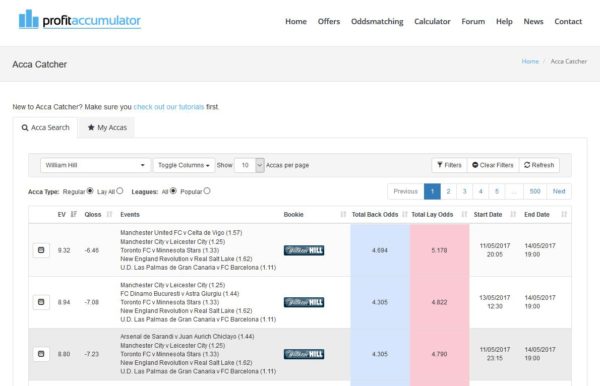
Here is a screen capture of the page that opens when you log in to your Profit Accumulator Platinum account and click on Acca Catcher in the Oddsmatching menu. Obviously, by the time you read this, the accas shown will have changed.
Acca Catcher shows a number of accas you can use with this method. By default they are arranged in order of EV, which stands for expected value. This is a measure of how profitable they should be, so the larger the better is the rule here. As you can see, the top one listed here (with the highest EV) Is with William Hill. This is often the case, as William Hill have the most generous terms and conditions and allow you to stake up to £50 per acca (some other bookies limit you to £25 or less).
The QLoss figure stands for qualifying loss. This only applies if you use what they call the Normal method. In this case you stake in such a way that if you end up with exactly one losing leg in your acca you get a free bet (from which you should be able to generate an 80% profit) and with any other outcome a modest qualifying loss. Using this method, on average you should make a profit equivalent to the EV shown. This is typically slightly higher than the profit available using the Lock In method, but of course it is only an average, and some of the time you will lose money.
Personally I prefer the certainty of the Lock In method even if it might be marginally less profitable overall. You may see this differently, of course.
The other things shown on the opening screen are the actual games in the acca, the total back and lay odds, and the start and end dates of the acca.
One other thing you will notice to the left of each acca is a small calculator icon. This is very important, as if you click on it, it will show you everything you need to know in order to extract a profit from the acca in question. So let;s see what happens when we click on the first of the accas shown…
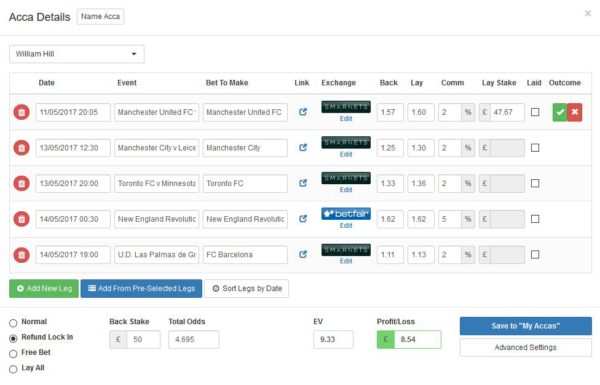
Note that by default the ‘Normal’ button is selected at the bottom left. As I prefer the Lock In method, however, I have switched it to that.
The calculator now shows you the acca bet you have to make and the first lay. Note that while you place all the back bets together in your accumulator, using the Lock In method you place the lay bets sequentially. This is necessary as the required stake can change depending on whether each leg wins or loses (and after two losing legs with the lock-in method you stop laying).
If we were doing this bet, then, our first step would be to place a £50 acca bet at William Hill containing the five bets shown. We would then lay off the first leg using a lay stake of £47.67, exactly as shown in the calculator.
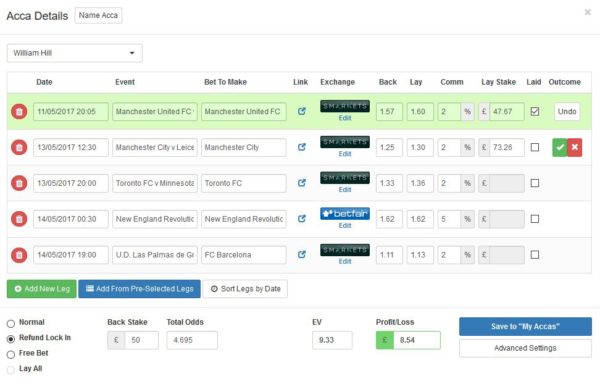
Once the match has been played and the result is known, we then return to the calculator and click on the green tick on the right if the result was as forecast (in this case a win for Manchester United) or the red tick if it wasn’t (a draw or away win). The calculator then shows us the lay stake we need to place in the next leg (see below).
So we now place a lay bet of £73.26 on Manchester City. This process continues until we reach the end of the acca or there are two losing legs, whichever comes first.
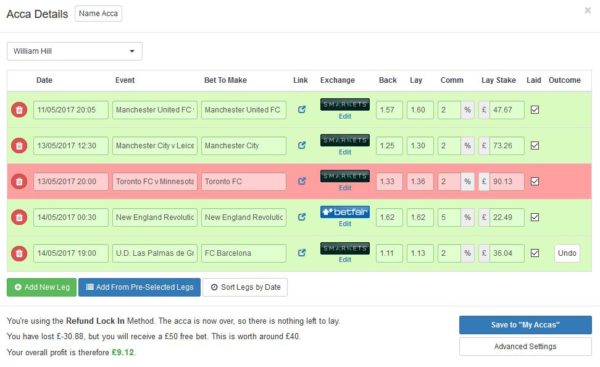
Let’s say for the sake of argument the middle leg of the acca loses but all the others win. The final calculator screen will look like this:
As you can see, because one leg lost, the acca doesn’t pay out and you have made a net loss on it. However, you qualify for a £50 free bet on the acca insurance. By backing and laying the free bet using standard matched betting technique (and the free calculator on Profit Accumulator) you should be able to extract around £40 profit from the free bet. In the example above, as the calculator says, you would therefore end up with a net profit of £9.12. Give or take a few pence, your net profit would be just the same if all five legs won or none of them.
More Acca Insurance Tips
I have set out above the basics of how matched betting with acca insurance works. As I said earlier, I highly recommend watching the training videos on Profit Accumulator to see exactly how it works step by step. Assuming you are a PA Platinum member you can also play about with the software to your heart’s content without spending any money until you are confident with it. Here though are a few more tips to help you on your way…
Bear in mind that if you can get better odds than those shown in the calculator, the net profit will be boosted. I find that often as a match gets closer the lay odds will go down, making your bet more profitable. You can enter the new lay odds manually and the lay stakes and profit figures will be automatically adjusted.
Sometimes Acca Catcher shows lay odds from Betfair, other times from Smarkets. I use the latter as much as possible, as their fees are lower and it simplifies matters to lay all your bets in one exchange. In any event, it is often worth checking the other exchange, as you may be able to get a better price there than the one shown on the calculator. Exchange prices change constantly, and if there is plenty of time before the next leg you may want to try entering a lay bet lower than the current offer price in the hope that it will be matched subsequently.
As mentioned above, an alternative to the Lock In method is the Normal method. With this you aim to have exactly one losing leg in your acca in order to qualify for the refund. With any other outcome (no losing legs or two or more) you suffer a small qualifying loss. With the Normal method, as soon as you have one losing leg in your acca, you stop laying. With the Lock In method, by contrast, you don’t stop laying until you have two losing legs.
Another option on the calculator is ‘Lay All’. This is where you lay all your selections at the same time (obviously before the first leg starts). This method only works when all the selections are available at extremely short odds (generally no higher than 1.20). The profits vary according to how many legs win – typically you will make a decent profit if all legs win, but if one loses you will make a very small profit or break even. With two or more losing legs the winnings increase again, but at such short odds this is obviously rare. I haven’t bothered with the ‘lay all’ method myself, but the option is there if you want it. It does have the obvious attraction that you can do all your backing and laying at once.
One thing to watch with accas is that you don’t have more than one ending on the same day. In the case of William Hill (and some others) they will only give you one refund per day – so if you have two accas ending the same day, each with one losing leg, you will only get one refund. That would leave you with a net loss on the other acca, of course.
As you may gather, I’m a big fan of William Hill, not least as they allow you to stake a generous £50 per acca and have this refunded as a free bet if one leg loses. Using the Lock In matched betting method, I would generally expect to make a minimum of £10 per William Hill acca. I therefore highly recommend using William Hill with this method, but would also advise placing other ‘mug’ bets with them to try to reduce the risk of having your account restricted (or gubbed, as matched bettors say). You can lay off your mug bets to minimize your losses from them.
Different bookies have different rules about accas, e.g. Ladbrokes only allow insurance up to a maximum stake of £25 and a smaller range of national leagues is eligible. Other bookies specify minimum odds for each leg of your acca, e.g. with Paddy Power the minimum is 1/5 (1.20 in decimal format). Acca Catcher from Profit Accumulator should incorporate any such restrictions into its recommendations, but it never hurts to check if you are uncertain.
When entering results in the calculator, remember that the outcome that counts is the one at full time (90 minutes). Some cup and international matches have extra time if the teams are drawing after 90 minutes, but the result after extra time isn’t relevant for acca betting purposes.
Good luck with your acca insurance bets. If you have any comments or questions, as ever, please do post them below.
Save
Save
Save
Save
Save
Save
Save
Save
Save
Save
Save
Save
If you enjoyed this post, please link to it on your own blog or social media:
Although it’s not essential to subscribe to a matched betting advisory service, if you are new to betting in particular it is highly advisable. The service I recommend is Profit Accumulator.
About Profit Accumulator
Profit Accumulator is a membership website that provides in-depth tutorials on how to apply matched betting strategies to make money. They also provide special “oddsmatching” software to find suitable bets and calculators to work out the necessary stakes (which is of course crucial).
Profit Accumulator have also just added two new services to their Platinum Membership. Previously these were only available to people playing an extra fee of around £15 a month for Platinum Plus membership (in addition to the normal Platinum members’ fee). The services in question are Acca Catcher and Match Catcher.
These two services are both aimed predominantly at people who have completed at least some of the introductory offers and are now looking to diversify their matched betting income.
Acca Catcher is designed to help members profit from refund offers on accumulators. In these you select four or more events to bet on and all must result as predicted for the bets to succeed. Some bookmakers have an offer where if one leg of your accumulator fails they refund your stakes. By carefully calculating your stakes you may be able to guarantee a set profit however your bet turns out. Acca Catcher takes you step by step through finding and exploiting such opportunities, showing you exactly how much to stake and when.
Match Catcher is software that helps users capitalize on horse racing refunds. Again, some bookies offer refunds if a horse you bet on comes second (sometimes third as well). If you can get a close match between the back price and the lay price of such a horse, you can stake in such a way that you only make a very small loss whatever the outcome, and in addition get the refund when your chosen horse comes second or third. With racing refunds you won’t win every time, but overall you will make a steady profit.
At the time of writing Profit Accumulator Platinum Membership costs £17.99 a month, including these two additional services. You can also take out an initial free trial membership which includes two offers that should make you up to £45 in tax-free profits.
In my view if you are looking for a tax-free way to supplement your income, matched betting via Profit Accumulator is well worth considering. You can make over £1000 quite easily by doing the bookmaker welcome offers. After that there are so-called reload offers made by bookmakers to existing clients, and you can now also use Match Catcher and Acca Catcher to help you take advantage of racing refunds and accumulator offers.
If you have any questions about matched betting or Profit Accumulator, please do post them below and I will do my best to answer them.
Note: As per my disclosure statement, I should like to make clear that as well as being a member of Profit Accumulator I am also an affiliate for them. If you join and become a paying member after following any of the links in this post, I will receive a commission for introducing you. This does not affect in any way the cost of the service to you or what you receive for your money.
Save
Save
If you enjoyed this post, please link to it on your own blog or social media: