
Everything Else

This includes everything  else I discuss on Pounds and Sense, including Health, Holidays, Relationships, and so on.

My short break in Portmeirion

My Short Break in Portmeirion

I recently enjoyed a three-night break in the lovely Welsh village/resort of Portmeirion. This is about two miles from Porthmadog in NW Wales. It was the first time I had stayed in Portmeirion, though I have visited many times before. Here’s a map from Google Maps.

Portmeirion is a beautiful Italianate village created by the architect Clough Williams Ellis. These days it’s probably best known as the location for the 1960s cult TV series The Prisoner, starring Patrick McGoohan.

Portmeirion is privately owned and you have to pay a fee to enter during the day. Of course, if you are staying there, as I was, this is included in the price you pay.

  • You can also get free admission (in the afternoon) by booking a minimum two-course lunch at Castell Deudraeth; this is part of the Portmeirion estate, a short walk from the village itself. Free admission to the village is also available if you book a spa treatment or afternoon cream tea there.

Accommodation

There are various accommodation options in Portmeirion. You can stay in the main hotel in the village or at Castell Deudraeth. You can also stay in one of the many self-contained cottages and apartments in the village itself. I did the latter, staying in one called The Neptune Suite. This is in the heart of the village, directly over the ice cream parlour. Here’s a photo…

Neptune Suite Portmeirion

I was quite surprised how spacious The Neptune Suite was. The front door opened into a good-sized lounge with comfortable chairs and sofas and (of course) a TV. There was also a sink in the corner with an electric kettle, coffee and teabags, mugs and glasses, and so forth. There were no cooking facilities but there was a small fridge with complimentary bottled water and a bottle of champagne (definitely not complimentary). The fridge came in very useful for storing milk and snacks for the evening (see below).

Next to the lounge was a double bedroom, with a large bathroom off it. The latter had a separate bath and shower, which felt quite a luxury. A good selection of freebies such as bath/shower gel, shampoo and conditioner, soap, shower caps and even miniature shoeshines were provided.

I stayed on a bed-and-breakfast basis. Breakfast was provided in the hotel, which was about five minutes’ walk away. The hotel breakfasts were excellent, with a self-service buffet and a choice of cooked breakfasts, which were brought to you. During the day I ate at one of the cafes and restaurants in the village (I particularly recommend the Italian-themed Caffi Glas).

There are fewer options for eating in Portmeirion in the evening. Basically you can book a table at the hotel or Castell Deudraeth. These both have highly rated restaurants, with prices to match! They would be good if you were celebrating a special occasion, but a bit pricey to eat at every day. Personally, after a big hotel breakfast and lunch in the village (or out exploring) all I wanted in the evening was a light meal anyway. So I brought my own bread and cheese, fruit, biscuits and so on. Along with a cold drink or a pot of tea, that was fine for me! But otherwise you could always take a short drive into Porthmadog, which has plenty of shops and eateries.

The apartment had free wifi which worked perfectly during my stay (not always the case in my experience). The location was quiet and peaceful (there was a low-key buzz from the ice cream parlour during the day but that closed at 4 pm) and I slept very well during my stay.

Financials

As Pounds and Sense is primarily a money blog, I should say a word about this.

Portmeirion is a bit more expensive than most places I visit on short breaks. For my three-night stay with breakfast, I paid £640, which works out at around £213 per day. I thought that was actually quite reasonable bearing in mind the standard of the accommodation and the other amenities on offer. I got a 10% ‘Genius Discount’ from Booking.com, which may have reduced the cost a bit.

I did notice as well that prices vary somewhat from week to week, I assume due to supply and demand. A bit of trial and error here may pay dividends!

One other thing I should say is that I opted for a ‘Village Double Room’ and didn’t know exactly what accommodation I would get. I guess that’s like staying in a hotel, when you aren’t normally told your room number beforehand. If you have a particular preference you can always try asking, but there’s no guarantee you will receive it. I did email a few days before to ask where I would be staying and discovered then that it would be The Neptune Suite.

Things to Do

There are various things you can do in or around Portmeirion. On my first full day I stayed in the village itself. I enjoyed walking the coastal path from the village and back through the woodlands behind. I also spent some time enjoying the heated outdoor pool. This is available to residents only (not day visitors). I was lucky with the weather and made the most of this facility. The changing rooms are pretty basic, but as my accommodation was just a couple of minutes’ walk away that really wasn’t an issue for me.

On my other full day I took a five-minute drive to Porthmadog and enjoyed a trip on the Ffestiniog Railway.

Ffestiniog Railway

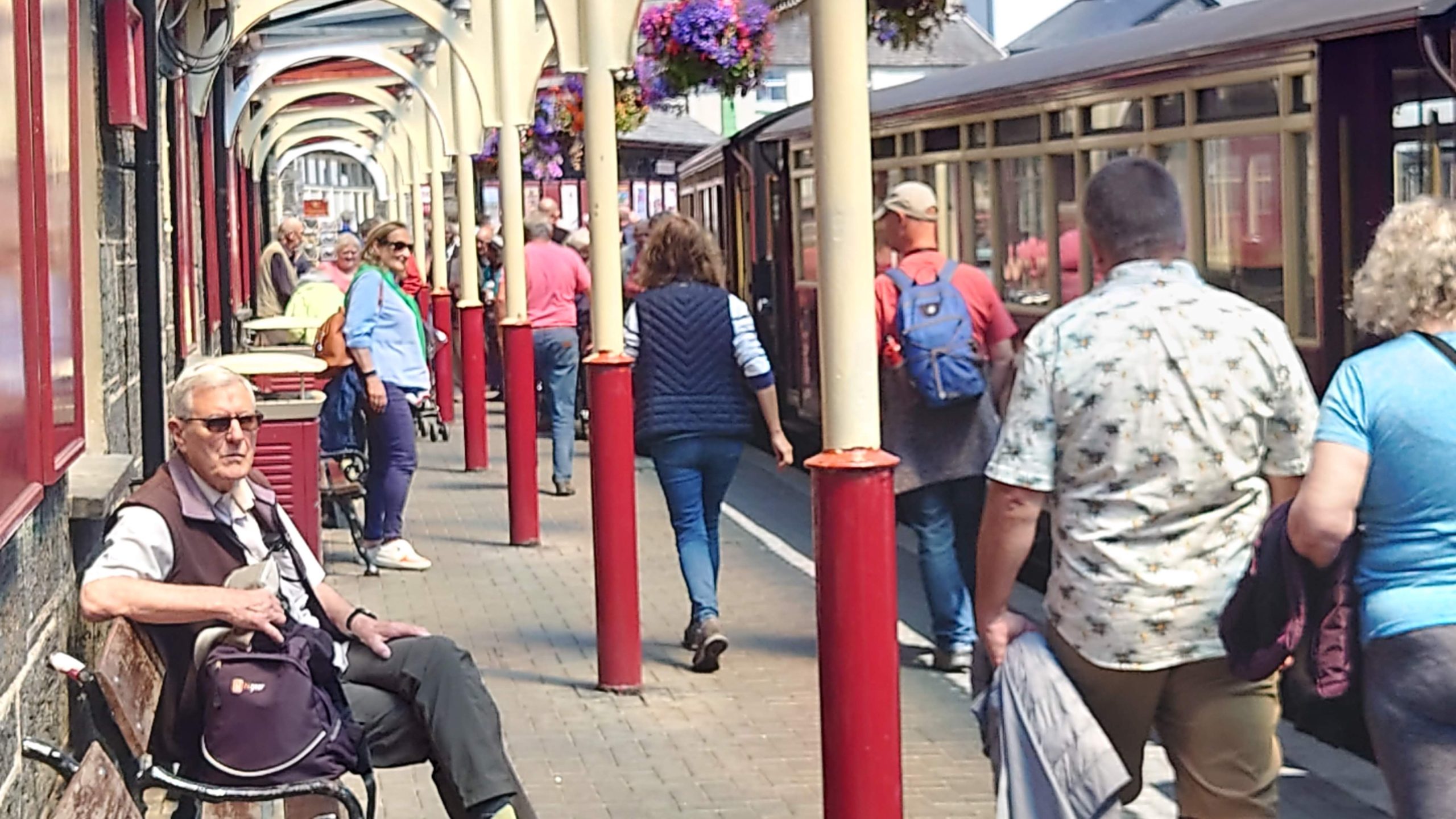
This heritage steam railway has two separate lines, both of which run from Porthmadog. The Welsh Highland Railway takes you on a scenic two-and-a-quarter hour trip through the heart of Snowdonia to Caernarfon, while the original Ffestiniog Railway takes you on a one-hour trip to Blaenau Ffestiniog. On this occasion I took the shorter journey, but I have done the Welsh Highland Railway trip before and recommend it as well. You can get more info on both (and book in advance) via the Ffestiniog Railway website.

The harbour station in Porthmadog has a small car park for people with disabilities only, but there is a free car park for people travelling on the railway at the back of the public car park opposite (Llyn Bach). I used that myself on this occasion. There were plenty of spaces when I arrived at around 9.30 a.m. but I noticed it was full later. So my top tip if going by car is to book a ticket on a morning train rather than leaving it until the afternoon!

Final Thoughts

As you may gather, I enjoyed my short break in Portmeirion and am happy to recommend it for a relaxing short break (though not an especially cheap one!).

Portmeirion is a great place to kick back and chill out. It has good road and rail connections, and there are also other high-quality tourist attractions nearby, including the Ffestiniog Railway, Harlech and Criccieth Castles, and so on.

Portmeirion itself isn’t somewhere to go if you want to be ‘entertained’. The gardens and buildings are beautiful and highly photogenic, and there are some lovely little shops and cafes. You can also enjoy scenic walks alongside the estuary and through the woodlands. And, as mentioned above, there is an outdoor pool you can use (or sunbathe beside, weather permitting!).

To be honest, Portmeirion isn’t going to suit everyone. If you want a holiday with lots of activities and entertainment laid on, it won’t fit the bill. And children and teenagers (especially) might find it a bit limited. For older people and couples looking to relax and recharge their batteries, though, it might be just the thing. There are also some special events (e.g. The Prisoner Weekend) held there throughout the year.

One other point to note is that dogs (apart from guide dogs) are not allowed anywhere in the village. So if you normally take a canine companion on holiday with you, Portmeirion may not be the place for you.

As always, if you have any comments or questions about this post, please do leave them below.

Be Seeing You


If you enjoyed this post, please link to it on your own blog or social media:
Pounds and Sense - Personal Update

Pounds and Sense – A Personal Update

Today I wanted to share some information about my personal circumstances and my plans for Pounds and Sense (in particular) going forward.

As you may know, I’ve been running PAS for nearly 10 years now and during that time have published over 560 blog posts. Most of these are still available to view via the sidebar on the right (or below if you’re reading this on a mobile). They cover the entire period during Covid, and some in particular make quite poignant reading now.

Nothing is forever, though, and as I’m now 70 I’ve decided the time has come to wind down the blog. My health remains reasonable (touch wood) but I have other interests I want to devote more time and energy to.

In addition, I am now officially retired and no longer registered as self-employed. In fact, Pounds and Sense hasn’t made a profit for some time. As other bloggers will testify, it has become much harder to make money this way in recent years – especially if (like me) you’re a one-man – or one-woman – band.

A major cause of this – in my view anyway – is the rise of AI in online search. In the past you could attract traffic by targeting certain keywords and phrases and hoping Google (or whoever) would rank your article high in search results for the keyword/s in question. With most people nowadays going no further than the AI answers at the top, that method of attracting readers no longer works nearly as well as it used to.

For this and (no doubt) other reasons, the last few years have seen a big fall in the number of other UK personal finance blogs. The ones left are mainly those run as a full-time business, often with a team of staff. Really these are personal finance websites rather than blogs in the traditional sense. There are still a few brave solo bloggers left, and more power to them. But from comments I have seen, I know many of them are struggling as well.

Meanwhile, the costs keep on rising. Pounds and Sense is a self-hosted WordPress website, so I have to pay annual fees for the domain name and (in particular) the hosting service. In total I am now paying over £200 a year for this, which in the last year or two is more money than I have made (directly) from the blog itself. There are other costs  as well such as accountancy services and even electricity bills. I also have to pay for the graphics service I use (PicMonkey) to create the cover images for my blog posts.

For all these reasons, then, I am winding down Pounds and Sense. I won’t stop immediately, but my posts will likely be less frequent in the coming months. In April next year my hosting service (the largest expense I have to pay) comes up for renewal, and at that point I plan to allow it to lapse. So after that date, all past and current content will cease to be available here. If there are any articles you particularly want to save for future reference, therefore, I recommend that you copy them sooner rather than later.

I should also say that as I will be closing PAS, I won’t be taking on any further sponsored posts or other commercial partnerships or arrangements. I don’t think it would be fair to take on such projects knowing that the blog will in all likelihood cease to exist a few months later. I am still happy to consider guest posts but on the understanding that they may not be up here very long.

With all that said and done, I do enjoy blogging, and it’s possible I might continue Pounds and Sense in some shape or form using a free or low-cost hosting service such as Blogger or WordPress.com. I might also copy over some content to this. Using this type of service has its drawbacks, but of course it has the big attraction of being cheap or free! Obviously I will let PAS readers know nearer the time if I decide to proceed with this.

In closing, thank you for reading this far; and particular thanks to my regular readers, some of whom have been with me for many years. I wish you all a happy and prosperous future in these increasingly uncertain times.

As always, you are very welcome to leave a comment below if you wish.


If you enjoyed this post, please link to it on your own blog or social media:
Caravan Fire Safety

Caravan Fire Safety: How to Protect Your Holiday Home and Your Finances

My post today is brought to you in association with Compass, a specialist provider of caravan and leisure insurance. It concerns an important subject all caravan owners need to be aware of.

With the UK experiencing a prolonged period of hot and dry weather this summer, and drought now declared across large parts of England for the third time in five years, it’s vital that all caravan owners take extra precautions to reduce the risk of fire.

Static caravans are particularly susceptible to fire damage. Their fixed position, close proximity to neighbouring units, and structural materials – often made of plastic and thin cladding – mean that a fire can spread rapidly and with devastating effect. The use of LPG gas cylinders adds further risk if they are not stored and handled correctly.

In August 2025, a wildfire on the North York Moors came within a few hundred metres of a holiday park near Dalby Forest before a shift in wind and swift action from North Yorkshire Fire and Rescue Service prevented what could have been a catastrophic loss.

Less than a year later, in late July 2026, a major wildfire broke out at Dunwich Heath on the Suffolk coast, forcing more than 200 caravans to be evacuated from the nearby Cliff House Holiday Park as flames spread across over 150 hectares of heathland. More than 100 firefighters battled the blaze over several days after a major incident was declared, a stark illustration of how quickly fire can threaten caravan parks during sustained hot, dry conditions.

Nationally, the trend is stark: the UK recorded 117 wildfires in 2025, more than double the total seen in 2023 and a 32% increase on 2024, second only to the record 207 wildfires recorded during the 40°C heat of 2022.

2025 was officially recorded as the hottest UK summer to date, and 2026 has already brought comparably extreme conditions, meaning the risk of fire-related incidents in caravans remains high. This is reflected in Compass’s fire claims data, which peaked between January 2024 and December 2025 at £881,982 – more than five times the total from the previous year.

With this summer already matching the extremes of 2025, and incidents like Dunwich Heath showing how fast a wildfire can take hold, taking proactive fire safety precautions in caravans is more critical than ever.

Common causes of static caravan fires include:

  • Careless use of barbecues near units

  • Improper disposal of cigarettes

  • Unattended cooking

  • Faulty gas appliances or heating systems

  • Electrical overloads and damaged wiring

According to fire safety data, a fire in a mobile home or caravan is significantly more likely to result in death or serious injury compared to conventional housing.

Kevin Minnear, Head of Underwriting at Compass, explains: “Caravans are fantastic for enjoying the outdoors, but they come with serious fire risks, especially in dry conditions. What we saw as a near-miss on the North York Moors last summer, and now a major incident at Dunwich Heath this year, tells us this isn’t a one-off. It’s a pattern, and with the UK in the grip of a prolonged drought, the risk of fire has never been greater.

“As insurers, we see the aftermath of caravan fires all too often, with families losing not only their cherished holiday homes but valuable personal belongings as well. We’re reminding everyone to stay vigilant, follow basic safety practices, and help prevent fires before they start.”

Top Tips to Stay Safe in Your Caravan This Summer

  • Always use barbecues well away from caravans, awnings and dry grass. Never use them inside or on decking, and ensure coals are fully extinguished before disposal., and always follow your park’s barbecue rules and designated areas.

  • Do not smoke inside caravans. Always use a proper ashtray and ensure cigarettes are completely stubbed out and disposed of properly.

  • Store gas bottles outside in a secure, upright position and never in direct sunlight. Turn them off properly after use and have them checked regularly.

  • Every caravan should have at least one working smoke alarm fitted. Test it weekly and change batteries regularly.

  • Avoid open flames indoors; candles and gas lanterns can ignite furnishings or nearby materials in seconds. Use battery-powered alternatives instead.

  • Fit a fire blanket inside your caravan and make sure you have a fire extinguisher, so you are prepared should the worst happen.

  • Avoid overloading plug sockets and have electrical systems checked regularly.

  • Ensure all escape routes are accessible and exits are not blocked.

Insurance Advice for Static Caravan Owners

In the unfortunate event of a fire, adequate insurance cover can be the difference between financial recovery and long-term loss. Caravan owners are advised to:

  • Review your policy to ensure it covers fire damage comprehensively.

  • Keep an up-to-date inventory of contents.

  • Notify your insurer immediately in the event of a fire-related claim.

  • Check whether your cover includes temporary accommodation or replacement of personal effects.

Fire spreads extremely quickly in caravans – even a small spark can have devastating consequences, especially during dry spells.

Kevin Minnear adds: “Prevention is always better than cure. We’re encouraging all caravan owners to make safety a top priority this summer. Fire can devastate a caravan in minutes, but by being proactive and following these simple steps, you can help safeguard your property.”

Many thanks to my friends at Compass for their assistance with this article. For more info on specialist caravan and leisure insurance, please visit compass.co.uk

As always, if you have any comments on this article, please do post them below.


If you enjoyed this post, please link to it on your own blog or social media:
Why Every Older Adult Should Consider the Shingles Vaccine (Shingrix)

Why Every Older Adult Should Consider the Shingles Vaccine (Shingrix)

Getting older has some advantages – but one downside is that our risk of developing certain illnesses increases. One of these is Shingles, a painful condition that can have long-lasting effects.

I recently had my second Shingrix vaccination, completing the recommended course. Like many people, I experienced some short-term side effects afterwards, mainly fatigue and exhaustion for a day or two. It wasn’t especially pleasant, but it soon passed. In my view, it was a small price to pay for the protection the vaccine offers.

If you’re eligible for the shingles vaccine, here’s why I think it’s well worth having.

What Is Shingles?

Shingles is caused by the varicella-zoster virus, the same virus that causes chickenpox. Even after you’ve recovered from chickenpox – perhaps many decades ago – the virus remains dormant in your nervous system.

As we age, our immune system naturally becomes less effective, allowing the virus to reactivate. When it does, it causes shingles.

The condition typically begins with tingling, burning or pain on one side of the body, followed by a blistering rash. While many people recover within a few weeks, others suffer much more serious complications.

It’s More Than Just a Rash

Many people underestimate shingles, assuming it’s simply an uncomfortable skin condition.

Unfortunately, it can be far more serious.

Complications can include:

  • Severe nerve pain (known as post-herpetic neuralgia) that can last for months or even years.
  • Eye infections that can threaten sight if shingles affects the face.
  • Hearing or balance problems.
  • Rarely, more serious neurological complications.

The risk of these complications increases significantly with age, particularly after 65.

How Effective Is Shingrix?

Shingrix is the vaccine now offered by the NHS. It replaced the older Zostavax vaccine because it provides much stronger and longer-lasting protection.

Clinical trials have shown that Shingrix is over 90% effective at preventing shingles in older adults, and it also greatly reduces the risk of post-herpetic neuralgia.

Protection remains high for many years after vaccination.

The vaccine is given as two injections, normally two to six months apart. It is a non-live vaccine that uses deactivated fragments of virus to create an immune reaction.

What About Side Effects?

Like any vaccine, Shingrix can cause side effects.

The most common include:

  • Soreness at the injection site
  • Fatigue
  • Headache
  • Muscle aches
  • Mild fever or chills

As mentioned earlier, I felt unusually tired and lacking in energy after both doses. People often find that the side effects after the second jab are worse than the first, though that wasn’t true in my case. Fortunately, the side effects both times only lasted a couple of days.

Although the side effects can be inconvenient, they’re generally short-lived and are a sign that your immune system is responding to the vaccine.

In my opinion, they’re a small inconvenience compared with the possibility of developing shingles itself.

Could It Also Help Protect Against Dementia?

One particularly interesting area of research has emerged in recent years.

Several large studies have suggested that people who receive the shingles vaccine may have a lower risk of developing dementia compared with those who remain unvaccinated.

Researchers are still trying to understand exactly why.

Possible explanations include:

  • Preventing shingles may reduce inflammation that could contribute to dementia.
  • Vaccination may produce beneficial effects on the immune system.
  • Preventing viral reactivation may help protect brain health.

It’s important to stress that Shingrix is not approved as a treatment or prevention for dementia, and more research is needed before firm conclusions can be drawn.

Nevertheless, the findings have attracted considerable interest within the medical community and provide another potentially encouraging reason to accept the vaccine when it’s offered.

Who Can Get the Vaccine?

The NHS is gradually expanding eligibility for Shingrix.

Currently, it is routinely offered to older adults as they reach the eligible age (70 in most cases) along with certain people who have weakened immune systems.

If you’re unsure whether you qualify, it’s worth asking your GP surgery or checking the NHS website.

Even if you’re not yet eligible, knowing about the vaccine means you can arrange to have it when the time comes.

  • I’d also add, be sure to get both jabs, not just the first, as this will give you much better protection. If necessary, chase up your health provider if they haven’t called you back for your second vaccination after six months. I had to do this myself.

My Verdict

Having now completed both doses, I’m very pleased that I decided to have the vaccine.

Yes, I felt washed out for a couple of days afterwards.

But compared with the possibility of suffering weeks of severe pain – or months of lingering nerve damage – it seemed a very worthwhile trade-off.

And while the possible link with a reduced risk of dementia still needs further investigation, it’s certainly an intriguing bonus.

Final Thoughts

As we get older, prevention becomes increasingly important. Vaccination is one of the simplest and most effective ways of protecting our future health.

Shingles can be an extremely unpleasant illness with long-lasting consequences, but fortunately we now have a vaccine that offers excellent protection.

If you’re invited to have the Shingrix vaccine, my advice would be simple: take up the offer. 

Your future self may well thank you.


Have Your Say

Have you had the shingles vaccine? Did you experience any side effects? Or have you unfortunately had shingles yourself?

Please share your experiences in the comments below. As always, I’d love to hear from you.



If you enjoyed this post, please link to it on your own blog or social media:
How to Know When Fruit and Vegetables Are Still Safe to Eat

How to Know When Fruit and Veg Are Still Safe to Eat – And When They Should be Binned

Today I’m sharing a guest post by Primrose Freestone, a Senior Lecturer in Clinical Microbiology at the University of Leicester. It concerns a subject that many older people (in particular) on tight budgets may find of interest. It’s certainly something I have wondered about myself in the past.

This article was originally published in The Conversation and is republished here under a Creative Commons licence.


Whether it’s trimming off a piece of mushy parsnip or cutting away a slightly mouldy bit of apple, many of us have used produce long after their peak of freshness.

While fruits and veggies are important for our health, they’re also highly susceptible to bacteria, fungi and other pathogenic microbes. Overripe fruit and veg can harbour E coli, Salmonella and Listeria bacteria, all of which can cause food poisoning. Understanding how to properly store fresh produce can maximise their freshness and keep them safe to eat for longer.

The use-by dates printed on packaging are usually a useful indicator of how long fresh produce can safely be stored and eaten. But the environment fresh produce is stored in can affect the shelf-life of produce – so use-by dates may not always be accurate.

Fruit and veg are living – so things like humidity, temperature, atmospheric gas, light, how long it’s been in storage and any potential microbial contamination can all affect how long produce can be stored.

The ideal storage conditions will also be different for each fruit and vegetable.

Fruit

Apples have a shelf-life of around one week at room temperature, and three to four weeks in the fridge. These should ideally be stored in the fridge’s veg drawer and washed before eating.

Apples which are a little bruised are safe to eat but don’t consume if they’re mouldy.

Bananas can last around two to seven days, depending on how ripe the bunch was when bought.

Store bananas at room temperature until ripe, then refrigerate to extend shelf life. Brown or mushy bananas are safe to eat so long as they aren’t mouldy.

Berries have a shelf life of around 3-7 days if refrigerated. Store them in their original packaging. Only wash before eating, as washing may spread fungal spores.

Again, don’t eat if mouldy. Even if only one berry in the punnet has mould and the rest look fine, they may still contain mould. This is because the toxins produced by moulds and other fungi – called mycotoxins – are invisible and directly penetrate food and can spread to adjacent foods.

Mycotoxins, such as the Aspergillus aflatoxin, can cause serious damage to the liver and have been linked to liver cancer.

A punnet of mouldy berries.
Even just one rotten berry can spoil the bunch. vfhnb12/ Shutterstock


Citrus fruits are usually good for around one week at room temperature, and up to one month in the fridge. Keep the fruits whole and store in the fridge in a mesh bag that allows airflow. Cut citrus can be kept in an airtight container for up to five days.

Grapes can last several days at room temperature, and up to two weeks when refrigerated. Store them in their original ventilated package to enable airflow, and wash only before eating. As with berries, if any of the grapes have gone mouldy it’s best to bin the bunch to avoid mycotoxin contamination.

Tomatoes should be allowed to ripen first at room temperature, then stored for up to two weeks in the fridge. Slightly soft or mushy tomatoes can be eaten so long as there’s no mould present.

Vegetables

Carrots and parsnips can be stored for up to two weeks in a cool pantry, and for more than a month in the fridge. Just make sure they’re stored in perforated bags to allow airflow.

Sprouted carrots or parsnips can still be eaten, but if they’re mushy or mouldy that means bacteria or fungi are already growing so throw them away.

Cucumbers can be stored in a plastic bag or container for up to a week in the fridge. Cut cucumbers should be placed in a clean plastic bag or container and eaten within 1-2 days, as microbes will start growing quickly.

Lettuce is usually okay to refrigerate for three to seven days if left whole. For mixed lettuce leaves, it’s best to follow the use-by date on the package. Whole lettuce should be stored in breathable packaging in the fridge’s salad drawer. Wash only before use. Any lettuce that has become mushy or turned brown shouldn’t be eaten.

Mushrooms have a shelf life of only one day at room temperature, and three to seven in the fridge. Denser mushroom species – such as shiitake or button – tend to keep longest. Store mushrooms in breathable bags in the middle of the fridge.

Onions can sometimes last more than six weeks when stored in a cool, dry, well-ventilated area. Do not wrap in plastic, as a lack of air flow reduces shelf life. You also shouldn’t store them with potatoes or other veg that release moisture, as this will cause fungus to grow. Sprouting onions can still be eaten if no mould is present.

Potatoes can also last more than six weeks when stored in a cool, dark, dry place.

Do not eat green or sprouting potatoes, as these often contain natural toxins which can cause severe gastrointestinal symptoms such as vomiting, abdominal pain and diarrhoea. Even if you cut off the sprouted or green bits, the toxins may still have spread throughout the entire spud. Importantly, these toxins are not destroyed by cooking.

Exposure to light greatly increases the formation of these toxins.

Maximising shelf life

Storing certain produce together can also affect shelf life.

Certain fruit and veg produce gases during when ripening – most notably ethylene. This gas acts as a ripening hormone, accelerating the process and reducing the shelf life of other produce nearby.

Bananas are high ethylene producers, while apples are even stronger ethylene releasers. Both can prematurely accelerate ripening of other fruit and veg, which can lead to over-ripeness, spoilage and mould growth. It’s therefore a good idea to avoid storing these fruits near other produce.

To minimise wastage, also consider buying only as much produce as you’ll eat within a few days.The Conversation

Primrose Freestone, Senior Lecturer in Clinical Microbiology, University of Leicester

This article is republished from The Conversation under a Creative Commons license. Read the original article.

As always, if you have any comments about this article, please feel free to post them below.


If you enjoyed this post, please link to it on your own blog or social media:
Are River Cruises Suitable for Solo Travellers

Are River Cruises Suitable for Solo Travellers?

My recent posts about cruise holidays and river cruises have generated quite a bit of interest among PAS readers. One asked if I could say something about the suitability of river cruises for solo travellers. I thought that was an interesting question (and one that’s relevant to me personally). So today I shall be addressing this particular topic.

River cruising has traditionally been seen as a holiday for couples or groups. But in recent years, more solo travellers – especially active retirees and budget-conscious explorers – have been asking if it’s a good fit for them too. The short answer to this is Yes – but with some important things to consider before you book.

Let’s take a look at the pros and cons…

👍 Pros of River Cruises for Solo Travellers

1. Built-In Social Opportunities

With smaller ships and communal activities like guided excursions, happy hours and shared dining, solo travellers often find it easy to strike up conversations. If you’re someone who enjoys meeting new people, river cruises can be surprisingly good in this respect.

2. Guided Excursions Take Out the Guesswork

Instead of navigating a new city on your own, excursions included in many packages let you explore in a group — perfect if you want cultural immersion without logistical stress.

3. Special Solo Cabins Are Growing

More cruise lines are introducing single-occupancy cabins (or reduced single supplements) to prevent solo travellers paying double the fare for a standard cabin. This makes solo travel more financially appealing.

4. Safety and Ease

Especially for older solo travellers, river cruising provides an added layer of comfort and security:

  • Onboard support staff.

  • Port stops often right in town centres – no long transfers.

  • Lectures, entertainment and shared experiences that make connecting with others easier.

👎 Cons of River Cruises for Solo Travellers

1. Single Supplements Can Be Pricey

Even with growing options for solo cabins, many river cruise packages still charge a single supplement — a surcharge for solo travellers that can significantly increase the overall cost. Always compare total price (not just headline fare).

2. Smaller Ships Mean Fewer People

If you’re a social butterfly craving variety in company, the smaller onboard population might feel a bit limited. Some people thrive on that atmosphere; others miss larger group dynamics. If there are some fellow passengers you really don’t like, on a river cruise it may be harder to avoid them.

3. Some Shore Excursions May Require Good Mobility

While many tours are gentle, some exploring old towns can involve walking on uneven cobblestones. Plan ahead if you have mobility concerns.

💡 Money-Saving Tips for Solo Cruisers

If you decide a river cruise is your kind of holiday, here’s how to make it better value…

1. Seek Out Reduced (or Zero) Single Supplements

Some operators – especially those targeting UK solo travellers – offer promotional periods with no single supplement on selected departures. Check specialist sites like RiverCruising.co.uk or GlobalRiverCruising.co.uk regularly and sign up to any email newsletters they offer.

2. Book Early

New solo cabins and low-supplement departures often sell out quickly. Booking up to a year in advance can secure better rates.

3. Compare Inclusions Carefully

A lower headline price isn’t always better. Packages that include drinks, excursions and transfers may cost more upfront but save you money overall.

4. Consider Shared Shore Excursions

If mobility isn’t an issue and you’re comfortable exploring with others, opting for group excursions rather than private tours may save money.

5. Travel Outside Peak Dates

Shoulder seasons – spring and autumn – usually come with lower prices and fewer crowds, giving you a more relaxed experience at a better price point.

6. Check for dedicated solo departures

Some operators like Riviera River Cruises occasionally run solo-only cruises with no supplement – ideal for meeting other solo voyagers.

7. Compare direct vs agent pricing

Sometimes booking directly with the cruise line is cheaper; other times a specialist agent will have better exclusive rates.

8. Fly from Regional Airports

River cruise packages often include flights. Compare prices from regional UK airports – you may find cheaper deals than London departures.

9. Use Loyalty Programmes & Travel Agents

Cruise line loyalty programmes can bring discounts, upgrades or onboard credits. Specialist cruise agents often know about promotions that aren’t publicised online.

🛳️ River Cruise Operators Friendly to Solo Travellers

1. AmaWaterways – Offers a range of solo traveler specials, including reduced single supplements (as low as 10% on select sailings) and even waived single supplement on specific ships with dedicated single occupancy cabins. It’s one of the more flexible mainstream lines for solo travellers in Europe.

2. Riviera River Cruises – This UK-focused operator has expanded its solo traveller options by eliminating the single supplement on a number of European river cruise departures (especially on the Rhine and Rhone). These sailings often have multiple cabins available with no supplement for solo bookings.

3. Avalon Waterways – Known for no single supplement on selected departures, Avalon runs dedicated sailings where solo travellers pay just the standard fare with no extra charge. These promotions are seasonal and vary by departure date and cabin category.

4. Tauck – Offers no single supplement in its lowest category cabins on European river cruises, making it a strong choice for solo travellers looking for a fully guided and inclusive experience without hefty extras.

5. Uniworld Boutique River Cruises – Frequently runs reduced or waived single supplement offers on selected sailings and cabin grades, appealing to solo travellers who want a boutique, luxury river experience.

6. Scenic – Provides significant single supplement discounts — on some sailings up to 75% off the usual extra charge — which can make luxury river cruising much more affordable for those travelling alone.

7. Emerald Cruises – Often offers solo-friendly specials including waived single supplements on select itineraries and dedicated single cabins. This gives solo cruisers the chance to book at twin-share prices for certain departures.

8. CroisiEurope – Another line regularly mentioned in travel roundups for offering single occupancy cabins or reduced single supplements on selected routes, helping solo travellers avoid paying double fares on all departures.

🧠 Final Verdict: Is River Cruising Good for Solo Travellers?

Yes – but it depends on your travel style and budget.

  • If you enjoy engaging with fellow travellers, appreciate guided experiences, and want a secure, stress-free way to see multiple destinations, river cruising can be a fantastic solo holiday.

  • Just be mindful of pricing structures like single supplements and cabin availability – and do your homework before booking.

For many UK solo travellers, the combination of cultural discovery, social opportunities and value-focused packages makes river cruising a very attractive option.

As always, if you have any comments or questions about this article, please do leave them below. And if you’ve been on a river cruise yourself (solo or otherwise), I’d love to hear what you thought and if you have any other tips for making the most of them.


If you enjoyed this post, please link to it on your own blog or social media:
Get Your Will Written Free of Charge in March

Get Your Will Written Free of Charge in March

Did you know that March is Free Wills Month?

Free Wills Month brings together a group of well-respected charities to offer members of the public aged 55 and over the opportunity to have their wills written or updated free using participating solicitors across the UK. The next one begins on Monday 2nd March 2026.

The charities involved include the NSPCC, Dogs Trust, Help for Heroes, Mind, Stroke Association, PDSA, Royal British Legion, Alzheimers Research UK, Mencap, British Heart Foundation, Age UK, and so on. You can see all the charities involved on this web page.

The scheme covers simple wills only, including ‘mirror wills’ for couples. In the latter case, only one member of the couple has to be 55 or over. If you need a complicated will (most people don’t) you can still have this done but may have to pay a top-up fee.

I strongly believe in using a properly qualified solicitor to draw up your will. In the last few years there have been a couple of occasions when failing to do this has caused problems and delays for members of my family. An up-to-date will written by a solicitor will ensure that your wishes are respected and will avoid causing legal complications for your loved ones after you are gone.

Free Wills Month means what it says. There are no catches, although the organizers obviously hope that you will choose to leave a donation to charity in your will. There is no obligation to do this, however.

To take part in Free Wills Month click through to the website on or after March 2nd 2026. You can then pick a solicitor from the list of companies taking part and contact them to book an appointment. Appointments are limited and on a first come, first served basis, so it’s important to call as soon as possible. Once all available appointments are taken, the campaign will close. This may happen before the end of March.

  • Until March 2nd you can enter brief details on the Free Wills Month website and will then receive an email reminder when the scheme opens.

If you have any comments or questions about this subject, as ever, please do post them below.

This is an annual update of this post.


If you enjoyed this post, please link to it on your own blog or social media:
Is a River Cruise Right for You?

Is a River Cruise Right for You?

In a recent post I talked about How to Save Money on Cruise Holidays. One or two people asked if I had any specific advice on river cruises, so today I thought I would address this subject.

River cruising has become one of the fastest-growing travel trends in recent years, and it’s not hard to see why. With scenic routes that wind through historic towns, a gentle pace, boutique ships and inclusive experiences, river cruises can feel like a dream holiday. But are they right for you?

In this post, I will explore the pros and cons of river cruising – particularly for older travellers – and share some  tips to help you get the best value for money.

🌊 What Is a River Cruise?

Unlike ocean cruises that traverse vast stretches of sea, river cruises sail inland waterways – think the Danube, Rhine, Seine, Douro, Nile or Volga. Ships are typically smaller, with fewer passengers and a focus on cultural immersion and sightseeing.

👍 Pros of River Cruises

1. Gentle Pace & Easy Exploration

River cruises are designed for relaxation, with stops in multiple towns and cities. You often disembark right in the heart of destinations – no long transfers from ports. This is ideal for older travellers who want culture without stress.

2. All-Inclusive Comfort

Most river cruise packages include meals, onboard entertainment and guided excursions. Fewer hidden costs mean easier budgeting – a big plus if you’re watching the pounds and pence.

3. Accessible & Stress-Free

Ships have fewer stairs and lots of public open space. Many cabins and facilities are designed for accessibility, which suits older passengers or anyone with mobility issues.

4. Scenic Days & Scenic Nights

You rarely miss a view, cruising through vineyards, past castles and alongside charming villages. It’s like a constantly changing hotel window.

5. Sociable but Calm Atmosphere

With smaller ships and more mature crowds, river cruising tends toward a relaxed, sociable vibe without the “big ship” bustle.

👎 Cons of River Cruises

1. Higher Cost per Day

River cruises are often more expensive per person, per day than equivalent ocean cruises or land tours – especially during peak seasons.

2. Smaller Cabins

Space is at a premium. Cabins can feel compact – which might be uncomfortable if you like extra room.

3. Limited Onboard Activities

If you crave night-time entertainment, water-slides or casinos, river cruising might feel too sedate. It’s more about sightseeing than onboard spectacle.

4. Mobility Needed for Excursions

Most shore excursions involve walking tours. While many are gentle, some may not be suitable for travellers with limited mobility unless you choose accessible options.

5. Seasonal & Weather Dependent

River levels vary with the weather. Drought or heavy rain can affect itineraries – something to keep in mind when planning.

💡 River Cruise Tips – Get the Best Value for Money

If a river cruise sounds appealing, here’s how to make sure it’s a smart financial decision:

1. Book Early – Or Last-Minute

Booking early often secures the best cabins and lower prices. But some lines also discount last-minute sailings to fill unsold berths. Stay flexible and watch for deals.

2. Choose Shoulder Seasons

Travelling in spring or autumn often means lower prices, fewer crowds and milder weather — great for cost-conscious explorers.

3. Compare Inclusions

Don’t just look at headline prices. Check what’s included. Flights, transfers, excursions and drinks packages can add up.

A slightly higher headline price with lots included may represent better value overall.

4. Compare direct vs agent pricing

Sometimes booking directly with the cruise line is cheaper; other times a specialist agent will have better exclusive rates.

5. Fly from Regional Airports

River cruise packages often include flights. Compare prices from regional UK airports — you may find cheaper deals than London departures.

6. Consider Solo or Shared Cabins

Some lines offer solo cabins or shared spaces that can be more affordable if you’re travelling alone.

7. Use Loyalty Programmes & Travel Agents

Cruise line loyalty programmes can bring discounts, upgrades or onboard credits. Specialist cruise agents often know about promotions that aren’t publicised online.

8. Plan Your Excursions Wisely

Shore excursions arranged through the cruise can be expensive. Look into local guides or self-guided tours where safe and feasible.

🛳️ How to Book Your River Cruise (and Where to Find Deals)

Booking a river cruise might seem daunting at first – there are many companies, rivers, dates and price points to choose from. But with a bit of know-how and the right resources, you can find great value and a cruise that suits your travel style and budget.

🌐 Specialist River Cruise Websites (UK Focused)

For many UK travellers, booking through a river cruise specialist can be one of the easiest ways to find the best deals and get expert advice:

  • RiverCruising.co.uk – A UK-based specialist agent offering cruises from a range of operators, with ABTA and ATOL protection and support in choosing the best itinerary for you.

  • GlobalRiverCruising.co.uk – Independent UK specialists focused on delivering tailored itineraries and exclusive savings across multiple top cruise brands.

  • Blue Water Holidays / CruisingHolidays.co.uk – UK travel agencies that cover river and small-ship cruises with plenty of detailed itineraries, customer reviews and exclusive deals.

  • LoveitBookit.com – Another trusted UK cruise agency where you can explore river cruise options and get personalised support from cruise experts.

These specialist sites often bundle flights, transfers and insurance into your holiday package and can help you navigate which cruise line and dates are best for your budget.

💻 Discount and Deal Sites

If you’re hunting for current deals and discounts, here are a few places worth checking regularly:

  • Wowcher – Offers curated travel deals, including discounted river cruise holidays in Europe.

  • Cruise comparison sites like Cruise1st also list special seasonal offers and upgrades on river cruise itineraries.

💡 Pro tip: Sign up for newsletters from these sites and the cruise lines themselves — many discount offers (especially early-bird or seasonal sales) go out first to email subscribers.

🚢 Leading River Cruise Companies for UK Travellers

Here are some of the most popular and reputable river cruise operators you might consider when booking:

🌍 Major International River Cruise Lines

  • Viking River Cruises – One of the best-known names in river cruising, with a wide range of European itineraries and good UK-specific resources.

  • AmaWaterways – Highly regarded for quality service, food, and wine, with promotional offers on many routes.

  • Emerald Cruises – Offers strong value deals with flights and extras sometimes included, plus seasonal discounts.

  • Uniworld Boutique River Cruises – Known for luxury, all-inclusive offerings and beautifully designed ships.

  • Amadeus River Cruises – A traditional European operator focused on elegant boutique-style river experiences.

  • CroisiEurope – A family-run French line with a vast range of European river routes and good mid-range pricing.

  • Saga River Cruises – A UK-focused operator tailored for travellers over 50, offering all-inclusive European river cruises with added UK perks such as included chauffeur services and local departures.

📍 How They Work for UK Travellers

  • Many of these companies have UK-specific websites and/or call centres and offer flight-inclusive packages departing from UK airports.

  • Booking early – often 12–18 months ahead – can secure the best cabins and prices, as river cruises tend to sell out popular routes well in advance. (Cruise community insights also suggest booking early rather than waiting for last-minute deals due to limited capacity.)

💭 Closing Thoughts: Is a River Cruise Worth It?

If you love scenic travel, cultural immersion and a relaxed pace – and you’re willing to pay a bit more for convenience and comfort – river cruising can be an unforgettable experience. For older travellers, the accessibility, ease and inclusive nature are major advantages.

But if you’re after huge ships with lots of entertainment or travel on a tight budget, alternative holiday types (like escorted tours or independent travel) might suit you better.

Ultimately, it comes down to your travel priorities, mobility and budget. With smart planning and savvy spending, a river cruise can be both affordable and deeply rewarding.

  • Have you tried a river cruise yourself and would you recommend it? Have any other tips for saving money or making the most of your holiday? Please do leave a comment below!


If you enjoyed this post, please link to it on your own blog or social media:
Coffee might protect your brain as you age

Guest Post: Your Morning Coffee Might Protect Your Brain as You Age – Here’s the Sweet Spot!

Today I have a guest post on a subject close to many people’s hearts (including mine!) – what are the benefits (and risks) of coffee drinking and how much a day is best?

This subject may be of particular interest to older people, as the latest research indicates that the caffeine in coffee (and tea) may offer some protection from dementia.

The article is by Eef Hogervorst, Professor of Biological Psychology at Loughborough University. It was originally published in The Conversation and is republished here under a Creative Commons licence.


Scientists have found that drinking two to three cups of coffee a day may significantly reduce your risk of developing dementia, but drinking more won’t help protect your brain any further.

A major study tracked 131,821 American nurses and health professionals for up to 43 years, starting when they were in their early 40s. During this time, 11,033 people – around 8% – developed dementia. But those who drank moderate amounts of caffeinated coffee or tea were notably less likely to be among them.

The protective effect was strongest in people aged 75 or younger, who saw their dementia risk drop by 35% if they consumed around 250mg-300mg of caffeine daily – roughly two to three cups of coffee. Crucially, drinking more than this didn’t provide any extra benefit.

Women in the study reported drinking around four and a half cups of coffee or tea per day when they joined, while men drank around two and a half cups. Those who drank more caffeinated coffee tended to be younger, but they also drank more alcohol, smoked and consumed more calories – factors that all have been found to increase dementia risk.

Interestingly, people who drank more decaffeinated coffee showed faster memory decline. Researchers believe this is probably because people switched to decaf after developing sleep problems, raised blood pressure, or heart rhythm disturbances – all of which are themselves linked to cognitive decline and dementia.

Why caffeine might protect the brain

There are sound biological reasons why caffeine could help keep our brains healthy. It works by blocking adenosine, a chemical that dampens the activity of brain messengers like dopamine and acetylcholine. These brain messengers (or neurotransmitters) can become less active as we age and in conditions such as Alzheimer’s disease, so caffeine’s stimulating effect may help counteract this decline.

Caffeine also appears to work through other mechanisms, including reducing inflammation and helping regulate blood sugar metabolism. People who did not have dementia (yet?) but drank more than two cups of coffee daily throughout their lives had lower levels of the toxic amyloid plaques, abundantly found in people’s brains who have Alzheimer’s disease.

Coffee and tea also contain many other beneficial compounds with antioxidant and blood vessel benefits which can all protect the ageing brain.

The American study found that only one to two cups of tea were linked to the best protection against dementia, which may reflect the fact that people in the US drink less tea than coffee overall. Green tea wasn’t examined separately, although most studies suggest it also protects against dementia.

Why does more caffeine stop being helpful? The researchers suggest it may be down to how our bodies break down coffee. Very high doses can also disrupt sleep and increase anxiety, which undermines any brain benefits.

A principle established back in 1908, known as the Yerkes-Dodson law, shows that when we become too stimulated – whether from anxiety or too much coffee – our mental performance starts to decline.

The findings from professional healthcare workers may not apply to everyone. But when researchers combined results from 38 other studies, they found similar results: caffeine drinkers had a 6%-16% lower dementia risk than non-drinkers, with one to three cups of coffee being optimal. Good news for tea lovers – in this broader analysis, drinking more tea was linked to greater protection.

Moderate caffeine intake doesn’t increase long-term blood pressure risk and may even reduce cardiovascular disease risk, which shares many risk factors with dementia. However, people with very high blood pressure are advised to limit themselves to perhaps one cup a day.

It’s worth noting that using “cups” as a measure doesn’t account for how much caffeine these actually contain. Fresh beans brewed at home contain different amounts of caffeine and can affect cholesterol levels differently than instant coffee, for instance.

But you don’t need much to feel a benefit. Even low doses of 40mg-60mg can improve alertness and mood in middle-aged people who normally did not drink (much) caffeine. More is not always better.The Conversation

Eef Hogervorst, Professor of Biological Psychology, Loughborough University

This article is republished from The Conversation under a Creative Commons license. Read the original article.

As always, if you have any comments about this article, please do post them below.


If you enjoyed this post, please link to it on your own blog or social media:
Post Nuptial Agreements

Guest Post: Why a Post-Nuptial Agreement Could Be a Wise Financial Decision

Today I’m sharing a guest article on a subject that – while it might seem unromantic – could be crucial to ensuring your financial security in later life.

Sadly, growing numbers of older people are seeing their marriages break down, leading in many cases to separation and divorce. Even if relatively amicable, this is likely to be stressful and emotionally exhausting. And – potentially even worse – it can have serious financial consequences for you and your family, both now and into the future.

My guest today, Richard Scott, a partner in the family team at HCR Law, knows this very well. In his article below he explains the benefit of having a post-nuptial agreement in place if, sadly, your marriage (or civil partnership) should come to an end.

Over to Richard then…


For many couples, the idea of a nuptial agreement is an unfamiliar and often unromantic concept. Yet, for those who have already married and whose financial circumstances have evolved, perhaps over many years, a post-nuptial agreement can offer clarity, protection and a far smoother path should the relationship ever break down.

In a climate where personal wealth, business interests and international assets are increasingly common, a carefully prepared post-nuptial agreement is a practical piece of financial planning that complements, rather than competes with, the marriage itself.

Legal status and why it matters

In England and Wales, post-nuptial agreements are not automatically legally binding. However, the courts are prepared to give decisive weight to a nuptial agreement where it is entered into freely by both spouses, with a full understanding of its implications, and where it is fair it is fair at the time of any future divorce.

In practice, that means a properly drafted post-nuptial agreement, supported by independent legal advice for both parties, full financial disclosure and the absence of coercion or pressure can be highly influential. It does not oust the court’s jurisdiction, but it does set a clear roadmap that the court will often follow unless needs or fairness dictate otherwise, particularly if the couple have independent children.

Financial clarity and reduced conflict

One of the principal benefits to any nuptial agreement is certainty. A post-nuptial agreement defines how assets would be treated if the marriage ends, reducing the scope for any dispute over property, savings, investments and pensions. That clarity can save significant legal costs and emotional upheaval by preventing arguments before they arise.

For couples who value transparency and orderly planning, the agreement functions as a financial charter that both parties can rely on, supporting trust rather than undermining it. In my experience, it is not uncommon for a post-nuptial agreement to be used as an option to re-establish trust in a faltering marriage. For instance, where perhaps one spouse has behaved poorly, or had an affair, the other spouse may require the reassurance of a post-nuptial agreement to help put the marriage back on track, instead of filing for divorce.

Protecting pre-acquired, family and business assets

Post-nuptial agreements are especially useful where one spouse brings pre-marital assets into the marriage or expects future inheritances or gifts. Ring-fencing such wealth helps ensure that family assets, heirlooms and intended legacies remain protected.

They are also invaluable for business owners, safeguarding a company’s continuity, shareholder relationships and value. By agreeing how shares and business interests would be treated, spouses reduce the risk of disruption to the enterprise, and this gives confidence to co-owners and investors.

Frequently I advise the children of business owners who are likely to inherit shares in a family business and who – often with their families –want to minimise any disruption to future succession planning by excluding those interests from the matrimonial pot with a post-nuptial agreement.

Sometimes couples who intend to enter into a pre-nuptial agreement simply run out of time to get the agreement finalised before the wedding. Rather than postpone the wedding, a post-nuptial agreement is a valuable alternative which is available to newlyweds and ensures that the opportunity to protect and ring-fence wealth acquired pre-marriage or any future inheritances, is not lost.

Adapting to life’s changes

Circumstances evolve after marriage: a career break to raise children, a relocation, the sale of a property, a windfall or the growth of a business. A post-nuptial agreement allows couples to recalibrate financial expectations to reflect these developments. This is particularly pertinent in second marriages, where there may be competing responsibilities to children from previous relationships, and in international families, where differing legal regimes can complicate outcomes. A tailored post-nuptial agreement brings order to complexity, aligning intentions with the realities of modern family life.

Fairness, safeguards and credibility

A robust agreement is not a blunt instrument. It can include review clauses, housing provisions and arrangements that meet needs fairly, especially where children are involved.

The process itself is not complicated. It involves both spouses’ obtaining independent legal advice, providing full disclosure of their assets and engaging in sensible negotiation. Most of of the clients I advise on this issue are pragmatic and are not out to engineer an unfair outcome, nor are their spouses – it’s about documenting a fair agreement with a view to avoiding contentious litigation in the future should the relationship break down at a later date.

A practical step in prudent planning

In summary, a post-nuptial agreement is a prudent step in managing financial risk. It offers peace of mind, helps safeguard hard-won family assets and businesses and significantly reduces the uncertainty and cost of a future dispute.

Lawyers advising on post-nuptial agreements often liken their importance to life insurance policies. The question for married couples should not be, “Can I afford one?” It should be, “Can I afford not to have one?” As such, for couples who value clarity and wish to protect their financial futures responsibly, it is an option well worth serious consideration.

Richard Scott (pictured below) is a partner in the family team at HCR Law.

Richard Scott

Many thanks to Richard and his colleagues at HCR Law for an eye-opening article on this important topic. As Richard says, devoting some attention to this issue now can potentially save you and your family a lot of grief (and legal costs) in the future.

As always, if you have any comments or queries about this article, please do leave them below.


If you enjoyed this post, please link to it on your own blog or social media: