
Making Money

Posts about making money from a 60-plus perspective. This includes sideline earning opportunities of all types.

Pound-Cost Averaging - Smart Strategy for Investing in Turbulent Times

Pound-Cost Averaging – A Smart Strategy for Investing in Turbulent Times

Volatile investment markets can be unsettling, particularly for older investors who may be more focused on preserving wealth than chasing high returns.

With ongoing geopolitical tensions, including the current conflict in the Middle East, market swings have become more pronounced. In this environment, a disciplined approach such as pound-cost averaging can help reduce risk and remove some of the stress from investing.

What Is Pound-Cost Averaging?

Pound-cost averaging (often abbreviated to PCA) is a simple investment strategy that involves investing a fixed amount of money at regular intervals, regardless of what the markets are doing.

Rather than trying to “time the market” – buying at the lowest point and selling at the highest – you invest regularly over time. This means you automatically buy more units when prices are low and fewer when prices are high.

How It Works in Practice

Suppose you invest £500 a month into a stock market fund:

  • In month one, prices are high, so your £500 buys fewer units.
  • In month two, prices fall, so the same £500 buys more units.
  • Over time, your average purchase cost tends to smooth out.

This reduces the risk of investing a large lump sum just before a market downturn – something that can be particularly damaging in retirement or near-retirement years.

The Key Benefits

1. Reduces Market Timing Risk

Even professional investors struggle to predict short-term market movements. Pound-cost averaging removes the need to guess when to invest, helping you avoid costly mistakes.

2. Smooths Out Volatility

By spreading your investments over time, you avoid the impact of sudden market swings. This is especially valuable during periods of uncertainty.

3. Encourages Discipline

Regular investing promotes good financial habits and helps ensure you stay committed to your long-term plan.

4. Emotion-Free Investing

Market falls can tempt investors to delay investing, while market highs can encourage overconfidence. PCA removes these emotional triggers.

Why It Matters Now

Recent instability linked to the Middle East conflict has contributed to increased volatility in global markets. Energy prices, inflation expectations and investor sentiment have all been affected.

In such conditions:

  • Markets can rise and fall sharply in short periods.
  • News headlines can trigger knee-jerk reactions.
  • Attempting to time entry points becomes even more difficult.

Pound-cost averaging provides a structured way to keep investing without being derailed by short-term events.

Lump Sum vs Regular Investing

It’s worth noting that, historically, investing a lump sum can sometimes produce higher returns – simply because more money is invested earlier.

However, this comes with higher risk. If markets fall soon after investing, losses can be significant.

For many people – particularly cautious investors or those approaching retirement – the lower risk and smoother ride offered by pound-cost averaging may be preferable.

Who Should Consider Pound-Cost Averaging?

This approach can be particularly suitable for:

  • New investors building confidence
  • Those investing monthly from income (e.g. pensions or earnings)
  • Investors concerned about current market volatility
  • Anyone looking to reduce emotional decision-making

It is also a natural fit for tax-efficient wrappers such as ISAs and pensions, where regular contributions are common.

Practical Tips for UK Investors

  • Use a Stocks and Shares ISA to shelter returns from tax
  • Set up an automatic monthly investment to maintain discipline
  • Choose diversified funds (e.g. global equity funds) to spread risk
  • Review periodically, but avoid reacting to short-term market noise

Final Thoughts

In uncertain times, trying to outguess the market can do more harm than good. Pound-cost averaging offers a steady, disciplined approach that helps reduce risk and maintain perspective.

While no strategy can eliminate volatility entirely, investing regularly over time can make market fluctuations work in your favour rather than against you – a valuable advantage in today’s unpredictable world.

As always, please feel free to leave any comments below. I am always delighted to hear from Pounds and Sense readers.

Disclaimer: I am not a qualified financial services professional and nothing in this post should be construed as personal financial advice. You should always do your own ‘due diligence’ before investing and seek professional advice if in any doubt how best to proceed. All investing carries a risk of loss.


If you enjoyed this post, please link to it on your own blog or social media:
Trading 212 review

Get a Free Share Worth Up To £100 With Trading 212

Offer Reopened!

Today I’m featuring a way you can get a free fractional share worth up to £100 by signing up (for the first time) with an online share trading platform called Trading 212.

Trading 212 is unusual in that it offers commission-free and fee-free share trading. As a special offer, until Tuesday 28th April 2026 they are offering people new to the platform a free fractional share just for signing up via a referral link (such as the links in this post). The share you will get is chosen at random, but could be worth up to £100. You can either keep this share or sell it.

How to Sign Up

Signing up with Trading 212 is pretty straightforward. Just visit the Trading 212 website via any of the (referral) links in this post and follow the on-screen instructions to register. Note that you will be required to provide various items of information, including your date of birth, National Insurance number, annual income, employment status, and contact details. I understand that this is to meet their legal ‘Know Your Customer’ duty.

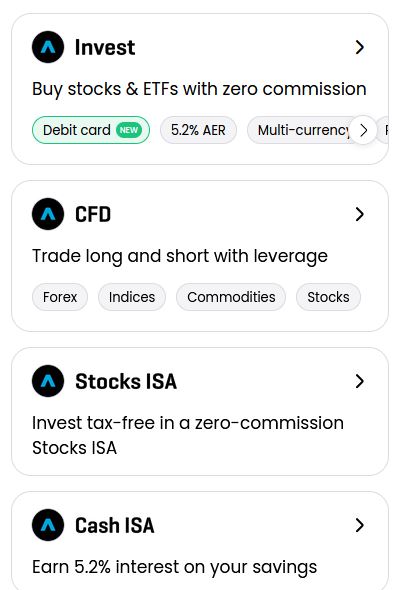
You will also need to indicate the type of account you want from the options available (see screen capture below).

Trading 212 accounts

As you will see, the four account types on Trading 212 are Invest, CFD, Stocks ISA and Cash ISA. You can apply for any or all of these if you like.

CFD stands for Contract for Difference. CFDs are quite complex financial instruments and unless you know what you’re doing I recommend giving them a miss.

If you just want the free share my suggestion would be to tick the Stocks ISA box. An ISA is, of course, a tax-exempt Individual Savings Account. As from April 2024 you can open any number of ISA accounts in a year as long as you don’t exceed your annual £20,000 allowance.

If you have already used up your entire £20,000 this year, you should choose Invest instead to open a general investment account without any tax benefits. Obviously if you don’t want a Stocks ISA with Trading 212 for any reason, you can choose this option as well.

  • For more information about the Trading 212 Cash ISA, see my review here. Be aware that you must open either an Invest account or a Stocks ISA account to qualify for a free share. Of course, there is nothing to stop you opening a Cash ISA account as well, but my recommendation would be to open an Invest or Stocks ISA account first.

Getting Your Free Share

There is one more step you will need to take in order to get your free share. You will need to deposit a minimum of £1 into your account. There are various ways you can do this, but i just used my debit card. There is no obligation to invest the £1 (or whatever you choose to deposit) and if you wish you can withdraw it once your free share has been credited.

The next business day you should receive an email confirming that a free fractional share has been added to your account. As mentioned above, this is allotted at random. If you’re lucky you might get one worth up to £100. Even if you get a less valuable one, though, it’s still a share for free. If you choose to keep it, it may rise in value. There may also be dividends payable in future (and credited to your account).

Selling Your Share

You can’t sell your share immediately. You have to wait three business days before doing so, but it is then just a matter of clicking the Sell button on your member’s dashboard.

The money will be credited to your Trading 212 account but you will have to wait 30 days before withdrawing it. So there may be a case for waiting to see if your share’s value goes up in that time. Of course, it could also go down!

In my case, I received a free share in the Ford Motor Company worth just under £8 at the time. Obviously this wasn’t as exciting as I might have hoped, but it was still – in effect – free money for almost no time or effort 😀

How Safe Is Trading 212?

Trading 212 is registered in England and Wales and authorized and regulated by the Financial Conduct Authority. In addition, all clients’ funds are kept separately in segregated bank accounts which are covered by the Financial Services Compensation Scheme. So even if the company itself were to go broke, any cash in your account would be protected up to a value of £120,000.

Of course, the FSCS guarantee doesn’t apply to the value of your stocks and shares, which can go down as well as up. All investments carry a risk of loss, although in the case of your free share you can never lose any more than the original cost, which was of course zero!

Referral Scheme

Any Trading 212 member can also refer new members while this offer is on. In that case, both you and the person concerned will receive one free fractional share worth up to £100. Obviously, the links in this blog post include my referral code – so if you register and get a free share, I will receive one also. Under the terms of the current offer you can get up to five free shares in this way. Five is the limit per person. Although you can still refer new members who will get a free share after this, as a referrer you won’t receive one as well. If and when the offer reopens in future, you will be able to refer more new members and get free shares again.

Final Thoughts

I first heard about Trading 212 a while ago, but wasn’t initially sure whether it was legit and here for the long term. And I thought the free share offer was, frankly, too good to be true. However, my own experiences have been entirely positive. My original free share in the Ford Motor Company was credited the next business day as promised and I received an email notifying me about it.

I can log in to my Trading 212 account any time to see how my Ford share is doing. I have also collected a few other shares from referrals. These include a share in AMD (the semiconductor company), which is currently worth an impressive £152.69, and one in Nike, which is worth £72.48. I still have my original Ford Motor Company share and it has risen in value to £8.75. I have also received several dividend payments from them. I haven’t sold any of my free shares yet but could of course do so any time I choose. I am not in any rush, as Trading 212 do not impose any platform or inactivity fees. 

Although in this post I have focused on the free share offer, Trading 212 is worth considering as a share-dealing platform too. In particular, the fact that it’s fee-free and commission-free means it is well suited for people who are dipping a toe in stocks and shares investment for the first time. By contrast, the dealing fees and commissions charged by some other share-trading platforms can make small share purchases prohibitively expensive. This review by Money Savvy Daddy looks at the pros and cons of Trading 212 as a share-dealing platform in a bit more detail.

In conclusion, I hope this post has inspired you to consider registering with Trading 212 to claim your free share. If you do, I hope you get a valuable one! Please let me know what share you receive in a comment below. And, as always, any other comments or questions are very welcome too.

  • Don’t forget, the current free share offer ends on Tuesday 28th April 2026.

Disclosure: The links in this post include my referral code. If you click through and register as described above, I will receive a free share (as will you). Please note also that I am not a qualified financial adviser and nothing in this post should be construed as individual financial advice. Everyone should do their own ‘due diligence’ before investing and seek advice from a qualified financial adviser if in any doubt how best to proceed. All investment carries a risk of loss (although not in the case of free shares, obviously).

This is an update of my original post about this special offer.

If you enjoyed this post, please link to it on your own blog or social media:
New Trading 212 Offer - Get a Guaranteed £25 Cash!

New Trading 212 Offer – Get a Guaranteed £25 Cash!

This offer is now closed

If you’ve been thinking about dipping your toes into investing – or you’re just after a quick cash boost at this expensive time of year – there’s a new Trading 212 offer on the table that’s worth checking out.

There is a £25 welcome reward for new UK customers who sign up and complete a few simple steps with Trading 212. Note that this is a limited-time offer that closes on 20 January 2026.

💰 What’s the Offer?

Trading 212 is currently running a limited-time promotion in the UK where new customers can earn a £25 cash reward by:

  1. Signing up for a Trading 212 Invest account using a referral link (like mine below)

  2. Verifying your identity

  3. Depositing funds and ordering a free Trading 212 card

  4. Using the card to make 3 transactions of £5 or more each within 10 days of opening your account

Once those conditions are met, you get £25 in cash credited to your account – and you can use that money however you like!

👉 Click on my referral link!

📝 How It Works (Step by Step)

Here’s a breakdown of what you need to do if you want to take part in this offer:

📌 Step 1: Sign Up
Click through my referral link and register for a new Trading 212 Invest account (UK residents only, new users only).

📌 Step 2: Verify Your Account
Trading 212 requires standard ID checks (passport, driving licence, address details, etc.). This helps satisfy regulatory “Know Your Customer” requirements.

📌 Step 3: Deposit Funds
Add at least £1 to your Trading 212 account – although you may want to deposit a bit more so you can do Step 4 straight away as well.

📌 Step 4: Order & Use Your Card
Order the free Trading 212 card and make three transactions of £5 or more – these can be everyday purchases you’d make anyway.

📌 Step 5: Get Your £25
After you meet the criteria, your £25 reward should be credited within a few business days. (You will have to wait 30 days before you can withdraw it.)

💷 What Is the Trading 212 Card?

As part of this offer, you need to order and use the Trading 212 card. So what exactly is it?

The Trading 212 card is a free debit card (physical and virtual) linked directly to your Trading 212 Invest account. It allows you to spend money held in your account just like you would with a normal bank debit card. Here is a quick summary of how it works…

  • Linked to your Trading 212 balance
    Any uninvested cash in your Trading 212 account can be used for card payments.

  • Everyday spending
    You can use the card in shops, online, and via contactless payments, just like a standard debit card.

  • No need to invest
    You don’t have to buy shares or funds to use the card. You can simply deposit money and spend it.

  • Free to order
    There’s no charge to order the card, and it’s managed through the Trading 212 app.

  • UK and overseas use
    The card can be used abroad, making it handy for travel or online purchases from overseas retailers (although exchange rates and fees can vary, so always check the latest terms).

Even after the bonus is paid, some people choose to keep the card as a secondary spending card, while others simply withdraw their money and stop using it. There’s no obligation to keep spending with it long term.

As always, it’s worth keeping an eye on Trading 212’s terms and conditions, as card features and fees can change over time.

💡 Why This Is a Good Deal

This is a no-brainer for most people because:

  • You don’t need to invest in stocks and shares to earn the £25 – just make normal card purchases you were planning to do anyway.

  • The minimum effort required is low: three card payments within 10 days.

  • You can withdraw the bonus cash after a short delay and spend it or reinvest it however you choose.

🧠 Things to Know

  • Offers like this can end or change at any time – so if you are interested, it’s worth acting sooner rather than later.

  • This is different from Trading 212’s free share promotion, which exists separately and offers up to £100 in free shares for new users. I discussed this offer in a separate blog post. Note that the Trading 212 free share offer is not available at the time of writing and I don’t know when (or if) it will return.

  • You must use a referral link to qualify for the £25 bonus.

  • You must also open an Invest account to qualify. A Stocks ISA, Cash ISA or CFD account won’t work (though you can open any of these subsequently).

📌 Final Thoughts

If you’ve been on the fence about trying out a stock trading or investment app, this £25 welcome reward from Trading 212 is a genuinely easy way to benefit from signing up. It doesn’t require any complicated investing – you can simply earn the bonus and decide what comes next. Just be sure to follow the steps above carefully and meet all the qualifying requirements.

  • And don’t forget that this limited-time offer closes on 20 January 2026.

As always, if you have any comments or questions about this post, please do leave them below.

Disclosure: If you take up this offer via my referral link, I will also receive a cash bonus for introducing you. The £25 cash bonus is guaranteed if you follow the steps set out above. If you choose to reinvest this money, however, be aware that – as with all investing – there is a risk of loss if you put the money into equities (stocks and shares). You should always do your own “due diligence” before investing and seek advice from a qualified financial planner/adviser if in any doubt how best to proceed.

If you enjoyed this post, please link to it on your own blog or social media:
My Top 20 Posts of 2025

My Top 20 Posts of 2025

As is customary for bloggers at this time of year, here are the top twenty posts on Pounds and Sense in 2025, based on comments, page-views and social media shares. They are in no particular order. I have excluded any posts that are no longer relevant.

I hope you will enjoy revisiting these posts, or seeing them for the first time if you are new to PAS.

All posts in the list below should open in a new tab/window when you click on the link concerned.

  1. The Pros and Cons of Investing for Dividends
  2. From Saving to Spending – The Retirement Mindset Shift
  3. Guest Post: How to Publish Your Book (And Earn Royalties!)
  4. What Are ETFs and How Can You Invest in Them?
  5. How to Save Money on Rail Fares With Split Ticketing
  6. Where to Get Pension Advice
  7. How Social Tariffs Can Help You Save on Household Bills
  8. What Are Bonds and How Can You Invest in Them?
  9. The Many Benefits of Learning a Musical Instrument in Later Life
  10. How to Invest in Gold in the UK
  11. Nutmeg Launches New Income Investing Portfolios
  12. How Over-50s Can Use Vinted to Save and Make Money
  13. Could a Smart Thermostat Save You Money?
  14. Here’s Why I’m not a Fan of FIRE
  15. How Often Should You Really be Washing Your Bedding? A Microbiologist Explains
  16. How to Prepare for Winter Blackouts
  17. How to Save Money on Your Heating Bills This Winter
  18. Annuity or Drawdown? Weighing Up Your Pension Income Options After 50
  19. Why Growing Numbers of Over-50s Are Buying Park Homes
  20. What Are Money Market Funds and Who Should Invest in Them?

I’ll be taking a break from blogging over the festive period (though I’ll still be around on X/Twitter and Facebook). I’ll therefore close by wishing you a Very Merry Christmas (strikes and cost-of-living crisis permitting) and for all of us a brighter, more prosperous new year 🍾

If you have any comments or questions, of course, feel free to leave them below as usual.Xmas tree


If you enjoyed this post, please link to it on your own blog or social media:
How Over-50s Can Use Vinted to Save and Make Money

How Over-50s Can Use Vinted to Save and Make Money

If – like many Pounds and Sense readers – you’re over 50, you may not have come across Vinted before – but chances are your children or grandchildren have!

This fast-growing online marketplace has become hugely popular among younger people for buying and selling clothes, shoes and accessories. Yet it’s not just for the younger generations. Vinted offers some real opportunities for older individuals too – both men and women – to declutter wardrobes, make extra money, and save on clothing costs.

What is Vinted?

Vinted is a website and mobile app that lets people buy and sell second-hand clothing and accessories directly to one another. It’s a bit like eBay, but focused specifically on fashion and lifestyle items.

Unlike eBay, though, Vinted doesn’t charge sellers any fees. You keep 100% of the sale price, while buyers pay a small fee for protection (covering refunds if something goes wrong). This makes it a simple and transparent way to trade unwanted items.

How Vinted Works

  • Selling: You list your unwanted clothes, shoes, or accessories by uploading photos, writing a description, and setting a price. When someone buys, you’ll be sent a prepaid postage label. All you need to do is package the item and drop it off at a collection point. Once the buyer confirms they’ve received it, the money is transferred to your Vinted wallet, ready to withdraw.

  • Buying: You can browse thousands of items, from high-street bargains to premium brands. Prices are often a fraction of what you’d pay new, and you can even make offers to negotiate a better deal.

Why Vinted Appeals

For the over-50s, Vinted offers several key attractions:

  1. Decluttering with purpose – Many of us have wardrobes full of clothes we no longer wear. Vinted allows you to turn them into extra cash instead of sending them to the charity shop or letting them gather dust.

  2. Saving money – If you’re looking for quality clothes without the price tag, Vinted is full of bargains. It’s not unusual to find items barely worn, or even brand new with tags.

  3. Sustainability – Buying second-hand is an environmentally friendly choice, reducing waste and giving clothes a second life.

  4. Ease of use – The app is designed to be simple, with clear instructions and prepaid postage, making it less daunting than other online marketplaces.

  5. For men as well as women – Although many users are women, Vinted has a huge range of men’s clothing and accessories too. Whether it’s a hardly-worn suit, branded jeans or sportswear, there’s plenty on offer.

Examples of Bargains on Vinted

To give you an idea of what’s out there, here are some typical deals you might come across on Vinted:

  • High street brands – Marks & Spencer blouses or trousers for £5–£10, compared with £25–£40 new.

  • Designer bargains – A barely-worn Barbour jacket for £60, versus £200+ brand new.

  • Footwear – Men’s Clarks leather shoes for under £20, often with very little wear.

  • Occasion wear – Ladies’ Phase Eight or Hobbs dresses for £25–£30, compared with £100+ in the shops.

  • Sports gear – Branded sportswear like Adidas, Nike, or Under Armour for £5–£15, perfect for the gym or walking.

  • Accessories – Leather handbags, belts, or scarves for £10–£20, often still in excellent condition.

It’s not uncommon to find items that are “BNWT” (brand new with tags) – meaning they’ve never been worn at all. Many people sell clothes that don’t fit, were impulse buys, or were received as gifts, making Vinted a treasure trove for bargain hunters.

Tips for Spotting the Best-Value Listings

With so many items available on Vinted, it pays to know how to separate the true bargains from the rest. Here are some simple tips:

  • Check seller ratings – Every seller has a profile showing reviews from previous buyers. Stick to sellers with consistently positive feedback to ensure reliability.

  • Look for “bundle deals” – Many sellers offer discounts if you buy two or more items from them. This is a great way to cut down on postage costs as well.

  • Search by brand and size – If you have favourite brands (e.g. M&S, Next, or Barbour), searching directly for them can quickly reveal hidden gems. Filtering by your size saves time too.

  • Use “new with tags” filters – If you prefer unworn clothes, you can filter results to show only brand new items, often at a fraction of the shop price.

  • Compare prices – Before buying, check the going rate for similar items. Some sellers price higher, while others just want to clear space and will accept offers.

  • Check item photos carefully – Clear, well-lit photos from different angles are a good sign the seller is genuine. Blurry or limited pictures may mean the item isn’t in the best condition.

  • Don’t be afraid to make an offer – Buyers can often negotiate, especially if an item has been listed for a while. A polite lower offer is sometimes accepted straight away.

Closing Thoughts

Vinted might be better known among 20- and 30-somethings, but there’s no reason over-50s shouldn’t benefit as well. Whether you’re looking to make some extra money, save on clothes shopping, or simply embrace sustainable fashion, Vinted offers a friendly and straightforward way to do it.

If you haven’t tried it yet, it could be well worth downloading the app and having a look around. You may be pleasantly surprised at just how easy it is to sell your old clothes – and perhaps bag yourself a bargain or two along the way.

Many thanks to my sister Annie for suggesting this article!


If you enjoyed this post, please link to it on your own blog or social media:
Your Guide to Freebies in the UK

Guest Post: Your Guide To Great Freebies In The UK

Today I have a guest post for you from my friend Carla on behalf of the FreeStuffSpot website.

If you like getting freebies delivered regularly, as Carla explains below, this is a site you definitely need to check out!


Imagine this: You’re sitting comfortably at home, watching a movie in your pyjamas, getting cosy with a nice cuppa, when the postman suddenly brings free beauty products to your home. Sounds wonderful, doesn’t it? It might even seem unreal. But I’m here to tell you that I’ve lived the dream. Let me help you learn about freebies.

I’m a huge fan when it comes to makeup. That’s been true as far back as I can remember, and it’s not likely to ever change. I could empty an endless bank account on makeup shopping, but sadly I don’t seem to have one of those. To keep my infinite appetite for makeup satiated, I always keep my eyes and ears open for ways to save money on the best beauty products. When I discovered that I could start getting free makeup sent straight to my home, I was more than a little interested. I was exhilarated.

You might not know this now, but there are many different makeup and beauty products sent to UK homes all the time, including free hair products, toiletries, perfume samples, and cosmetics. Think about it. You can try a current or new brand, all without spending any cash, or even leaving your home! Can it get better than that? Here are my insights about using FreeStuffSpot to get free makeup and beauty products on top of other freebies I already enjoy.

Why Are Beauty Brands Giving Free Stuff Away?

Businesses are always trying to get prospective customers to try out their products or brands in exchange for some feedback. These arrangements bypass the middlemen that normally do market research. Given how many businesses are moving towards the social media giants, namely Facebook and Twitter/X at least, they now can speak directly to consumers while listening to their concerns.

They can also reach out to many new customers at the same time.

So How Do You Get Free Beauty Products Of Your Own?

It’s not hard. I just registered for a newsletter from FreeStuffSpot, guaranteed to have nine brand-new freebies every single day. This newsletter covers things from free samples, competitions, and just generally free stuff. The day after I signed up for the newsletter, I got an email with giveaways, offers, and even restaurant vouchers.

What Other Kinds Of Freebies Are Available?

The website has more categories than just the beauty products I love and adore. You can find food and beverage, kids and baby stuff, free pet things, and freebies for just about anyone in your home. You don’t want to keep such a great thing to yourself, right?

FreeStuffSpot doesn’t just do freebies. They also have tricks to save money, advice on how to make money, and tips about getting more savvy in terms of money overall. The next time I plan to eat out, I’ll be using the page for restaurant vouchers for sure. The free days out category is great for us as a family, since we have young ones that love being out where it’s open. We can have a fun family day outside our home without emptying our bank account.

I’ve also joined the fan group for FreeStuffSpot enthusiasts. This perky community is a place where members post pics of the freebies they get. Sure, some of it is bragging, but it’s also about letting everyone else know about freebies and offers they don’t yet know about.

Just How Easy Is It To Use FreeStuffSpot?

If you want to start enjoying freebies, it’s very simple:

Visit the website at FreeStuffSpot and register to receive their daily newsletter full of freebies.

Browse the website and then apply for freebies you like the sound of.

Then just wait for the freebies to show up at your home!

My Verdict Is In…

I’ve really enjoyed looking through FreeStuffSpot since I started writing online. I’ve already got a perfume sample that I fell in love with, to the point of buying the actual full-size product. I’ve also got a tea towel, face wipes, and even teabags!


Many thanks to Carla for her enthusiastic endorsement of FreeStuffSpot. If you’re a freebies fan I hope you will take a moment to check out the site for yourself.

As always, if you have any comments or questions about this article, please do post them below.

This is a sponsored guest post.


If you enjoyed this post, please link to it on your own blog or social media:
Why a Financial Order is Essential on Your Divorce

Guest Post: Why a Financial Remedy Order is Essential on Your Divorce

Today I’m sharing a guest article on a subject nobody likes to think about, but one that could be crucial to ensuring your financial security in later life..

Sadly, growing numbers of older people are seeing their marriages break down and having to undergo the painful process of divorce. Even if relatively amicable, this is likely to be stressful and emotionally exhausting. And – even worse – any mistakes you make now can have serious consequences for your finances, both now and into the future.

My guest today, Victoria Fellows, a partner and head of family at the Birmingham office of HCR Law, knows this very well. And she has some important advice for anyone who may find themselves in this situation.

Over to Victoria then…


Divorce rates among individuals aged 50 and over – often referred to as ‘silver splitters’ – have been on the rise in the UK over recent decades, with the number of over-60s legally separating doubling since the 1990’s. This trend contrasts with the decline in divorce rates across younger age groups. It can be put down to various factors, such as longer life expectancy, empty nest syndrome and the increasing numbers of financially independent women who are able to support themselves outside marriage.

At the end of 2024, the Law Commission published a scoping report on financial remedies on divorce. This indicated that 60% of the couples who divorced in 2023 had not properly dealt with their finances upon divorce, sometimes thinking it was not worth obtaining an order from the court as they believed they had no assets justifying the expense of formally separating their finances.

So while these couples are now divorced, both parties remain vulnerable to a financial claim application from their former spouse at any point until they remarry or die. The case of Vince v Wyatt illustrated why this was a mistake. The parties had nothing when they divorced and did not bother to get a clean break order. Post separation, Mr Vince became a multi-millionaire through his own business activities. Mrs Wyatt was allowed to bring financial claims against him 20 years after the divorce, resulting in a significant financial award being made in her favour.

Resolving financial issues during a divorce is therefore crucial for both immediate stability and long-term security. This is especially true for silver splitters undergoing ‘grey divorce’ – another term referring to divorces in later life. ​Unlike their younger counterparts, they will not have years of working life ahead of them to build up savings or pensions. It is therefore crucial that the marital assets are divided fairly to help ensure that both spouses have financial security during their retirement. There is also the possibility that in their fifties or sixties, one spouse will come into a substantial inheritance post-divorce which, without a financial remedy order, the former spouse could make a claim on in the future.

So What Do Financial Agreements Look Like?

As a result of being married, both parties have a number of financial claims that they can make against each other. The orders that a court can make are as follows:

  • Orders for maintenance pending suit (‘interim’ spousal maintenance)
  • Periodical payments orders (spousal maintenance for joint lives, specific term and/or a nominal amount)
  • Lump sum orders
  • Property adjustment orders
  • Pension sharing orders

In deciding whether to make any of the above orders, the court must consider all the circumstances. These will include:

a) The income, earning capacity, property and other financial resources of each party or what they are likely to have in the foreseeable future, including any increase in that earning capacity.

b) The financial needs, obligations and responsibilities which each of the parties to the marriage has or is likely to have in the foreseeable future.

c) The standard of living enjoyed by the parties before the breakdown of the marriage.

d) The age of each party to the marriage and duration of the marriage.

e) Any physical or mental disability of either party to the marriage.

f) The contributions which either of the parties have made or are likely to make in the foreseeable future to the welfare of the family, including any contribution by looking after the home or caring for the family.

In every case the court also has to consider whether a ‘clean break’ is appropriate. A clean break is where the parties’ finances are arranged to allow them to separate without any further financial responsibility for each other. While the court must give consideration to this, it does not mean that there can or should be a clean break in every case. This will necessarily depend upon the other factors involved.

How Are Agreements Reached?

There are a number of ways in which financial matters can be resolved:

  1. Discussions directly between the parties if they are able to discuss and agree a financial settlement that both of them are comfortable with.
  2. Mediation where both parties try to reach agreement between themselves with the assistance of a trained mediator.
  3. Negotiation through solicitors. Each party can appoint a solicitor to negotiate on their behalf. This approach is suitable for complex financial situations or when mediation isn’t appropriate.
  4. Other forms of dispute resolution. Arbitration and collaborative law are further alternatives. Arbitration is effectively a ‘private’ process that largely mirrors court proceedings but where the parties have more control in particular in respect of timescales. Collaborative law is a separate process which may only be suitable in certain circumstances. Each person appoints their own collaboratively trained lawyer and both parties and their lawyers meet together to work things out face to face.
  5. Financial remedy proceedings. If all other options fail, it may be necessary for formal court proceedings to be issued to resolve financial matters. An application for financial remedy can only be commenced after a Divorce Petition has been filed with the court. The proceedings usually involve attending court on three occasions. If financial settlement is not agreed at either of the initial two hearings, or in between them, then a final hearing will be listed at which the Judge after hearing evidence makes a decision that is binding on the parties. This would be the most cost-prohibitive option and can end with resolution of financial matters being taken entirely out of the parties’ hands.

Top Tips to Make the Process Easier

Seek professional advice as soon as possible. Consult with financial advisors and solicitors who are experienced in later-life divorce and can help navigate complex financial issues and ensure a fair settlement is not only reached but also incorporated into an order to be approved by the court. ​

Enter into full financial disclosure to ensure that all assets are disclosed and taken into consideration when looking at overall settlements that plan for short- and long-term financial security. ​This will take time, so start sorting out your paperwork early. This is likely to include bank statements, pension records and documents relating to any other investments you might have, e.g. premium bonds, stocks and shares, rental income, and so on.

Remember to consider wills and estate planning as divorce does not automatically revoke a will. It’s crucial to update wills to reflect new circumstances and ensure assets are distributed according to current wishes. ​

Divorcing later in life presents unique challenges, but with careful planning and professional guidance, it is possible to navigate the process and achieve a fair and secure financial settlement.

Victoria Fellows (pictured, below) is a partner and the head of the family team of the Birmingham office of HCR Law.

HCR Law Victoria Fellows

Many thanks to Victoria and her colleagues at HCR Law for an eye-opening article on this important topic. If you are unfortunate enough to find yourself in this situation, devoting some attention to financial planning now can potentially save you and your family a lot of grief in the future.

As always, if you have any comments or queries about this article, please do leave them below.


If you enjoyed this post, please link to it on your own blog or social media:
How to Publish Your Book

Guest Post: How to Publish Your Book (and Earn Royalties!)

Today I’m pleased to bring you a guest post from my friend and near-neighbour Sally Jenkins, a successful published fiction and non-fiction author (check out her latest novel Out of Control – a later-life romance perfect for summer holiday reading!).

Many older people (in particular) harbour an ambition to write a book and make money from it. If that includes you, I hope you will find Sally’s article of interest. In it she sets out the main options for getting your book published, and shares some valuable resources she has found.

Over to Sally then…


Everyone has at least one book in them, or so the saying goes. It might be a thriller, a memoir, a collection of poems or short stories, a ‘how-to’ non-fiction manual or something completely different. Finishing that manuscript is a laudable achievement in itself but don’t stop there. It takes guts to send any literary work out into the public arena; however, doing so can lead to an additional passive income stream in the form of royalties that continue to hit your bank account long after you’ve finished writing.

There are three main routes to publication that you might like to consider:

Traditional Publishing

Traditional publishers come in all shapes and sizes, from the giants like Penguin and Hachette to far smaller, less well-known companies who publish in e-book format only.

Traditional publishers bear all the costs of publishing a book, meaning there is no financial risk for the author. These costs may include editing, proofreading, cover design, marketing and the printing of physical copies. The author contributes nothing to these costs and receives a small royalty for each copy of the book sold.

The competition to be signed by a traditional publisher is fierce and only a very small number of authors are taken on. The larger companies will only accept manuscript submissions via a literary agent but it is possible for authors to submit directly to many of the small publishing houses. There is nothing to lose by trying this traditional route but be prepared to develop a thick skin to deal with the probable rejections. A good place to start is an up-to-date copy of the Writers’ and Artists’ Yearbook, which contains a comprehensive list of publishers and literary agents.

Partnership Publishing

In the partnership publishing model, the publisher and the author share the financial risk of publishing the book. This means the author will be asked to make a financial contribution towards the publishing costs. What proportion and how much this means in monetary terms will vary from company to company, so it’s worth approaching more than one partnership publisher and requesting explicit information about their offering. In return for contributing to the publishing costs, the author can expect to receive a higher percentage of royalty payments than under the traditional model.

However, care is needed when choosing a partnership company to work with – there are many rogue or ‘vanity’ publishers out there who will publish anything and charge a lot of money for very little service. Ensure that the company you choose has a manuscript selection process – even if this means you might face rejection as in the traditional model. A true partnership publisher will only publish books that it thinks have merit and will sell. Even so, there is no guarantee that you will recoup all or any of your publishing costs via royalties. Do not spend more than you can afford to lose.

The Writers’ Beware website has a section devoted to avoiding vanity publishers.

Self-Publishing

Authors who self-publish carry all the financial risk themselves but retain all the royalties (bar the amount taken by distribution platforms such as Amazon). It is possible to self-publish on Amazon at no cost or you might choose to spend hundreds of pounds depending on what services you buy in. The main services requiring financial outlay will be:

Cover Design – don’t attempt this yourself unless you are a graphic designer with a knowledge of the book covers currently selling in your genre. An amateur cover design will be obvious and off-putting to potential readers.

Editing – a novel (particularly a first novel) may benefit from a full structural edit. This will advise on plot, character development, pace etc. You might also want to consider a sentence level copyedit and/or proofread.

Formatting – some authors pay for this but, with a little patience, anyone who can use Microsoft Word can do this themselves.

Printing – there is no need to pay for a print run of books and hold them in stock.

Amazon (and other companies) use print-on-demand (POD) technology. This means that when someone orders a copy of your book it is printed individually and sent direct to the customer. Authors can also order copies at a reduced rate to sell direct to friends, family or the public at large.

The Alliance of Independent Authors has a directory of reputable editors, cover designers, proofreaders, etc. The directory also lists companies who can offer a complete self-publishing service for authors who don’t want to do any of the leg work – but this can be very expensive. As with partnership publishing, never spend more than you can afford to lose.

KIndle Direct Publishing for Absolute Beginners If you would like to know more about low-cost self-publishing via Amazon, the e-book Kindle Direct Publishing for Absolute Beginners (pictured, left) offers a good introduction. If you don’t currently read on Kindle, download the free Kindle app to your laptop, tablet or smartphone.

Whichever publishing route you choose, enjoy the journey and the royalties!

Sally JenkinsBio: Sally Jenkins (pictured, right) currently writes uplifting and hopeful novels for the traditional publisher Choc Lit (part of Joffe Books). She has also had a novel published in partnership with The Book Guild and has self-published several books via Amazon KDP. When not at the keyboard, she feeds her addiction to words by working part-time in her local library and running two reading groups. Sally can also be found walking, church-bell ringing and enjoying shavasana in her yoga class. Follow her writing blog at https://sally-jenkins.com/.


If you enjoyed this post, please link to it on your own blog or social media:
How to Make Money from Stoozing

How to Make Money From Stoozing

Having fallen out of favour for a while due to a lack of suitable opportunities, the sideline-earning system of stoozing is back in the spotlight again!

Stoozing is a financial strategy that allows individuals to profit by leveraging 0% interest credit card offers. By using the interest-free periods, you can earn interest on borrowed funds without incurring additional costs.

Here’s a guide to effectively implementing a stoozing strategy…

1. Understanding Stoozing

Stoozing involves borrowing money through a credit card offering a 0% interest period and depositing that money into a high-interest savings account. The goal is to earn interest on the borrowed funds and repay the credit card balance before the interest-free period ends. This method requires careful planning and discipline to ensure profitability.

2. Steps to Implement Stoozing

Select a Suitable 0% Interest Credit Card

Begin by researching credit cards that offer a 0% interest period on purchases or balance transfers. Opt for cards with the longest interest-free durations to maximize potential gains. Ensure you understand any associated fees, such as balance transfer fees, which could impact your overall profit. A useful resource for tracking down cards with 0% interest-free offers can be found on the popular MoneySavingExpert website.

Use the Credit Card for Everyday Purchases

Instead of using your debit card or cash, utilize the 0% interest credit card for daily expenses. This approach allows your regular income to remain in your bank account. This money can then be transferred to a high-interest savings account. Note that you should never withdraw cash directly from your credit card as you will be charged interest on this and it may also adversely affect your credit score (see below).

Deposit Funds into a High-Interest Savings Account

Transfer the money that would have been used for purchases into a high-interest savings account. This strategy enables you to earn interest on funds that would otherwise have been spent. Regularly monitor interest rates using a platform such as MoneySuperMarket to ensure you’re getting the best possible return on your savings.

Make Minimum Monthly Payments

It’s essential to make at least the minimum monthly payments on your credit card to maintain the 0% interest offer. Setting up a direct debit can help prevent missed payments, which could result in losing the interest-free benefit.

Repay the Full Balance Before the 0% Period Ends

Before the end of the 0% interest period, ensure you repay the entire credit card balance using the funds in your savings account. The difference between the interest earned and any fees paid represents your profit.

3. Example of Potential Earnings

Let’s say you obtain a 0% interest credit card with a 24-month interest-free period and a credit limit of £5,000. You deposit the full £5,000 into a high-interest savings account offering an annual interest rate of 5%.

  • Year 1 Interest: £5,000 x 5% = £250
  • Year 2 Interest: £5,000 x 5% = £250
  • Total Interest Earned Over 2 Years: £500

Assuming there are no fees and you meet all minimum payments on time, your profit from stoozing would be £500, simply by leveraging the 0% interest period.

4. Calculating Potential Profits

To assess the potential gains from stoozing, you can use online calculators designed for this purpose. These allow you to enter details such as the balance to be transferred, the introductory period, balance transfer fees, and minimum monthly payments to estimate your profit. One such calculator is available at stoozing.com.

5. Risks and Considerations

While stoozing can be profitable, it’s important to be aware of potential risks:

  • Discipline Required: Failure to make minimum payments or repay the balance before the 0% period ends can lead to interest charges that outweigh your earnings.
  • Credit Score Impact: Applying for multiple credit cards can affect your credit score. It’s advisable to check your credit report before proceeding. And it may be best to avoid stoozing if you plan to apply for a mortgage or business loan in the near future.
  • Changing Interest Rates: Savings account interest rates can vary, potentially reducing your anticipated profits.
  • Fees: Be mindful of any fees associated with the credit card or savings account, as they can erode your gains.

6. Closing Thoughts

Stoozing offers a method to earn additional income by strategically using 0% interest credit card offers and high-interest savings accounts.

Success in stoozing hinges on careful planning, disciplined financial management, and a thorough understanding of the terms and conditions associated with the financial products involved. Always ensure that the interest earned exceeds any fees incurred to achieve a net profit.

As always, if you have any comments or questions about this post, please do leave them below.


If you enjoyed this post, please link to it on your own blog or social media:
My Top Twenty Posts of 2024

My Top 20 Posts of 2024

As is customary for bloggers at this time of year, here are the top twenty posts on Pounds and Sense in 2024, based on comments, page-views and social media shares. They are in no particular order. I have excluded any posts that are no longer relevant.

I hope you will enjoy revisiting these posts, or seeing them for the first time if you are new to PAS.

All posts in the list below should open in a new tab/window when you click on the link concerned.

  1. Planning a UK Holiday This Year? Here Are Some Ideas For You!
  2. Nutmeg Review: My Experiences with this Robo-Adviser Investment Platform
  3. Twenty Great Ways to Make Extra Money From Home
  4. What Are the Best Video Calling Tools for Older People?
  5. Review: The New Trading 212 Cash ISA
  6. Update on My eToro Virtual Portfolio – November 2024
  7. Here’s Why I’m Not Doing EDF Energy’s ‘Sunday Saver’ Challenge
  8. Here’s Why I Changed My Mind About EDF Energy’s ‘Sunday Saver’ Challenge
  9. How to Start Copy Trading With eToro
  10. Ten Tax-Free Ways to Boost Your Finances
  11. How to Harness the Power of Compounding
  12. What is AER and Why is it Important to Savers and Investors?
  13. How to Maximize Your Tax-Free Savings Interest
  14. How to Win Cash and Prizes in Online Competitions
  15. What Alternatives Are There to Heat Pumps?
  16. How to Reduce the Impact of Tax Rises in Rachel Reeves’ First Budget
  17. Can You Still Make Money From Matched Betting?
  18. How to Prepare for Winter Blackouts
  19. How to Save Money on Your Heating Bills This Winter
  20. One Key Lesson About Investing I Learned From My Dad’s Big Mistake

Thank you for being a valued Pounds and Sense reader. Just a reminder that you can get notifications every time the blog is updated via the Subscribe box on the right (or scroll down on mobile devices). You can also follow PAS on X/Twitter and Facebook and now on BlueSky as well 🙂

If you have any comments or questions about this post, of course, feel free to leave them below as usual.


If you enjoyed this post, please link to it on your own blog or social media: