
How to Save Money on Your Heating Bills This Winter

How to Save Money on Your Heating Bills This Winter

For older people in particular, heating bills can be among their biggest expenses. And it’s especially important for older people to keep warm, as getting chilled can lower your body’s resistance to infection and – in the worst cases – lead to hypothermia.

In addition, as you doubtless know, gas and electricity bills have gone up considerably in the last year or two. Growing numbers of older people are literally finding themselves in a position where they have to choose between heating and eating 😮

So today I thought I’d set out some ways you may be able to save money on your heating and energy bills. Following these tips could save you hundreds of pounds in the months and years ahead.

Switch Energy Supplier

It’s important to check regularly whether you could save money by switching to a different supplier and/or tariff. The quick and easy way of doing this is via a price comparison website. There are a number of these available, including GoCompare and USwitch.

Just visit the comparison site and enter a few details, including your current supplier and tariff and how much you spend on gas and electricity in the course of a year (it doesn’t have to be exact). The site will then display the best deals currently open to you and how much you might be able to save by switching to them. In most cases you can also start the switching process by clicking on the relevant link. Before you do, though, it’s worth checking on cashback sites like Quidco and Top Cashback, as some energy companies pay cashback via these sites to people switching their supply to them.

If you are one of the 1.1 million households who use oil for heating, you can save money by shopping around for suppliers too. Check out the oil price comparison service BoilerJuice. Type in your postcode and how many litres of heating oil you’re looking to buy, and BoilerJuice will show you quotes from suppliers covering your area.

Switching energy suppliers is generally quick and easy, and can save you hundreds of pounds a year at a stroke. In these challenging times, it should be high on your list of potential money-saving strategies this winter.

Get Financial Help

If you’re in certain priority groups, you may be able to get cash payments to help offset your energy bills.

Winter Fuel Payment is a one-off annual payment of ÂŁ100 to ÂŁ300 which was previously made to everyone over state pension age. Last year the new Labour government took the decision to cancel WFP for all but the very poorest pensioners (those in receipt of pension credit). Such was the outcry that they had to back-track, so now everyone over state pension age will receive the payment this winter. The only catch is that if you earn more than ÂŁ35,000 a year, you will be required to pay it back. See this article for more information.

In addition, those on certain welfare benefits (including Pension Credit, Income Support and Universal Credit) may be eligible for Cold Weather Payments. This is ÂŁ25 for any period of seven consecutive days when temperatures fall below zero. More information can be found on this page of the government website.

You may also be eligible for £150 off your energy bill under the Warm Home Discount Scheme. This is run by some (not all) of the energy companies. If you get the Guaranteed Credit element of Pension Credit you will qualify automatically. But if you’re on a low income and meet the energy supplier’s other criteria, you may also qualify. Contact your supplier directly for more information. The large energy companies such as EDF and British Gas all operate this scheme, but some of the smaller ones don’t. The Warm Home DIscount scheme for 2025/26 opens at the end of October 2025. More information can be found on the official website.

Finally, if you’re on a very low income, you may qualify for help from the Household Support Fund: This is money provided to councils by the government to assist pensioners and others on very low incomes. You will need to contact your local council to find out if you’re eligible.

More Top Tips

Here are some more ways you may be able to save money on your heating and energy bills.

  • Have your boiler serviced regularly, to ensure it is operating at peak efficiency.
  • If you have an old boiler that keeps breaking down, the time may have come to replace it. The Energy Saving Trust say that you could save up to up to 40 percent on your gas bill by installing a new ‘A’ rated condensing boiler with a programmer, room thermostat and thermostatic radiator controls.
  • Upgrading your insulation can also cut bills by reducing the amount of heat going to waste. Depending on your circumstances, you may be able to get a free boiler and/or insulation under the government’s Energy Company Obligation (ECO) scheme. You can apply for this via your energy company. Even if you’re not on a low income, you may be able to get a discount on home insulation, so it’s worth checking to see what’s available.
  • If your radiators aren’t heating up properly at the top, you may need to bleed them to release air in the pipes. Depending on the radiator, you may need a special key to do this or a flat-bladed screwdriver.
  • Turn down your thermostat by one degree ­- this can reduce your heating bill by up to 10%.
  • Ensure you don’t put furniture right in front of radiators, as this can block heat from entering the room.
  • Replace old light-bulbs with new energy-saving bulbs. The latest LED bulbs are just as bright as old incandescent bulbs and use a tenth of the energy. They last longer too.
  • Exclude draughts with heavy curtains and draught excluders by doors.
  • Turn off heaters in rooms you aren’t using and close the doors to keep heat in.
  • Place reflective foil behind radiators on exterior walls to bounce heat back into the room.
  • It can also help to clean behind radiators (using a brush such as this one) to remove dust and dirt.
  • Don’t leave electrical appliances on standby.
  • Wash clothes at 30 degrees and try to avoid using tumble driers. Hang washing outside whenever possible or place it over an airer.
  • Consider investing in a smart thermostat system such as Nest or Hive. This will give you precise, automated control over your heating system, allowing you to use just as much energy as you need and no more. See my blog post about smart thermostats for more information.
  • If your funds are limited and you have or develop a disability you may be able to get a Disabled Facilities Grant (DFG) from your local authority to pay for adaptations such as stairlifts.

By taking these steps you should be able to cut your heating and energy bills significantly this winter.

If you have any comments or questions about this post, as always, please do leave them below.

  • This is a fully updated version of my original post on this subject.



If you enjoyed this post, please link to it on your own blog or social media:
Annuiity or Drawdown?

Annuity or Drawdown? Weighing Up Your Pension Income Options After 50

As you approach retirement, one of the biggest financial decisions you’ll face is how to turn your pension savings into a reliable income.

Two of the main options are buying an annuity or using a pension drawdown strategy. Both approaches have pros and cons, and which is right for you will depend on your circumstances, priorities and attitude to risk.

It’s also worth noting that annuity rates are currently more generous than they have been for many years, thanks largely to higher interest rates. That makes annuities a more attractive choice today than they might have seemed just a year or two ago.

What is an Annuity?

An annuity is a financial product you buy with some or all of your pension savings. In return, the provider guarantees to pay you an income for life (or for a fixed period). The amount depends on your age, health and the options you choose, e.g. whether payments continue to a spouse after your death.

You may also opt for payments to be fixed or rise in line with inflation. The latter will reduce the amount you receive initially but may be beneficial in the longer term.

  • For a ballpark estimate of how much income an annuity may generate for you, check out this free calculator. It will give you a rough figure based on your age and the size of your pension pot.

What is Drawdown?

With drawdown (also called flexi-access drawdown), your pension savings remain invested and you take money out as needed. You have control over how much you withdraw and when. This is the method I am using to generate an income currently from my Bestinvest SIPP.

Annuity vs Drawdown: Comparison Table

Here’s how the two main ways to turn your pension savings into income compare at a glance:

Feature Annuity Pension Drawdown
Income security Guaranteed for life (or fixed term) Depends on investment performance and withdrawals
Flexibility Fixed once set up – limited changes allowed Very flexible – you choose how much and when to withdraw
Potential for growth None (income is fixed) Pension pot remains invested and can grow
Risk level Very low (no investment risk) Higher (subject to market fluctuations)
Inheritance potential Usually none unless special options chosen Remaining funds can usually be passed to beneficiaries
Inflation protection Optional – inflation-linked annuities start lower Depends on investment returns and withdrawal strategy
Health impact Poor health can mean higher income via “enhanced” rates Health does not affect drawdown income directly
Ongoing management None once purchased Requires regular monitoring and possible financial advice
Best suited for Those wanting guaranteed, worry-free income Those comfortable with risk and wanting flexibility
Current appeal Rates are now at their best for years due to higher interest rates Still popular for flexibility, but requires careful planning

Which Option is Right for You?

  • If you value certainty and peace of mind, an annuity (especially with today’s higher rates) may be appealing.
  • If you want flexibility, growth potential, and the ability to leave an inheritance, drawdown could be the better fit.
  • Many people now choose a blend of the two – using part of their pot to buy an annuity for essential expenses, and keeping the rest in drawdown for flexibility and growth.

You Don’t Have to Decide All at Once

It’s important to remember that this isn’t necessarily an “either/or” decision. Many people begin their retirement with pension drawdown, giving them flexibility in the early years when spending needs can vary. Later on, when they want more security and less investment risk, they can choose to convert some or all of their remaining funds into an annuity. This phased approach offers the best of both worlds — flexibility when you’re active and security later in life.

  • And other things being equal, the older you are when you take out an annuity, the more generous the terms you are likely to get.

Final Thoughts

There’s no “one size fits all” answer. Your choice will depend on factors such as your health, whether you have other sources of income, your attitude to risk, and how important leaving an inheritance is to you.

With annuity rates at their most attractive in years, now could be a good time to revisit them as part of your retirement planning. But drawdown remains a strong option for those seeking control and flexibility and the potential for growth.

Before making any decisions, it’s wise to get independent financial advice to ensure you choose the strategy – or mix of strategies – that best fits your goals.

Disclosure: I am not a qualified financial adviser and nothing in this blog post should be construed as personal financial advice. I highly recommend taking professional advice about your pension options before committing yourself to a particular course of action. This article lists a number of reputable advisory platforms and services for pension advice. Bear in mind that all investing carries a degree of risk.


If you enjoyed this post, please link to it on your own blog or social media:
Stay healthy this winter - the best supplements for cold and flu season

Stay Healthy This Winter: The Best Supplements for Cold and Flu Season

We are currently heading into the peak season for flu and other respiratory viruses (including Covid). These infections can be a nuisance at least. And – in the case of older people especially – they can sometimes be life-threatening.

While a balanced diet, regular exercise and adequate sleep remain the cornerstones of good health, certain supplements can provide an extra layer of protection. Here’s a guide to the best supplements to support your immune system during the colder months.


1. Vitamin D

Why it’s essential: With limited sunlight during UK winters, many people experience a drop in their vitamin D levels. This nutrient plays a crucial role in immune function and helps reduce the risk of respiratory infections.

How to take it: Public Health England recommends everyone consider a daily supplement of 10 micrograms (400 IU) of vitamin D during the autumn and winter months. Higher doses may be necessary for those with deficiencies, but consult a healthcare professional first.


2. Vitamin C

Why it’s essential: Vitamin C is known for its immune-boosting properties and its ability to reduce the duration and severity of colds. It’s also a powerful antioxidant that helps protect cells from damage.

How to take it: A daily dose of 500–1,000 mg is generally safe for most people. You can also pair supplementation with dietary sources like oranges, kiwi fruit and bell peppers.


3. Zinc

Why it’s essential: Zinc is vital for immune cell function and has been shown to shorten the duration of cold symptoms when taken early. It also helps your body fight off viruses more effectively.

How to take it: Lozenges containing 10–15 mg of zinc can be taken at the onset of a cold. Long-term supplementation should not exceed 25 mg daily unless advised by a healthcare professional.


4. Probiotics

Why it’s essential: A healthy gut microbiome supports immune function, and probiotics help maintain this balance. Some strains, like Lactobacillus and Bifidobacterium, are particularly effective in reducing the risk of upper respiratory tract infections.

How to take it: Look for a high-quality probiotic supplement with at least 1 billion CFUs (colony-forming units). Yogurt and fermented foods like kimchi and sauerkraut can also be excellent natural sources.


5. Elderberry Extract

Why it’s essential: Elderberries have been traditionally used to fight colds and flu. They are rich in antioxidants and may reduce the severity and duration of symptoms.

How to take it: Elderberry syrup or capsules are common forms. Follow the recommended dosage on the product label, and avoid taking it if you have an autoimmune condition without consulting a doctor.


6. Echinacea

Why it’s essential: Echinacea is a popular herbal remedy that may help prevent and reduce the severity of colds by boosting immune activity.

How to take it: Look for standardised extracts and follow the manufacturer’s dosage guidelines. Echinacea is best taken at the first sign of illness.


7. Omega-3 Fatty Acids

Why it’s essential: Omega-3s, particularly EPA and DHA found in fish oil, have anti-inflammatory properties that support immune function and overall health.

How to take it: Aim for 250–500 mg of combined EPA and DHA daily. Vegetarian or vegan options include algae-based supplements.


8. Garlic Supplements

Why it’s essential: Garlic contains allicin, a compound with antimicrobial and immune-boosting properties. Regular garlic intake has been associated with fewer colds and flu.

How to take it: Opt for aged garlic extract supplements or incorporate fresh garlic into your diet for the best benefits.


Final Tips

  • Consult a GP or pharmacist: Always check with a healthcare professional before starting new supplements, especially if you’re pregnant, nursing or on medication.
  • Choose quality brands: Look for products that are third-party tested for purity and potency. A wide range of supplements and vitamins is available from Amazon.
  • Maintain healthy habits: Supplements work best when combined with a balanced diet, regular exercise, good hygiene and adequate sleep.

By supporting your immune system with the right supplements, you can give yourself a better chance of staying healthy this cold and flu season.

  • This is a revised update of an annual post.


If you enjoyed this post, please link to it on your own blog or social media:
My Investments Update - October 2025

My Investments Update – October 2025

Here is my latest monthly update about my investments. You can read my September 2025 Investments Update here if you like.

I’ll begin as usual with my Nutmeg Stocks and Shares ISA. This is the largest investment I hold other than my Bestinvest SIPP (personal pension).

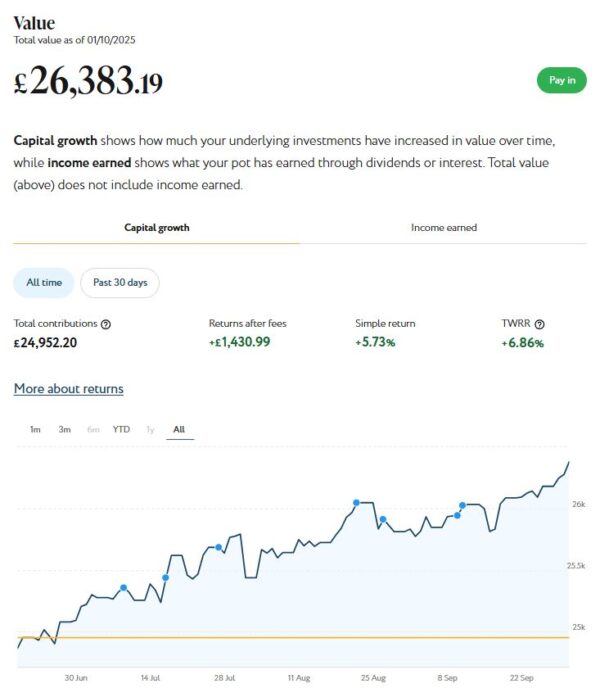
As regular readers will know, in June I transferred most of the money in my Nutmeg Fully Managed portfolio (just under £25,000) to a new Nutmeg Income Portfolio. I discussed this in detail in this recent post, but basically money in this port is invested to generate an income from share dividends and other sources. This is then paid monthly. Capital appreciation is targeted as well, but these portfolios are aimed primarily at older people (and others) who want/need their investment to generate a regular cash income.

In September my Nutmeg income portfolio generated ÂŁ78.72 of income, which was duly paid in to my bank account on 24 September 2025. That is down a bit on the ÂŁ134.03 I received in August, but it means I have now received a total (tax-free) income of ÂŁ212.75 to date. That is in line with Nutmeg’s projected annual return of just under 5% for income ports at my chosen risk level (five). Obviously it is too early to draw any significant conclusions from this, though.

My income portfolio also grew in value in September. It’s now worth ÂŁ26,383 compared with ÂŁ25,815 at the start of last month, a rise of ÂŁ568. As the screen capture shows, the port has actually increased by ÂŁ1,430.99 (5.73%) since I opened it in June. That’s good going, though I don’t suppose it will carry on like this indefinitely!

Nutmeg Income port October 2025

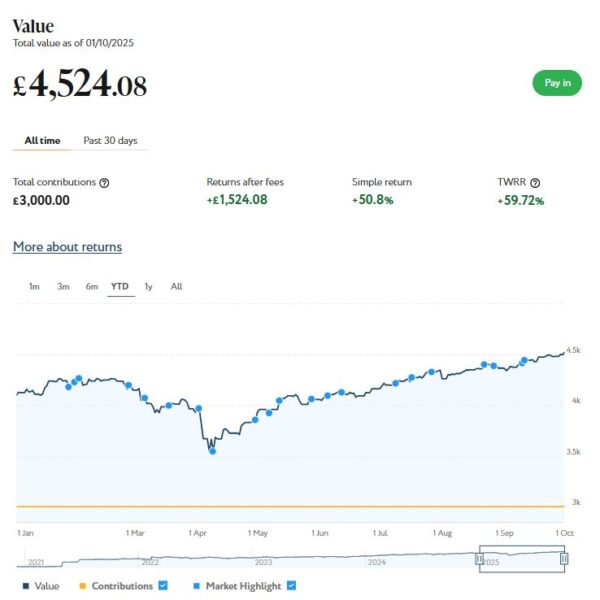
I still have a smaller, growth-oriented pot using Nutmeg’s Smart Alpha option. This is now worth £4,524 compared with £4,368 a month ago, a rise of £156. Here is a screen capture showing performance for the year to date.

Nutmeg Smart Alpha Oct 2025

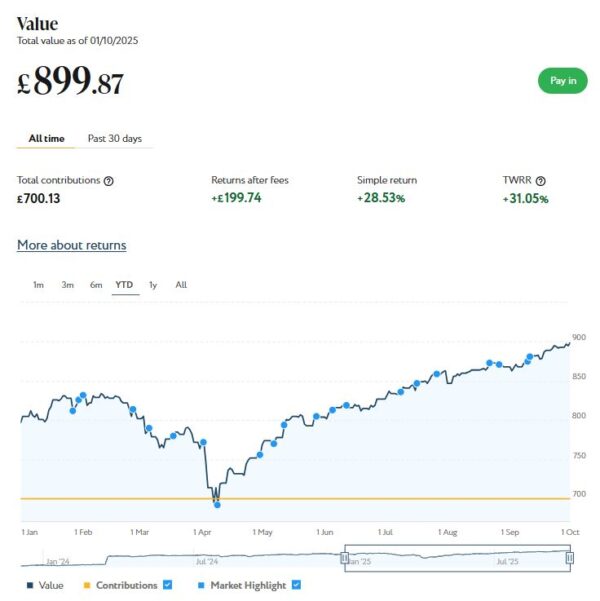
And at the start of December 2023 I invested £500 in one of Nutmeg’s thematic portfolios (Resource Transformation). In March 2024 I also invested a further £200 from referral bonuses (something I no longer receive for reasons I won’t bore you with). As you can see from the YTD screen capture below, this portfolio is now worth £900 (rounded up) compared with £868 last month, a rise of £32.

Nutmeg thematic port Oct 25

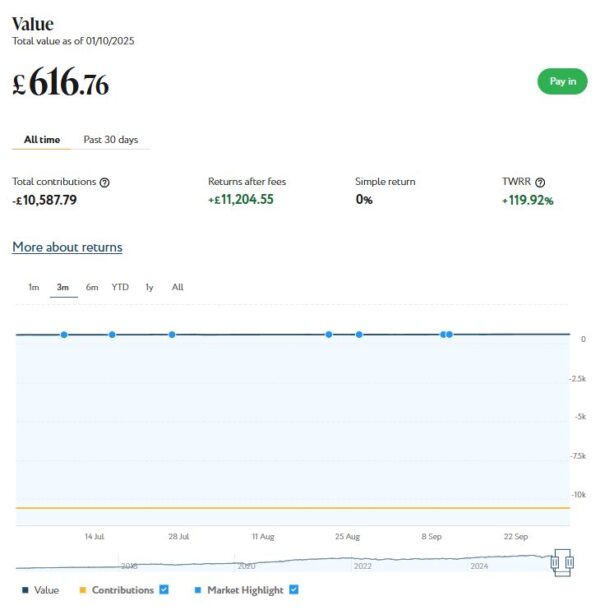
Finally, I still have a small amount left in my original Nutmeg Fully Managed portfolio. I have kept this largely for comparison purposes. This has increased in value from ÂŁ595 at the start of September to ÂŁ617 (rounded up) now, a rise of ÂŁ22.

Nutmeg Fully Managed port Oct 2025

As you can see, September was a pretty good month for my Nutmeg investments. Overall I was up by ÂŁ778 or 2.46%. In addition I did, of course, receive ÂŁ78.72 in income from my income portfolio.

Excluding income generated, the overall value of my Nutmeg investments is up by £1,996 since the start of 2025, so the April 2025 fall (caused largely by Trump’s tariffs) has now fully reversed. I am also up by £3,069 or 10.45% since the start of October last year, again excluding cash income received. All things considered, that’s not a bad result.

As I always have to say, some volatility is to be expected with stock market investments, but over the longer term they tend to even themselves out (and generally perform better than bank savings accounts, although that is never guaranteed). In general the worst thing you can do is panic and sell up when downturns occur (as happened in April this year). You are then crystallizing your losses rather than giving the markets time to recover. This is something I had cause to discuss in this blog post from earlier this year.

You can read my full Nutmeg review here. If you are looking for a home for your annual ISA allowance, based on my overall experience over the last nine years, they are certainly worth considering. They offer self-invested personal pensions (SIPPs), Lifetime ISAs and Junior ISAs as well.

Moving on, I also have investments with P2P property investment platform Assetz Exchange. As discussed in this post, the company has rebranded as Housemartin.

My investments with Housemartin continue to generate steady returns. Housemartin focuses on lower-risk properties (e.g. sheltered housing). I put an initial ÂŁ100 into this in mid-February 2021 and another ÂŁ400 in April. In June 2021 I added another ÂŁ500, bringing my total investment up to ÂŁ1,000.

Since I opened my account, my HM portfolio has generated a respectable ÂŁ273.80 in revenue from rental income. I have made a small net loss of ÂŁ19.02 on property disposals. Capital growth generally has slowed, in line with UK property values generally.

At the time of writing, 16 of ‘my’ properties are showing gains, 7 are breaking even, and the remaining 17 are showing losses. My portfolio of 40 properties is currently showing a net decrease in value of £43.52. That means that overall (rental income minus capital value decrease and loss on disposal) I am up by £211.26. That’s still a respectable return on my £1,000 and does illustrate the value of P2P property investments for diversifying your portfolio. And it doesn’t hurt that with Housemartin most projects are socially beneficial as well.

The net fall in capital value of my Housemartin investments is obviously a little disappointing. But it’s important to remember that until/unless I choose to sell the investments in question, it is largely theoretical, based on the latest price at which shares in the property concerned have changed hands. The rental income, on the other hand, is real money (which in my case I’ve reinvested in other HM projects to further diversify my portfolio).

To control risk with all my property crowdfunding investments nowadays, I invest relatively modest amounts in individual projects. This is a particular attraction of Housemartin as far as i am concerned. You can actually invest from as little as £1 per property if you really want to proceed cautiously.

  • As I noted in this blog post, Housemartin is particularly good if you want to compound your returns by reinvesting rental income. This effectively boosts the interest rate you are receiving. Personally, once I have accrued a minimum of ÂŁ10 in rental payments, I usually reinvest this money in either a new HM project or one I have already invested in (thus increasing my holding). Over time, even if I don’t invest any more capital, this will ensure my investment with Housemartin grows at an accelerating rate and becomes more diversified as well.

My investment on Housemartin is in the form of an IFISA so there won’t be any tax to pay on profits, dividends or capital gains. I’ve been impressed by my experiences with Housemartin and the returns generated so far, and intend to continue investing with them. You can read my full review of Assetz Exchange/Housemartin here and my article about the rebranding to Housemartin here. You can also sign up for an account directly via this link [affiliate].

In 2022 I set up an account with investment and trading platform eToro, using their popular ‘copy trader’ facility. I chose to invest $500 (then about £412) copying an experienced eToro trader called Aukie2008 (real name Mike Moest).

In January 2023 I added to this with another $500 investment in one of their thematic portfolios, Oil Worldwide. I also invested a small amount I had left over in Tesla shares.

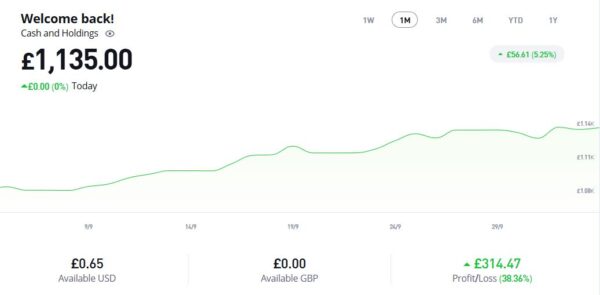
As you can see from the screen captures below, my original investment (total value ÂŁ888.36 in pounds sterling) is today worth ÂŁ1,135.00 an overall increase of ÂŁ246.64 or 27.76%.

  • Note: eToro now displays the value of investments in your native currency, although you can change this if you wish.

Etoro home Oct 25

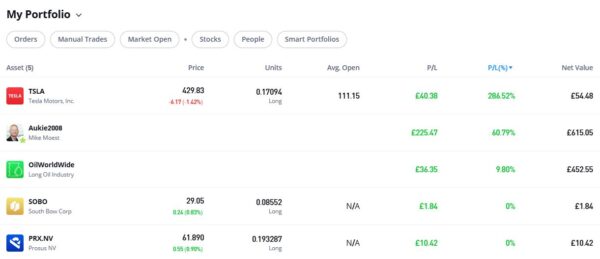
Etoro port Oct 25

You can read my full review of eToro here. You may also like to check out my more in-depth look at eToro copy trading. I also discussed thematic investing with eToro using Smart Portfolios in this recent post. The latter also reveals why I took the somewhat contrarian step of choosing the oil industry for my first thematic investment with them.

As you can see, my Oil WorldWide investment is in profit, though at 9.80% it is nothing too exciting. My copy trading investment with Aukie2008 has been doing better, with an overall 60.79% profit. To be fair, I have held this investment a bit longer.

My Tesla shares, which I bought as an afterthought with some spare cash I had in my account, are up again this month. They are showing an impressive overall profit of 286.52% since I bought them. If only I had put a bit more money into this!

You might also notice that I have small holdings in Prosus NV, a Dutch internet group, and South Bow, a Canadian energy infrastructure company. To be honest I don’t understand how I acquired these, but I assume they are some sort of bonus I was awarded. In any event, I am happy to have them in my portfolio.

  • eToro also offer the free eToro Money app. This allows you to deposit money to your eToro account without paying any currency conversion fees, saving you up to ÂŁ5 for every ÂŁ1,000 you deposit. You can also use the app to withdraw funds from your eToro account instantly to your bank account. I tried this myself and was impressed with how quickly and seamlessly it worked. You can read my blog post about eToro Money here. Note that it can also serve as a cryptocurrency wallet, allowing you to send and receive crypto from any other wallet address in the world.

If you would like more information about setting up an eToro account, please click on this no-obligation website link [affiliate]. Don’t forget that you also get a free $100,000 virtual portfolio, which you can use to experiment with trading and investing strategies. I have certainly earned a lot from mine.

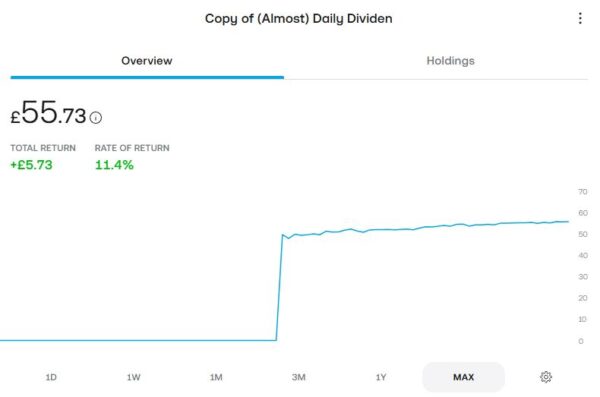
As an experiment, at the start of April this year I put £50 into an investment ISA with Trading 212. As mentioned in my recent blog post about dividend investing, I put it into the (Almost) Daily Dividends Portfolio, a ready-made portfolio or ‘pie’ on Trading 212. As you can see from the screen capture below, my portfolio is now worth £55.73, an increase of £5.73 or 11.4% over the six-month period. It has even accrued a grand total of 50p in dividends!

Trading 212 Dividends ISA Oct 25

I am quite impressed with how this investment has been faring, despite the small amount I put in (which means I may be missing out on some smaller dividends). If I increased my investment I would almost certainly become eligible for more dividends, and even more the longer I remain invested. If I had any spare money at the moment, I would consider doing this. Of course, I do now have an income-focused portfolio with Nutmeg as well (see above).

Moving on, I published various posts on Pounds and Sense in September. I have listed below those that are still relevant.

In Get a Free Share Worth Up To ÂŁ100 With Trading 212, I revealed that this popular offer had reopened. If you have never held an account with Trading 212, you can get a free share worth up to ÂŁ100 just by signing up with them. You do have to open a Stocks ISA or (non-ISA) Invest account – a Cash ISA won’t qualify you for the free share. This offer is still open but it closes on Monday 6 October 2025 – so if you want to take advantage, you need to get your skates on now.

In Get Your Will Written Free of Charge in October, I pointed out that October is Free Wills Month. This event brings together a group of well-respected charities to offer members of the public aged 55 and over the opportunity to have their wills written or updated free of charge using participating solicitors across the UK. Free Wills Month is now up and running, so see my blog post to find out how you can benefit.

And in Amazon Prime Big Deals Day Is Almost Here I spotlighted the fact that this annual promotional event begins on Tuesday 7 October 2025. This is a special event for Amazon Prime members only. Amazon say they will be offering members their lowest prices of the year on selected products across a wide range of categories, from consumer electronics to groceries. Personally I shall be looking for a new electric shaver this time 🙂

Finally, How Often Should You Really Be Washing Your Bedding? is a syndicated guest post by professional microbiologist Primrose Freestone. Dr Freestone looks at everything from sheets and pillowcases to blankets and duvet covers and even mattresses. Personally I found her expert advice quite eye-opening. I definitely need to do better in future!

I’ll close with a reminder that you can also follow Pounds and Sense on Facebook or Twitter (or X as we have to call it now). Twitter/X is my number one social media platform and I post regularly there. I share the latest news and information on financial matters, and other things that interest, amuse or concern me. So if you aren’t following my PAS account on Twitter/X, you are definitely missing out!

  • I am also on the BlueSky social media network under the username poundsandsense.bsky.social. Twitter/X remains my primary social media platform, but I also post details of my latest blog posts, third-party articles and other financial news and resources on BlueSky for those who prefer to follow me there.

As always, if you have any comments or questions, feel free to leave them below. I am always delighted to hear from PAS readers 🙂

Disclaimer: I am not a qualified financial adviser and nothing in this blog post should be construed as personal financial advice. Everyone should do their own ‘due diligence’ before investing and seek professional advice if in any doubt how best to proceed. All investing carries a risk of loss. 

Note also that posts on PAS may include affiliate links. If you click through and perform a qualifying transaction, I may receive a commission for introducing you. This will not affect the product or service you receive or the terms you are offered, but it does help support me in publishing PAS and paying my bills. Thank you!

If you enjoyed this post, please link to it on your own blog or social media:
Amazon Prime Big Deals Day

Amazon Prime Big Deals Day is Almost Here!

In case you’ve not heard, Amazon Prime Big Deals Day is almost with us. It extends over two days, Tuesday 7th and Wednesday 8th October 2025.

This is a special event for Amazon Prime members only. Amazon say they will be offering members their lowest prices of the year on selected products across a wide range of categories, from consumer electronics to groceries.

Some of the best deals will be reserved for Amazon’s own products, such as their Kindle e-book readers, Amazon Echo smart speakers and Ring video doorbells and security cameras. Discounts of up to 60% will be on offer for these products. If you’re thinking of buying any of them, Amazon Prime Big Deals Day is definitely the day – or two days – to do it.

  • There are also some great ‘early deals’ available now. For example, at the time of writing you can buy an Oral-B iO2 electric toothbrush for just ÂŁ41.99, a 58% discount on the normal price of ÂŁ100.

I have been a member of Amazon Prime for over ten years now. As a regular Amazon shopper, I find it well worth while for the free one-day delivery on millions of items alone. But as a Prime member you get access to a host of other benefits and services as well, including Amazon Prime Music and Amazon Prime Video.

If you’re thinking of joining Amazon Prime, therefore, I highly recommend doing it in the next few days, so you can benefit from the Prime Big Deals Day offers. Personally I think it’s worth it for the free delivery alone, let alone everything else that’s on offer. But if you wish, you can get a 30-day free trial now, take advantage of the Prime Big Deals Day offers, and then cancel without owing any money. It’s your choice!

  • You can also see all the latest Prime Big Deals Day offers by clicking here.

As always, if you have any comments about Amazon Prime or Prime Big Deals Day, please do post them below.

Disclosure: This post includes affiliate links. If you click through and make a purchase, I may receive a commission for introducing you. This will not affect the price you pay or the products or services you receive.


If you enjoyed this post, please link to it on your own blog or social media:
Get Your Will Written Free of Charge in October

Get Your Will Written Free of Charge in October

Did you know that October is Free Wills Month?

Free Wills Month brings together a group of well-respected charities to offer members of the public aged 55 and over the opportunity to have their wills written or updated free using participating solicitors across the UK.

The charities involved include the NSPCC, Dogs Trust, Samaritans, Mind, Age UK, The Stroke Association, PDSA, and many others. Free Wills Month happens twice a year, in March and October.

The scheme covers simple wills only, including ‘mirror wills’ for couples. In the latter case, only one member of the couple has to be 55 or over. If you need a complicated will (most people don’t) you can still have this done but may have to pay a top-up fee.

I have talked about the importance of creating a will and why you should get it done by a properly qualified solicitor previously on PAS. An up-to-date will written by a solicitor will ensure that your wishes are respected and will avoid causing legal complications for your loved ones after you are gone.

Free Wills Month means what it says. There are no catches, although the organizers hope that you will choose to leave a donation to charity in your will. There is no obligation to do this, however.

To take part in Free Wills Month click through to the website during October and fill in your details. You can then pick a solicitor from the list of companies taking part and contact them to book an appointment. Appointments are limited and on a first come, first served basis, so it’s best to apply as soon as possible to avoid disappointment.

  • Free Wills Month October 2025 starts officially on Wednesday 1st October 2025 but you can sign up on the FWM website to be notified when when the campaign starts in your area.

If you have any comments or questions about this subject, as ever, please do post them below.

Note: This is a revised and updated version of my original post on this subject.



If you enjoyed this post, please link to it on your own blog or social media:
How often should you really be washing your bedding? A microbiologist explains

How Often Should You Really Be Washing Your Bedding? A Microbiologist Explains

Today I have a guest post for you on a subject many of us wonder about. It’s by Primrose Freestone, Senior Lecturer in Clinical Microbiology at the University of Leicester.

The article was originally published in The Conversation and is republished here under a Creative Commons licence.


Most of us spend around a third of our lives in bed. Sleep isn’t just downtime; it’s essential for normal brain function and overall health. And while we often focus on how many hours we’re getting, the quality of our sleep environment matters too. A clean, welcoming bed with crisp sheets, soft pillowcases and fresh blankets not only feels good, it also supports better rest.

But how often should we really be washing our bed linens?

According to a 2022 YouGov poll, just 28% of Brits wash their sheets once a week. A surprising number admitted to leaving it much longer, with some stretching to eight weeks or more between washes. So what’s the science-backed guidance?

Let’s break down what’s actually happening in your bed every night – and why regular washing is more than just a question of cleanliness.


Get your news from actual experts, straight to your inbox. Sign up to our daily newsletter to receive all The Conversation UK’s latest coverage of news and research, from politics and business to the arts and sciences.


Each night, as we sleep, we shed hundreds of thousands of skin cells, excrete oils from our sebaceous glands, and sweat up to half a pint of fluid – even if we’ve showered just before bed. Our skin hosts millions of bacteria and fungi, many of which are transferred onto sheets, pillows and duvets as we move during the night.

That fresh sweat may be odourless, but bacteria on our skin, particularly staphylococci, break it down into smelly byproducts. This is often why you wake up with body odour, even if you went to bed clean.

But it’s not just about microbes. During the day, our hair and bodies collect pollutants, dust, pollen and allergens, which can also transfer to our bedding. These can trigger allergies, affect breathing, and contribute to poor air quality in the bedroom.

Dust mites, fungi and other unseen bedfellows

The flakes of skin we shed every night become food for dust mites – microscopic creatures that thrive in warm, damp bedding and mattresses. The mites themselves aren’t dangerous, but their faecal droppings are potent allergens that can aggravate eczema, asthma and allergic rhinitis.

Fungi also find your bed appealing. Some species, like aspergillus fumigatus, have been detected in used bed pillows and can cause serious lung infections, particularly in people with weakened immune systems.

If you sleep with pets, the microbial party gets even livelier. Animals introduce extra hair, dander, dirt and sometimes faecal traces into your sheets and blankets, increasing the frequency at which you should be washing them.

So, how often should you wash your bedding?

Sheets and pillowcases

  • When: Weekly, or every three to four days if you’ve been ill, sweat heavily, or share your bed with pets.
  • Why: To remove sweat, oils, microbes, allergens and dead skin cells.
  • How: Wash at 60°C or higher with detergent to kill bacteria and dust mites. For deeper sanitisation, tumble dry or iron. To target dust mites inside pillows, freeze for at least 8 hours.

Mattresses

  • When: Vacuum at least weekly and air the mattress every few days.
  • Why: Sweat increases moisture levels, creating a breeding ground for mites.
  • Tips: Use a plastic or allergen-proof mattress protector and replace the mattress every seven years to maintain hygiene and support.

Pillow interiors

Blankets and duvet covers

  • When: Every two weeks, or more often if pets sleep on them.
  • Why: They trap skin cells, sweat and allergens.
  • How: Wash at 60°C or as high as the care label allows. Some guidance recommends treating these like towels: regular and hot washes keep them hygienic.

Duvets

  • When: Every three to four months, depending on usage and whether pets or children share your bed.
  • Why: Even with a cover, body oils and mites eventually seep into the filling.
  • How: Check the label: many duvets are machine-washable, others may require professional cleaning.

Your bed may look clean – but it’s teeming with microbes, allergens, mites and irritants that build up fast. Washing your bedding isn’t just about keeping things fresh; it’s a matter of health.

Regular laundering removes the biological soup of sweat, skin, dust and microbes, which helps to reduce allergic reactions, prevent infections and keep odours at bay. And as research continues to show the profound effect of sleep on everything from heart health to mental clarity, a hygienic sleep environment is a small but powerful investment in your wellbeing.

So go ahead – strip the bed. Wash those sheets. Freeze your pillows. Your microbes (and your sinuses) will thank you.

Sweet dreams – and happy laundering.The Conversation

Primrose Freestone, Senior Lecturer in Clinical Microbiology, University of Leicester

This article is republished from The Conversation under a Creative Commons license. Read the original article.

As always, if you have any comments about this article, please do post them below.


If you enjoyed this post, please link to it on your own blog or social media:
My Investments Update September 2025

My Investments Update – September 2025

Here is my latest monthly update about my investments. You can read my August 2025 Investments Update here if you like.

I’ll begin as usual with my Nutmeg Stocks and Shares ISA. This is the largest investment I hold other than my Bestinvest SIPP (personal pension).

As regular readers will know, in June I transferred most of the money in my Nutmeg Fully Managed portfolio (just under £25,000) to a new Nutmeg Income Portfolio. I discussed this in detail in this recent post, but basically money in this port is invested to generate an income from share dividends and other sources. This is then paid monthly. Capital appreciation is targeted as well, but these portfolios are aimed primarily at older people (and others) who want/need their investment to generate a regular cash income.

In August my Nutmeg income portfolio generated ÂŁ134.03 of income, which was duly paid in to my bank account on 22 August 2025. Based on Nutmeg’s estimated annual return of just under 5% for income ports at my chosen risk level (five), I had been expecting around ÂŁ100, so this was somewhat better than that. Obviously it is far too early to draw any conclusions, though.

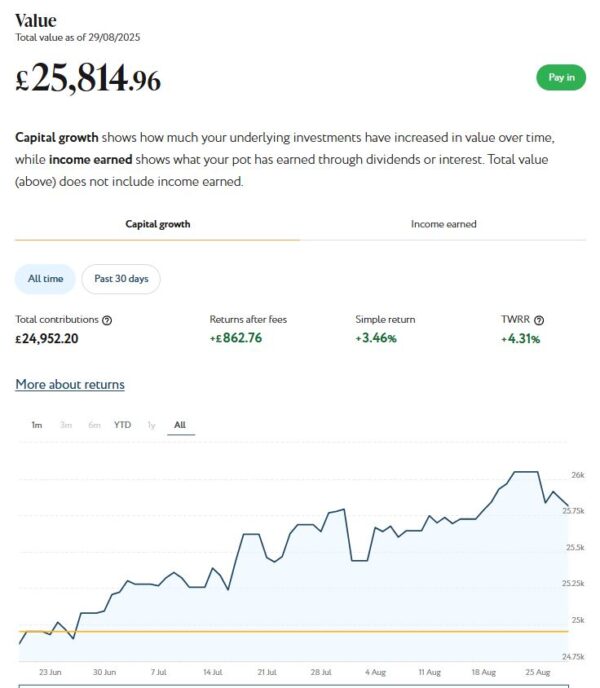
My income portfolio has also grown a little in value in August. It’s now worth £25,815 compared with £25,793 at the start of last month, an increase of £22. As the screen capture shows, the port has actually grown in value by £862.76 (3.46%) since I opened it.

Nutmeg Income port Sept 25

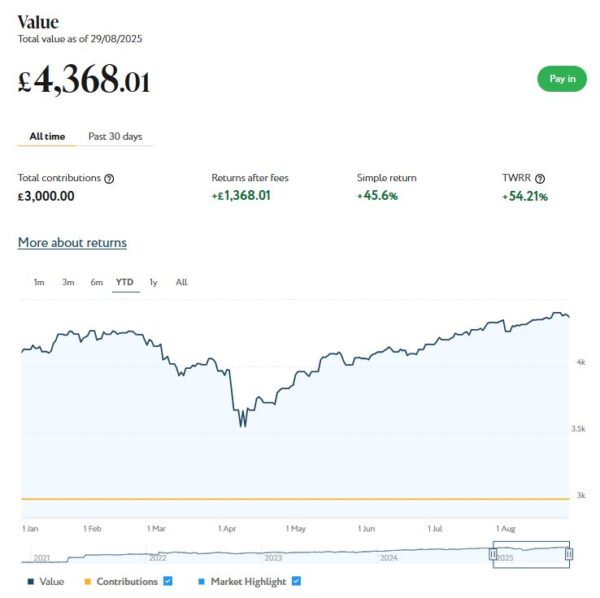
I still have a smaller, growth-oriented pot using Nutmeg’s Smart Alpha option. This is now worth £4,368 compared with £4,346 a month ago, a rise of £22. Here is a screen capture showing performance for the year to date.

Nutmeg Smart Alpha Sept 25

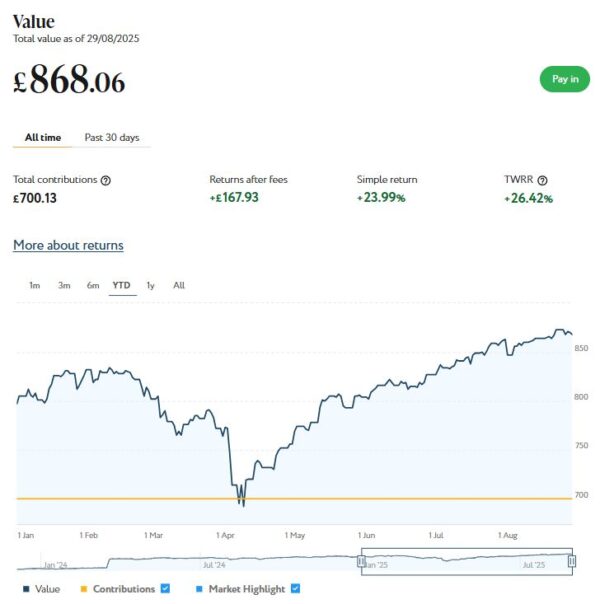
And at the start of December 2023 I invested ÂŁ500 in one of Nutmeg’s thematic portfolios (Resource Transformation). In March 2024 I also invested a further ÂŁ200 from referral bonuses (something I no longer receive for reasons I won’t bore you with). As you can see from the YTD screen capture below, this portfolio is now worth ÂŁ868 compared with ÂŁ863 last month, a rise of ÂŁ5.

Nutmeg thematic port Sep 25

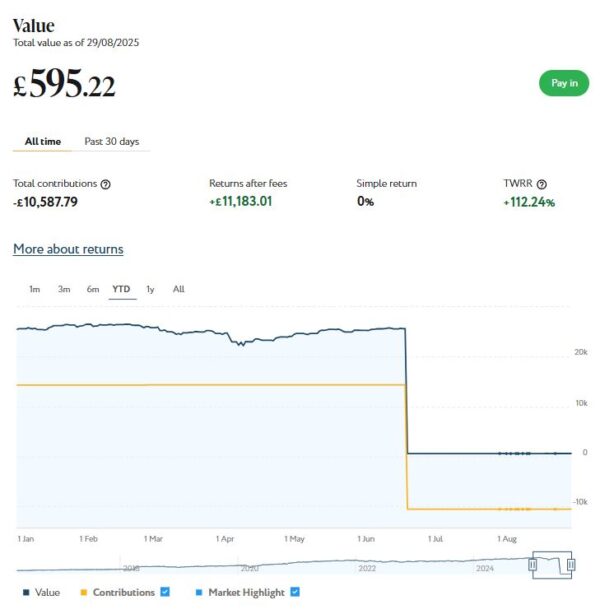
Finally, I still have a small amount left in my original Nutmeg Fully Managed portfolio. I have kept this largely for comparison purposes. This has increased in value from ÂŁ594 at the start of August to ÂŁ595 now, a rise of ÂŁ1.

Nutmeg fully managed Sep 25

As you can see, August was a steady, if unexciting, month for my Nutmeg investments. Overall I was up by ÂŁ50 or 0.16%. In addition I did, of course, receive ÂŁ134.03 in income from my income portfolio.

Excluding income generated, the overall value of my Nutmeg investments is up by £1,218 since the start of 2025, so the April 2025 fall (caused largely by Trump’s tariffs) has now fully reversed. I am also up by £2,413 or 7.48% since the start of September last year, again excluding cash income received. All things considered, that’s not a bad result.

As I always have to say, some volatility is to be expected with stock market investments, but over the longer term they tend to even themselves out (and generally perform better than bank savings accounts, although that is never guaranteed). In general the worst thing you can do is panic and sell up when downturns occur (as happened in April this year). You are then crystallizing your losses rather than giving the markets time to recover. This is something I had cause to discuss in this blog post from earlier this year.

You can read my full Nutmeg review here. If you are looking for a home for your annual ISA allowance, based on my overall experience over the last nine years, they are certainly worth considering. They offer self-invested personal pensions (SIPPs), Lifetime ISAs and Junior ISAs as well.

Moving on, I also have investments with P2P property investment platform Assetz Exchange. As discussed in this post, the company has rebranded as Housemartin.

My investments with Housemartin continue to generate steady returns. Housemartin focuses on lower-risk properties (e.g. sheltered housing). I put an initial ÂŁ100 into this in mid-February 2021 and another ÂŁ400 in April. In June 2021 I added another ÂŁ500, bringing my total investment up to ÂŁ1,000.

Since I opened my account, my HM portfolio has generated a respectable ÂŁ266.87 in revenue from rental income. I have made a small net loss of ÂŁ19.02 on property disposals. Capital growth generally has slowed, in line with UK property values generally.

At the time of writing, 16 of ‘my’ properties are showing gains, 3 are breaking even, and the remaining 19 are showing losses. My portfolio of 38 properties is currently showing a net decrease in value of £59.59. That means that overall (rental income minus capital value decrease and loss on disposal) I am up by £188.26. That’s still a respectable return on my £1,000 and does illustrate the value of P2P property investments for diversifying your portfolio. And it doesn’t hurt that with Housemartin most projects are socially beneficial as well.

The net fall in capital value of my Housemartin investments is obviously a little disappointing. But it’s important to remember that until/unless I choose to sell the investments in question, it is largely theoretical, based on the latest price at which shares in the property concerned have changed hands. The rental income, on the other hand, is real money (which in my case I’ve reinvested in other HM projects to further diversify my portfolio).

To control risk with all my property crowdfunding investments nowadays, I invest relatively modest amounts in individual projects. This is a particular attraction of Housemartin as far as i am concerned. You can actually invest from as little as £1 per property if you really want to proceed cautiously.

  • As I noted in this blog post, Housemartin is particularly good if you want to compound your returns by reinvesting rental income. This effectively boosts the interest rate you are receiving. Personally, once I have accrued a minimum of ÂŁ10 in rental payments, I usually reinvest this money in either a new HM project or one I have already invested in (thus increasing my holding). Over time, even if I don’t invest any more capital, this will ensure my investment with Housemartin grows at an accelerating rate and becomes more diversified as well.

My investment on Housemartin is in the form of an IFISA so there won’t be any tax to pay on profits, dividends or capital gains. I’ve been impressed by my experiences with Housemartin and the returns generated so far, and intend to continue investing with them. You can read my full review of Assetz Exchange/Housemartin here and my article about the rebranding to Housemartin here. You can also sign up for an account directly via this link [affiliate].

In 2022 I set up an account with investment and trading platform eToro, using their popular ‘copy trader’ facility. I chose to invest $500 (then about £412) copying an experienced eToro trader called Aukie2008 (real name Mike Moest).

In January 2023 I added to this with another $500 investment in one of their thematic portfolios, Oil Worldwide. I also invested a small amount I had left over in Tesla shares.

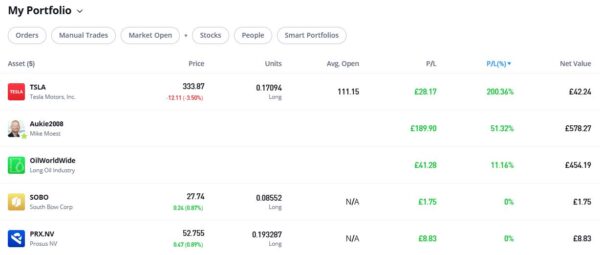
As you can see from the screen captures below, my original investment (total value ÂŁ888.36 in pounds sterling) is today worth ÂŁ1,085.93, an overall increase of ÂŁ197.57 or 22.24%.

  • Note: eToro now displays the value of investments in your native currency, although you can change this if you wish.

eToro main Sept 25

eToro portrfolio Sept 25

You can read my full review of eToro here. You may also like to check out my more in-depth look at eToro copy trading. I also discussed thematic investing with eToro using Smart Portfolios in this recent post. The latter also reveals why I took the somewhat contrarian step of choosing the oil industry for my first thematic investment with them.

As you can see, my Oil WorldWide investment is in profit, though at 11.14% it is nothing too exciting. My copy trading investment with Aukie2008 has been doing better, with an overall 51.32% profit. To be fair, I have held this investment a bit longer.

My Tesla shares, which I bought as an afterthought with some spare cash I had in my account, are up again this month. They are showing an impressive overall profit of 200.36% since I bought them. If only I had put a bit more money into this!

You might also notice that I have small holdings in Prosus NV, a Dutch internet group, and South Bow, a Canadian energy infrastructure company. To be honest I don’t understand how I acquired these, but I assume they are some sort of bonus I was awarded. In any event, I am happy to have them in my portfolio.

  • eToro also offer the free eToro Money app. This allows you to deposit money to your eToro account without paying any currency conversion fees, saving you up to ÂŁ5 for every ÂŁ1,000 you deposit. You can also use the app to withdraw funds from your eToro account instantly to your bank account. I tried this myself and was impressed with how quickly and seamlessly it worked. You can read my blog post about eToro Money here. Note that it can also serve as a cryptocurrency wallet, allowing you to send and receive crypto from any other wallet address in the world.

If you would like more information about setting up an eToro account, please click on this no-obligation website link [affiliate]. Don’t forget that you also get a free $100,000 virtual portfolio, which you can use to experiment with trading and investing strategies. I have certainly earned a lot from mine.

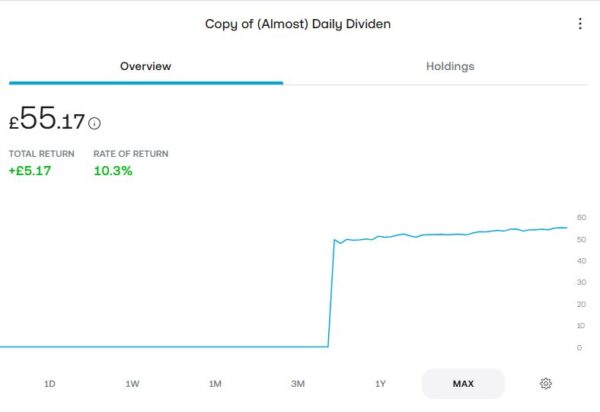
As an experiment, I recently put £50 into an investment ISA with Trading 212. As mentioned in my recent blog post about dividend investing, I put it into the (Almost) Daily Dividends Portfolio, a ready-made portfolio or ‘pie’ on Trading 212. As you can see from the screen capture below, my portfolio is now worth £55.17, an increase of £5.17 or 10.3% over the four-month period. It has even accrued a grand total of 38p in dividends!

Trading 212 SSISA Sep 25

I am quite impressed with how this investment has been faring, despite the small amount I put in (which means I may be missing out on some smaller dividends). If I increased my investment I would almost certainly become eligible for more dividends, and even more the longer I remain invested. If I had any spare money at the moment, I would consider doing this. Of course, I do now have an income-focused portfolio with Nutmeg as well (see above).

Moving on, I published various posts on Pounds and Sense in August. I have listed below those that are still relevant.
In Here’s Why I’m Not a Fan of FIRE I talked about the Financial Independence, Retire Early (FIRE) movement and explained why I am not an aficionado. I set out various reasons, including the impossibility of planning and predicting your life twenty or thirty years into the future.

In Could a Smart Thermostat Save You Money? I explained what these devices are and set out some hints and tips for making the most of them. I also discussed my own experience with a Hive smart thermostat.

In How to Check Your Tax Code and Correct it if Necessary I explained how to check this important piece of financial data. I revealed what the code means and what you should do if you believe yours is wrong. In my view everyone should check their tax code, as if it’s incorrect you may be paying too much tax or, conversely, too little. In the latter case you will still have to pay the tax when the error is discovered, potentially with added interest as well.

How Over-50s Can Save and Make Money Using Vinted discusses this very popular buying-and-selling platform among younger people. In the article I point out that Vinted can be an invaluable resource for older folk as well. I explain how it works and set out some hints and tips for making the most of it.

Finally, in Dividend Investing vs Total Return: Which Works Best for Income Investors? I look at these two popular approaches to drawing an income from your investments. Of course, this is something many retired and semi-retired people want (or need) to do. I compare the pros and cons of each method and discuss my personal experience.

I’ll close with a reminder that you can also follow Pounds and Sense on Facebook or Twitter (or X as we have to call it now). Twitter/X is my number one social media platform and I post regularly there. I share the latest news and information on financial matters, and other things that interest, amuse or concern me. So if you aren’t following my PAS account on Twitter/X, you are definitely missing out!

  • I am also on the BlueSky social media network under the username poundsandsense.bsky.social. Twitter/X remains my primary social media platform, but I also post details of my latest blog posts, third-party articles and other financial news and resources on BlueSky for those who prefer to follow me there.

As always, if you have any comments or questions, feel free to leave them below. I am always delighted to hear from PAS readers 🙂

Disclaimer: I am not a qualified financial adviser and nothing in this blog post should be construed as personal financial advice. Everyone should do their own ‘due diligence’ before investing and seek professional advice if in any doubt how best to proceed. All investing carries a risk of loss. 

Note also that posts on PAS may include affiliate links. If you click through and perform a qualifying transaction, I may receive a commission for introducing you. This will not affect the product or service you receive or the terms you are offered, but it does help support me in publishing PAS and paying my bills. Thank you!

If you enjoyed this post, please link to it on your own blog or social media:
Dividend vs Total Return Investing

Dividend Investing vs Total Return: Which Works Best for Income Investors?

As we move into our 50s and beyond, many of us start to shift focus from building wealth to drawing income from our investments. But when it comes to generating that income, there are two main approaches investors tend to consider: dividend investing and a total return strategy.

Both can work, but they operate on different principles, and each has its own pros and cons. Let’s take a closer look.

What is Dividend Investing?

Dividend investing involves building a portfolio of shares (or funds) that pay out regular dividends. The dividends received are used as income, while the underlying shares are ideally held long term.

For example, UK companies such as Vodafone or Legal & General have historically paid relatively high dividends. Many investment trusts and equity income funds also focus on this approach, targeting a yield of 4–5% per year.

Pros of Dividend Investing

  • Predictable income: Dividends can provide a relatively steady stream of cash without needing to sell investments.

  • Psychological comfort: Many investors prefer “living off the income” rather than dipping into capital.

  • Inflation protection: Well-managed companies often increase dividends over time, offering some inflation hedge.

  • Tax efficiency in ISAs and pensions: Dividends received inside these wrappers are tax-free.

Cons of Dividend Investing

  • Limited choice: By focusing only on dividend-paying shares or funds, you may miss opportunities in sectors with low or no payouts (e.g. technology).

  • Dividend cuts: Companies can reduce or suspend dividends, as many did during the pandemic.

  • Potentially lower growth: High-yield companies may not grow as strongly as firms that reinvest profits instead of paying them out.

  • Chasing yield risk: Investors may be tempted by high yields that aren’t sustainable.

What is a Total Return Strategy?

A total return approach doesn’t focus solely on dividends. Instead, you generate income by drawing a regular amount from the portfolio, which may come from dividends, bond interest, or by selling some holdings. The goal is to maximise the portfolio’s overall growth and then withdraw from that “pot” in a sustainable way.

For example, you might hold a global tracker fund (which pays some dividends but not a high yield) and set up a monthly withdrawal of 4% of the portfolio value each year.

Pros of a Total Return Strategy

  • Broader diversification: You’re not limited to dividend-paying stocks. You can invest in growth companies, bonds, property, or even alternative assets.

  • More flexibility: You can adjust withdrawals depending on market conditions, income needs, and tax planning.

  • Potentially higher growth: By including growth assets, you may end up with stronger long-term performance.

  • Control over timing: You choose when and how much to withdraw, rather than relying on dividend payment schedules.

Cons of a Total Return Strategy

  • Selling in downturns: If markets fall, you may be forced to sell investments at depressed prices to maintain income.

  • Requires discipline: You need a plan (e.g. a safe withdrawal rate) to avoid running out of money too soon.

  • Less “natural” income: Some investors don’t like dipping into capital, even if mathematically it makes sense.

  • Market dependency: Income levels may fluctuate depending on performance.

Dividend Investing vs Total Return: At a Glance

Feature Dividend Investing Total Return Strategy
Income Source Dividends from shares/funds Mix of dividends, interest, and selling investments
Reliability of Income Can feel steady, but dividends may be cut Depends on market performance and withdrawal discipline
Diversification Limited to dividend-paying stocks/funds Broader choice, including growth assets
Growth Potential Lower if focused on high yield Potentially higher with growth companies included
Flexibility Less flexible, tied to dividend schedules High flexibility, withdrawals can be tailored
Psychological Comfort Feels like “living off income” Requires willingness to dip into capital
Risk in Downturns Dividend cuts possible May need to sell assets at lower prices
Best For Those wanting simplicity and regular income Those comfortable managing withdrawals for long-term growth

Which Approach is Better?

The answer depends on your circumstances, risk tolerance, and psychology.

  • If you value simplicity and a steady income stream, dividend investing may be appealing. For example, many UK investment trusts such as City of London or Murray Income have raised their dividends for decades.

  • If you want maximum flexibility and growth potential, a total return strategy could work better — especially when combined with careful planning, such as withdrawing a fixed percentage each year.

For many investors, a blend of the two is the most practical solution. Holding some dividend-paying funds alongside growth-focused investments can deliver both psychological comfort and portfolio resilience.

My Personal Approach

As mentioned above, I have a mixture of growth-focused investments along with my main income-focused Nutmeg portfolio. I wrote about the latter in a recent blog post and also refer to it in my monthly investment updates (such as this one).

My growth-focused (total return) investments include my Bestinvest SIPP (private pension). This comprises a dozen or so investment trusts and funds, which I chose myself. My SIPP is currently in drawdown, so every month I sell a certain amount in order to release the money I will be drawing. This only takes a couple of minutes, and I vary the fund I choose to avoid depleting any too fast. Of course, most funds accrue dividends and other income which helps replenish them, along with (hopefully) growth in the value of the fund concerned.

As mentioned, my main income-focused investment is with Nutmeg. This provides a monthly income without any action needed from me. If I wanted it to be the same every month I could turn on the ‘smoothing’ function Nutmeg offers, but currently I am simply taking whatever income accrues in the month concerned.

For the time being this blended approach works for me, but as I get further into retirement I may switch more of my money away from growth- towards income-focused investments.

Obviously, the above is just for information purposes. Everyone’s circumstances are different, and what is appropriate for me may not be for you.

Key Takeaways

  • Dividend investing offers simplicity and natural income but limits diversification and risks dividend cuts.

  • Total return investing offers flexibility and potentially higher growth, but requires discipline and the willingness to sell assets.

  • Over-50s should consider their income needs, investment horizon, and attitude to risk before deciding.

👉 Final thought: Remember that both strategies can be made more tax-efficient by using ISAs and pensions. And whichever approach you favour, keeping costs low and diversifying widely remain as important as ever.

As always, if you have any comments or queries about this article, please do leave them below.

Disclaimer: I am not a qualified financial adviser and nothing in this post should be construed as personal financial advice. You should always do your own ‘due dligence’ and seek professional advice if in any doubt how best to proceed. All investing carries a risk of loss.

If you enjoyed this post, please link to it on your own blog or social media:
How Over-50s Can Use Vinted to Save and Make Money

How Over-50s Can Use Vinted to Save and Make Money

If – like many Pounds and Sense readers – you’re over 50, you may not have come across Vinted before – but chances are your children or grandchildren have!

This fast-growing online marketplace has become hugely popular among younger people for buying and selling clothes, shoes and accessories. Yet it’s not just for the younger generations. Vinted offers some real opportunities for older individuals too – both men and women – to declutter wardrobes, make extra money, and save on clothing costs.

What is Vinted?

Vinted is a website and mobile app that lets people buy and sell second-hand clothing and accessories directly to one another. It’s a bit like eBay, but focused specifically on fashion and lifestyle items.

Unlike eBay, though, Vinted doesn’t charge sellers any fees. You keep 100% of the sale price, while buyers pay a small fee for protection (covering refunds if something goes wrong). This makes it a simple and transparent way to trade unwanted items.

How Vinted Works

  • Selling: You list your unwanted clothes, shoes, or accessories by uploading photos, writing a description, and setting a price. When someone buys, you’ll be sent a prepaid postage label. All you need to do is package the item and drop it off at a collection point. Once the buyer confirms they’ve received it, the money is transferred to your Vinted wallet, ready to withdraw.

  • Buying: You can browse thousands of items, from high-street bargains to premium brands. Prices are often a fraction of what you’d pay new, and you can even make offers to negotiate a better deal.

Why Vinted Appeals

For the over-50s, Vinted offers several key attractions:

  1. Decluttering with purpose – Many of us have wardrobes full of clothes we no longer wear. Vinted allows you to turn them into extra cash instead of sending them to the charity shop or letting them gather dust.

  2. Saving money – If you’re looking for quality clothes without the price tag, Vinted is full of bargains. It’s not unusual to find items barely worn, or even brand new with tags.

  3. Sustainability – Buying second-hand is an environmentally friendly choice, reducing waste and giving clothes a second life.

  4. Ease of use – The app is designed to be simple, with clear instructions and prepaid postage, making it less daunting than other online marketplaces.

  5. For men as well as women – Although many users are women, Vinted has a huge range of men’s clothing and accessories too. Whether it’s a hardly-worn suit, branded jeans or sportswear, there’s plenty on offer.

Examples of Bargains on Vinted

To give you an idea of what’s out there, here are some typical deals you might come across on Vinted:

  • High street brands – Marks & Spencer blouses or trousers for ÂŁ5–£10, compared with ÂŁ25–£40 new.

  • Designer bargains – A barely-worn Barbour jacket for ÂŁ60, versus ÂŁ200+ brand new.

  • Footwear – Men’s Clarks leather shoes for under ÂŁ20, often with very little wear.

  • Occasion wear – Ladies’ Phase Eight or Hobbs dresses for ÂŁ25–£30, compared with ÂŁ100+ in the shops.

  • Sports gear – Branded sportswear like Adidas, Nike, or Under Armour for ÂŁ5–£15, perfect for the gym or walking.

  • Accessories – Leather handbags, belts, or scarves for ÂŁ10–£20, often still in excellent condition.

It’s not uncommon to find items that are “BNWT” (brand new with tags) – meaning they’ve never been worn at all. Many people sell clothes that don’t fit, were impulse buys, or were received as gifts, making Vinted a treasure trove for bargain hunters.

Tips for Spotting the Best-Value Listings

With so many items available on Vinted, it pays to know how to separate the true bargains from the rest. Here are some simple tips:

  • Check seller ratings – Every seller has a profile showing reviews from previous buyers. Stick to sellers with consistently positive feedback to ensure reliability.

  • Look for “bundle deals” – Many sellers offer discounts if you buy two or more items from them. This is a great way to cut down on postage costs as well.

  • Search by brand and size – If you have favourite brands (e.g. M&S, Next, or Barbour), searching directly for them can quickly reveal hidden gems. Filtering by your size saves time too.

  • Use “new with tags” filters – If you prefer unworn clothes, you can filter results to show only brand new items, often at a fraction of the shop price.

  • Compare prices – Before buying, check the going rate for similar items. Some sellers price higher, while others just want to clear space and will accept offers.

  • Check item photos carefully – Clear, well-lit photos from different angles are a good sign the seller is genuine. Blurry or limited pictures may mean the item isn’t in the best condition.

  • Don’t be afraid to make an offer – Buyers can often negotiate, especially if an item has been listed for a while. A polite lower offer is sometimes accepted straight away.

Closing Thoughts

Vinted might be better known among 20- and 30-somethings, but there’s no reason over-50s shouldn’t benefit as well. Whether you’re looking to make some extra money, save on clothes shopping, or simply embrace sustainable fashion, Vinted offers a friendly and straightforward way to do it.

If you haven’t tried it yet, it could be well worth downloading the app and having a look around. You may be pleasantly surprised at just how easy it is to sell your old clothes – and perhaps bag yourself a bargain or two along the way.

Many thanks to my sister Annie for suggesting this article!


If you enjoyed this post, please link to it on your own blog or social media: