
guest post

Post Nuptial Agreements

Guest Post: Why a Post-Nuptial Agreement Could Be a Wise Financial Decision

Today I’m sharing a guest article on a subject that – while it might seem unromantic – could be crucial to ensuring your financial security in later life.

Sadly, growing numbers of older people are seeing their marriages break down, leading in many cases to separation and divorce. Even if relatively amicable, this is likely to be stressful and emotionally exhausting. And – potentially even worse – it can have serious financial consequences for you and your family, both now and into the future.

My guest today, Richard Scott, a partner in the family team at HCR Law, knows this very well. In his article below he explains the benefit of having a post-nuptial agreement in place if, sadly, your marriage (or civil partnership) should come to an end.

Over to Richard then…


For many couples, the idea of a nuptial agreement is an unfamiliar and often unromantic concept. Yet, for those who have already married and whose financial circumstances have evolved, perhaps over many years, a post-nuptial agreement can offer clarity, protection and a far smoother path should the relationship ever break down.

In a climate where personal wealth, business interests and international assets are increasingly common, a carefully prepared post-nuptial agreement is a practical piece of financial planning that complements, rather than competes with, the marriage itself.

Legal status and why it matters

In England and Wales, post-nuptial agreements are not automatically legally binding. However, the courts are prepared to give decisive weight to a nuptial agreement where it is entered into freely by both spouses, with a full understanding of its implications, and where it is fair it is fair at the time of any future divorce.

In practice, that means a properly drafted post-nuptial agreement, supported by independent legal advice for both parties, full financial disclosure and the absence of coercion or pressure can be highly influential. It does not oust the court’s jurisdiction, but it does set a clear roadmap that the court will often follow unless needs or fairness dictate otherwise, particularly if the couple have independent children.

Financial clarity and reduced conflict

One of the principal benefits to any nuptial agreement is certainty. A post-nuptial agreement defines how assets would be treated if the marriage ends, reducing the scope for any dispute over property, savings, investments and pensions. That clarity can save significant legal costs and emotional upheaval by preventing arguments before they arise.

For couples who value transparency and orderly planning, the agreement functions as a financial charter that both parties can rely on, supporting trust rather than undermining it. In my experience, it is not uncommon for a post-nuptial agreement to be used as an option to re-establish trust in a faltering marriage. For instance, where perhaps one spouse has behaved poorly, or had an affair, the other spouse may require the reassurance of a post-nuptial agreement to help put the marriage back on track, instead of filing for divorce.

Protecting pre-acquired, family and business assets

Post-nuptial agreements are especially useful where one spouse brings pre-marital assets into the marriage or expects future inheritances or gifts. Ring-fencing such wealth helps ensure that family assets, heirlooms and intended legacies remain protected.

They are also invaluable for business owners, safeguarding a company’s continuity, shareholder relationships and value. By agreeing how shares and business interests would be treated, spouses reduce the risk of disruption to the enterprise, and this gives confidence to co-owners and investors.

Frequently I advise the children of business owners who are likely to inherit shares in a family business and who – often with their families –want to minimise any disruption to future succession planning by excluding those interests from the matrimonial pot with a post-nuptial agreement.

Sometimes couples who intend to enter into a pre-nuptial agreement simply run out of time to get the agreement finalised before the wedding. Rather than postpone the wedding, a post-nuptial agreement is a valuable alternative which is available to newlyweds and ensures that the opportunity to protect and ring-fence wealth acquired pre-marriage or any future inheritances, is not lost.

Adapting to life’s changes

Circumstances evolve after marriage: a career break to raise children, a relocation, the sale of a property, a windfall or the growth of a business. A post-nuptial agreement allows couples to recalibrate financial expectations to reflect these developments. This is particularly pertinent in second marriages, where there may be competing responsibilities to children from previous relationships, and in international families, where differing legal regimes can complicate outcomes. A tailored post-nuptial agreement brings order to complexity, aligning intentions with the realities of modern family life.

Fairness, safeguards and credibility

A robust agreement is not a blunt instrument. It can include review clauses, housing provisions and arrangements that meet needs fairly, especially where children are involved.

The process itself is not complicated. It involves both spouses’ obtaining independent legal advice, providing full disclosure of their assets and engaging in sensible negotiation. Most of of the clients I advise on this issue are pragmatic and are not out to engineer an unfair outcome, nor are their spouses – it’s about documenting a fair agreement with a view to avoiding contentious litigation in the future should the relationship break down at a later date.

A practical step in prudent planning

In summary, a post-nuptial agreement is a prudent step in managing financial risk. It offers peace of mind, helps safeguard hard-won family assets and businesses and significantly reduces the uncertainty and cost of a future dispute.

Lawyers advising on post-nuptial agreements often liken their importance to life insurance policies. The question for married couples should not be, “Can I afford one?” It should be, “Can I afford not to have one?” As such, for couples who value clarity and wish to protect their financial futures responsibly, it is an option well worth serious consideration.

Richard Scott (pictured below) is a partner in the family team at HCR Law.

Richard Scott

Many thanks to Richard and his colleagues at HCR Law for an eye-opening article on this important topic. As Richard says, devoting some attention to this issue now can potentially save you and your family a lot of grief (and legal costs) in the future.

As always, if you have any comments or queries about this article, please do leave them below.



If you enjoyed this post, please link to it on your own blog or social media:
Can you wear the same socks more than once?

Can You Wear the Same Socks More Than Once? A Microbiologist Explains

A few months ago I published a guest post on the subject of how often you should wash your bedding. The article generated quite a lot of interest, so today I am publishing another by the same author: Primrose Freestone, a Senior Lecturer in Clinical Microbiology at the University of Leicester.

This article was originally published in The Conversation and is republished here under a Creative Commons licence.


It’s pretty normal to wear the same pair of jeans, a jumper or even a t-shirt more than once. But what about your socks?

If you knew what really lived in your socks after even one day of wearing, you might just think twice about doing it.

Our feet are home to a microscopic rainforest of bacteria and fungi – typically containing up to 1,000 different bacterial and fungal species. The foot also has a more diverse range of fungi living on it than any other region of the human body.

The foot skin also contains one of the highest amount of sweat glands in the human body.

Most foot bacteria and fungi prefer to live in the warm, moist areas between your toes where they dine on the nutrients within your sweat and dead skin cells. The waste products produced by these microbes are the reason why feet, socks and shoes can become smelly.

For instance, the bacteria Staphylococcal hominis produces an alcohol from the sweat it consumes that makes a rotten onion smell. Staphylococcus epidermis, on the other hand, produces a compound that has a cheese smell. Corynebacterium, another member of the foot microbiome, creates an acid which is described as having a goat-like smell.

The more our feet sweat, the more nutrients available for the foot’s bacteria to eat and the stronger the odour will be. As socks can trap sweat in, this creates an even more optimal environment for odour-producing bacteria. And, these bacteria can survive on fabric for months. For instance, bacteria can survive on cotton for up to 90 days. So if you re-wear unwashed socks, you’re only allowing more bacteria to grow and thrive.

The types of microbes resident in your socks don’t just include those that normally call the foot microbiome home. They also include microbes that come from the surrounding environment – such as your floors at home or in the gym or even the ground outside.

In a study which looked at the microbial content of clothing which had only been worn once, socks had the highest microbial count compared to other types of clothing. Socks had between 8-9 million bacteria per sample, while t-shirts only had around 83,000 bacteria per sample.

Species profiling of socks shows they harbour both harmless skin bacteria, as well as potential pathogens such as Aspergillus, Candida and Cryptococcus which can cause respiratory and gut infections.

The microbes living in your socks can also transfer to any surface they come in contact with – including your shoes, bed, couch or floor. This means dirty socks could spread the fungus which causes Athlete’s foot, a contagious infection that affects the skin on and around the toes.

This is why it’s especially key that those with Athlete’s foot don’t share socks or shoes with other people, and avoid walking in just their socks or barefoot in gym locker rooms or bathrooms.

What’s living in your socks also colonises your shoes. This is why you might not want to wear the same pair of shoes for too many days in a row, so any sweat has time to fully dry between wears and to prevent further bacterial growth and odours.

Foot hygiene

To cut down on smelly feet and reduce the number of bacteria growing on your feet and in your socks, it’s a good idea to avoid wearing socks or shoes that make the feet sweat.

Washing your feet twice daily may help reduce foot odour by inhibiting bacterial growth. Foot antiperspirants can also help, as these stop the sweat – thereby inhibiting bacterial growth.

It’s also possible to buy socks which are directly antimicrobial to the foot bacteria. Antimicrobial socks, which contain heavy metals such as silver or zinc, can kill the bacteria which cause foot odour. Bamboo socks allow more air flow, which means sweat more readily evaporates – making the environment less hospitable for odour-producing bacteria.

Antimicrobial socks might therefore be exempt from the single-use rule depending on their capacity to kill bacteria and fungi and prevent sweat accumulation.

But for those who wear socks that are made out of cotton, wool or synthetic fibres, it’s best to only wear them once to prevent smelly feet and avoid foot infections.

It’s also important to make sure you’re washing your socks properly between uses. If your feet aren’t unusually smelly, it’s fine to wash them in warm water that’s between 30-40°C with a mild detergent.

However, not all bacteria and fungi will be killed using this method. So to thoroughly sanitise socks, use an enzyme-containing detergent and wash at a temperature of 60°C. The enzymes help to detach microbes from the socks while the high temperature kills them.

If a low temperature wash is unavoidable then ironing the socks with a hot steam iron (which can reach temperatures of up to 180–220°C) is more than enough kill any residual bacteria and inactivate the spores of any fungi – including the one that causes Athlete’s foot.

Drying the socks outdoors is also a good idea as the UV radiation in sunlight is antimicrobial to most sock bacteria and fungi.

While socks might be a commonly re-worn clothing item, as a microbiologist I’d say it’s best you change your socks daily to keep feet fresh and clean.The Conversation

Primrose Freestone, Senior Lecturer in Clinical Microbiology, University of Leicester

This article is republished from The Conversation under a Creative Commons license. Read the original article.

As always, if you have any comments about this article, please do post them below.


If you enjoyed this post, please link to it on your own blog or social media:
How often should you really be washing your bedding? A microbiologist explains

How Often Should You Really Be Washing Your Bedding? A Microbiologist Explains

Today I have a guest post for you on a subject many of us wonder about. It’s by Primrose Freestone, Senior Lecturer in Clinical Microbiology at the University of Leicester.

The article was originally published in The Conversation and is republished here under a Creative Commons licence.


Most of us spend around a third of our lives in bed. Sleep isn’t just downtime; it’s essential for normal brain function and overall health. And while we often focus on how many hours we’re getting, the quality of our sleep environment matters too. A clean, welcoming bed with crisp sheets, soft pillowcases and fresh blankets not only feels good, it also supports better rest.

But how often should we really be washing our bed linens?

According to a 2022 YouGov poll, just 28% of Brits wash their sheets once a week. A surprising number admitted to leaving it much longer, with some stretching to eight weeks or more between washes. So what’s the science-backed guidance?

Let’s break down what’s actually happening in your bed every night – and why regular washing is more than just a question of cleanliness.


Get your news from actual experts, straight to your inbox. Sign up to our daily newsletter to receive all The Conversation UK’s latest coverage of news and research, from politics and business to the arts and sciences.


Each night, as we sleep, we shed hundreds of thousands of skin cells, excrete oils from our sebaceous glands, and sweat up to half a pint of fluid – even if we’ve showered just before bed. Our skin hosts millions of bacteria and fungi, many of which are transferred onto sheets, pillows and duvets as we move during the night.

That fresh sweat may be odourless, but bacteria on our skin, particularly staphylococci, break it down into smelly byproducts. This is often why you wake up with body odour, even if you went to bed clean.

But it’s not just about microbes. During the day, our hair and bodies collect pollutants, dust, pollen and allergens, which can also transfer to our bedding. These can trigger allergies, affect breathing, and contribute to poor air quality in the bedroom.

Dust mites, fungi and other unseen bedfellows

The flakes of skin we shed every night become food for dust mites – microscopic creatures that thrive in warm, damp bedding and mattresses. The mites themselves aren’t dangerous, but their faecal droppings are potent allergens that can aggravate eczema, asthma and allergic rhinitis.

Fungi also find your bed appealing. Some species, like aspergillus fumigatus, have been detected in used bed pillows and can cause serious lung infections, particularly in people with weakened immune systems.

If you sleep with pets, the microbial party gets even livelier. Animals introduce extra hair, dander, dirt and sometimes faecal traces into your sheets and blankets, increasing the frequency at which you should be washing them.

So, how often should you wash your bedding?

Sheets and pillowcases

  • When: Weekly, or every three to four days if you’ve been ill, sweat heavily, or share your bed with pets.
  • Why: To remove sweat, oils, microbes, allergens and dead skin cells.
  • How: Wash at 60°C or higher with detergent to kill bacteria and dust mites. For deeper sanitisation, tumble dry or iron. To target dust mites inside pillows, freeze for at least 8 hours.

Mattresses

  • When: Vacuum at least weekly and air the mattress every few days.
  • Why: Sweat increases moisture levels, creating a breeding ground for mites.
  • Tips: Use a plastic or allergen-proof mattress protector and replace the mattress every seven years to maintain hygiene and support.

Pillow interiors

Blankets and duvet covers

  • When: Every two weeks, or more often if pets sleep on them.
  • Why: They trap skin cells, sweat and allergens.
  • How: Wash at 60°C or as high as the care label allows. Some guidance recommends treating these like towels: regular and hot washes keep them hygienic.

Duvets

  • When: Every three to four months, depending on usage and whether pets or children share your bed.
  • Why: Even with a cover, body oils and mites eventually seep into the filling.
  • How: Check the label: many duvets are machine-washable, others may require professional cleaning.

Your bed may look clean – but it’s teeming with microbes, allergens, mites and irritants that build up fast. Washing your bedding isn’t just about keeping things fresh; it’s a matter of health.

Regular laundering removes the biological soup of sweat, skin, dust and microbes, which helps to reduce allergic reactions, prevent infections and keep odours at bay. And as research continues to show the profound effect of sleep on everything from heart health to mental clarity, a hygienic sleep environment is a small but powerful investment in your wellbeing.

So go ahead – strip the bed. Wash those sheets. Freeze your pillows. Your microbes (and your sinuses) will thank you.

Sweet dreams – and happy laundering.The Conversation

Primrose Freestone, Senior Lecturer in Clinical Microbiology, University of Leicester

This article is republished from The Conversation under a Creative Commons license. Read the original article.

As always, if you have any comments about this article, please do post them below.


If you enjoyed this post, please link to it on your own blog or social media:
Your Guide to Freebies in the UK

Guest Post: Your Guide To Great Freebies In The UK

Today I have a guest post for you from my friend Carla on behalf of the FreeStuffSpot website.

If you like getting freebies delivered regularly, as Carla explains below, this is a site you definitely need to check out!


Imagine this: You’re sitting comfortably at home, watching a movie in your pyjamas, getting cosy with a nice cuppa, when the postman suddenly brings free beauty products to your home. Sounds wonderful, doesn’t it? It might even seem unreal. But I’m here to tell you that I’ve lived the dream. Let me help you learn about freebies.

I’m a huge fan when it comes to makeup. That’s been true as far back as I can remember, and it’s not likely to ever change. I could empty an endless bank account on makeup shopping, but sadly I don’t seem to have one of those. To keep my infinite appetite for makeup satiated, I always keep my eyes and ears open for ways to save money on the best beauty products. When I discovered that I could start getting free makeup sent straight to my home, I was more than a little interested. I was exhilarated.

You might not know this now, but there are many different makeup and beauty products sent to UK homes all the time, including free hair products, toiletries, perfume samples, and cosmetics. Think about it. You can try a current or new brand, all without spending any cash, or even leaving your home! Can it get better than that? Here are my insights about using FreeStuffSpot to get free makeup and beauty products on top of other freebies I already enjoy.

Why Are Beauty Brands Giving Free Stuff Away?

Businesses are always trying to get prospective customers to try out their products or brands in exchange for some feedback. These arrangements bypass the middlemen that normally do market research. Given how many businesses are moving towards the social media giants, namely Facebook and Twitter/X at least, they now can speak directly to consumers while listening to their concerns.

They can also reach out to many new customers at the same time.

So How Do You Get Free Beauty Products Of Your Own?

It’s not hard. I just registered for a newsletter from FreeStuffSpot, guaranteed to have nine brand-new freebies every single day. This newsletter covers things from free samples, competitions, and just generally free stuff. The day after I signed up for the newsletter, I got an email with giveaways, offers, and even restaurant vouchers.

What Other Kinds Of Freebies Are Available?

The website has more categories than just the beauty products I love and adore. You can find food and beverage, kids and baby stuff, free pet things, and freebies for just about anyone in your home. You don’t want to keep such a great thing to yourself, right?

FreeStuffSpot doesn’t just do freebies. They also have tricks to save money, advice on how to make money, and tips about getting more savvy in terms of money overall. The next time I plan to eat out, I’ll be using the page for restaurant vouchers for sure. The free days out category is great for us as a family, since we have young ones that love being out where it’s open. We can have a fun family day outside our home without emptying our bank account.

I’ve also joined the fan group for FreeStuffSpot enthusiasts. This perky community is a place where members post pics of the freebies they get. Sure, some of it is bragging, but it’s also about letting everyone else know about freebies and offers they don’t yet know about.

Just How Easy Is It To Use FreeStuffSpot?

If you want to start enjoying freebies, it’s very simple:

Visit the website at FreeStuffSpot and register to receive their daily newsletter full of freebies.

Browse the website and then apply for freebies you like the sound of.

Then just wait for the freebies to show up at your home!

My Verdict Is In…

I’ve really enjoyed looking through FreeStuffSpot since I started writing online. I’ve already got a perfume sample that I fell in love with, to the point of buying the actual full-size product. I’ve also got a tea towel, face wipes, and even teabags!


Many thanks to Carla for her enthusiastic endorsement of FreeStuffSpot. If you’re a freebies fan I hope you will take a moment to check out the site for yourself.

As always, if you have any comments or questions about this article, please do post them below.

This is a sponsored guest post.


If you enjoyed this post, please link to it on your own blog or social media:
Why Has My Bank Abandoned Me?

Guest Post: Why Has My Bank Abandoned Me?

Today I am sharing something a bit different – an opinion piece by a fellow writer who asks to be known as SD.

In her article, SD expresses her frustration with banks who no longer seem to care about their customers, especially the older ones. I guess this is something many Pounds and Sense readers may be able to relate to.

Over to SD, then…


I just read in the news about yet another banking app outage – this time, with serious consequences. Salaries were delayed, house moves disrupted, and critical money transfers put on hold. Everything ground to a halt, with no clear resolution in sight. And it got me thinking – if AI is so advanced, why can’t it fix outages like this?

Paying bills was stalled, and customers were understandably frustrated. These outages seem to be happening far too often. Yes, it’s 2025, but are our banking systems really ready for a fully digital future?

Not long ago, I was a customer of a high street bank. After years of in-person banking, staff encouraged me to “go digital” and use their app. I was reluctant. As someone who experiences anxiety and panic attacks, I find complex IT systems overwhelming. I’m over 57 – I wasn’t raised in the digital age.

Despite me sharing my concerns, the bank staff didn’t really listen. A sign on the wall said “Not all disabilities are visible”, yet this clearly didn’t apply to me. My local branch, which was always busy, was shut down – ATM and all. Another nearby branch followed suit. There was one left five miles away, but eventually even that became digital only.

When I visited and explained my situation, I was told bluntly that I couldn’t be helped – there were no counters any more. I didn’t need anything complicated. Just a basic, face-to-face banking service. Instead, I was simply dismissed. Invisible disabilities, it seems, were invisible to them too.

So I closed my account and went to another high street bank – only to be met with more unwelcome change. Gone was the polished wood floor and staffed counters. In their place: low, foam seats and whiteboards hiding the old counter space. It felt less like a bank and more like a waiting room.

These trendy seating areas? Not great if you’re elderly or disabled.

Still, I figured sitting here was better than trying to deal with a chatbot. Banks think chatbots are a great innovation, but they’re not yet smart enough to help with specific, real-world banking issues. I’ve tried. It’s frustrating. And I thought AI was supposed to solve problems?

There were only three staff members at the new branch, all run off their feet. When I asked about opening a new account, I was told I needed a smartphone. I declined and walked out.

If they still had real counters and six staff members, people might not mind standing in line. They’d actually get served.

Which brings me back to banking app outages – again. They’re frequent, disruptive, and a growing source of frustration. Yet I was told digital banking was “the future” and that I’d be left behind if I didn’t.

Tell that to the millions of customers now stuck in this digital mess. It’s a financial farce.

Call me a tech dinosaur, but I truly believe shutting down mass branches was one of the worst decisions banks ever made. Staff lost jobs. Customers lost peace of mind.

It all worked just fine – until the banks decided to “modernize”.

Yes, a few banking hubs have popped up. But most town-centre branches now sit empty, derelict, and forgotten. It’s a sad waste of once-useful community spaces.


Many thanks to SD for a thought-provoking (and clearly heart-felt) article.

I do agree that the so-called digital revolution has made life harder for many older people and those with disabilities. Yes, some have taken to banking apps and online banking without major issues. I have a friend in his eighties to whom I had to give a crash course after his wife (who previously handled all their finances) passed away. Despite my concerns he soon got the hang of it and uses his bank’s app like a professional now.

But plenty of older people do struggle, especially with apps and complicated online security systems. And clearly it doesn’t help if your memory and eyesight aren’t as good as they once were. I can understand why so many older folk yearn for times gone by, when you could speak to a real-life individual and they would help you with whatever issues you might be having.

But what do YOU think? Have the banks really abandoned older customers, or do we just need to accept change and “get with the programme”? I’d love to hear your views and experiences, as would SD!


If you enjoyed this post, please link to it on your own blog or social media:
How to Publish Your Book

Guest Post: How to Publish Your Book (and Earn Royalties!)

Today I’m pleased to bring you a guest post from my friend and near-neighbour Sally Jenkins, a successful published fiction and non-fiction author (check out her latest novel Out of Control – a later-life romance perfect for summer holiday reading!).

Many older people (in particular) harbour an ambition to write a book and make money from it. If that includes you, I hope you will find Sally’s article of interest. In it she sets out the main options for getting your book published, and shares some valuable resources she has found.

Over to Sally then…


Everyone has at least one book in them, or so the saying goes. It might be a thriller, a memoir, a collection of poems or short stories, a ‘how-to’ non-fiction manual or something completely different. Finishing that manuscript is a laudable achievement in itself but don’t stop there. It takes guts to send any literary work out into the public arena; however, doing so can lead to an additional passive income stream in the form of royalties that continue to hit your bank account long after you’ve finished writing.

There are three main routes to publication that you might like to consider:

Traditional Publishing

Traditional publishers come in all shapes and sizes, from the giants like Penguin and Hachette to far smaller, less well-known companies who publish in e-book format only.

Traditional publishers bear all the costs of publishing a book, meaning there is no financial risk for the author. These costs may include editing, proofreading, cover design, marketing and the printing of physical copies. The author contributes nothing to these costs and receives a small royalty for each copy of the book sold.

The competition to be signed by a traditional publisher is fierce and only a very small number of authors are taken on. The larger companies will only accept manuscript submissions via a literary agent but it is possible for authors to submit directly to many of the small publishing houses. There is nothing to lose by trying this traditional route but be prepared to develop a thick skin to deal with the probable rejections. A good place to start is an up-to-date copy of the Writers’ and Artists’ Yearbook, which contains a comprehensive list of publishers and literary agents.

Partnership Publishing

In the partnership publishing model, the publisher and the author share the financial risk of publishing the book. This means the author will be asked to make a financial contribution towards the publishing costs. What proportion and how much this means in monetary terms will vary from company to company, so it’s worth approaching more than one partnership publisher and requesting explicit information about their offering. In return for contributing to the publishing costs, the author can expect to receive a higher percentage of royalty payments than under the traditional model.

However, care is needed when choosing a partnership company to work with – there are many rogue or ‘vanity’ publishers out there who will publish anything and charge a lot of money for very little service. Ensure that the company you choose has a manuscript selection process – even if this means you might face rejection as in the traditional model. A true partnership publisher will only publish books that it thinks have merit and will sell. Even so, there is no guarantee that you will recoup all or any of your publishing costs via royalties. Do not spend more than you can afford to lose.

The Writers’ Beware website has a section devoted to avoiding vanity publishers.

Self-Publishing

Authors who self-publish carry all the financial risk themselves but retain all the royalties (bar the amount taken by distribution platforms such as Amazon). It is possible to self-publish on Amazon at no cost or you might choose to spend hundreds of pounds depending on what services you buy in. The main services requiring financial outlay will be:

Cover Design – don’t attempt this yourself unless you are a graphic designer with a knowledge of the book covers currently selling in your genre. An amateur cover design will be obvious and off-putting to potential readers.

Editing – a novel (particularly a first novel) may benefit from a full structural edit. This will advise on plot, character development, pace etc. You might also want to consider a sentence level copyedit and/or proofread.

Formatting – some authors pay for this but, with a little patience, anyone who can use Microsoft Word can do this themselves.

Printing – there is no need to pay for a print run of books and hold them in stock.

Amazon (and other companies) use print-on-demand (POD) technology. This means that when someone orders a copy of your book it is printed individually and sent direct to the customer. Authors can also order copies at a reduced rate to sell direct to friends, family or the public at large.

The Alliance of Independent Authors has a directory of reputable editors, cover designers, proofreaders, etc. The directory also lists companies who can offer a complete self-publishing service for authors who don’t want to do any of the leg work – but this can be very expensive. As with partnership publishing, never spend more than you can afford to lose.

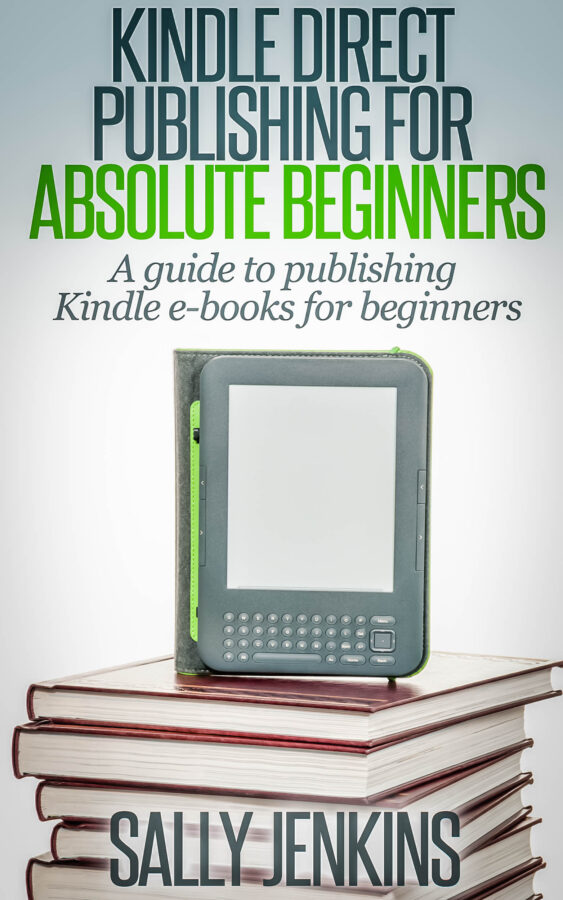
KIndle Direct Publishing for Absolute Beginners If you would like to know more about low-cost self-publishing via Amazon, the e-book Kindle Direct Publishing for Absolute Beginners (pictured, left) offers a good introduction. If you don’t currently read on Kindle, download the free Kindle app to your laptop, tablet or smartphone.

Whichever publishing route you choose, enjoy the journey and the royalties!

Sally JenkinsBio: Sally Jenkins (pictured, right) currently writes uplifting and hopeful novels for the traditional publisher Choc Lit (part of Joffe Books). She has also had a novel published in partnership with The Book Guild and has self-published several books via Amazon KDP. When not at the keyboard, she feeds her addiction to words by working part-time in her local library and running two reading groups. Sally can also be found walking, church-bell ringing and enjoying shavasana in her yoga class. Follow her writing blog at https://sally-jenkins.com/.


If you enjoyed this post, please link to it on your own blog or social media:
Marriage in Later Life

Guest Post: Marriage in Later Life: A Guide to the Financial and Legal Implications

This Valentine’s Day I’m pleased to bring you a guest article on a subject that I know will resonate with many readers of this blog.

Finding love in later life is clearly to be celebrated. But there are potential pitfalls as well, especially if you’ve been married before and/or have children from previous relationships. Mistakes made now can have costly – and stressful – consequences for you and your family further down the line.

My guest today, Victoria Fellows, a partner and head of family at the Birmingham office of HCR Law, knows this all too well. And she has some excellent advice for anyone who may be contemplating tying the knot (again) in their later years.

Over to Victoria then…


More adults are remarrying in later life than ever according to the Office of National Statistics, and it could be a smart financial move as much as a romantic one.

Marriage is an important decision at any stage of life, but when it comes to later-life marriages, the financial and legal implications take on an added level of significance which can include both benefits and challenges. This is especially likely if you have been married before (which accounts for most marriages among over 50s) or have children from previous relationships.

One of the primary concerns when entering a later marriage is protecting your children’s and/or extended family’s inheritance rights. In the absence of proper planning, a surviving spouse may inherit a significant portion of the estate, potentially diminishing what your children from earlier relationships would receive. This can lead to complicated family dynamics, particularly if your surviving spouse chooses to remarry or if your children feel their inheritance has been unfairly diminished.

There may also be inheritance tax (IHT) issues if the combining of assets pushes the estate value above the inheritance tax threshold, creating additional financial burdens for children who inherit.

So how can assets be protected to provide reassurance to the happy couple and their families?

Pre-Nuptial and Post-Nuptial Agreements

In addition to thinking about what happens to your wealth when you die, it’s also worth giving some thought to what might happen if you separate.

A pre-nuptial agreement is a legal contract entered into before marriage that sets out how assets will be divided in the event of divorce or death. While pre-nuptial agreements are not legally binding in England and Wales, they can be persuasive if challenged in court, particularly if both parties entered into the agreement voluntarily and with full disclosure of assets. In later-life marriages, a pre-nup can be used to protect children’s inheritance rights by ensuring that assets accumulated before the marriage remain separate and are passed down to children.

A post-nuptial agreement can serve a similar purpose but is created after the marriage has taken place. Although UK courts are not legally obliged to uphold these agreements, post-nups can still be considered, especially if they are seen as fair, transparent, and made with legal advice.

It can be an awkward subject to raise, but nuptial agreements simply set out what a financial agreement would look like were you to separate and allow you to ring-fence any assets that one or both of you are bringing to the marriage. Often we find that our older clients feel more confident about getting married once they have raised the issue of a pre-nup with their partner because it provides both parties (and their wider families) with clarification on what would happen if they were to separate further down the line.

Wills and Trusts

Creating or updating a will is crucial to ensure that assets are distributed according to your wishes after your death. For individuals in later-life marriages, it’s vital to establish clear provisions that reflect your intent to protect children’s inheritance, ensuring that your assets are passed to your own children and grandchildren not your new spouse’s family. A well-drafted will can explicitly set out which assets should go to children from previous relationships and can address potential challenges from a surviving spouse.

Many people are unaware that when they marry a previous will is likely to become null and void. Therefore, if you pass away without making a new will, the law will decide how your assets are distributed, which may not reflect your wishes or the needs of your loved ones.

In addition to creating or updating a will, you can consider a life interest trust which could upon your death give your surviving spouse the right to an income for the rest of their life, at which point the remaining capital would be passed to your children. This will prevent the entire estate passing to a surviving spouse for them to pass on at their discretion, which may or may not include your children.

Joint Ownership and Beneficiary Designations

When it comes to property you should carefully consider whether joint ownership or beneficiary designations will achieve your asset protection goals. In the case of joint ownership, you can hold property as tenants-in-common, which ensures that you each own a specific share of the property. This is important because, upon the death of one spouse, their share will be passed on according to their will or trust, rather than automatically going to the surviving spouse.

Beneficiary designations on life insurance policies, pensions, and retirement savings plans should also be reviewed. In the UK, these designations take precedence over what is written in a will, meaning that you can directly allocate these assets to your children rather than your surviving spouse.

Pensions

If you have any ‘defined benefit’ (final salary) pensions, they will likely pay a portion of your income to your spouse when you die, so it’s important you update them to let them know of a new spouse.

Meanwhile any money that remains in ‘defined contribution’ pensions, such as stakeholder pensions or self-invested personal pensions (SIPPs) can be passed on when you die to your chosen loved ones.

You can tell your provider/s whom you would like to inherit your pension by completing an expression of wishes form.

Conclusion

Marriage in later life presents unique financial and legal considerations, especially when it comes to protecting assets for children from previous relationships. It’s essential to have open, honest communication with both your spouse and your children. Discussing your intentions, explaining why you are making certain decisions, and addressing any concerns upfront can help to avoid potential conflicts down the road.

With careful estate planning, the use of legal tools like pre-nuptial agreements, wills, trusts, and tax strategies, you can safeguard your wealth and ensure that your assets are passed down according to your wishes. By taking these steps, later-life marriages can be both emotionally fulfilling and financially secure, providing peace of mind for you your spouse and their families.

Victoria Fellows (pictured, below) is a partner and head of family in the Birmingham office of HCR Law.

HCR Law Victoria Fellows

Many thanks to Victoria and her colleagues at HCR Law for an eye-opening article on this important topic. It may not be particularly romantic but devoting a little attention to these matters now can potentially save you and your heirs a lot of grief in the future.

As always, if you have any comments or queries about this article, please do leave them below.



If you enjoyed this post, please link to it on your own blog or social media:
Life Insurance Myths

Guest Post: Debunking Common Myths About Over 50 Life Insurance

For those of us who pride ourselves on family and caring for the ones we love, life insurance can be a very helpful safety net to have. Whether you want to leave behind a nest egg or just help them cover funeral expenses, taking out a policy can give you peace of mind that your loved ones will be looked after when you’re gone.

But unfortunately, life insurance is often surrounded by myths and misconceptions that can cause a lot of confusion when it comes to choosing a policy.

So in this post I’ve teamed up with British Seniors, Over 50 Life Insurance specialists, to take a look at the truth behind these common assumptions. Below, we’ll debunk some of the myths around Over 50 Life Insurance, so you can take pride in making an informed decision for your family.

Myth 1: “I’m Too Old to Get Life Insurance”

One of the most common myths is that people of a certain age can’t get life insurance. Many people assume that insurers won’t cover them if they’re over a certain age. In reality, Over 50 Life Insurance policies are designed to be taken out later in life. With British Seniors, you’re guaranteed acceptance for an Over 50 Life Insurance policy if you’re a UK resident aged 50 to 80. Better yet, there’s no need for medicals, blood tests, or complicated forms – you can get your policy sorted out over the phone.

Myth 2: “Life Insurance Is Too Expensive for Seniors”

Another common misconception is that life insurance becomes too expensive as you get older. While it is true that premiums are cheaper when you’re younger, many Over 50 Life Insurance policies are built to be affordable. When you take out a policy with British Seniors, you have control over your future payments with a fixed benefit amount or you can add the Increasing Benefit Option. With a fixed benefit amount, your monthly payments will stay the same for the duration of your policy. With the Increasing Benefit Option, to help keep up with the effects of inflation, your benefit amount and monthly premium will increase annually.

Myth 3: “I Don’t Need Over 50 Life Insurance Because I’m Debt-Free”

While being debt-free is a fantastic achievement, life insurance can be used for so much more than just debt. Many people take out life insurance to cover funeral costs, leaving their loved ones free from financial burdens during a difficult time. You could also leave your benefit amount as a nest egg for your family, so they can have some extra financial security. So, even if debts are no longer a concern, a life insurance policy can still offer some peace of mind and support for your loved ones.

Myth 4: “I Have Savings, So I Don’t Need Insurance”

While consistent saving is a great way to prepare for the future, even a substantial nest egg can be subject to risks where life insurance is not. Nobody knows what tomorrow will bring, and the reality is that many of us will end up needing our rainy-day savings for unforeseen expenses, like medical emergencies, home repair, loss of income, or simple day to day life as the cost-of-living increases. With an Over 50 Life Insurance policy in place, you have something of a financial safety net, so no matter what your savings look like down the line you can still count on your benefit amount.

Myth 5: “Life Insurance Payouts Are Taxed”

Many people worry that the payout from their life insurance policy will be heavily taxed, reducing its value for your family. The truth, however, is that life insurance payouts are usually exempt from income tax. Having said this, it’s important to note that your policy could be counted towards the overall value of an estate for inheritance tax purposes. Setting up your policy in a trust can help with this, by seeing to it that your loved ones receive their payout untaxed.

Myth 6: “I Can’t Get Life Insurance Due To A Medical Condition”

Another common myth is that having a medical condition makes it impossible to secure Over 50 Life Insurance. While this could be true of some policies that involve health assessments or medicals, some insurers offer guaranteed acceptance if you meet the criteria. With British Seniors, you’re guaranteed acceptance if you’re a UK resident aged 50 to 80. That means no medicals or blood tests are needed.

Myth 7: “I Can’t Leave Anything Significant to My Family”

While it’s true that the payout from an Over 50 policy may not be as large as those from other types of life insurance, the payout can still make a significant difference. You could secure enough to cover funeral costs, unpaid bills, or even to leave as a monetary gift. Having a policy in place also goes beyond financial value, as it can be a lovely gesture that tells your loved ones you care about them and their future.

Conclusion

In short, life insurance is not as complicated as it might seem – and being over the age of 50 doesn’t mean it’s too late to get covered. With these common myths busted, we hope that you feel more confident when it comes to planning for the future. Now you can make an informed choice for your loved ones and feel proud that you’ve looked out for them. If you’d like more information on British Seniors Over 50 Life Insurance, reach out to their trusted, UK-based advisors today and you’ll get a free quote with no strings attached.


Many thanks to my friends at British Seniors Over 50 Life Insurance for their assistance in compiling this article. As always, if you have any comments or queries, please do leave them below.


If you enjoyed this post, please link to it on your own blog or social media:
Dos and don'ts for divorce

Guest Post: Dos and Don’ts for Divorce in 2025

My guest post today concerns a subject none of us wants to think about, but one that can have huge financial (and other) ramifications, especially if not handled well.

Traditionally divorce lawyers see a peak in enquiries in January. Indeed, the first Monday in January is sometimes known as ‘Divorce Day’. This uptick may be partly to do with people putting off taking action till after the festive season is over. Nevertheless, divorce is undoubtedly a matter on the minds of many people at this time of year.

If – sadly – you find yourself in this position, my guest today, Simon Bassett, head of the family team at RWK Goodman, has put together some Dos and Don’ts to help ensure the process goes as smoothly as possible for you.

Over to Simon, then…

Dos and Don’ts for Divorce in 2025

Dos

  • Focus on your long-term goal – your happiness and the children’s happiness.
  • Build a support network – divorce can be a daunting process so build a support network of trusted family members and friends and consider using a therapist or divorce coach – we find that our clients who have good support make better decisions and are less likely to procrastinate.
  • Choose your solicitor carefully – like any working relationship, you need find someone you can work with and build a rapport with. Seek recommendations from friends and colleagues and if the fit doesn’t feel right, find another.
  • Try and keep the divorce amicable and out of court by using non-court methods such as mediation. Not only will this be better for your children and your own emotional health, it will also save you money in legal fees and speed up the process.
  • Sort out your paperwork – if you have your finances in order, e.g. details of all your expenditure, income and pensions, this will save you masses in divorce fees.
  • Be grateful for what you had – the end of a relationship should not be viewed as a failure. Some relationships simply run their course, so be grateful for what you had, e.g. there were many years of good times, and what the marriage produced, the children.

Don’ts

  • If you are certain your marriage has come to an end, don’t delay taking action. Things may get messy, but they will get better!
  • Look back and obsess about what went wrong.
  • Compare your divorce to other people’s – every divorce is different.
  • Don’t ignore your solicitor – if they recommend something, it will be based on many years’ experience and the advice will be specific to you and designed to achieve the best possible outcome.
  • Don’t email your solicitor every time you have a heated exchange with your ex!
  • Don’t be greedy – the courts take a very dim view of people who exaggerate what they may need post-divorce.
  • No matter how tiresome your ex is, don’t ever be negative about him/her in front of the children. Remember that you are your children’s role model.

Simon Bassett is the head of the family team at RWK Goodman and has over 30 years’ experience advising clients on divorce and other family law issues.

Many thanks to Simon for his valuable advice. Although I’ve not been in this situation myself, I have friends and relatives who have. From what I have seen, the process is far less stressful for all concerned if matters can be conducted in a civilized – and even amicable – way.

You can contact Simon and his colleagues at RWK Goodman via their website. They have offices in London, Bath, Oxford, Swindon, Bristol, Marlborough and Thame.

As always, if you have any comments or queries about this post, please do leave them below.


If you enjoyed this post, please link to it on your own blog or social media:
7 Top Tips for Money Saving Websites

Guest Post: 7 Top Money-Saving Websites for Freebies

Today I have another guest post for you on the subject of saving money and getting freebies 🙂

My friends at Hot Free Stuff have put together this list of seven top money-saving websites where you can get freebies, discount codes, downloadable coupons, and more.  Check them out, and don’t forget to sign up for free emails from Hot Free Stuff to get all the latest free offers daily!


Are you a stressed-out mum (or dad) trying to make the family budget work?

It takes juggling to make the household budget balance without the need for taking a calculator on every shopping trip. That is because just a click of your mouse or a swipe of your tablet can reel in huge savings on credit card bills, home goods, fashion, electricity, and fun-filled family activities!

We have done the work of trawling the Internet to find you seven of the best money-saving websites around. We’ll help you get freebies, codes, downloadable coupons and more, so that you can do more with your budget every week. Here is our point-and-click guide to savings…

HotFreeStuff.co.uk
This site gets you access to lots of free samples you can really use, from lotions to perfumes. Save money using this site on lots of household goods and get a chance to try new products for free as soon as they are available.

Gumtree
At this so-called ‘classified community’ you can snap up lots of great deals on pets to property. There are many listings for rentals and jobs throughout the UK and Ireland. You will enjoy the deals, but you can also get free items via the freebies section. Just scroll beyond the ads and sponsor links to find many free listings for household items and furniture. At the time of writing there were listings on the London site for free sofas and mattresses, a working Hotpoint fridge-freezer, and free haircuts. Just a word of caution – we suggest for any classified site that you take someone along with you to collect any items, and be careful about giving away too much personal info when responding to ads.

HotUKDeals
This site has been around for well over a decade and is the most reputable place for people to share information on the freebies and discounts they have picked up on their website travels. It is free to register and features include ‘Top 10 Hottest Offers’, requests for offers, and fun, free competitions to enter.

My Voucher Codes
Get over 2000 discount codes at Britain’s biggest voucher website. Tabs include top listings as well as categories, together with the ability to print out vouchers.

Groupon
Never underestimate the power of Groupon! Many times it can seem like a venue for free or cut-price beauty treatments. There are, however, great deals on family attractions, meals and holiday getaways as well.

Moneysaving Expert (MSE)
This massive site set up by financial journalist Martin Lewis has saved the UK millions. It is clearly written, easy to understand, and has lots of information on getting deals on everything from home and car insurance to broadband and mortgages.

Travel Supermarket
This is the best site to find travel deals and compare flights and hotel offers in one easy-to-navigate resource.


Many thanks to Hot Free Stuff for sharing their advice and information. If you have any comments or questions – or other tips and resources for saving money – please do share them below as usual.

Hot Free Stuff

Disclosure: this is a sponsored post.


If you enjoyed this post, please link to it on your own blog or social media: