Today I have a sponsored guest post for you on behalf of Fife Autocentre. The post sets out four advantages to using a mobile tyre-fitting service for tyre replacements and repairs.
Taking good care of your tyres is crucial to maintaining your car’s longevity and performance while keeping you safe. The best way to do this is to engage mobile tyre-fitters to get your tyres repaired, fixed or fitted.
Cost-effective
Why waste time and money trying to get to a garage for tyre replacements and repairs? Mobile tyre-fitting provides an ideal, cost-effective solution. An expert fitter will attend at your preferred location and provide a professional service when conducting repairs and replacements. You will therefore avoid the expense (and risk) involved if you do the job incorrectly yourself. For mobile tyre-fitting, check with the experts at Fife Autocentre.
Increased safety
Why risk damaging your tyres even more when you can be served by a mobile tyre-fitting service at your home or workplace? Attempting to take your car to a garage on damaged tyres is extremely dangerous, as you may end up broken down in the middle of nowhere or even having an accident. A mobile tyre fitting service will immediately respond and act accordingly.
Supremely convenient
Why stress to get tyre problems fixed if you can be reached and attended to at your convenience? Mobile tyre fitters will serve you without disrupting your day’s activities. Just call for help, then carry on with your day as normal.
Instant emergency service
Getting stranded due to tyre problems is a driver’s worst nightmare. So reaching out to a mobile tyre-fitting service is the best solution. Simply contact them and they’ll send someone directly to your location to offer the most effective solution wherever you may be. By this means you can avoid unnecessary delays and be back on the road again in the least time possible.
Final Thoughts
Mobile tyre fitting is the modern way to approach your tyre problems as it is affordable, swift and effective.
I’d just like to add my own endorsement to the advice above. Early on in the first lockdown my car had a puncture and I made the mistake of driving to a tyre and exhaust fitting centre to have it repaired.
Even though I reinflated the tyre before departing, it quickly went flat again. By the time I got to the centre the tyre was flat as a pancake and the wheel had gone out of shape as a result. Instead of paying a small fee for a puncture repair, I therefore had to shell out for a new tyre. So I am very much on board with the advice to use a mobile tyre-fitting service in this situation!
As always, if you have any comments and/or questions about this post, please do leave them below.
Disclosure: This is a sponsored post for which I am receiving a fee.
If you enjoyed this post, please link to it on your own blog or social media:
I recently returned from a three-day break in Llanbedrog. This is a village on the Llyn (or Lleyn) Peninsula in NW Wales. It was the first time I had been to Llanbedrog, although I have holidayed in North Wales quite often.
This was also the first time I had stayed at an Airbnb property. I did try last year but was scuppered by the pandemic, so had a refund voucher I needed to use up. The place I stayed was a room/apartment attached to a private house, but self-contained with its own front door. I’ll say more about it below.
Llanbedrog itself is by the coast, roughly half way between Pwllheli (famed for its Butlins camp, now run by Haven Holidays) and trendy Abersoch. Here is a map of the area from Google Maps.
Accommodation
As mentioned, I stayed at an Airbnb property in Llanbedrog. Under Airbnb’s rules I’m not supposed to reveal exactly where it was, but the location was certainly convenient. It was about 100 yards from the main road and 150 from one of the two local pubs. The beach was around ten minutes’ walk away.
You can read more about the place I stayed on this page of the Airbnb website (you can also read my post about booking a holiday with Airbnb here). It consisted of a large bedroom-cum-sitting room, along with a bathroom with excellent walk-in shower. There was also a kitchenette area with a toaster, fridge, sink, coffee-making machine and so on, but no actual cooking facilities (there wouldn’t have been room for them). For a short stay that wasn’t a problem, though. On two nights my Airbnb host, Jem, kindly cooked main meals for me for a modest extra fee. And on the other night I went to the local pub, which was very good as well 🙂
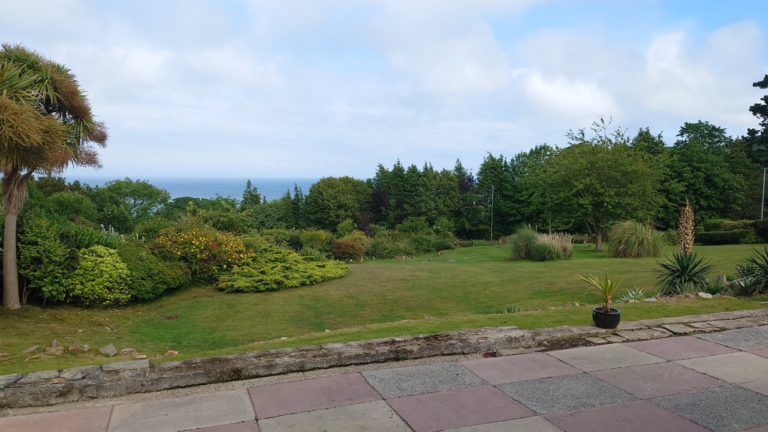
My room had a stunning view across the hosts’ beautiful garden with the sea in the background (see photo below). Another thing I enjoyed was that the garden was home to a colony of wild rabbits. They looked very cute and provided an entertaining all-day cabaret!
The apartment had free wifi which worked perfectly during my stay (not always the case in my experience). The location was quiet and peaceful, and I slept very well.
Financials
As Pounds and Sense is primarily a money blog, I should say a few words about this.
I paid a total of £344.98 for my three-night stay. This was made up as follows:
£91.67 x 3 nights = £275
Cleaning fee £20
Service Fee (which goes to Airbnb) £49.98
I was charged an initial deposit of £112.50, with the balance taken from my card a fortnight before my visit. As mentioned, some of the cost was covered by a refund from a booking I made with Airbnb in 2020 which had to be cancelled.
So the total price worked out to £115 a day. Obviously that’s not cheap, but prices across the board have risen due to Covid and the additional cleaning and other precautions property owners have to take. I thought it was very reasonable bearing in mind the high standard of the accommodation and the convenience of the location.
Things to Do
I won’t give you a blow-by-blow account of what I did while I was there, but here are a few highlights.
Plas yn Rhiw
This National Trust property is about 7 miles from Llanbedrog. It’s pretty remote, and I was glad to have my satnav to guide me. At one point I drove through a tiny hamlet and some children waved at me as I passed. That was a first for me!
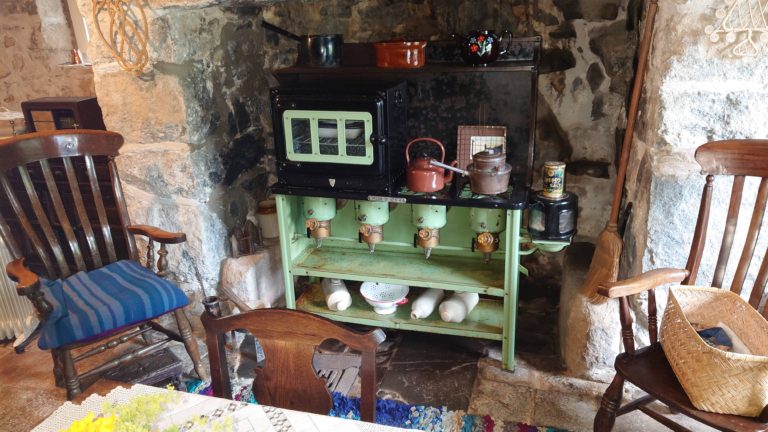
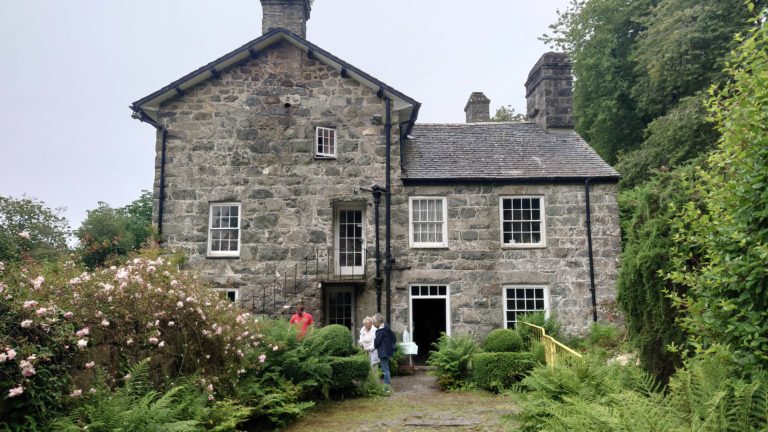
Plas yn Rhiw is a 16th century manor house (with Georgian additions) overlooking the sea. Unfortunately due to Covid only the ground floor was open to visitors. This was basically three rooms, all roped off so you had to look at them from a distance. As you may imagine, it didn’t take me very long to go round. I did though have a nice chat with the National Trust lady who was in the kitchen. She told me about the paraffin cooking range from the 1950s (see photo below). There must have been quite a smell in the house when this was going!
The house also has some beautiful formal gardens (see photo below). And, naturally, there is a tea room. I enjoyed an excellent cappuccino with a jam and cream scone here. As I chose to sit inside (it was raining a bit at this point) I had to complete a Covid tracking form. That was no great hardship, of course.
Overall I enjoyed my visit to Play yn Rhiw even though the restrictions were frustrating. I would like to go back there again when things are more normal and see the rest of the house.
Oriel Plas Glyn y Weddw
This gothic-styled mansion built in 1857 is in Llanbedrog and was five minutes walk from where I was staying.
Nowadays the building is used as an art gallery and museum. It also has an excellent cafe attached which I visited twice during my stay. It’s free to enter and certainly worth a visit if you are staying in the Llanbedrog area. The gallery hosts a permanent collection of Welsh porcelain (said to be among the finest in Wales) along with exhibitions of works by local artists.
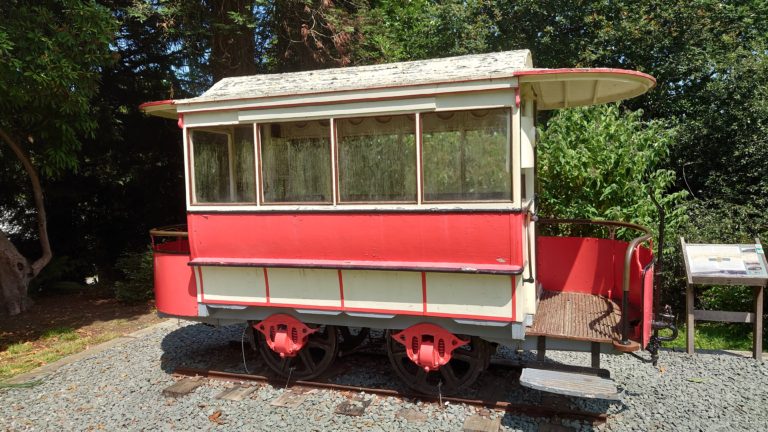
Oriel Plas Glyn y Weddw also has some beautiful gardens and an outdoor theatre, which had some shows advertised for later in the year (though not during my visit). In the grounds there is also this carriage from the horse-drawn tramway which used to run from Pwllheli to Llanbedrog. Apparently this was a popular tourist attraction until the track was damaged by a heavy storm in the 1930s and subsequently abandoned.
Llanbedrog Beach
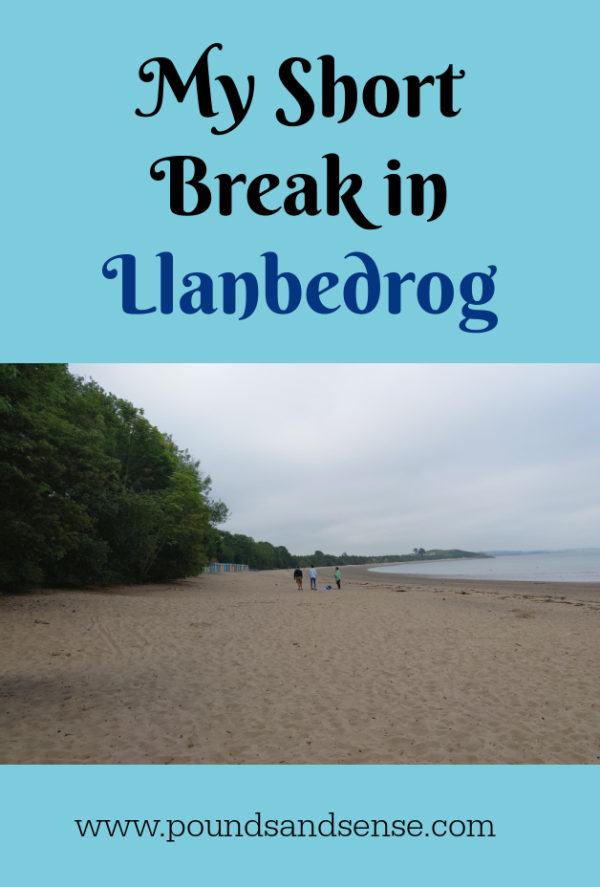
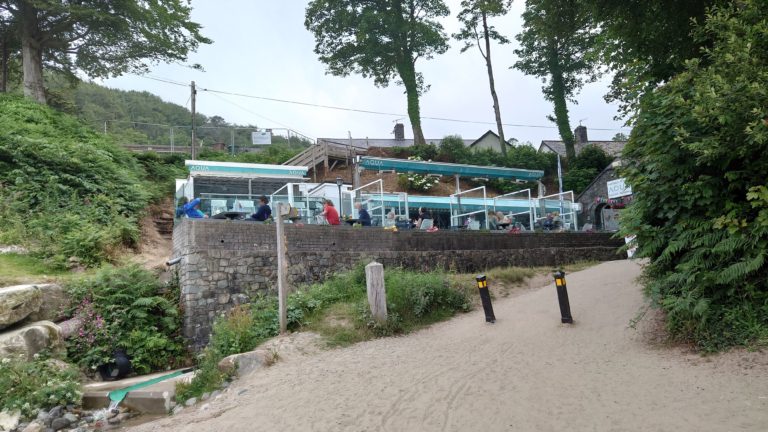
As mentioned, the beach (see cover photo) was about ten minutes’ walk from my apartment. It was sandy and quiet, and offered a perfect place for children to play. The beach huts were well maintained and picturesque. There was also a beach bar serving drinks and snacks all day (though not in the evening). I didn’t go here in the end as it was quite small and I felt a bit awkward about taking up a table on my own when families were queuing up. I did hear good reports about it, though, and it was certainly a lovely location (see photo).
Final Thoughts
As you may gather, I enjoyed my short break in Llanbedrog, and am happy to recommend both the town and the accommodation where I stayed for a short break. Llanbedrog is a lovely place to relax and chill out, and with its beautiful beach could also be a good destination for families with young children. Older children and teenagers might find the lack of other entertainments a bit limiting though.
As for me, this was the first time I had been away since last autumn. After many months of lockdown, I really appreciated the sea air and (mostly) sunshine, and of course the much-needed change of scene. I definitely plan to return there before too long.
As always, if you have any comments or questions about this post, please do leave them below.
If you enjoyed this post, please link to it on your own blog or social media:
Regular readers will know that I have been posting about my personal experience of the coronavirus crisis since the original lockdown started (you can read my September update here if you like).
As previously I will discuss what has been happening with my finances and my life generally over the last few weeks, while trying to avoid being too repetitive!
As always, I will start with the money side of things.
Financial
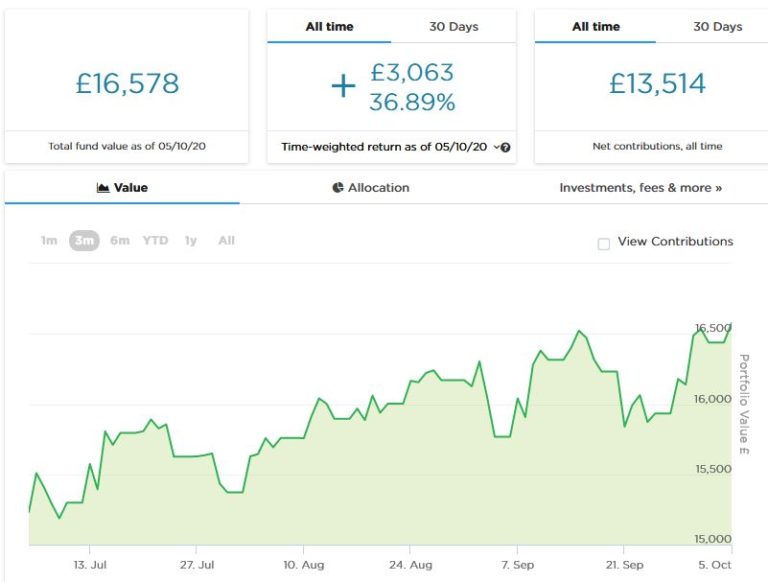
As I’ve done before, I’ll begin with my Nutmeg stocks and shares ISA. This has gone up and down over the last few weeks, but currently stands at £16,578. That is over £500 up on last month, so I’m happy with that! Here is a screen capture covering the last three months…
My Property Partner and Kuflink investments are still both ticking along satisfactorily. Property Partner has resumed paying dividends on some properties, which is appreciated. The five-year sales process has also resumed. There is a backlog, though, so it will probably be longer than five years till the properties I hold shares in can be sold at the current, independently-assessed market price (or retained, of course).
There is nothing really to report about The House Crowd. I assume that the sales of the two properties in which I hold £1,000 shares are progressing, but can understand that it is a slow process at present. At least rental payments are still accruing, which should help to defray some of the selling costs.
There has been no further word either regarding my investments with Crowdlords. As I said last month, I have two remaining investments with them, Kennington Road eco-houses and Trent House. I was told they hope to have exit options for these properties by the end of the year, but I’m not holding my breath. On the plus side, they are paying 6 percent interest on my Trent House investment, which is quite generous in these days of ultra-low interest rates.
Personal
It’s been an eventful few weeks one way and the other.
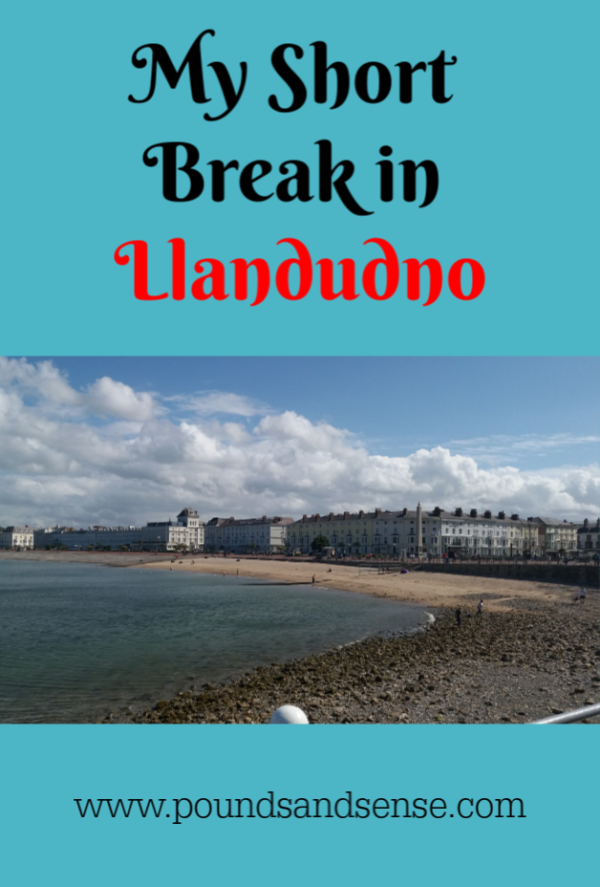
As mentioned previously, I had booked a short break in Llandudno (see cover image) near the end of September. Thankfully I was able to go. If I had left it just a few days later I would have had to cancel, as the Welsh Assembly has decided to lock down the whole of the Llandudno and Conwy area due to rising infection rates. That means no-one can currently go in or out of the area without a compelling reason (and having a holiday booked there doesn’t count).
Anyway, I enjoyed my visit. I stayed in a self-catering apartment, which turned out to be a good choice in most respects. It was on two floors, with a lounge and well-equipped kitchen on the lower floor and a double bedroom and bathroom on the upper. The location was central but quiet, yet just five months’ walk from the sea. The only drawback was that parking was on the street and finding a spot was a bit of a lottery. I was lucky to get somewhere close when I arrived, but later in the holiday had to park on another road half a mile away, which was a bit of a pain. I paid £255 for my three-night stay via Booking.com, which I thought was reasonable. By comparison, the seafront hotels I checked out were charging over £600 for three nights’ bed and breakfast.
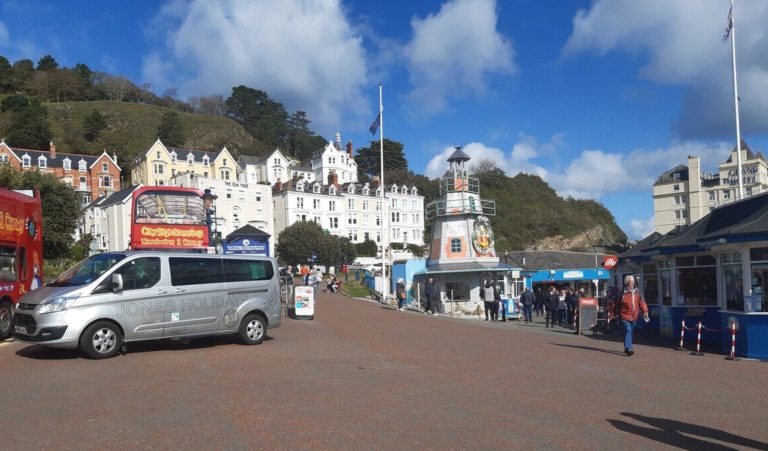
Not surprisingly Llandudno was quieter than usual for the time of year, but there were still plenty of visitors, and many of the small hotels and boarding houses had ‘No Vacancies’ signs in their windows. While some places and amenities were closed, many others were open, and I was pleased to find that the pier was fully operational (see photo below). Professor Codman’s famous Punch and Judy show on the promenade wasn’t running, though – a shame, as there were lots of young children who might have enjoyed it.
On my first day I left my car at the apartment and took a couple of bus tours. The first was the open-top bus that takes a circular route between Llandudno and Conwy and includes a running commentary. I have done this trip before and noticed that the recorded commentary hasn’t changed this year. Mind you, that may be just as well, as a post-Covid commentary would have had to include details about all the hotels and other places that have closed due to the virus, the seafront theatre that became a Covid field hospital, and so forth…
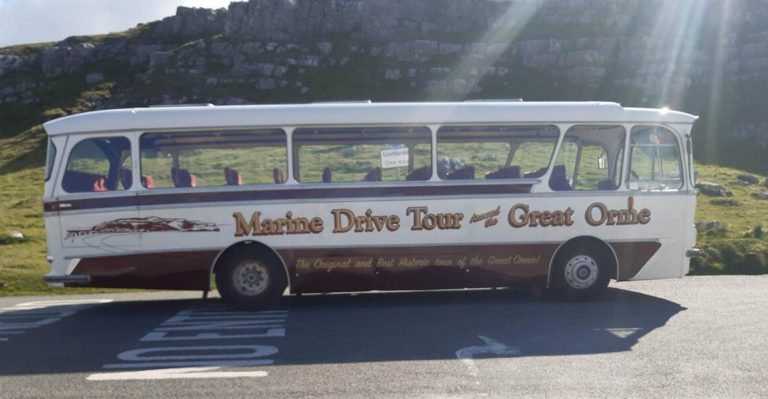
The other trip was on a vintage bus (see photo) around the Great Orme, one of the two promontories at either end of Llandudno’s seafront. This had a knowledgeable driver/guide, who provided an interesting – and up-to date – commentary. I must admit I particularly enjoyed seeing ‘Millionaire’s Row’ at the far side of the Orme. There are some amazing houses here, owned by people who like to preserve their privacy. Obviously the coach passes from a distance, but it was still a good opportunity to gawp at how the super-rich live. I particularly enjoyed hearing about the house that has its own private lift down to the beach!
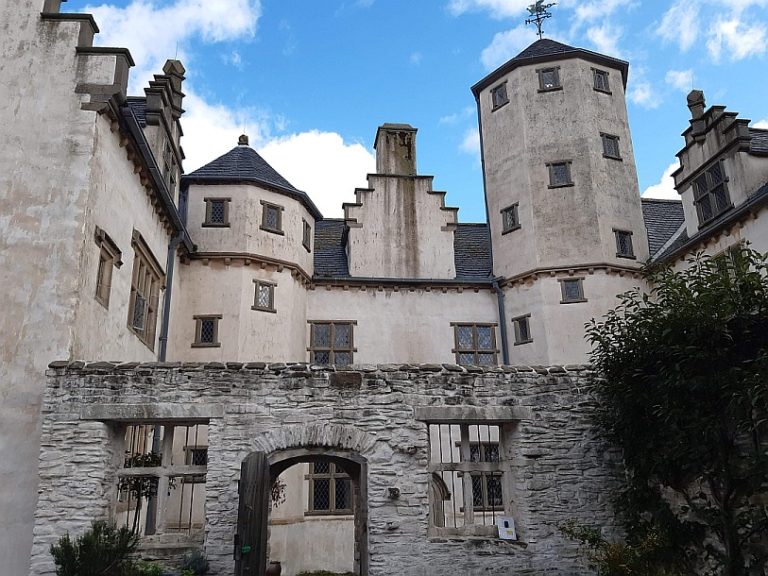
On the second day of my visit I drove to the medieval walled town of Conwy, which is about three miles away. I booked a ticket online to see Plas Mawr, a restored Elizabethan town house (photo below). It was fascinating, and I was glad I took the option of borrowing one of the free electronic guides. You use these to scan a QR code in each room and it provides a commentary on the room itself and various interesting historical tidbits associated with it.
As with my visit to Dunster Castle near Minehead earlier in September, all the usual anti-virus measures were in place. I had to wear a face covering throughout, and staff ensured that there were no more than two households in a room at any one time. It worked pretty smoothly, although you had to follow a set route and there was no possibility of returning to a room once you had left it.
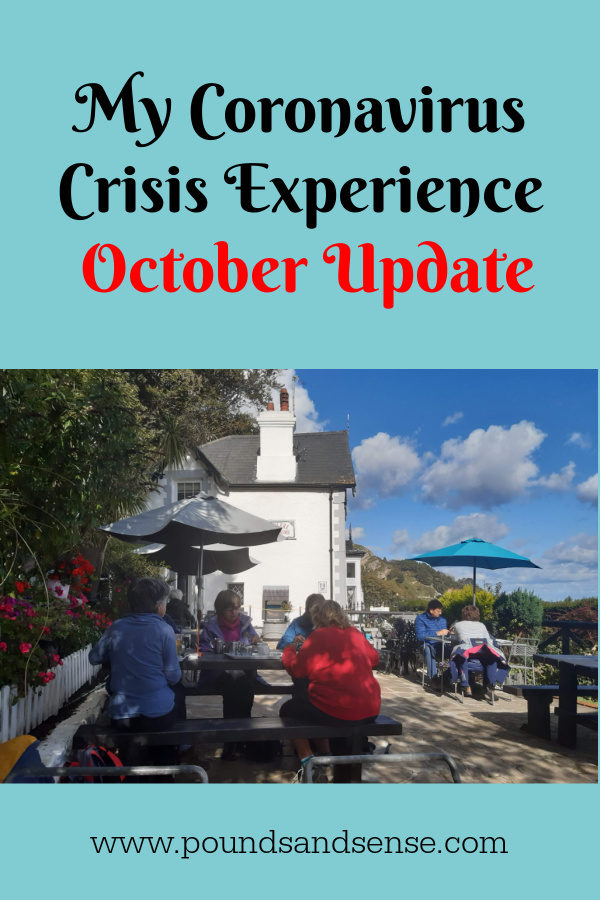
In case you’re wondering, the photo in my cover image shows the Haulfre Gardens Tearoom on the lower slopes of the Great Orme. It’s one of my favourite places in Llandudno, and I was pleased to find it was still open. I enjoyed afternoon tea in their lovely garden on both days of my visit. As you can see, I was pretty lucky with the weather!
As mentioned above, I was very glad to be able to make my trip before the current lockdown would have made it impossible. I feel very sorry for people who booked after me and were unable to go, especially as I have heard that some are now having problems getting their money back. But I am sorry also for the hotels and other businesses who have been left high and dry by the lockdown. I really hope for their sake it doesn’t go on too long 🙁
Moving on, I had an experience I would rather not have had in the last few weeks too. At a routine eye examination my optician saw something she didn’t like the look of in the retina of my left eye. So she packed me off to the eye clinic at Queens Hospital, Burton. The doctor there told me I had a perforation of the retina, and gave me laser treatment then and there. It wasn’t painful but it was obviously nerve-racking. The doctor did say it was a good thing my optician had spotted the problem, as it could have led to a detached retina if left untreated, which is clearly more serious. I have to go for a follow-up check this weekend, but touch wood the problem has been repaired. I guess if nothing else this does show why it’s so important to have your eyes checked regularly even if you don’t think there is anything wrong with them. That applies doubly to older people and those who (Iike me) are very short-sighted, as we are especially susceptible to this sort of thing.
On the Covid front, clearly most of the news hasn’t been good recently. Mind you, in most parts of the UK hospital admissions and deaths remain a lot lower than at the peak of the pandemic in the spring. I have seen the current situation described as a ‘casedemic’, which seems a pretty apt description. Clearly it’s important to protect the elderly and vulnerable at this time. Young people don’t typically suffer severe reactions to the virus, however, so I do wonder if some of the more extreme measures aimed at them are fair or necessary. Personally I am taking what I consider reasonable precautions but still trying to live my life as normally as possible. I volunteered for the UCL Virus Watch panel a few weeks ago and fill in a weekly questionnaire saying whether I have any possible Covid symptoms (none so far). They have also just asked me to take a blood test to see if I have any antibodies or other natural resistance to the virus. I’ll be interested to see the results of that!
As regards masks and such matters, I have been wearing a half-face shield in supermarkets (as a mask sceptic I’m not going to other shops till masks are voluntary again, though I might make an exception if the shop clearly states that they welcome non-mask-wearers). I find this better than the full face shield I was wearing before, as it doesn’t interfere with my vision. Shields are also much easier to breathe through than cloth masks, and I haven’t yet been challenged by any staff members or self-appointed mask police. In case you are interested, here’s an Amazon ad (affiliate) for some half-face shields similar to the type I am now using.
Well, I guess that’s enough for now. I do hope you and your loved ones are staying safe and well. As always, if you have any comments or questions about this post, please do leave them below.
If you enjoyed this post, please link to it on your own blog or social media:
I recently enjoyed a three-night break in the North Somerset coastal town of Minehead.
It was actually my first visit to Minehead. Early this year, before the pandemic struck, I booked breaks in a few places I hadn’t been to before. Minehead was the only one I didn’t have to cancel 🙁
After some online research, I had booked a room at the Channel House Hotel. This is on Minehead’s North Hill (see cover photo), on the opposite side of the bay from the Butlins holiday camp. Here’s a map by courtesy of Google.
The Channel House Hotel had excellent reviews and a great location near the harbour. It had its own car park as well, which is always a plus with seaside hotels!
Here’s some more information about my stay…
The Hotel
The Channel House Hotel is a small country-house hotel with eight bedrooms. They don’t accommodate dogs or children under the age of 15.
I had Room 7, on the top floor. I had been hoping for a sea view, but due to a line of trees I couldn’t really see it from my room. I could at least hear the waves, though! The hotel is in a quiet, peaceful location, and I slept very well on all three nights.
As you would expect in these strange times, various anti-virus precautions were in place. I had my temperature checked on arrival, and hand sanitizer was available by the front door and on all the tables in the dining room.
I opted for breakfast and an evening meal, although you can book bed and breakfast only. Other dining options near the hotel appear limited, though, especially in these times of Covid.
There was a good choice of breakfast options for a small hotel. As well as the full English (which you can customize as you wish) you could also have Eggs Benedict in three different variations or smoked haddock with poached egg. You could also have a plate of mixed fruit, cereal and/or yogurt, plus the usual toast and hot drinks. I’m not sure what the normal arrangements for breakfast are, but obviously at present they can’t have a self-service buffet, so most meal options are brought to your table.
There is a choice of starters and main meals in the evenings, with guests asked to say what they would like after breakfast. Fair enough in my view, as there is obviously no point in the hotel preparing meals nobody wants! That applies especially at the moment with visitor numbers so low – partly due to the virus and partly (I understand) as a deliberate policy to help preserve social distancing. During my stay, there were never any more than six guests including me.
Evening meals are served at 7.00 pm, with pre-meal drinks in the small bar from 6.30. Although the latter is obviously optional, I did find this an enjoyable way of meeting and getting to know my fellow guests. There was one couple and all the others were solo ladies around my age or older. We all got along well. I enjoyed hearing what they had been doing during the day, as most of them knew the area better than I did.
The evening meals were very good. They comprised five courses: starter, main, dessert, cheese and biscuits, and coffee. That may sound a lot, but the portions were sensibly sized, so I didn’t feel too guilty!
Fish seems to be a speciality and I particularly enjoyed the sole I had on the first night. One thing that surprised me, though, was that the menu never included any vegetarian main courses. They do cater for veggies and those with special diets, so I’m sure if I’d asked I could have had something. For three nights I was perfectly happy with what was on offer. But as I eat vegetarian quite often at home, it might have been nice to have that option on the menu as well, some nights at any rate!
My twin-bedded room was more than adequate for my needs. It had a small (by modern standards) wall-mounted TV, but that was fine for a short visit. The WiFi worked well once I sorted out a bit of confusion over the password, and I was able to use it in my room as well as the communal areas. The bathroom was a good size and had a bath with a modern electric shower over it. My bed was comfortable and there was plenty of storage space. I was well looked after and had an enjoyable and relaxing stay.
Financials
As Pounds and Sense is primarily a money blog, I should say a word about this.
I paid £360 for my three-night stay (including breakfasts and evening meals) at the Channel House Hotel, which I thought very reasonable. If I had chosen bed and breakfast only, the price would have been £285. As you may gather from this, the hotel charge a fixed price of £25 for their five-course evening meals.
You can check current prices and availability on the Hotels.com website. You can book this way (which I did) or directly with the hotel. The latter method may or may not work out cheaper.
Things to See and Do
Inevitably at the time of my visit a lot of places and attractions were either closed or not operating normally.
I was particularly disappointed that the West Somerset Railway – said to be the longest heritage railway in England – was not running. At the time of writing there is still no indication when it will reopen.
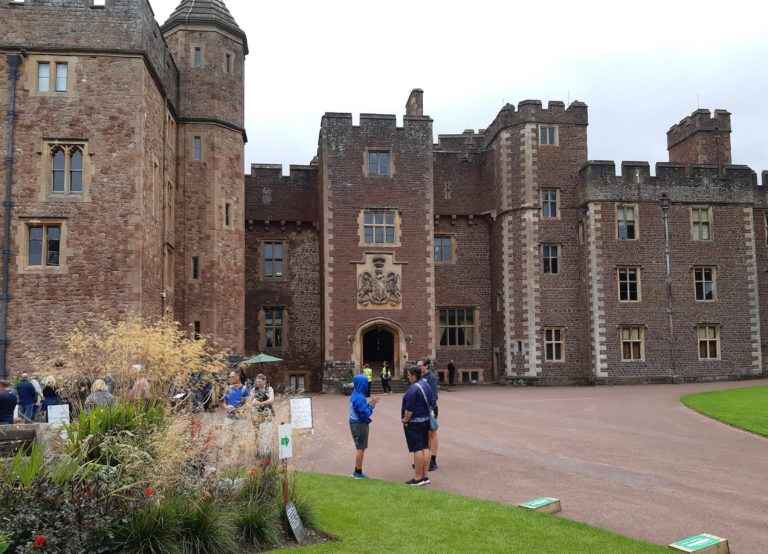
I was though able to visit Dunster Castle, which is owned by the National Trust. As a Trust member I was able to get free admission, but had to book a ticket in advance on the website. They are doing this to ensure that visitor numbers are controlled, to help maintain social distancing.
Dunster Castle goes back to at least Norman times, with an impressive medieval gatehouse and ruined tower providing a reminder of its long and sometimes turbulent history. The castle became a lavish country home during the 19th century for the Luttrell family, and the furnishings and decor are largely from that time. The castle is surrounded by a terraced garden displaying varieties of Mediterranean and subtropical plants. Below this is a riverside woodland garden leading to a historic working watermill (unfortunately closed at present).
Due to anti-virus measures, visitors have to follow a long and winding route through the gardens to get to the castle, so my top tip is to allow longer than you would expect to arrive at your allotted time. Bear in mind also that you will be expected to follow a similarly circuitous route afterwards to get back to the car park. This means there is a lot of walking before and after you see the castle itself. I was okay with that, but I suspect some older visitors might struggle.
Anyway I duly arrived at the castle entrance and, after giving a phone number for track-and-trace and using a hand sanitizer, was allowed to enter (wearing a face covering, of course). Only certain parts of the castle were open to visitors, not including the kitchens for some reason. On the plus side, though, with so few visitors there was plenty of room to see everything on view. Although entry is by timed ticket, once in you are allowed to stay for as long as you want (or at least for as long as you can stand wearing a face covering).
I spent around an hour in the castle, after which I was ready for some refreshments. I am not sure if the castle has a coffee shop normally but if so it was closed. They did though have a pop-up cafe in the gardens (you can just see this to the left of my photo above). I had a hot chocolate and a slice of coffee-and-walnut cake here, which I very much enjoyed even though it wasn’t exactly a healthy option!
Dunster Castle was the only formal visitor attraction I visited during my stay, and I do recommend it, so long as walking isn’t a problem for you.
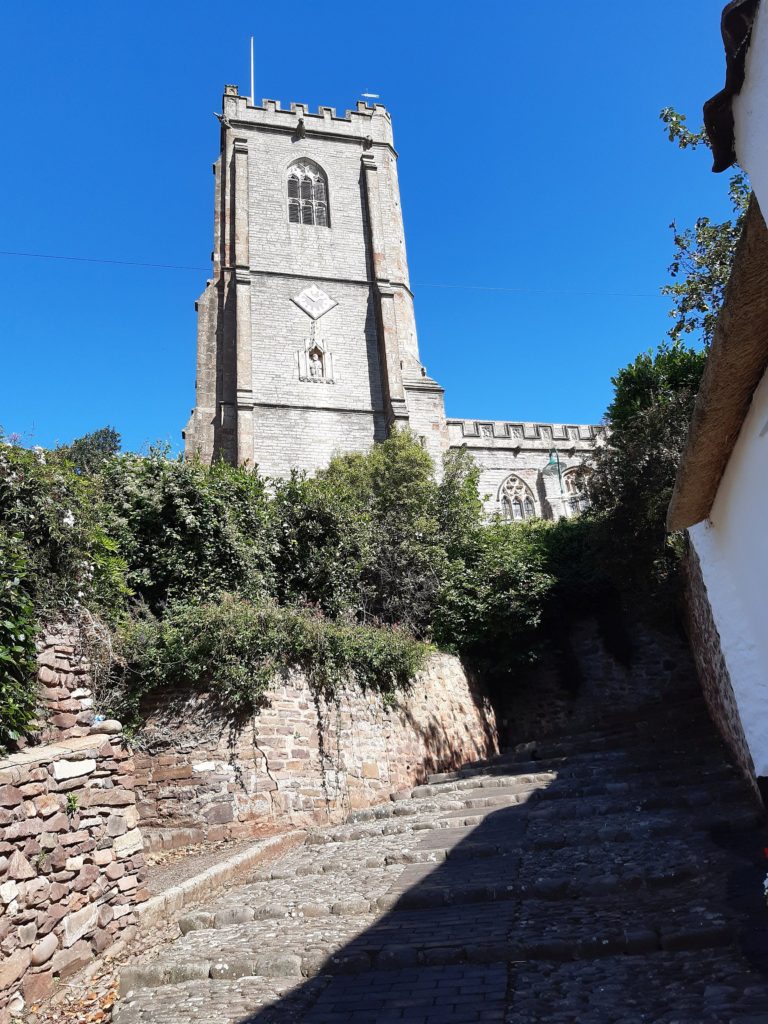
In fact, I did a lot of walking throughout my break. That included along the seafront, from the harbour to the Butlins camp, and also up North Hill, which takes you to the edge of Exmoor. On the walk up North Hill, I stopped to admire the 16th century St Michael’s Church (also sadly closed).
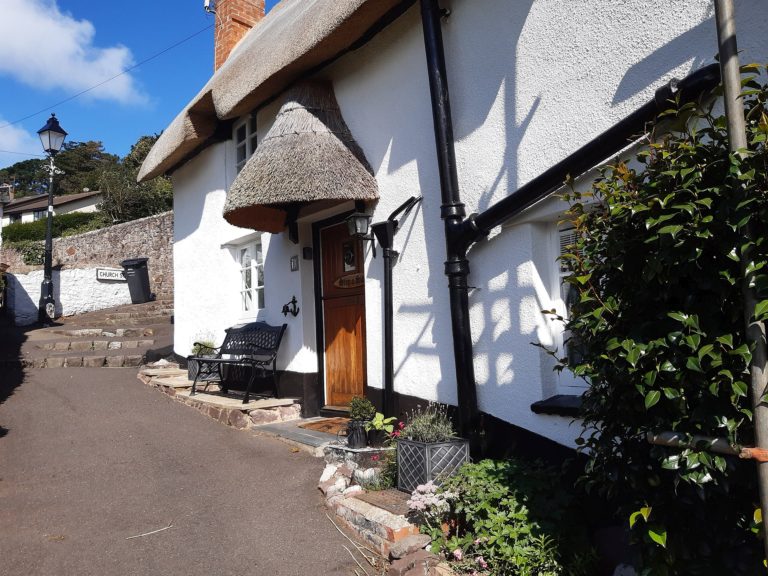
Near the church is an area called Church Steps, where there are some beautiful thatched cottages.
I would like to show you the view across the bay from the top of North Hill, which I am told is quite spectacular. When I got to the viewing area, however, a closed and padlocked gate barred my way, with a forbidding warning notice about Covid-19. Having made the not-inconsiderable effort to walk up the hill (most people drive), this was pretty disappointing. I sat at the roadside for a few minutes collecting my thoughts before heading down again. That was probably the low point of the holiday!
On my last day in Minehead I took a short stroll to Blenheim Gardens, a well-tended and attractive public park. The cafe was closed as well, but I wandered down to the harbour and enjoyed a takeaway cream tea there 🙂
Closing Thoughts
Overall, I enjoyed my visit to Minehead, though obviously the fact that so many places were closed did spoil it a little. I had an enjoyable, relaxing time, with plenty of healthy fresh air and exercise (just as well in view of the cakes and five-course dinners!). I will hope to go back again when things are more normal.
As always, if you have any comments or questions about this post, please do leave them below.
If you enjoyed this post, please link to it on your own blog or social media:
A great number of people today need to transfer currencies, or receive transfers from abroad, for many different reasons. As globalization extends, this need has become more frequent as geographical borders become less relevant.
For example, our parents couldn’t even dream about services like eBay or Alibaba, where you can buy anything and have it delivered from a dozen countries away. And the whole thing might be cheaper than buying it in your local store!
But here is where the matter of foreign currency transfers becomes important. Paying for something abroad or getting money sent to you might not be cheap. That’s because not only do you have to pay bank fees for the transaction, you also lose money on currency exchange, which is often a mandatory step in cross-border transfers.
Luckily, today there are alternative money transfer services that allow you to cut these costs. You’ll need to look into them if you require regular foreign currency exchange (FX or forex) services.
Why You Might Need to Make Foreign Currency Transfers
One reason you might need to make a large money transfer abroad is real estate. Buying property is an important part of the retirement planning process and many Britons choose to retire abroad. For example, the latest data indicates that there are about 466,000 British pensioners living in the EU. There are even more among the 5.5 million Brits living worldwide.
Even if you don’t plan on moving or buying a vacation home on some tropical beach, you might consider investing. Investing in real estate is one of the less risky methods for growing your fortune. Of course, the coronavirus crisis has heavily affected this industry. But there are still some very promising prospects for the residential housing market.
Also, today you’ll need to make international payments when booking your holiday accommodation. So, if you plan to travel at all, you’ll need to look for cheap money transfer solutions.
Anyone involved in international business also needs to make and/or accept international payments. This also includes the simple process of buying goods through one of the many e-commerce platforms.
In addition to those reasons, if you are an expat or a traveller, you’ll need to exchange money regularly. The same goes for dealing with transfers like inheritance or even accepting dividend payments from your investments.
All in all, living in the modern world makes you exposed to foreign currency exchange and transfers in many ways. Therefore, the knowledge of how to save money on these transactions is sure to be useful.
How Much Do Foreign Currency Transfers Cost in a Bank?
The cost of an international bank wire transfer is a very complicated issue. First of all, you need to understand that banks will advertise, and sometimes even show you, only the transfer fee. In the UK those range from £8 to about £40. That doesn’t seem too bad, especially for large transfers, right?
However, the truth is that banks are deceiving customers most of the time. If they were fully transparent, you would understand that what truly matters is the FX rate margin. That’s the amount that the bank charges per currency conversion on top of the mid-market exchange rate.
Simply put, high FX margins are why you lose so much money on currency conversions. Different banks use different margins and that’s why they offer different exchange rates. But if you compare the options offered by top UK banks, you’ll see that they are all very close.
Therefore, you don’t have much of a choice.
Also, there might be additional fees involved in a cross-border money transfer. The recipient bank might charge its own fees. If there are any intermediary ‘stops’ along the way, more fees will come.
All things considered, the real cost of an international money transfer can go up to 3-10% of the transfer amount. This cost will be higher for exotic currencies and transfers to remote locations. It will go down a bit for large transfers because banks might offer better terms to VIP clients.
However, the total will always be quite high.
Leading Money Transfer Service Alternatives From the UK
With bank transfer costs so high, a necessity for an alternative emerged. The solution came in the form of FX brokers and money-transfer companies. These businesses offer services similar to banks, but they have much lower overhead costs. Therefore, they are able to keep both the margins and fees very low.
In fact, many companies charge no transfer fees at all for the majority of transactions. However, they use different margins that often depend on the transfer size. Thus, you should always compare foreign currency transfers before choosing a service. This won’t be difficult as all top companies in the industry offer free quotes. They also have transparent pricing schemes.
On average, a transfer with one of these companies will cost you 1-3% of the total. Industry leaders even offer options that allow you to cut costs below 1% for large transfers.
The most notable UK-based FX companies today are TransferWise and WorldFirst. There are other notable businesses as well. However, they cannot compete with these two giants that have multi-million funding.
TransferWise
TransferWise launched not even a decade ago and it has already become a major disruptor in the banking industry. It took over the FX money transfer industry rather fast as well. The main selling point of this company was offering not merely cheap transfers but also a fixed margin scheme.
This means that TransferWise managed to offer its customers consistency and a chance to save a great deal of money. Because of the fixed margins, its services were the most affordable in the industry. The company is now valued at over $3.5 billion and it’s expanded to many countries, including the US.
WorldFirst
WorldFirst is another veteran in the FX transfer industry. This company built a solid reputation for its reliability and trustworthiness. Launched back in 2004 literally from a basement, WorldFirst became one of the industry leaders within a few years.
In 2019 this fintech business was purchased by Ant Financial of the Alibaba Group. This allowed WorldFirst to launch a major change in pricing. It had already been one of the top companies, but it could not compete with TransferWise in affordability. However, the new pricing scheme with fixed margins that go below 0.55% makes WorldFirst a cheaper alternative even to TransferWise. At the moment, there is no cheaper option for foreign currency transfers in the UK. Also, WorldFirst has a very wide reach due to its association with Alibaba, though it’s not yet available in the US.
In Conclusion: Do Your Research for Saving Money on Foreign Currency Transfers
FX money transfer companies today offer great opportunities for money saving. However, do not forget that the lowest cost doesn’t necessarily mean the best offer. These companies have a number of requirements and additional services that you should research. For example, some have a minimum transfer limit. Others offer FX hedging tools that will be essential for reducing risks for businesses and investors.
Thus, be sure to compare all options you have available and research them thoroughly. Watch out for scammers, and choose only those businesses that have a good standing in the industry.
This is a sponsored post.
If you enjoyed this post, please link to it on your own blog or social media:
Regular readers will know that I have been posting about my personal experience of the coronavirus crisis since lockdown started (you can read my August update here if you like).
As previously I will discuss what has been happening with my finances and my life generally over the last few weeks. I will try to avoid being too repetitive, as I have obviously published a few of these updates now and not everything changes that much from one update to the next!
As always, I will start with the money side of things.
Financial
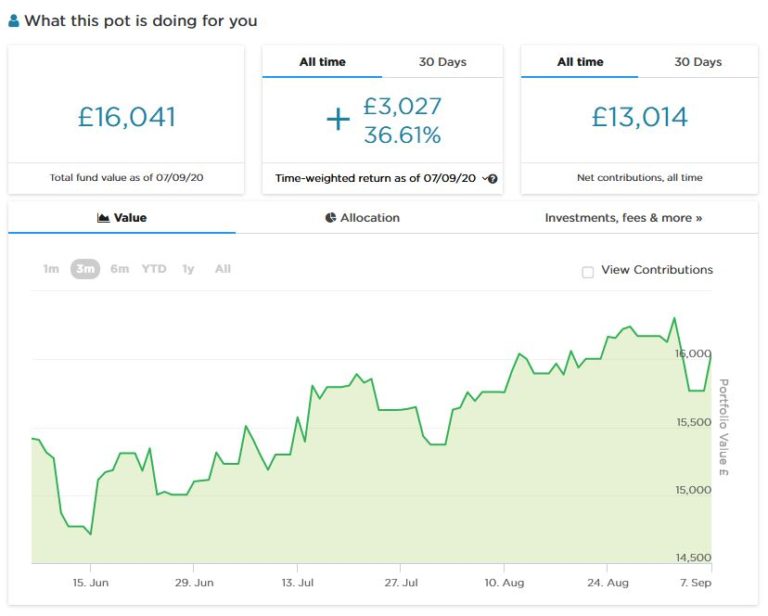
As usual, I’ll start with my Nutmeg stocks and shares ISA. This has gone up and down over the last few weeks, but is currently at £16,041. At one point it was as high as £16,270, but it’s still over £400 up on last month, so I’m not complaining. Here is a screen capture covering the last three months…
My two Buy2LetCars investments are still delivering the promised monthly returns without any hassle. I was pleased that Buy2LetCars also chose to feature me and my blog posts about the company in their email newsletter last month. That brought me a few more readers, so a special welcome if you are one of them! Again, if you’d like to learn more, you can read my review of Buy2LetCars here and my more recent article about the company here.
There is nothing particular to report about my Property Partner or Kuflink investments, both of which are ticking along satisfactorily. As regards The House Crowd, another of their properties in which I hold a share has just been sold, so that is around £2,000 in capital I am expecting back in the next month or two. Unfortunately I am not expecting to make any profit on these two investments, though I have of course received rental payouts – or dividends if you prefer – from these properties over the time I’ve held shares in them.
As regards Crowdlords – which I discussed last month – I wrote asking about two investments I still have with them, Kennington Road eco-houses and Trent House. I had received no information from Crowdlords about either of these projects since before lockdown in March, which I found disappointing.
I received a prompt and courteous reply from Crowdlords co-founder, Richard Bush. He told me that the properties in question were proving difficult to exit from and the situation had been complicated by the change in their FCA status. He added: ‘Prior to the FCA announcement we were about to launch new investments for both of these properties, giving those that wish to leave an exit option and others who like income-based investments to take over, alongside mortgages. This is still our plan, though at the same time we will also try and sell both properties…Once we’re back up and running with Equity and Mezzanine investments we will turn our attention to the BTL’s (including Kennington Road) and still hope to have an exit option available by the end of the year. In the meantime Trent House will continue to earn 6% p.a interest.’
So I guess that is somewhat reassuring, but I’m still not holding my breath about seeing any return from either of these projects any time soon. It’s a shame because I’ve always liked Crowdlords and had good returns from my other investments with them. But obviously these are unprecedented times and property markets generally have been struggling. I will wait to see what new offering the company comes up with, but it will have to be very enticing indeed to persuade me to invest with them again.
As mentioned last time, I applied for the second (and final) round of SEISS (Self Employed Income Support Scheme) payments in mid-August and duly received payment a few days latter. I haven’t seen any complaints or problems about the administration of the SEISS programme and think HMRC deserve a lot of credit for how smoothly it has run. I do know there were issues over eligibility, however, so my commiserations go to any self-employed people who – for no fault of their own – failed to qualify.
In any event, if you are self-employed and eligible for a SEISS payment, applications are open now, so don’t delay!
Personal
In the last few weeks I have done a few things for the first time since lockdown in March. For one, I took advantage of the government’s Eat Out to Help Out scheme to enjoy a couple of pub lunches (okay, one was more of a pub brunch). It was great to be doing something more normal again and catch up with old friends I hadn’t seen since the start of the year. And paying half-price was a nice bonus!
It was obviously a different experience from the usual. When my friend and I arrived for our pub lunch, we were met by a man at the door who checked our booking and showed us to our table (no chance to pick our own as we would normally). One thing I noticed was that no staff were wearing masks and only a few customers. As a mask sceptic this didn’t bother me, but again I was struck by the incongruity of a situation where you can be in a pub surrounded by other diners for a couple of hours with almost nobody masked, then go to a supermarket and be forced to put one on while there (unless you’re exempt, of course).
In any event, I really enjoyed my pub lunch and catching up with my friend. We couldn’t pay cash as we would normally – nobody wants cash nowadays in case it’s contaminated – so my friend paid on his card and I later forwarded my half to him via PayPal. That was a first!
I also went to Birmingham to meet another old friend for brunch at one of the Wetherspoons pubs there. It felt odd to be on the streets in Brum and see so many people wearing masks in the open. Nobody does this in the small town where I live, but I guess it’s a bit different in big cities. Anyway, my friend arrived before me and was directed to a table at the back of the pub. I then had to wander around the tables looking for him behind various protective screens, feeling like a voyeur or a spy. But thankfully I found him eventually!
The instructions on the table told us to order via the Wetherspoons app. That task fell to me, as my friend doesn’t have a smartphone. I managed to do it after signing in to the pub’s free WiFi. I saw several people struggling with this, though. They either ended up hailing a passing waitress or gave up and ordered at the bar.
Anyway, the app worked well for me, and I was impressed by the speed with which cutlery was brought to our table, shortly followed by our meals (two all-day breakfasts). We both also ordered coffee with limitless refills. I was pleased to discover that this was still on offer, though you are now supposed to ask a staff member for a new mug before going to the coffee machine again. I did this, but I don’t think anyone else did.
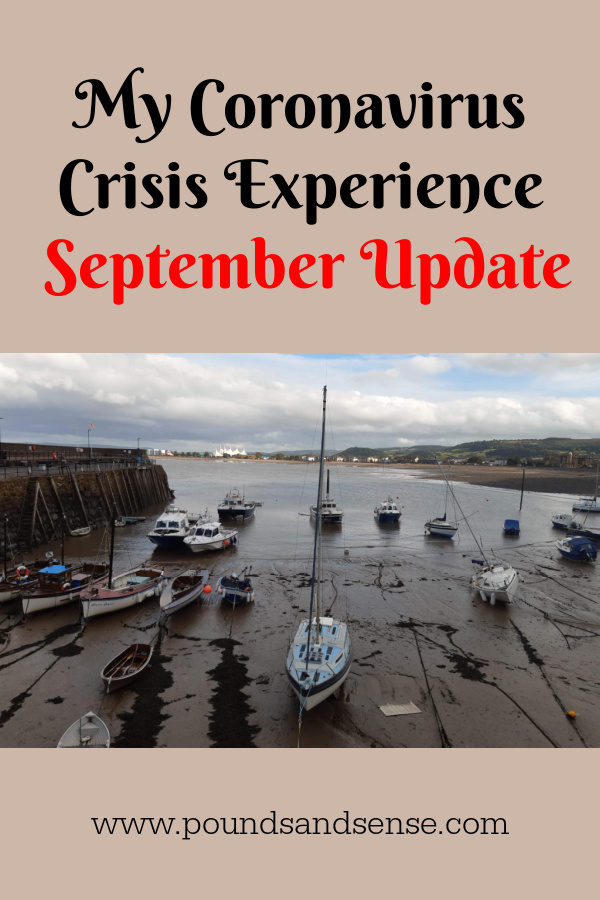
I have just returned form a short break in Minehead on the Somerset coast (my cover image shows the harbour with the Butlins camp in the background!). I won’t say too much about this here as I plan to do a separate post about it soon. But I will say it was an enjoyable and relaxing break, only slightly marred by the fact that many of the attractions were closed due to Covid. I did manage to visit the nearby Dunster Castle (pictured below), which is owned by the National Trust. Sadly only some areas were open to the public, with various restrictions due to the virus. But on the plus side, because visitor numbers were being limited, I had plenty of space to appreciate what was actually on view!
Going back to masks and such matters, I have been wearing a full face shield in supermarkets (I’m not going to other shops till masks are voluntary again, though I might make an exception if the shop clearly states that they welcome non-mask-wearers). I find this a good compromise as it is much easier to breathe through than a cloth mask, and I haven’t yet been challenged by any staff members or self-appointed mask police. I also recently obtained a half-face shield which covers you from the nose downward. That makes it more portable, and also means your vision isn’t impaired (shields are made of clear plastic, but with my eyesight I struggle a bit reading lists of ingredients through them). In case you are interested, here’s an Amazon ad (affiliate) for some half-face shields similar to the type I bought.
I am looking forward to another late summer break in a couple of weeks’ time. I shall be going to Llandudno in North Wales, one of my favourite UK holiday destinations. I shall be staying in a self-catering apartment and am looking forward to shopping for food without having to put a mask on (Wales so far having sensibly resisted the pressure to make masks mandatory in shops). More about that next time!
And that’s it really. Recent reports are indicating an uptick in the virus among young people especially, and of course the doom-mongers are out in force again. Nonetheless, I think there are still plenty of reasons to stay positive. Hospital admissions and deaths are thankfully still at very low levels. And in my personal opinion we are very unlikely to see a ‘second wave’ anywhere near as bad as the first. Of course, it’s important to continue taking sensible precautions such as hand-washing and using sanitizing gel, along with social distancing (if you can keep up with the ever-changing rules). Personally I think that any marginal benefits from wearing masks are more than offset by the way people misuse them in practice. But I’d better not go on any more about that!
I hope you and your loved ones are staying safe and sane during this crazy time. As ever, if you have any comments or questions about this post, please do leave them below.
If you enjoyed this post, please link to it on your own blog or social media:
For many older people the free bus pass (officially known as the older person’s bus pass) is a valuable concession. It helps them get about and maintain their independence without eating into their often limited income.
Holders typically get free bus travel within their local authority area between 9.30 am and 11 pm on weekdays and all day at weekends.
The rules for when you qualify for a free bus pass vary according to where in the UK you live. In Scotland, Wales and Northern Ireland, it’s straightforward. You qualify once you reach your 60th birthday.
Those living in England are not as fortunate. In this case, you won’t qualify until you reach the current state pension age. This is currently 66 for both men and women. The state pension age will start to increase again from 6 May 2026, and will reach 67 by 6 March 2028.
Once you have reached the qualifying age in whichever country of the UK you live, you can apply via the government’s Apply for an Older Person’s Bus Pass page. You will see a box on this page in which to enter your postcode. Clicking through this should take you to the website for your local authority (though you may have to navigate to the page for travel concessions from there). You can then apply online for your bus pass. Requirements can vary from one local authority to another, but in general you will be required to upload a passport-style photo, proof of identity, and proof of residency in the area concerned (e.g. a council tax bill). For info about how to renew your bus pass online, please click here.
If you don’t want to apply online, most authorities also offer an option to apply in person, e.g. at a public library. Your local authority website should have more information about this.
Some local authorities have their own schemes and concessions for older (and/or disabled) people. Again, your local authority website should tell you if there are any special concessions for older people in your area, or you can ask at your local library.
In London, once you reach the female state pension age you can apply for an Older Person’s Freedom Pass. This entitles you to 24-hour free travel across Transport for London’s networks (except for some river boats where travel is half price). You can check your eligibility for a Freedom Pass and apply here.
Cards and Discounts
Even if you don’t yet qualify for a free bus pass, there may be other ways you can get free or discounted travel.
If you live in London and are 60 or over, you can apply for a 60+ Oyster card. This provides free travel on the London Underground, Overground, trams and buses, as well as some TfL Rail and National Rail services, but you can’t use it outside London. The card has a one-off £20 administration fee. You can apply online from two weeks before your 60th birthday. For more information about the application process see the TfL website.
Also once you are 60 or over, you can apply for a Senior Railcard. This currently costs £30 a year and gets you a third off most rail journeys, local and national. You can get more information and apply here.
Or if you’re 60 or over and make regular use of National Express coaches, you can buy a Senior Coachcard which costs £12.50 (plus 2.50 p&p) and offers a third off travel throughout the year. With this card you can also buy a £15 day-return on Tuesdays, Wednesdays and Thursdays to anywhere in the UK (excluding airports) as long as you book three days in advance. You can apply for a Senior Coachcard via the National Express website.
As always, if you have any comments or questions about this post, please leave them below. Happy travels!
If you enjoyed this post, please link to it on your own blog or social media:
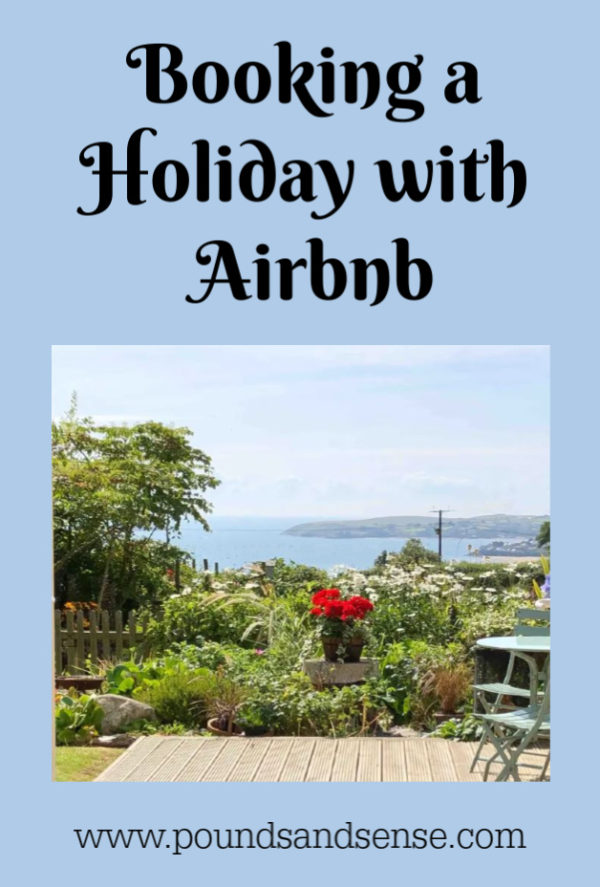
I recently booked my first ever break with Airbnb.
Of course, I’ve been aware of this person-to-person accommodation booking platform for some time, but till now I’ve avoided using it myself. In the back of my mind were stories I read years ago about people renting out sofas in their living room to make a bit of extra cash. At my age that prospect – the sofa in the living room, I mean – definitely didn’t hold any appeal!
Times change, though, and it’s important to keep up with them. In my case I wanted to book a short break in a part of North Wales that isn’t well served by hotels, the Lleyn Peninsula. Okay, I could have stayed at the Haven Holidays Park (formerly Butlins) in Pwllheli, but I was pretty sure that wouldn’t be my cup of Welsh tea either.
So after researching the relatively few hotels in the Abersoch area where I wanted to stay using Booking.com (affiliate link), I decided it might be time to give Airbnb a try. In recent years, as regular readers will know, I have become more accustomed to booking self-catering accommodation for short breaks, and have realised that in some ways I prefer this to staying in hotels.
In this blog post I thought I’d share my experience of registering with Airbnb and finding and booking accommodation. I hope this might inspire you to try it yourself if you haven’t yet taken the plunge with Airbnb.
Of course, you can also become an Airbnb host and make money that way. I haven’t tried this myself, but did cover the subject in another blog post titled Boost Your Income by Renting Out a Room.
Registering with Airbnb
Before you can make a booking with Airbnb, you have to be registered on the website. You can still browse without joining but (as I found out) if you find somewhere you like available on the dates you want, you will have to go back and register and then start the whole process again. This is a frustrating waste of time. It’s free to register and doesn’t take long, so if there is any chance you might want to book through the platform, my advice would be to do this first.
Registering with Airbnb is similar to registering on other booking websites. One thing to be aware of, though, is that as well as your personal details, as proof of ID they also ask you to upload a scan of an official document such as your passport or driving licence with your photo on it. Once you have done this, you have to wait for your ID to be approved. In my case this happened within 15 minutes and I received notification by email.
Once you’ve done all that, you can start searching for your perfect holiday retreat!
Searching Airbnb
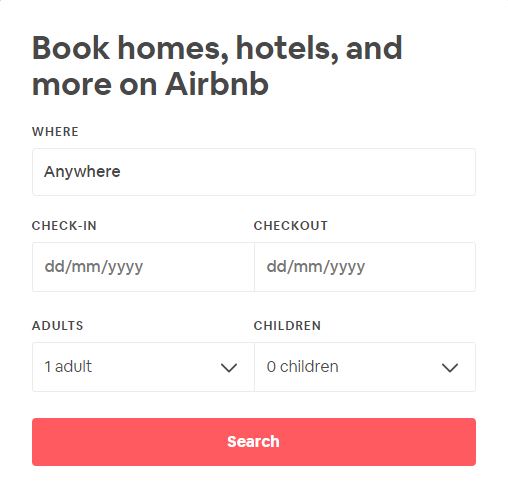
Once you are logged in, you can start your search using the box on the Airbnb front page (see below).
As you can see, you have to enter where you wish to go and the dates you want to arrive and depart. You have to choose specific dates, even if (as I was) you are flexible about this. Once you have found somewhere you like, you will be able to see what other dates that accommodation is available. If you want to check all possible places in the area, though, you may need to do a few searches using different dates.
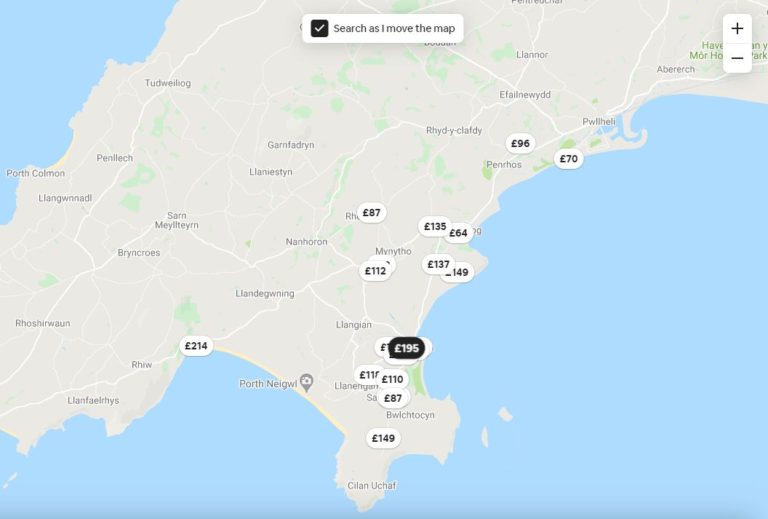
Anyway, once you have entered the relevant details and clicked on search, a new page will open showing you a map of the area in question. Here’s what I got when I searched just now for accommodation near Abersoch in early May (not actually when I am going).
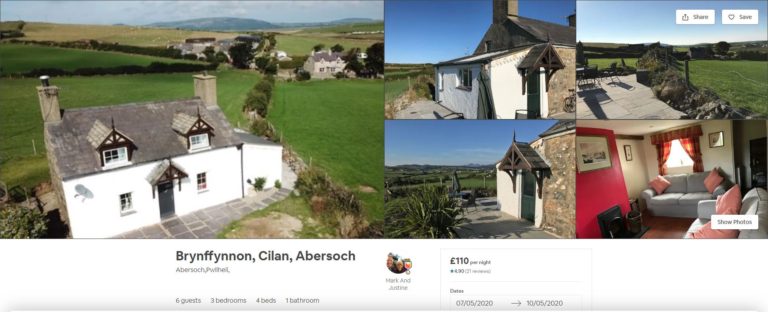
As you may gather, each of the prices in a small oval represents an Airbnb place with availability on the dates in question. The price is the cost per night. Clicking on any of these will bring up brief info about the accommodation in question. If you like the look of this, clicking again will bring up a new page with photos and more. Here’s the top of the page for a cottage I like the sound of, though it would be too large for me alone.
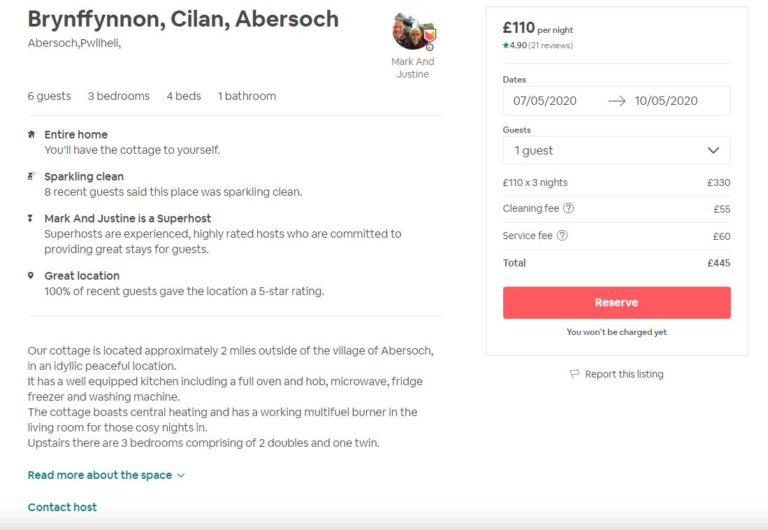
Also on this page are full details about the accommodation and a reservation form – see below.
As you can see, for your money you are getting considerably more than a sofa in someone’s living room 😀 £110 a night seems very reasonable to me for a cottage that can accommodate a family of six.
As you may have noticed, there are some additional charges. Many Airbnb properties – though by no means all – charge a cleaning fee. In addition, you will always be charged a service fee. This goes to Airbnb, and is one way they make their money (they also charge a fee to the property owners).
If you scroll down you will see various other items, including visitor reviews and a calendar showing when the property is (and isn’t) available. Also towards the bottom of the screen you will find the cancellation terms. These are set by the hosts and vary considerably, so be sure to study them carefully. Often you will be able to cancel free of charge until a certain date. After that, you may have to pay the service charge and perhaps part or all of the booking fee as well.
Making Your Booking
If you want to proceed, clicking on Reserve will take you to a new page where you can confirm your booking and provide payment information. This is pretty standard, although one thing you don’t normally have to do on hotel booking sites is write a message of introduction to the property owners (your hosts).
Airbnb provide a ready-written message you can use by default. This is pretty bland, however. I think it’s best to take a few minutes to write something more personal about who you are, why you want to visit the area, and so on. This is especially important if you are new to Airbnb and don’t have any history on the site or reviews written about you (yep, Airbnb hosts review guests as well as vice versa). In theory a host can decline your booking if they don’t like the sound of you, so it’s good to reassure them that you are a normal human being and will treat their property with respect.
And that’s it, basically. When I made my booking it all went through smoothly and I received a thank-you message from the hosts within an hour. I haven’t been on the holiday yet, but will post a review on this blog after my return.
As always, if you have any comments or questions about this post, please do leave them below.
If you enjoyed this post, please link to it on your own blog or social media:
I recently enjoyed a three-night break in the North Wales coastal resort of Llandudno.
I have been to Llandudno a few times. I started going about 10 years ago when my partner, Jayne, was still alive. She fancied the idea of staying in a traditional British seaside resort. Llandudno certainly ticks all the boxes there, with its sweeping promenade, long pier, and Punch and Judy show by the beach 🙂
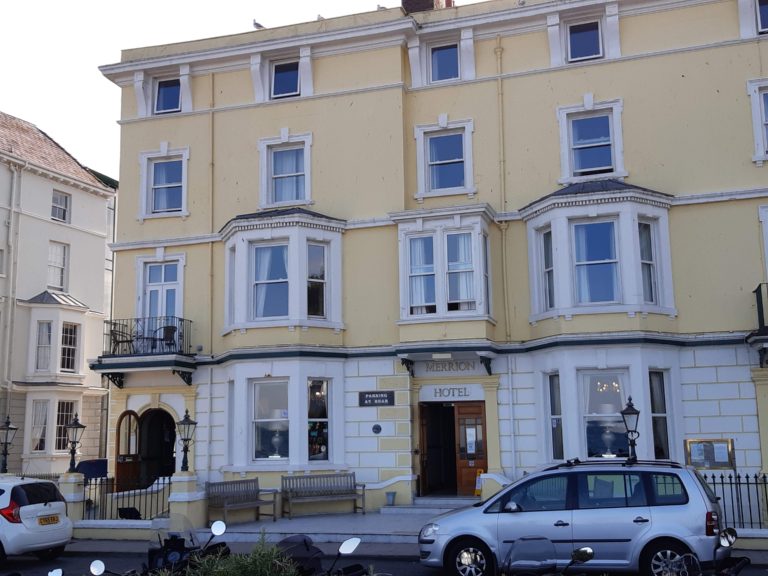
I have stayed in various hotels and B&Bs in Llandudno, but on this occasion I returned to The Merrion Hotel (pictured below), a place I have stayed twice before.
The Merrion is located overlooking the popular North Shore Beach, just a two-minute walk from the pier. It’s also convenient for the town centre and many of the local tourist attractions. I was happy to be able to park my car there for the duration of the holiday and go everywhere on foot (or the open-top tourist bus – see below).
I have embedded a map of the area below (courtesy of Google maps
The Hotel
The Merrion is a traditional seaside hotel. It is family owned and run, and I have always found the service there friendly and helpful. On this occasion I was allocated a third-floor room with a lovely view across the beach and sea. Thankfully the hotel has lifts, incidentally.
My room wasn’t huge, but quite large enough for a short stay. There was a good-sized bathroom (with bath and shower attachment) and a flat-screen TV. I was staying on a bed and breakfast basis, so there were tea-making facilities but nothing else.
The Merrion has a restaurant downstairs where breakfast is served. This is mainly buffet-style, though tea or coffee and toast (if you want it) are brought to your table. As well as fruit and/or cereal, you can have a cooked breakfast including eggs (fried, poached or scrambled), bacon, sausages, mushrooms, hash browns, black pudding, baked beans, grilled tomatoes, and so on. Smoked kippers are also available on request.
You also have have the option of eating in the restaurant in the evening if you wish (in fact I did for all three nights). The menu changes each day and you pay a set fee for one, two or three courses (plus coffee).
I thought the food generally was excellent, and there was a good range of choice, including meat, fish and vegetarian/vegan options. The service was also excellent from the team of young waiters and waitresses, many of whom were from eastern Europe..
There is a bar and ballroom at the back of the hotel. Live entertainment is on offer here most evenings. This is generally provided by a solo singer, and clearly targeted at the Merrion’s core audience of seniors. It wasn’t really my cup of tea, but maybe it will be in another ten or twenty years’ time 😀
The Merrion has free wifi, which worked perfectly during my stay (not always the case in my experience).
I should also mention that the hotel is well prepared for visitors with disabilities. All public areas are wheelchair accessible, and mobility scooters and other aids can be hired via reception.
The location is obviously not the quietest. If you want that, you are probably better off at a hotel such as The Clontarf (where I’ve also stayed) on the quieter West Beach. Personally, though, I enjoyed listening to the buzz of visitors and the sound of the Punch and Judy drifting over. It all goes pretty quiet at night, and I didn’t have any problem sleeping.
Financials
As Pounds and Sense is primarily a money blog, I should say a few words about this.
I paid £450 for my three-night stay (including breakfasts) at The Merrion, which I thought was reasonable bearing in mind the location and facilities on offer. I didn’t have to pay a deposit and paid the entire fee on arrival. You can cancel up to two days before and not owe anything.
As regards evening meals, The Merrion charge a fixed fee of £27 for three courses, or you can pay lower prices for two courses or a single course (all including coffee and a mint as well). It’s obviously good to have this flexibility, even though I must confess to having three courses every night!
You can check current prices and availability on the Booking.com website. You can book this way (which I did) or directly with the hotel. The latter method may or may not work out cheaper.
Things to Do
I shan’t give you a blow-by-blow account of what I did while I was there. However, I will highlight a few of my favourite attractions in and around Llandudno.
The Pier
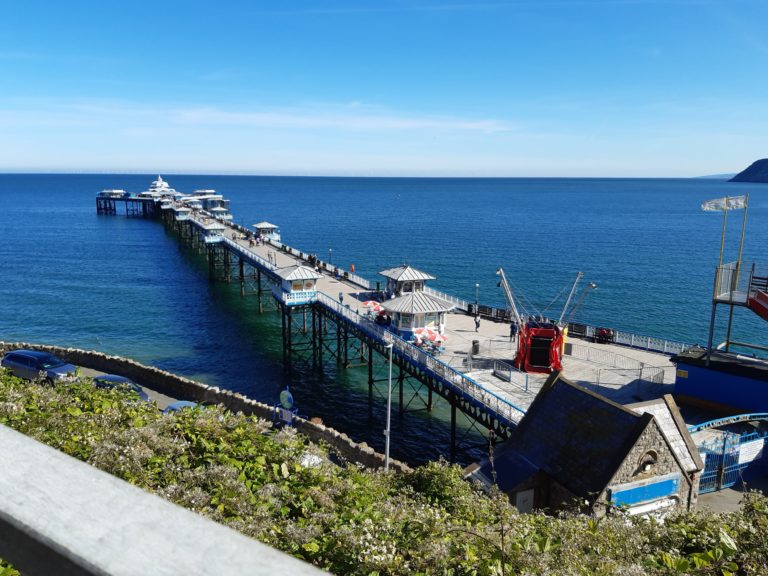
Llandudno Pier is the longest pier in Wales at 700 metres, and the fifth longest in England and Wales. It is free to visit and has all the usual seaside attractions, many of which are aimed more at younger visitors. It is pleasant to walk along, though, with wonderful views of the Llandudno seafront (see cover photo). At the end of the pier you can get a drink and a snack at any of several bars and cafes.
Cable Car
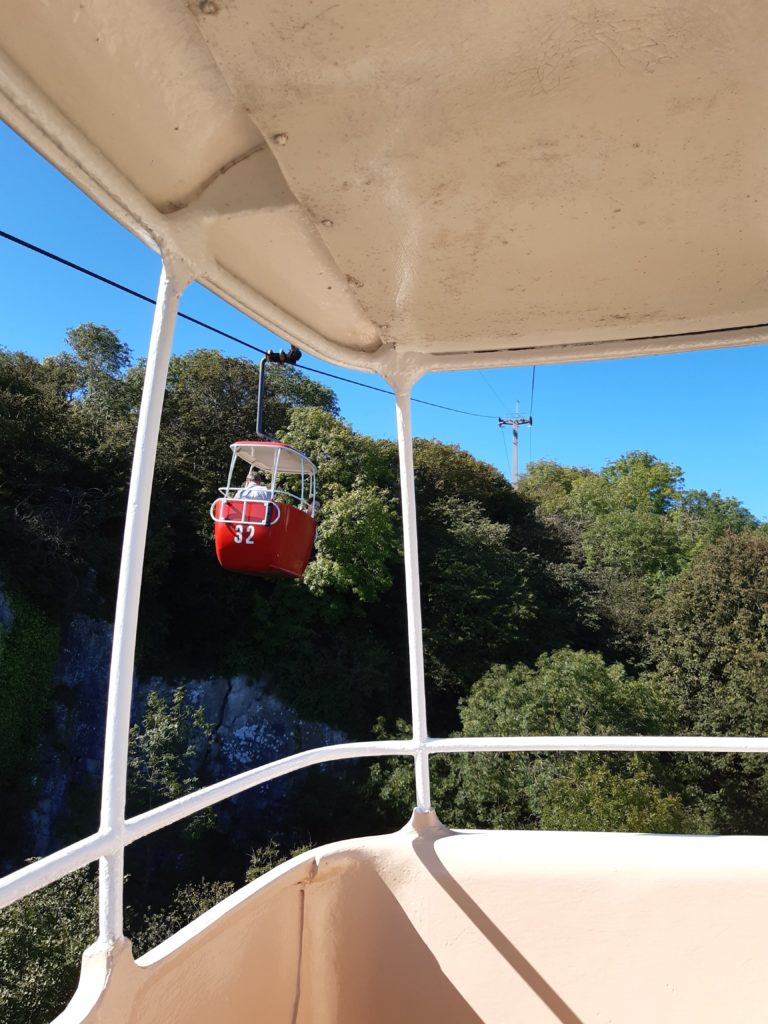
The Llandudno Cable Car runs from Happy Valley, an attractive public park overlooking the pier, to the top of the Great Orme. It is the longest passenger cable car system in Britain. The distance to the summit is just over a mile and the whole journey takes about nine minutes. There are stunning views along the way, including both of Llandudno’s beaches, the Great Orme and the Little Orme, the town of Llandudno, and further away the mountains of Snowdonia and the island of Anglesey.
On the day I went the wind was starting to get up and sandbags were put in the cars to stop them swaying too much. Later in the afternoon the ride was stopped. If you hope to go on the Cable Car, be aware that this may happen – and if you get a calm day, take advantage of it!
Great Orme Tramway
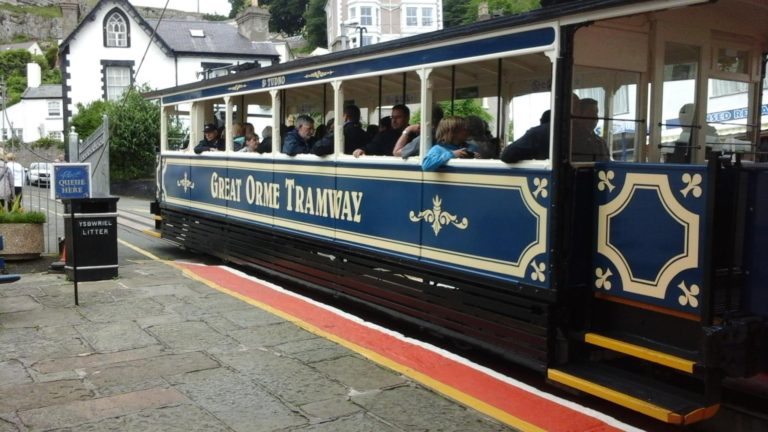
The Great Orme Tramway offers an alternative method to the Cable Car for getting to the top of the Great Orme (and one that is less susceptible to the weather). It is is Britain’s only cable-hauled public road tramway and opened in July 1902. You have to change trams at the Halfway Station and continue your journey to the summit. You will be travelling in the original Victorian tramcars, which have been lovingly restored over the years.
At the top of the Orme you can visit the Summit Complex, which has a variety of shops, bars and cafes. It’s a bit too commercialized for my taste, and I prefer the Visitor Centre (behind the Tramway station) which has displays about the natural history of the Great Orme and a small gift shop. There are also, of course, amazing views from the summit in all directions.
Great Orme Mines
The Great Orme Mines are said to be the oldest metal mines open to the public in the world. Excavations are ongoing, but visitors can explore several levels of the 3,500-year-old tunnels. The shop offers a selection of interesting and attractive rocks, minerals and fossils.
The Mines are about half-way up the Great Orme. One (relatively effortless) way of getting there is to go up on the Tramway and break your journey at the Halfway Station. It is just a short, signposted walk to the Mines from here.
Boat-Trips on the Sea-Jay
The Sea-Jay (pictured below) offers trips from Llandudno’s south beach. They have short (25-minute) trips around the Great Orme throughout the day, and longer (one-hour) trips that take in both the Great Orme and the Little Orme. I highly recommend the longer trip, which took place at 11 am every day during my visit. It’s not massively expensive (£8 when I went) and you may be lucky (as I was) and see grey seals at the foot of the Little Orme.
If you enjoy boat trips, there are also various others from Conwy (see below).
Conwy
The medieval walled town of Conwy is just a few miles down the road from Llandudno and well worth a visit while you are there.
One option (which I took this time) is to buy a one-day ticket on the open-top tourist bus which runs between Llandudno and Conwy, starting by the pier. This ‘hop on, hop off’ bus is a great way of getting your bearings if you are new to the area, and you get the benefit of an interesting running commentary as well. There is also a discount for over 60s!
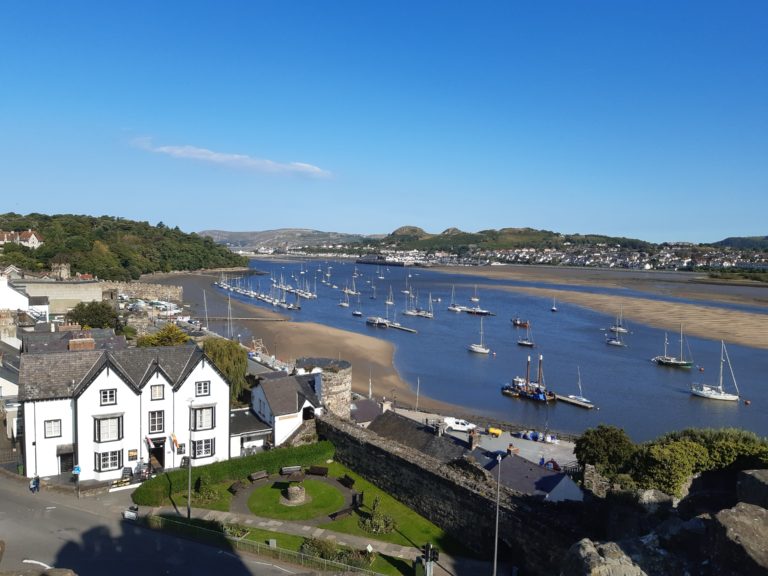
The biggest and best-known attraction in the town is Conwy Castle, and I went there myself on this occasion. It is remarkably well preserved, and if you go up the spiral staircases to the tops of the towers (you need to be reasonably fit for this), you can enjoy some amazing views of the town and estuary (see photo below).
Two other places I recommend visiting in Conwy if you are interested in history are Plas Mawr, a large Elizabethan town house owned by CADW, and Aberconwy House, a somewhat smaller 14th century merchant’s house owned by the National Trust.
Final Thoughts
As you may gather, I enjoyed my short break in Llandudno staying at The Merrion Hotel, and am happy to recommend both the town and the hotel for a short break. Llandudno is a traditional British seaside resort, and none the worse for that. It’s a good place to chill out, but there are lots of interesting things to see and do as well. And it is very well set up for older visitors, as evidenced by the large number who go there!
As always, if you have any comments or questions about this post, please do leave them below.
If you enjoyed this post, please link to it on your own blog or social media:
I have just returned after a three-day break in the Welsh coastal town of Aberystwyth.
It was actually my third visit to Aberystwyth. I first went there a couple of years ago on the recommendation of friends, and liked it so much I have gone every year since.
On previous occasions I stayed at the Marine Hotel on the seafront overlooking the North Beach. The Marine is a traditional seaside hotel and I do like and recommend it, even though the reception staff can be a bit glum 😀
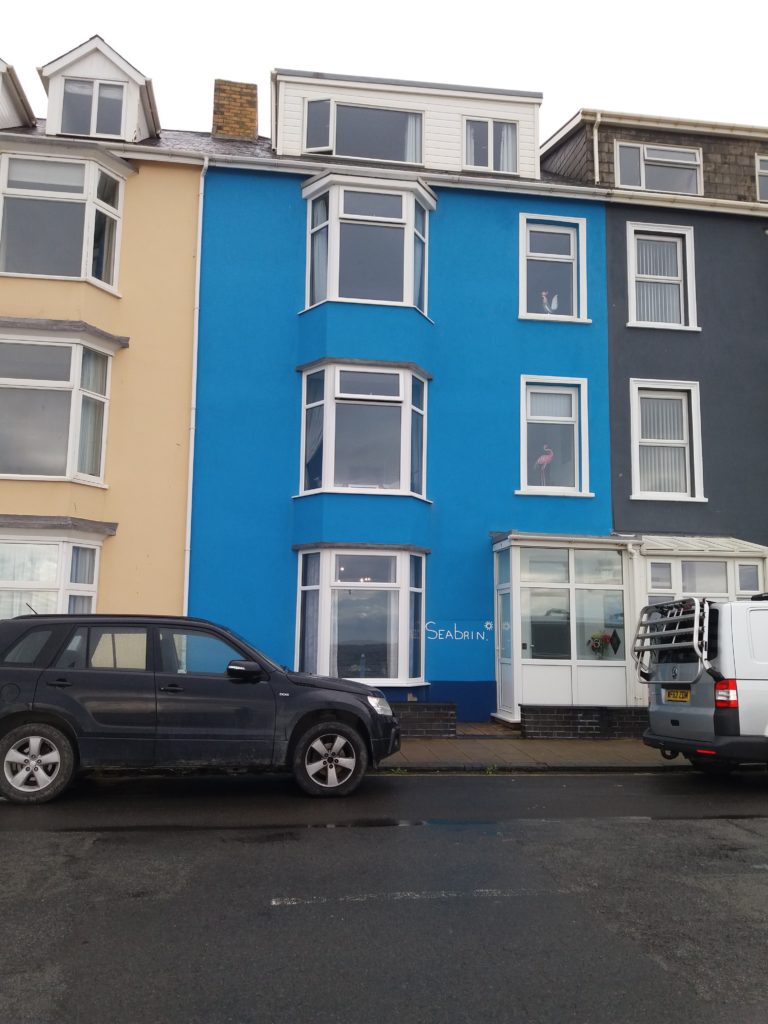
This time I fancied a change, though. I have been impressed by my recent forays into self-catering (especially on my recent visit to Yorkshire), so I decided to see what was available in that line in Aberystwyth. I ended up booking three nights at the Seabrin apartments, pictured below.
Seabrin is situated overlooking the seafront at the quieter South Beach, not far from the harbour. I have embedded a map of the area below (courtesy of Booking.com).
There are actually three apartments at Seabrin, all self-catering (at one time the owners offered B&B, but for various reasons they no longer do so).
The top floor apartment is the smallest and has one double bed. The second floor apartment (which I stayed in) has a double bed and a single bed, all in the same room. The first floor apartment is the largest with two bedrooms, so can easily accommodate three or four people. All three apartments have sea views.
The owners, Marise and Wilf, live on the ground floor, so they are usually around if you need anything.
I found my apartment comfortable and spacious. There was a lounge with TV and DVD player and a bay window with wonderful views overlooking the beach and sea. I spent quite a bit of time just sitting here looking out, hoping to see dolphins in the bay. Marise told me that dolphins had been spotted the week before, but the sea was probably just a little too rough while I was there. It was still wonderfully relaxing, though.
There was a separate kitchen, well equipped with electric cooker, dishwasher, microwave, fridge/freezer, and so on. The bedroom was at the back of the house, with a good-sized shower room a couple of steps down from it. The separate WC with wash hand basin was outside the bedroom at the end of a short corridor. It’s a slightly eccentric layout, but does mean that if there are two of you, one can take a shower while the other is, er, washing their hands.
The decor in the apartment was a little quirky – the glittering glass-covered kitchen wall reminded me of a nightclub – but obviously for a few days that’s not a problem. There were lots of books around the apartment which made me feel at home, and a selection of videos too.
As far as eating is concerned, Seabrin is only a short walk from the town centre, so there are plenty of restaurants nearby and shops for buying provisions. There is a large Marks and Spencer’s with a food hall, where I bought a couple of ready meals. On my last night I intended to eat out, but couldn’t get a table at The Olive Branch, the Greek restaurant I have been to before. I ended up getting a takeaway meal from The Seafront Palace (just round the corner from The Olive Branch) instead. I ordered Sweet and Sour Chicken Hong Kong Style with Egg Fried Rice. It was delicious, so I highly recommend it if you visit Aberystwyth and fancy a Chinese!
Seabrin has free wifi, which worked perfectly during my stay (not always the case in my experience). The location is quiet and peaceful, and I slept very well.
Financials
As Pounds and Sense is primarily a money blog, I should say a few words about this.
I paid £375 for my three-night stay in the one bedroom apartment at Seabrin, which I thought was reasonable. I paid an initial 70% deposit of £262.50 when I booked (in March 2019), with the balance of £112.50 payable a month before my holiday dates. Note that these payments are not refundable if you cancel, so you need to be pretty sure you are going before putting your money down. Or take out separate holiday cancellation insurance, of course.
Costs obviously vary according to the accommodation you want, when you want it, and for how long. The price I paid worked out to £125 a night, which – as I said above – seemed reasonable bearing in mind the location and what you get for your money. Of course, unlike most hotels, you don’t get a cooked breakfast, and neither is a daily housekeeping visit included. On the positive side, though, you do get much more space, a fully equipped kitchen, a separate lounge and bedroom, and complete privacy during your stay.
One other thing to bear in mind is that Seabrin do not allow dogs in the property or children under the age of 12.
You can check current prices and availability on the Booking.com website. You can book this way (which I did) or directly with the property. The latter method may or may not work out cheaper.
Things to Do
I shan’t give you a blow-by-blow account of what I did while I was there. However, I will highlight a few of my favourite attractions in and around Aberystwyth.
1. Constitution Hill
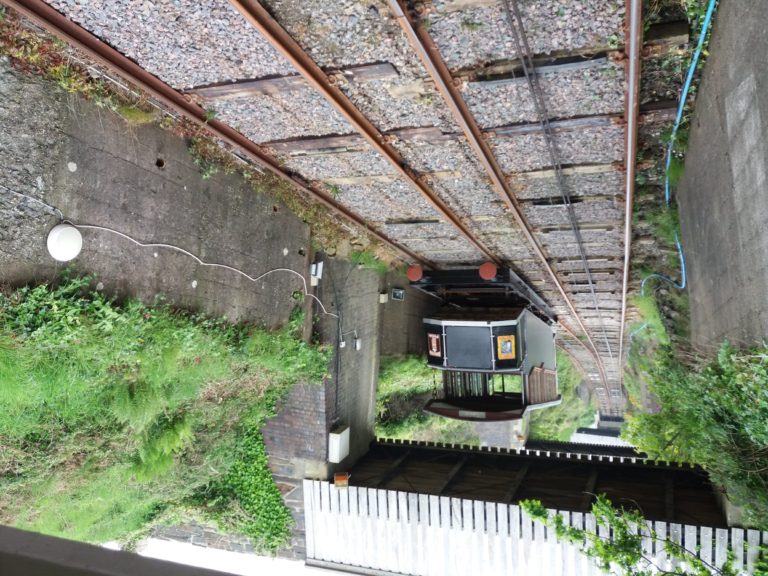
This is the famous promontory at the northern end of Aberystwyth (see cover photo). If you’re feeling energetic you can walk up it, or for a few pounds you can take the historic Cliff Railway. A standard return ticket on this costs £5, but over-60s pay just £3.50.
At the top you can enjoy spectacular panoramic views across Aberystwyth. You can also visit the Camera Obscura, which on a bright sunny day is very impressive (not so much when it’s cloudy, though). I also recommend a coffee and slice of cake at the Consti Cafe. They serve excellent cappuccinos, and also have free wifi which works without having to log in. I’ve spent an hour in here just enjoying coffee and Welsh cakes and reading my newspaper 🙂
2. Vale of Rheidol Railway
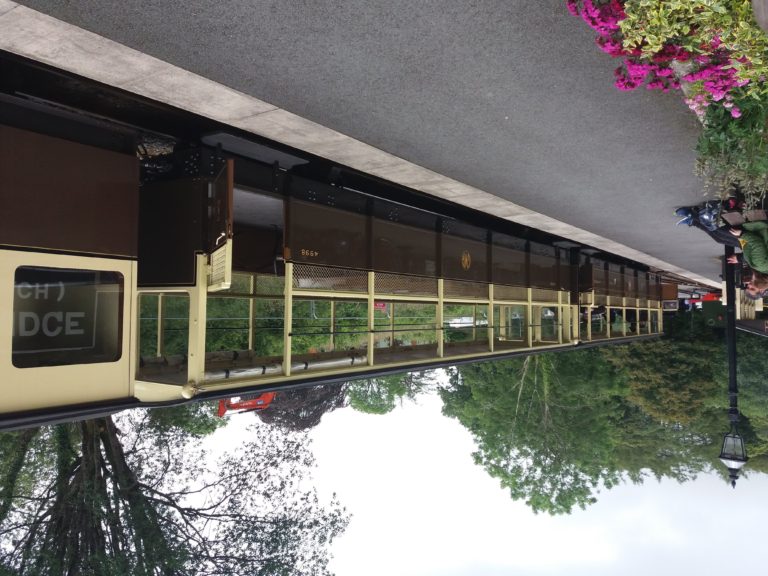
This heritage steam railway will take you on an hour-long journey from Aberystwyth along the beautiful Rheidol Valley to Devils Bridge. You can read more about it on the railway’s website and book tickets as well. It’s possible to upgrade to first class for £3 on the day (one-way only), but having done this I’d have to say I don’t see much point. I actually found the standard class carriages (and seats) more comfortable.
Devils Bridge itself is well worth a look if you have time before getting the train back. Three bridges were built here, one on top of the other (at different times, obviously). There are two walks you can take for a small fee. The Punch Bowl walk costs £1 and gives you a chance to view the three bridges and the the stream that flows under them. The other, longer walk takes you the other way from the bridges, past some stunning waterfalls. This costs a maximum of £4 at the time of writing, though there are some discounts for older people and children. As for why the place is called Devils Bridge, I’ll leave you to find that out for yourself!
3. Ceredigion Museum
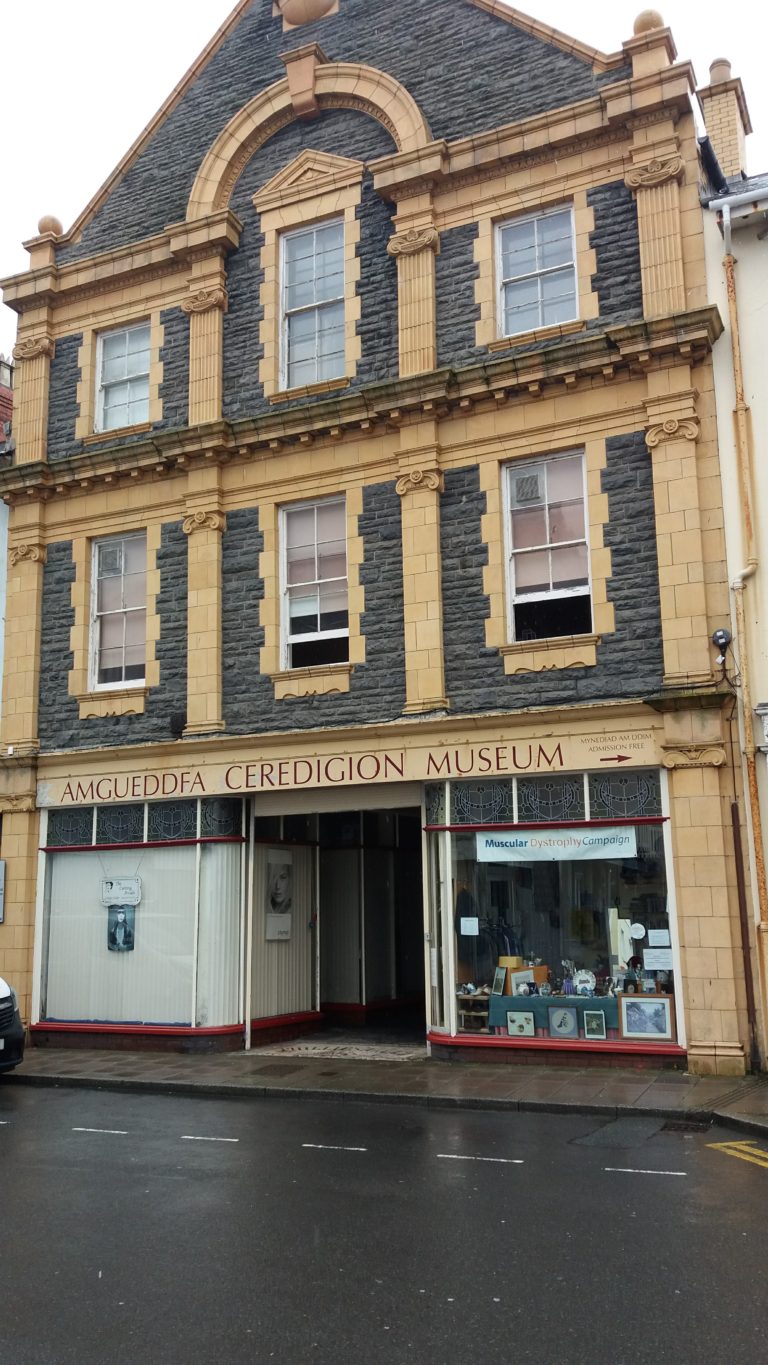
The Ceredigion Museum in the centre of Aberystwyth is free to visit and a great option for a rainy day. It’s in a beautifully preserved Edwardian theatre, with many of the original fixtures and fittings still in place. There are fascinating displays here on all aspects of Welsh life and Welsh history.
4. Bwlch Nant yr Arian
I visited this ‘forest centre’ a few miles out of Aberystwyth on the A44 for the first time this year. There are various scenic trails you can walk (or run) from the centre, and a number of mountain biking trails as well. The highlight for me, though, was the Red Kite feeding, which takes place at 3 pm every day in the summer. Once their food has been put out, the skies fill with these magnificent birds (I counted over 100). Whether or not bird-watching is your thing normally, it’s something to marvel at. Here’s a link to the website for more info. And yes, there’s a nice coffee shop as well!
Final Thoughts
As you may gather, I enjoyed my short break in Aberystwyth staying at Seabrin Apartments, and am happy to recommend both the town and the accommodation for a short break. Aberystwyth is a bit quieter and less commercialized than Llandudno (though I also like it there), and the fact that it’s a university town means it has quite a cosmopolitan feeling. It’s a good place to chill out, but there are lots of interesting things to see and do as well.
As always, if you have any comments or questions about this post, please do leave them below.
If you enjoyed this post, please link to it on your own blog or social media: