As speculation mounts ahead of Rachel Reeves’ upcoming budget on 26 November 2025, many UK retirees and those approaching retirement are wondering if now is the right time to take a tax-free lump sum from their pension. Already it appears growing numbers have been doing just that in anticipation of a possible tightening of the rules.
The rumoured changes in pension taxation could have significant implications, but should these potential shifts prompt immediate action? Let’s explore the factors you should consider.
What Is the Tax-Free Lump Sum?
In the UK, when you begin accessing your defined contribution pension (typically from age 55, rising to 57 in 2028) you are currently able to take up to 25% of your pension pot tax free, subject to a cap (currently £268,275). This tax-free cash is often used for a home deposit, debt pay-off, investment, or simply a financial cushion in retirement.
The Upcoming Budget and the Rumour Mill
As mentioned above, the Autumn Budget will be delivered by Rachel Reeves, the Chancellor of the Exchequer, on 26 November 2025. Given the government’s fiscal pressures – slow growth, high borrowing, commitments to public services, and so on – pensions (and pension tax reliefs) are under increasing scrutiny.
Among the speculated measures are:
Reducing or limiting the current 25% tax-free cash entitlement.
Adjusting tax relief on pension contributions (for example moving to a flat rate or scaling back higher-rate relief).
Capping salary sacrifice pension arrangements or increasing National Insurance on them.
However, officially there are assurances that the tax-free lump sum rule will not be cut in this Budget. HM Treasury has signalled that while pensions generally are in scope for reform, a “raid” on tax-free cash is off the table for now.
Why Some Are Considering Acting Now
Because of the rumours, many savers are thinking: “If the 25% tax-free rule is reduced or withdrawn in future, better to take it now.” Indeed:
Research shows that nearly 59 % of people are worried about changes to the tax-free cash rule ahead of the Budget.
Before you jump, it’s important to consider the downsides:
Speculation is not policy Rumours abound, but nothing is guaranteed until the Budget is announced and legislation moves through. Acting based purely on speculation introduces risk.
Reduced pension pot = reduced income later Taking cash now reduces the amount left invested in your pension, which could lower your future retirement income or growth potential.
Lost tax-efficient growth and benefits Leaving funds within a pension means continued tax-relief on growth, protected status for certain tax benefits (including potential inheritance tax advantages) until rules change. Withdrawn funds may lose these perks.
Re-investing is complex and possibly taxed If you withdraw and then reinvest elsewhere (e.g., an ISA), the tax treatment, returns and flexibility may differ — and you may fall foul of HMRC rules (e.g., pension “recycling” rules) if you try to put withdrawn cash right back into a pension.
Triggering higher tax or reducing benefits Taking lump sums might push you into a higher income tax band, or reduce eligibility for means-tested benefits. Once you take the amount, you can’t “untake” it.
What You Should Do Rather Than Rush
Pause, but monitor: With the Budget just weeks away, wait for the official announcements.
Review your plan: Think about your retirement timescale, how much income you’ll need, and what role the lump sum will play in that.
Check your immediate needs: If you have pressing expenses (e.g. paying off expensive debt, home adaptations), the lump sum may make sense. If it’s purely “in case rules change”, be cautious.
Seek expert personal advice: Pension decisions are long-term and often irreversible. A qualified financial adviser can assess your whole situation, not just the tax angle.
Keep an eye on transitional protections: If rules change, the government typically layers in protections for those close to retirement. That could mean any changes happen with a delay, not overnight.
So Is Now the Time to Take Your Tax-free Lump Sum?
It depends on your personal circumstances, but in broad terms:
Yes, you might consider taking it now if:
You have an immediate, compelling financial need for the cash.
Your retirement plan is settled, and you won’t harm your long-term income by reducing the pot.
You are comfortable sacrificing some future growth for now.
No, you might be best to wait if:
You’re taking the lump sum purely on the basis of rumoured policy change.
Your retirement income depends significantly on your pension pot size and future growth.
You believe the current tax-free rule will remain (official signs point that way for now) and you want to keep your funds invested tax-efficiently.
Final Thoughts
With the Budget on 26 November 2025, the risk of rule-changes is real, but the specifics are uncertain. While rumours suggest the tax-free lump sum (the 25% rule) could be reduced, the Treasury has publicly said it will not be cut this year. Still, the doubt has already caused many savers to act.
Rather than acting in panic, it’s wise to pause, understand your own retirement plan, and consult an adviser. If you do decide to take your tax-free lump sum before the Budget, make sure it is for a reason aligned with your long-term goals — not simply a reaction to budgetary speculation.
As always, pensions are complex and deeply personal. Changes in tax rules can take time to come into effect; acting too early or for the wrong reason may cost you more in the long run than you save.
As always, if you have any comments or questions about this post, please do leave them below. But bear in mind that I am not a qualified professional adviser and cannot give personal financial advice.
This is a fully revised update of an earlier article.
If you enjoyed this post, please link to it on your own blog or social media:
As you doubtless know, one of the first acts of the new Labour government last year was to scrap the Winter Fuel Payment (WFP) for all but the very poorest pensioners (those eligible for pension credit).
Such was the outcry they had to backtrack and most pensioners will now receive WFP this winter – but with one major catch. Here’s everything you need to know…
1. What’s changed this year
The good news is that the Winter Fuel Payment has been reinstated for most pensioners. Here’s how it works…
If you were born on or before 21 September 1959 and meet the usual residence criteria, you are eligible for the payment.
For winter 2025/26 a household will normally receive £200 if the oldest person is under 80, or £300 if someone in the household is aged 80 or over.
Payment is automatic for most people — you don’t need to apply, unless perhaps you haven’t received it before.
2. The income threshold – what it means
Although the payment is available again for most, there is a taxable income threshold of £35,000 a year.
If your taxable income is £35,000 or less for the tax year 2025/26, you keep the full amount of the payment.
If your taxable income is over £35,000, you’ll still receive the payment initially, but it will be reclaimed via the tax system (either through your tax code if under PAYE, or via Self Assessment) or you may opt out of receiving the payment. Note that the deadline for opting out of the 2025/26 payment has now passed.
It’s important to note that the threshold applies to each individual, not to the household income. So in a couple living together, if one person’s taxable income is over £35,000 and the other’s is not, the higher earner’s share will be clawed back while the other may keep theirs.
3. What counts towards that £35,000 taxable income?
This is probably the trickiest part, so let’s break it down simply.
What does count (i.e. taxable income elements):
Your State Pension (because this is taxable income).
Interest on savings if it is taxable (e.g. outside an ISA) or dividends from investments (again depending on whether taxable).
Rental income or other taxable income streams.
What does not count:
Income from savings within an ISA (Individual Savings Account) is tax-free and does not count towards the £35,000 threshold.
Tax-free state benefits such as Pension Credit, Attendance Allowance or Personal Independence Payment.
The Winter Fuel Payment itself is tax-free and does not count as income for this threshold.
Capital gains (e.g. profits from sale of property or shares) are not included.
Premium Bond prizes
4. What to do next
Here are some practical pointers for you (or your friends/family):
Check your estimated taxable income for the year 2025/26. If you expect it to be under £35,000, you’re fine for this payment.
If your taxable income is likely to be over £35,000, you’ll still receive the payment (it’s too late now to opt out) but will be required to repay it via the tax system. In future years you might want to opt out of the payment, though many may still prefer to receive it and repay the money later.
If you have savings, consider whether holding them in tax-free vehicles (e.g. ISAs) can help reduce your taxable income, as interest received outside an ISA may count.
Make sure you are receiving any other benefits you may be entitled to (e.g. Pension Credit) — even though Winter Fuel Payment is partly means-tested now, those on very low income will often qualify for multiple sources of support.
Be alert to scams: you do not need to apply for this if you’re eligible, and the government will not ask you by text or email for bank details to “claim” this payment.
5. Quick recap
You are eligible if you reached State Pension age by the “qualifying week” (15–21 September 2025) and meet residence rules.
The payment is worth £200 (if all under 80 in the household) or £300 (if someone 80+) for winter 2025/26 in England & Wales.
Taxable income threshold: £35,000 per person. Under that → you keep it; over that → it will be clawed back.
Taxable income includes pensions, savings interest (outside ISAs), earnings, etc. Doesn’t include ISAs, Pension Credit, Attendance Allowance.
You don’t have to claim unless perhaps you haven’t received before; it’s automatic for most. Payments expected November/December 2025.
As always, if you have any comments or questions about this blog post, do leave them below. Please be aware that I am not a qualified financial adviser and under UK law cannot give personal financial advice.
If you enjoyed this post, please link to it on your own blog or social media:
As you approach retirement, one of the biggest financial decisions you’ll face is how to turn your pension savings into a reliable income.
Two of the main options are buying an annuity or using a pension drawdown strategy. Both approaches have pros and cons, and which is right for you will depend on your circumstances, priorities and attitude to risk.
It’s also worth noting that annuity rates are currently more generous than they have been for many years, thanks largely to higher interest rates. That makes annuities a more attractive choice today than they might have seemed just a year or two ago.
What is an Annuity?
An annuity is a financial product you buy with some or all of your pension savings. In return, the provider guarantees to pay you an income for life (or for a fixed period). The amount depends on your age, health and the options you choose, e.g. whether payments continue to a spouse after your death.
You may also opt for payments to be fixed or rise in line with inflation. The latter will reduce the amount you receive initially but may be beneficial in the longer term.
For a ballpark estimate of how much income an annuity may generate for you, check out this free calculator. It will give you a rough figure based on your age and the size of your pension pot.
What is Drawdown?
With drawdown (also called flexi-access drawdown), your pension savings remain invested and you take money out as needed. You have control over how much you withdraw and when. This is the method I am using to generate an income currently from my Bestinvest SIPP.
Annuity vs Drawdown: Comparison Table
Here’s how the two main ways to turn your pension savings into income compare at a glance:
Feature
Annuity
Pension Drawdown
Income security
Guaranteed for life (or fixed term)
Depends on investment performance and withdrawals
Flexibility
Fixed once set up – limited changes allowed
Very flexible – you choose how much and when to withdraw
Potential for growth
None (income is fixed)
Pension pot remains invested and can grow
Risk level
Very low (no investment risk)
Higher (subject to market fluctuations)
Inheritance potential
Usually none unless special options chosen
Remaining funds can usually be passed to beneficiaries
Inflation protection
Optional – inflation-linked annuities start lower
Depends on investment returns and withdrawal strategy
Health impact
Poor health can mean higher income via “enhanced” rates
Health does not affect drawdown income directly
Ongoing management
None once purchased
Requires regular monitoring and possible financial advice
Best suited for
Those wanting guaranteed, worry-free income
Those comfortable with risk and wanting flexibility
Current appeal
Rates are now at their best for years due to higher interest rates
Still popular for flexibility, but requires careful planning
Which Option is Right for You?
If you value certainty and peace of mind, an annuity (especially with today’s higher rates) may be appealing.
If you want flexibility, growth potential, and the ability to leave an inheritance, drawdown could be the better fit.
Many people now choose a blend of the two – using part of their pot to buy an annuity for essential expenses, and keeping the rest in drawdown for flexibility and growth.
You Don’t Have to Decide All at Once
It’s important to remember that this isn’t necessarily an “either/or” decision. Many people begin their retirement with pension drawdown, giving them flexibility in the early years when spending needs can vary. Later on, when they want more security and less investment risk, they can choose to convert some or all of their remaining funds into an annuity. This phased approach offers the best of both worlds — flexibility when you’re active and security later in life.
And other things being equal, the older you are when you take out an annuity, the more generous the terms you are likely to get.
Final Thoughts
There’s no “one size fits all” answer. Your choice will depend on factors such as your health, whether you have other sources of income, your attitude to risk, and how important leaving an inheritance is to you.
With annuity rates at their most attractive in years, now could be a good time to revisit them as part of your retirement planning. But drawdown remains a strong option for those seeking control and flexibility and the potential for growth.
Before making any decisions, it’s wise to get independent financial advice to ensure you choose the strategy – or mix of strategies – that best fits your goals.
Disclosure: I am not a qualified financial adviser and nothing in this blog post should be construed as personal financial advice. I highly recommend taking professional advice about your pension options before committing yourself to a particular course of action. This article lists a number of reputable advisory platforms and services for pension advice. Bear in mind that all investing carries a degree of risk.
If you enjoyed this post, please link to it on your own blog or social media:
As we move into our 50s and beyond, many of us start to shift focus from building wealth to drawing income from our investments. But when it comes to generating that income, there are two main approaches investors tend to consider: dividend investing and a total return strategy.
Both can work, but they operate on different principles, and each has its own pros and cons. Let’s take a closer look.
What is Dividend Investing?
Dividend investing involves building a portfolio of shares (or funds) that pay out regular dividends. The dividends received are used as income, while the underlying shares are ideally held long term.
For example, UK companies such as Vodafone or Legal & General have historically paid relatively high dividends. Many investment trusts and equity income funds also focus on this approach, targeting a yield of 4–5% per year.
Pros of Dividend Investing
Predictable income: Dividends can provide a relatively steady stream of cash without needing to sell investments.
Psychological comfort: Many investors prefer “living off the income” rather than dipping into capital.
Inflation protection: Well-managed companies often increase dividends over time, offering some inflation hedge.
Tax efficiency in ISAs and pensions: Dividends received inside these wrappers are tax-free.
Cons of Dividend Investing
Limited choice: By focusing only on dividend-paying shares or funds, you may miss opportunities in sectors with low or no payouts (e.g. technology).
Dividend cuts: Companies can reduce or suspend dividends, as many did during the pandemic.
Potentially lower growth: High-yield companies may not grow as strongly as firms that reinvest profits instead of paying them out.
Chasing yield risk: Investors may be tempted by high yields that aren’t sustainable.
What is a Total Return Strategy?
A total return approach doesn’t focus solely on dividends. Instead, you generate income by drawing a regular amount from the portfolio, which may come from dividends, bond interest, or by selling some holdings. The goal is to maximise the portfolio’s overall growth and then withdraw from that “pot” in a sustainable way.
For example, you might hold a global tracker fund (which pays some dividends but not a high yield) and set up a monthly withdrawal of 4% of the portfolio value each year.
Pros of a Total Return Strategy
Broader diversification: You’re not limited to dividend-paying stocks. You can invest in growth companies, bonds, property, or even alternative assets.
More flexibility: You can adjust withdrawals depending on market conditions, income needs, and tax planning.
Potentially higher growth: By including growth assets, you may end up with stronger long-term performance.
Control over timing: You choose when and how much to withdraw, rather than relying on dividend payment schedules.
Cons of a Total Return Strategy
Selling in downturns: If markets fall, you may be forced to sell investments at depressed prices to maintain income.
Requires discipline: You need a plan (e.g. a safe withdrawal rate) to avoid running out of money too soon.
Less “natural” income: Some investors don’t like dipping into capital, even if mathematically it makes sense.
Market dependency: Income levels may fluctuate depending on performance.
Dividend Investing vs Total Return: At a Glance
Feature
Dividend Investing
Total Return Strategy
Income Source
Dividends from shares/funds
Mix of dividends, interest, and selling investments
Reliability of Income
Can feel steady, but dividends may be cut
Depends on market performance and withdrawal discipline
Diversification
Limited to dividend-paying stocks/funds
Broader choice, including growth assets
Growth Potential
Lower if focused on high yield
Potentially higher with growth companies included
Flexibility
Less flexible, tied to dividend schedules
High flexibility, withdrawals can be tailored
Psychological Comfort
Feels like “living off income”
Requires willingness to dip into capital
Risk in Downturns
Dividend cuts possible
May need to sell assets at lower prices
Best For
Those wanting simplicity and regular income
Those comfortable managing withdrawals for long-term growth
Which Approach is Better?
The answer depends on your circumstances, risk tolerance, and psychology.
If you value simplicity and a steady income stream, dividend investing may be appealing. For example, many UK investment trusts such as City of London or Murray Income have raised their dividends for decades.
If you want maximum flexibility and growth potential, a total return strategy could work better — especially when combined with careful planning, such as withdrawing a fixed percentage each year.
For many investors, a blend of the two is the most practical solution. Holding some dividend-paying funds alongside growth-focused investments can deliver both psychological comfort and portfolio resilience.
My Personal Approach
As mentioned above, I have a mixture of growth-focused investments along with my main income-focused Nutmeg portfolio. I wrote about the latter in a recent blog post and also refer to it in my monthly investment updates (such as this one).
My growth-focused (total return) investments include my Bestinvest SIPP (private pension). This comprises a dozen or so investment trusts and funds, which I chose myself. My SIPP is currently in drawdown, so every month I sell a certain amount in order to release the money I will be drawing. This only takes a couple of minutes, and I vary the fund I choose to avoid depleting any too fast. Of course, most funds accrue dividends and other income which helps replenish them, along with (hopefully) growth in the value of the fund concerned.
As mentioned, my main income-focused investment is with Nutmeg. This provides a monthly income without any action needed from me. If I wanted it to be the same every month I could turn on the ‘smoothing’ function Nutmeg offers, but currently I am simply taking whatever income accrues in the month concerned.
For the time being this blended approach works for me, but as I get further into retirement I may switch more of my money away from growth- towards income-focused investments.
Obviously, the above is just for information purposes. Everyone’s circumstances are different, and what is appropriate for me may not be for you.
Key Takeaways
Dividend investing offers simplicity and natural income but limits diversification and risks dividend cuts.
Total return investing offers flexibility and potentially higher growth, but requires discipline and the willingness to sell assets.
Over-50s should consider their income needs, investment horizon, and attitude to risk before deciding.
👉 Final thought: Remember that both strategies can be made more tax-efficient by using ISAs and pensions. And whichever approach you favour, keeping costs low and diversifying widely remain as important as ever.
As always, if you have any comments or queries about this article, please do leave them below.
Disclaimer: I am not a qualified financial adviser and nothing in this post should be construed as personal financial advice. You should always do your own ‘due dligence’ and seek professional advice if in any doubt how best to proceed. All investing carries a risk of loss.
If you enjoyed this post, please link to it on your own blog or social media:
Whether you’re just starting, mid-career, or approaching retirement age, getting the right pension advice is crucial to ensure a secure and comfortable future.
Fortunately, there are many places in the UK (both free and paid) that offer pension guidance and tailored advice. In this blog post, we’ll explore reasons why you need pension advice, the best places to get help, and answer some frequently asked questions about pension advisers.
Why Would You Need Pension Advice?
Pensions are a vital part of your financial future, yet many people don’t fully understand how to approach pension problems or what investment options are available. Before we look at where you can find pension advice, here are a few common situations where seeking advice might be a smart move:
Near Retirement – As you approach retirement age, you’ll have to make important decisions such as when to access your pension, how to take your benefits, and how to minimise tax. Professional advice can help you make the most of your savings.
Multiple Pension Pots – If you have changed jobs frequently in the past, you might have multiple pension pots. Getting expert advice can help you trace and consolidate them efficiently, ensuring you don’t lose track of valuable funds.
Pension Transfers – Transferring pensions, especially from defined benefit (DB) schemes, can be risky if not handled carefully. Expert advice is essential to assess the risks and avoid losing valuable benefits.
Investment Choices – If you have a defined contribution (DC) pension, you can choose where your pension contributions are invested. Advice can help match your investment risk profile with your long-term goals.
Places To Get Pension Advice in the UK
Many organisations and platforms in the UK offer pension guidance and advice. Some are free and impartial, while others are professional financial advice services that may charge a fee.
Here’s a breakdown of some places where you can get pension advice:
1. Pension Wise
Pension Wise is a government-backed service offered through MoneyHelper. It offers free and impartial guidance to people aged 50 or over with a defined contribution pension. If you’re unsure about what type of pension pot you have, they have a service that helps determine whether or not you have a defined contribution pension. You can book a free appointment online or over the phone with a pension specialist who will explain how each pension option works, what tax you could pay, and how to identify scams. It also offers a helpline and webchat open Monday to Friday from 9 am to 5 pm.
Pros
Government-backed service
Free online and phone appointments
Suitable for people aged 50 or over with a defined contribution pension pot
Cons
You may not be able to get an appointment if you are under 50 or only have a defined benefit pension
Citizens Advice is an independent organisation in the UK that provides free and confidential guidance on a wide range of financial issues, including pensions. They have a network of local charities in around 1,600 locations across England and Wales with 14,000 volunteers and 8,843 staff. You can contact a guidance specialist online, on the phone, or by visiting your local Citizens Advice branch. Their website is also a helpful resource for general information about state pensions, workplace pensions, personal pensions, and more.
Pros
Around 1,600 locations across the UK
Free face-to-face and phone appointments
A great resource for general pension information
Cons
You may not be able to get an appointment if you are under 50 or only have a defined benefit pension
FinancialAdvisers.co.uk is an online platform with a database of over 60,000 FCA-approved financial advisers and 15,000 firms across the UK. It works by connecting people with a range of financial advisers based on their postcode. Users can enter their postcode in the directory and filter the results by pension and retirement advice to find a list of pension advisers nearby.
In addition, they also offer a ‘Get Matched’ service that matches you with a suitable adviser. By answering a few questions and entering your personal details, it allows you to find an FCA-regulated adviser in your local area and request a guaranteed call back.
Pros
Free directory to find pension advisers near you
Free ‘Get Matched’ service
Most pension advisers listed offer a free initial consultation
Cons
You have to make contact with advisers unless you get matched
As a part of the Chartered Insurance Institute group, the Personal Finance Society (PFS) serves as the UK’s professional body dedicated to the financial planning sector. This organisation is committed to elevating standards and fostering professionalism across the sector, primarily aiming to enhance public trust and confidence.
The Personal Finance Society provides a free search tool on their website, enabling individuals to locate qualified advisers nearby. By inputting their location, users can refine their search based on their specialty, such as retirement pensions and annuities. The tool also allows for filtering options to show only chartered financial planners, specialists in later life and retirement planning, or advisers who can be contacted by email or telephone.
Pros
Free search tool to find advisers in your local area
All listed advisers are qualified and members of the PFS
Most advisers listed offer a free initial consultation
Age UK is a leading charity federation designed to provide support and guidance to older people on a wide range of topics, including pensions. They offer a free and confidential helpline and have specialist advisers at over 120 locations across the UK. The Age UK website provides general information on pension pots, state pensions, workplace pensions, finding old pensions, annuities, how to spot pension scams, and more.
Pros
Free and impartial guidance
Free helpline open 8 am to 7 pm, 365 days a year
Specialist advisers in over 120 locations across the UK
NEST (National Employment Savings Trust) is a popular workplace pension scheme in the UK designed to make automatic enrolment as easy as possible. The scheme was set up by the government and introduced by the Pensions Act 2008. Under the act, all employers in the UK are legally required to put eligible staff into a pension scheme and contribute towards the pension pot. This is to help staff save as much as possible for retirement.
Whatever pension provider you are with, it is worth seeking advice from them. If you’ve been auto-enrolled into a NEST pension scheme, they offer guidance and support on their website in a range of areas, such as how to grow your pension, transfers, contributions, pension tax, and more.
What is the Difference Between Pension Guidance and Advice?
Pension guidance helps you understand your options and make informed decisions, but it doesn’t recommend specific financial products or tell you what to do. It’s usually free and impartial and offered by services like Pension Wise and Citizens Advice. Pension advice, on the other hand, is provided by regulated financial advisers. They assess your financial situation and recommend specific actions or products for a fee.
Is It Worth Paying a Pension Adviser?
It depends on your circumstances. If you’re close to retirement or have multiple pension pots, paying for tailored advice can be a smart investment. A good adviser can help you avoid costly mistakes, optimise your tax position, and choose suitable investments.
How Much Does a Pension Adviser Charge?
Most pension advisers offer a free initial consultation and charge a fee for their services. These fees vary depending on the complexity of your situation and how the adviser charges. Typical fee structures include fixed, percentage-based (0.5% to 2% of the pension value managed), or hourly. Before working with an adviser, it is recommended that you ask about fee disclosure to avoid hidden costs.
Where to Go From Here for Pension Advice
Getting the right pension advice can mean the difference between a comfortable retirement and financial uncertainty. Whether you’re just starting to save, consolidating old pension pots, or deciding how to access your pension funds, it pays to seek help.
Start with free, impartial guidance services to understand your options. If your situation is more complex or you want advice tailored to your retirement goals, consider hiring a regulated financial adviser. With a wealth of resources available, planning for retirement doesn’t have to be daunting.
This is a collaborative post.
If you enjoyed this post, please link to it on your own blog or social media:
If you’ve been watching the news lately, you’ll probably have seen headlines about stock markets taking a tumble thanks to a wave of tariffs announced by Donald Trump. It’s enough to make any retiree feel uneasy – especially if your pension is tied to the markets.
But before you start panicking or making any big changes, take a deep breath. Here’s what you really need to know.
What’s Going On?
President Trump’s tariffs are stoking fears of a global trade war. Investors don’t like uncertainty, and the markets are reacting with volatility. There have been drops not just in the US but across the globe, including here in the UK.
For retirees, that can feel personal. If your pension pot or retirement income is invested in stocks and shares, you might be wondering: Am I going to be okay?
Short answer: Yes, if you stay calm and avoid knee-jerk reactions.
Why This Isn’t the Time to Panic
Markets have always had ups and downs. That’s not new. Whether it was the financial crisis of 2008, the Brexit vote, or the COVID crash (see below), every downturn has sooner or later been followed by recovery.
If you sell investments during a dip, you lock in those losses. But if you ride it out, your portfolio has every chance to bounce back, as has happened before. History is on your side.
Speaking of which…
Consider The Covid Crash
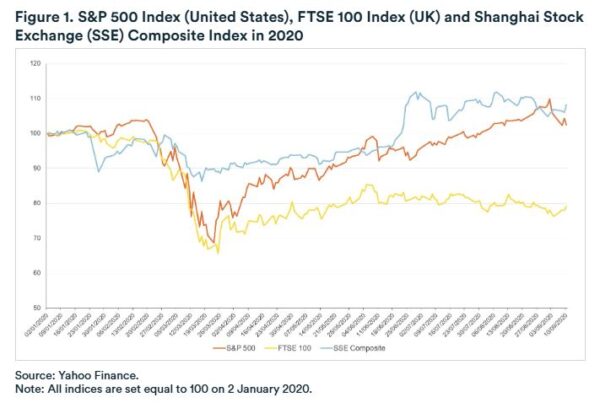
In early 2020 it became clear that COVID was going to be a massive deal, and markets world-wide fell dramatically. And yet by mid-March, as the chart below from Yahoo Finance reveals, they were already recovering.
The recovery in stock market values continued through 2021. If you check out my in-depth review of the Nutmeg robo-adviser investment platform, you can see this for yourself. Overall, the period from March 2020 to December 2021 saw a big rise in the value of my Nutmeg investments. If I had panicked in early 2020 and withdrawn all my money then, I would certainly have been thousands of pounds worse off.
Your Pension Is Built to Withstand This
Most UK pensions – especially workplace and private pensions – are designed for long-term sustainability. They’re usually diversified across different types of assets like stocks, bonds and property. This helps soften the blow when markets get rocky.
If you have a defined benefit pension, you’re likely shielded from market fluctuations altogether. These pensions pay a fixed income and aren’t directly tied to the stock markets.
For those with defined contribution pensions – the majority of us these days – yes, the value can go up and down. But remember, pensions are managed by professionals who adjust strategies to navigate global changes like the current one.
What You Can Do (Instead of Worrying)
Check in with your adviser – They can help you understand how exposed your pension is to current events and whether any changes are needed. See also my article on Why Over-50s May Need an Independent Financial Adviser.
Keep a cash buffer – If possible have a few months’ worth of living expenses in cash or savings, so you’re not forced to sell your investments during market lows.
Stay diversified – A mixture of investments across regions and sectors helps spread risk.
Ignore the noise – Newspaper headlines are designed to grab attention. Focus on your long-term goals instead.
One other point is that, if you’re in the early days of retirement especially, dips can present an opportunity to buy while values are depressed, in the hope of gaining when (hopefully) they recover. This won’t be appropriate for everyone and it’s important to proceed cautiously. Timing the market is notoriously difficult, and if you get this wrong you can lose money rather than making it. But if you are careful (and not overly risk-averse) there are undoubtedly opportunities to be found at these times.
Bottom Line
Trump’s tariffs might be shaking the markets, but your retirement doesn’t have to be shaken with them. Your pension plan is more robust than you might think, and a temporary dip doesn’t mean disaster.
If you’re feeling anxious, that’s normal – but don’t let fear drive your financial decisions. Speak to a financial adviser if you need reassurance (I have one myself) and above all, keep your cool. Retirement is a long game, and a smart strategy will see you through.
As always, if you have any comments or questions about this article, please do leave them below.
DISCLOSURE: I am not a professional financial adviser and nothing in this article should be construed as personal financial advice. If you are uncertain how best to proceed, I strongly recommend speaking to a qualified financial adviser or planner. They will take the time to fully understand your particular circumstances and advise you how best to proceed. All investing carries a risk of loss.
If you enjoyed this post, please link to it on your own blog or social media:
Today I am looking at the Warm Home Discount scheme. The 2024/25 version of this has just launched.
The WHD scheme provides people on low incomes and/or certain means-tested benefits with a discount of £150 on their electricity bill. This is a one-off payment that will be credited to your electricity account by March 2025. It won’t be paid to you in cash.
If you have a pre-payment electricity meter you can still get WHD. You may be given a voucher you can use to top up your payments. Your electricity supplier will tell you exactly how and when you will receive this.
You may be able to get the discount on your gas bill instead if your supplier provides you with both gas and electricity. You will need to ask your supplier about this.
To get the £150 discount, you need to have your name on the bill and either receive a qualifying benefit or (in Scotland) qualify under your supplier’s low-income criteria (see below).
If you live in England or Wales, you will qualify if you either:
An important thing to note is that only pensioners who receive the Guarantee element of Pension Credit will qualify automatically for the Warm Home Discount. These people are known as ‘Core Group 1’ in England and Wales and the ‘Core Group’ in Scotland. If you’re in this group you should receive a letter between October 2024 and early January 2025 telling you when and how the discount will be paid. If you don’t get a letter and think you are eligible for the core group, you should contact the Warm Home Discount helpline on 0800 030 9322.
You should also still qualify for WHD if you live in England or Wales and:
your energy supplier is part of the scheme (see below)
you get certain means-tested benefits or tax credits
your property has a high energy cost score (see below)
your name (or your partner’s) is on the bill
This is known as being in ‘Core Group 2’. The qualifying means-tested benefits are:
Housing Benefit
income-related Employment and Support Allowance (ESA)
income-based Jobseeker’s Allowance (JSA)
Income Support
the ‘Savings Credit’ part of Pension Credit
Universal Credit
You could also qualify if your household income falls below a certain threshold and you get either:
Again, you should receive a letter between October 2024 and early January 2025 telling you about the discount if you’re eligible. In most cases you are no longer required to apply for it.
Most eligible households will receive an automatic discount. Your letter will say if you need to call a helpline by 28 February 2025 to confirm your details.
If you’re eligible, your electricity supplier will apply the discount to your bill by 31 March 2025.
If you live in Scotland and don’t get the Guarantee Element of Pension Credit, you may qualify to receive WHD if:
your energy supplier is part of the scheme
you (or your partner) get certain means-tested benefits or tax credits
your name (or your partner’s) is on the bill
Your supplier may have additional criteria so you will need to check with them if you’re eligible. This is known as being in the ‘broader group’. To get the discount you’ll need to stay with your supplier until it’s paid.
As mentioned above, if you are not in Core Group 1 in England and Wales, to qualify for WHD your property must also have a high energy cost score.
The Government models the energy cost score of your property based on official data about its characteristics. These include the property type, age, and floor area. The Government uses data from the Valuation Office Agency (VOA) to model your property’s energy cost score. They may also use your property’s Energy Performance Certificate (EPC), assuming it has one. Other sources and statistical methods may also be used for the small proportion of households where data is not otherwise available.
Each year the Government will decide what constitutes a high energy cost score. It’s not straightforward for an individual to determine whether they will be eligible under this criterion. If you fill in the online eligibility checker, however, it should indicate whether or not you are likely to qualify (when I tried this for some elderly friends, it said they would ‘probably’ qualify and should wait to receive a letter).
Which Suppliers Offer Warm Home Discount?
All the large energy suppliers offer WHD and some of the lesser-known ones as well. Below is a list of suppliers copied from the government webpage devoted to Warm Home Discount. You can check your eligibility on the supplier’s website or phone them up and ask.
100Green (formerly Green Energy UK or GEUK)
Affect Energy – see Octopus Energy
Boost
British Gas
Bulb Energy – see Octopus Energy
Co-op Energy – see Octopus Energy
E – also known as E (Gas and Electricity)
Ecotricity
E.ON Next
EDF
Fuse Energy
Good Energy
Home Energy
London Power
Octopus Energy
Outfox the Market
OVO
Rebel Energy
Sainsbury’s Energy
Scottish Gas – see British Gas
ScottishPower
Shell Energy Retail
So Energy
Tomato Energy
TruEnergy
Utilita
Utility Warehouse
The government say that if the electricity supplier you were with stops trading, you may still be eligible for the Warm Home Discount. Ofgem will appoint your new supplier for you, and you should check with the new supplier to find out if you’re eligible for the discount.
If you are in the market for a new energy supplier, you may like to know that if you switch to EDF Energy you can get £50 credited to your account by clicking on my EDF referral link. I am an EDF customer myself and will also get £50 credited to my account if you do this and switch to EDF. This will not affect in any way the service you receive or the rate you are charged.
Other Winter Fuel Benefits
Two other benefits are also available to qualifying individuals.
1. People born before 23rd September 1958 and in receipt of pension credit or certain other welfare benefits are eligible for a Winter Fuel Payment. This is worth £200 or £300 per person and will be paid in November or December 2024. More information including eligibility details can be found on the official government website. As you may know, previously all state pensioners were entitled to WFP, but the new Labour government has chosen to restrict it to the poorest pensioners only.
2. In the event of a prolonged cold spell, most people receiving Pension Credit will receive Cold Weather Payments. People on Income Support, Jobseeker’s Allowance, Employment and Support Allowance (ESA) and Universal Credit may also qualify depending on their circumstances, e.g. if they have a disability and/or a disabled child living with them. You will get this payment if the average temperature in your area is recorded as, or forecast to be, zero degrees Celsius or below for seven consecutive days. You get £25 for each seven-day period of very cold weather between 1 November and 31 March. Note that people in Scotland don’t get Cold Weather Payments but might get an annual £50 Winter Heating Payment instead. This is paid regardless of weather conditions in your area.
As always, if you have any comments or questions about this post, please do leave them below.
This is the 2024 update of an annual post.
If you enjoyed this post, please link to it on your own blog or social media:
The first budget under new Labour Chancellor Rachel Reeves is scheduled for Wednesday 30 October 2024.
Speculation is rife about potential tax rises aimed at addressing the country’s economic challenges. But while tax increases appear inevitable, there is still time to take proactive steps to minimize their impact on your finances.
Here are some tips for how to prepare for and reduce the burden of potential tax hikes.
1. Maximize Tax-Efficient Savings and Investments
One of the most effective ways to protect yourself from higher taxes is by taking full advantage of tax-efficient savings and investment vehicles. These include:
ISA Allowances: The annual ISA (Individual Savings Account) allowance is currently £20,000. Money saved in an ISA grows tax-free, meaning you won’t pay any income tax, dividend tax or capital gains tax (CGT) on any profits made. As well as Cash ISAs, you can invest in Stocks and Shares ISAs and Innovative Finance ISAs (IFISAs).
Personal Savings Allowance (PSA): Basic rate taxpayers can earn up to £1,000 in savings interest tax-free. Higher rate taxpayers get a reduced allowance of £500.
Starting Rate for Savings: For those with a low overall income, the starting rate for savings can be especially beneficial. If your total income (excluding savings interest) is less than £17,570, you may qualify for the starting rate for savings, which can provide up to an additional £5,000 in tax-free interest. This is discussed in more detail in my recent post How to Maximize Your Tax-Free Savings Interest.
Venture Capital Schemes: For those willing to take more risk, schemes like the Enterprise Investment Scheme (EIS) and Seed Enterprise Investment Scheme (SEIS) offer significant tax reliefs, including income tax relief and capital gains tax exemption on profits.
2. Diversify Your Investments
Diversification remains a cornerstone of sound investment strategy, especially in times of political and economic uncertainty. By spreading your investments across different asset classes – such as equities, bonds and property – you can reduce the risk of any single investment adversely affecting your portfolio. Consider international diversification as well to hedge against possible downturns in the UK economy.
3. Consider Using a ‘Bed and ISA’ Strategy
If you hold a lot of investments outside an ISA or other tax shelter, this can be a good strategy to reduce your tax liability.
Bed-and-ISA involves selling taxable stocks and shares and then repurchasing them within an ISA wrapper. This allows you to transfer investments into a tax-protected environment, where future gains and income will be sheltered from tax. Note that you cannot transfer taxable stocks and shares directly into an ISA, but Bed-and-ISA performs the same function.
On the minus side, Bed-and-ISA may incur some costs in terms of transaction fees and any difference (spread) between selling and buying prices. You may also become liable for CGT if any profits realized exceed your annual tax-free allowance. The long-term benefits can be substantial, however. This applies especially if – as seems likely – tax-free CGT allowances are reduced and the rates payable are increased. Of course, the Conservatives started doing this when they were in power.
4. Rebalance Your Portfolio Towards Tax-Efficient Assets
Different types of investments are subject to different levels of tax. It’s important to rebalance your portfolio to favour assets that could be less impacted by tax hikes.
Dividends: The tax-free dividend allowance for 2024/25 is £500, and anything above this is taxed at rates of 8.75% (basic rate taxpayers), 33.75% (higher rate), and 39.35% (additional rate). If dividend tax rises further, you may want to limit investments in dividend-paying stocks outside of tax-free wrappers like ISAs and pensions (see above).
Capital Gains: The capital gains tax (CGT) allowance has dropped to £3,000 for the 2024/25 tax year, and there are fears it could be cut further. Consider selling assets to crystallize gains while you can still use your allowance, or shift investments into tax-free vehicles like ISAs using the ‘Bed and ISA’ (or ‘Bed and Pension’) strategy discussed above..You can also offset capital gains with capital losses. If you have investments that have performed poorly, selling them to realize a loss can help offset gains elsewhere in your portfolio. Remember that CGT only applies when a profit (or loss) is actually realised.
Bonds: Government and corporate bonds are often seen as lower-risk investments and may be less vulnerable to tax increases than equity income streams. You might want to consider including more bonds in your portfolio.
Commodities: Gold and other commodities have traditionally been seen as a safe haven in times of economic upheaval. There are risks, however, and it’s important to do your own ‘due diligence’ and seek professional advice before going down this route.
5. Use Your Pension Allowance
Pensions are one of the most tax-efficient ways to save for the future. Contributions receive tax relief at your marginal income tax rate, which means for every £100 you contribute, the government effectively adds £20 for basic-rate taxpayers, £40 for higher-rate taxpayers, and £45 for additional-rate taxpayers.
Consider increasing your pension contributions to mitigate the impact of other tax rises. Just be sure to keep within the current £60,000 annual pension contribution limit. Note that for those earning over £260,000 (adjusted income), the tax-free allowance tapers. More info about this can be found on the government website.
If you’re self-employed, consider setting up or increasing contributions to a private pension or Self-Invested Personal Pension (SIPP) to take full advantage of these benefits.
6. Plan for Inheritance Tax (IHT) Rises
Inheritance tax has long been a controversial topic, and it may well increase under the new government. Currently, the IHT threshold is £325,000, with an additional £175,000 allowance if you’re passing your main home to direct descendants. Anything above this is currently taxed at 40%.
To mitigate IHT risks:
Consider making gifts: You can give away up to £3,000 per year tax-free, with additional allowances for wedding gifts and gifts from surplus income. Gifts between spouses are normally exempt from CGT or IHT, allowing you to transfer assets and take advantage of both partners’ allowances.
Set up a trust: Placing assets in a trust may help reduce IHT liabilities.
Life insurance policies: Some people take out policies specifically designed to cover future IHT bills. Always seek professional advice, however, as trusts and insurance policies can be complex.
7. Review Your Income Structure
Reeves may target income tax thresholds and reliefs, particularly for higher earners. Reviewing how your income is structured could help mitigate the impact.
Salary Sacrifice Schemes: Consider participating in salary sacrifice schemes, where you give up part of your salary in exchange for benefits like pension contributions, childcare vouchers, or cycle-to-work schemes. This will reduce your taxable income.
Dividend Income: If you run a business or own shares, taking income as dividends can be more tax-efficient than a salary, particularly if the dividend tax rates remain lower than income tax rates. Any good accountant will be able to advise you.
Spousal Income Splitting: If your spouse is in a lower tax bracket, transferring income-generating assets to them can reduce your overall tax burden. This is particularly useful for rental income or dividends from jointly held investments.
8. Prepare for Property Tax Changes
Property taxes, including stamp duty and council tax, could see reforms or increases. Here’s how to plan.
Bring Forward Property Transactions: If you’re considering buying (or selling) property, it may be wise to do so before any potential stamp duty increases are announced. Locking in current rates could save you significant costs.
Consider Downsizing: If you anticipate increased council tax rates or other property-related taxes, downsizing to a smaller home could reduce your future tax liabilities and lower your overall living costs. And, of course, doing this should release some of the equity in your property, which you can then use to help maintain your standard of living.
9. Enhance Charitable Giving
If Reeves increases income tax or reduces the thresholds for higher tax rates, charitable giving can become a more attractive option.
Gift Aid: Donations made under Gift Aid are tax-efficient, as charities can claim an additional 25% from the government. Higher-rate taxpayers can claim back the difference between the basic rate and higher rate of tax on their donations.
Donor-Advised Funds: These funds allow you to make a charitable contribution, receive an immediate tax deduction, and then recommend grants from the fund over time. It’s a strategic way to manage charitable giving while benefiting from tax relief.
10. Stay Informed and Seek Professional Advice
Tax planning can be complex, especially in an uncertain economic environment. Staying informed about potential changes in the budget and seeking professional financial advice can help you adapt your strategy to minimize your tax liabilities effectively.
Monitor Budget Announcements: Keep an eye on the budget and any subsequent economic statements to understand how proposed changes might affect you. Quick responses can sometimes yield significant tax savings.
Consult a Financial Adviser: A qualified financial adviser can help tailor a tax-efficient strategy to your individual circumstances, taking into account your income, assets, and long-term financial goals.
Closing Thoughts
While tax rises in Rachel Reeves’ first budget may be inevitable, UK residents have various strategies at their disposal to mitigate the impact.
By taking advantage of tax-efficient investments, restructuring income and staying informed, you can protect your wealth and ensure that any tax increases have a minimal effect on your financial well-being. As always, professional advice tailored to your specific situation is invaluable in navigating these changes effectively.
If you have any comments or questions about this post, please do leave them below. But bear in mind that I am not a qualified tax adviser and cannot provide personal financial advice. All investing carries a risk of loss.
If you enjoyed this post, please link to it on your own blog or social media:
I’ll start as usual with my Nutmeg Stocks and Shares ISA. This is the largest investment I hold other than my Bestinvest SIPP (personal pension).
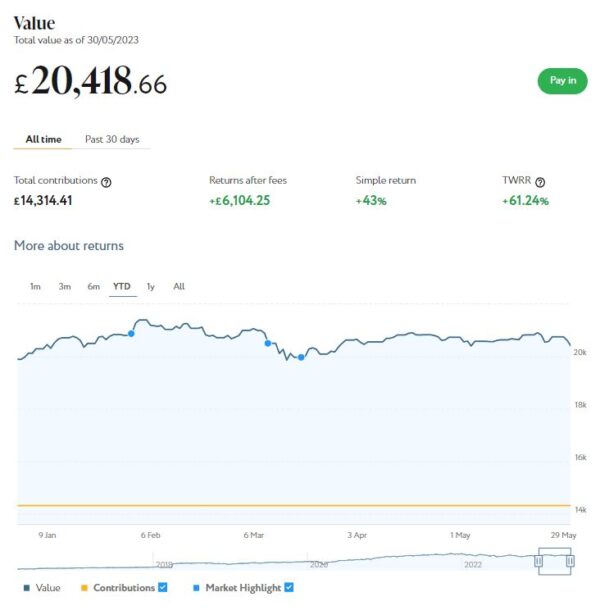
As the screenshot below for the year to date shows, my main Nutmeg portfolio is currently valued at £20,419. Last month it stood at £20,740 so that is a fall of £321.
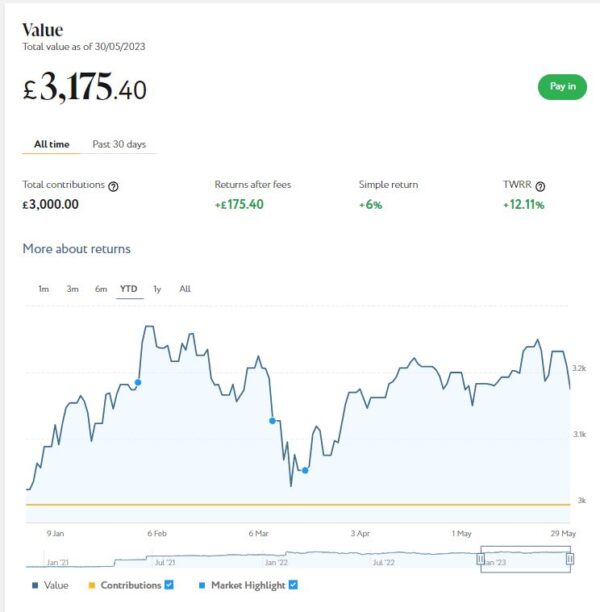
Apart from my main portfolio, I also have a second, smaller pot using Nutmeg’s Smart Alpha option. This is now worth £3,175 compared with £3,201 a month ago, a small decrease of £26. Here is a screen capture showing performance since the start of this year.
As you can see, this has been another up-and-down month for both my Nutmeg pots. Pro rata, though, my Smart Alpha portfolio has again done a bit better than my main portfolio. I am therefore tempted to switch more of my money into it, although there isn’t a massive difference in performance between them.
The net value of all my Nutmeg investments has fallen this month by £347 or 1.45% month on month. That is obviously disappointing, but both pots are still comfortably up on where they were at the start of the year. And their total value has risen by £1,781 (8.16%) since mid-October last year.
Of course, all investing is (or should be) a long-term endeavour. Over a period of years stock market investments such as those used by Nutmeg typically produce better returns than cash accounts, often by substantial margins. But there are never any guarantees, and in in the short to medium term at least, losses are always possible.
Also, as you may know, both my Nutmeg pots have quite high risk levels (9/10 main, 5/5 Smart Alpha). If you haven’t yet seen it, you might like to check out my blog post in which I looked at the performance over time of Nutmeg fully managed portfolios at every risk level from 1 to 10 . I was pretty amazed by the difference risk level makes, with higher-risk ports over almost any period of three or more years in the last ten generating significantly better overall returns. If you are investing for the long term (and you almost certainly should be) choosing a hyper-cautious low-risk level might not therefore be the smartest strategy. The one exception is if you plan to withdraw your money soon and don’t want to risk losing too much if there is a sudden downturn.
You can read my full Nutmeg review here (including a special offer at the end for PAS readers). If you are looking for a home for your annual ISA allowance, based on my overall experience over the last seven years, they are certainly worth considering. They offer self-invested personal pensions (SIPPs) and Junior ISAs as well.
Moving on, my Assetz Exchange investments continue to generate steady returns. Regular readers will know that this is a P2P property investment platform focusing on lower-risk properties (e.g. sheltered housing). I put an initial £100 into this in mid-February 2021 and another £400 in April. In June 2021 I added another £500, bringing my total investment up to £1,000.
Since I opened my account, my AE portfolio has generated a respectable £117.63 in revenue from rental income. As I said in last month’s update, capital growth has slowed, though, in line with UK property values generally.
At the time of writing, 7 of ‘my’ properties are showing gains, 4 are breaking even, and the remaining 14 are showing (small) losses. My portfolio is currently showing a net decrease in value of £23.62, meaning that overall (rental income minus capital value decrease) I am up by £94.01. That’s still a decent return on my £1,000 and does illustrate the value of P2P property investments for diversifying your portfolio. And it doesn’t hurt that with Assetz Exchange most projects are socially beneficial as well.
Obviously the fall in capital value of my AE investments is a bit disappointing. But it’s important to bear in mind that unless and until I choose to sell the investments in question, it is largely theoretical. The rental income, on the other hand, is real money (which in my case I have chosen to reinvest in other AE projects to further diversify my portfolio).
I also spoke to the CEO of Assetz Exchange, Peter Read, recently. He made the point that capital values on the platform simply reflect the latest price at which shares in the property concerned have changed hands on their exchange. They do not represent objective or independent valuations of the properties. If you are investing long term with AE, the annual yield from rentals is really a much more important consideration.
Peter also made the point that the current high inflation rate has actually been beneficial for Assetz Exchange investors. That is because properties on the platform generally have an annual review when rentals are increased in line with inflation. That means from the end of the financial year in April, rentals have increased in most cases by around 10%. I don’t want to go into too much detail about this here, but it is a subject I may return to in a future blog post.
To control risk with all my property crowdfunding investments nowadays, I invest relatively modest amounts in individual projects. This is a particular attraction of AE as far as i am concerned. You can actually invest from as little as 80p per property if you really want to proceed cautiously.
Another property platform I have investments with is Kuflink. They continue to do well, with new projects launching every week. I currently have around £2,500 invested with them in 18 different projects. To date I have never lost any money with Kuflink, though some loan terms have been extended once or twice. On the plus side, when this happens additional interest is paid for the period in question.
My loans with Kuflink pay annual interest rates of 6 to 7.5 percent. These days I invest no more than £200 per loan (and often less). That is not because of any issues with Kuflink but more to do with losses of larger amounts on other P2P property platforms in the past. My days of putting four-figure sums into any single property investment are behind me now! Nowadays I mainly opt to reinvest the monthly repayments I receive from Kuflink, which has the effect of boosting the percentage rate of return on the projects in question
Obviously a possible drawback with Kuflink and similar platforms is that your money is tied up in bricks and mortar, so not as easily accessible as cash savings or even (to some extent) shares. They do, however, have a secondary market on which you can offer any loan part for sale (as long as the loan in question is performing and not in arrears). Clearly that does depend on someone else wanting to buy it, but my experience has been that any loan parts offered are typically snapped up very quickly. So if an urgent need arises, withdrawing your money (or part of it) is unlikely to be an issue.
You can read my full Kuflink review here. They offer a variety of investment options, including a tax-free IFISA paying up to 7% interest per year with built-in automatic diversification. Alternatively you can build your own IFISA, with most loans on the platform being IFISA-eligible.
Until 30 June 2023 Kuflink are offering enhanced promotional rates of up to 9.73% (gross annual interest equivalent rate) for their Auto-Invest products (IFISA-eligible). There is limited availability for this offer and it may be withdrawn any time before 30 June 2023 if the limit is reached. For more information, click here [affiliate link].
Last year I set up an account with investment and trading platform eToro, using their popular ‘copy trader’ facility. I chose to invest $500 (then about £412) copying an experienced eToro trader called Aukie2008 (real name Mike Moest).
In January 2023 I added to this with another $500 investment in one of their thematic portfolios, Oil Worldwide. I also invested a small amount I had left over in Tesla shares. My original investment of $1,022.26 is today worth $1,093.00, an overall increase of $70.74 or 6.92%. in these turbulent times I am happy enough with that.
Since last month the price of my Tesla shares has risen and my copy trading portfolio with Aukie2008 has performed steadily. Unfortunately my most recent investment in Oil Worldwide is in the red, though. I am hoping for better things in the months ahead 🙂
eToro also recently introduced the eToro Money app. This allows you to deposit money to your eToro account without paying any currency conversion fees, saving you up to £5 for every £1,000 you deposit. You can also use the app to withdraw funds from your eToro account instantly to your bank account. I tried this myself recently and was impressed with how quickly and seamlessly it worked. You can read my blog post about eToro Money here.
I had two more articles published in May on the excellent Mouthy Money website. The first was How to Save Money With Cashback Sites. If you ever buy anything online, you can almost certainly save money by signing up with these sites, which include Quidco and Top Cashback. You can read about my experiences with them and my top tips in this article.
My other article was Equity Release – Is It Right for You? In these financially challenging times, more and more older people are turning to equity release to release money tied up in their homes. My article explains the main options and sets out a range of points to consider before doing this.
As I’ve said before, Mouthy Money is a great resource for anyone interested in money-making and money-saving I always look forward to reading the articles by my fellow contributors. Shoestring Jane is a particular favourite and I enjoyed reading her recent article How to Start Comping and Win Big!
I also published a number of new posts on Pounds and Sense in May. One of these was about My Short Break in Aberdovey. This is a small town on the mid-Wales coast, between Aberystwyth and Tywyn. It was my first visit to Aberdovey and I recommend it for a chilled-out break – although (as I say in the article) I wouldn’t go there for the nightlife!
On a similar note, I published Get a Free ETF Share Worth up to £200 with Wealthyhood. Wealthyhood is a DIY wealth-building app aimed especially at people who are new to stock market investing. As from 1 June 2023 they changed their fee structure to make it even more attractive to small investors. It’s worth checking out, even if you only want the free share. This is an ongoing offer, but to qualify you do have to make a £20 minimum investment on the platform.
I also published an article titled Nibble Launches New Legal Strategy for investors. Nibble is a European crowdlending platform open to anyone. They are offering returns of up to 14.5% in their new Legal Strategy, which involves investing in loans that are in default and facing legal action (hence the name, of course). That is obviously higher risk, but NIbble guarantee to pay all investors in this strategy a minimum of 8% up to the maximum 14.5% depending how successful their recovery efforts prove. Average quarterly returns are currently 12.5%.
The other post I published in May was also about equity release. It’s titled Why Are People Opting for Equity Release? The article features some interesting research on why people are opting for equity release in the current economic climate, and what reasons are becoming more common. Definitely worth a look if equity release is on your radar.
One other thing I should mention is that I had an article published a couple of weeks ago in the Daily Telegraph newspaper about my investing experiences. If you read my monthly investment updates on PAS you won’t find too many surprises in it, but here’s a link anyway in case you’d like to check it out. Note that the article is behind a paywall so unless you are a Telegraph subscriber you will only be able to see the start.
Finally in May I enjoyed a short break in Yorkshire visiting my sister Liz and her family. Once again I stayed at the beautiful Hewenden MIll Cottages, between Wilsden and Cullingworth (near Haworth and ‘Bronte country’). If you’re looking for an unusual, rural-based short-break destination, Hewenden could certainly fit the bill. A photo of the old mill building (in which I stayed on a previous visit but not this time) is shown below. There is also a photo of the woodland at Hewenden in the cover image. You can read my original review of Hewenden Mill Cottages here.
That’s all for today. I hope you’re enjoying the better weather and taking the opportunity to get out and about in our beautiful country (or further afield).
As always, if you have any comments or queries, feel free to leave them below. I am always delighted to hear from PAS readers
If you enjoyed this post, please link to it on your own blog or social media:
As you probably know, equity release is a method of unlocking funds tied up in your property. It is open to homeowners aged 55 and over (60 and over in the case of home reversion plans).
In recent years equity release has become increasingly popular, and even rising interest rates have done little to dampen this trend. So today I thought I would look at the main reasons people are opting for equity release. I am indebted to my colleagues from Equity Release Supermarket for providing information (based on their internal data) on the top reasons people are releasing equity, as well as which reasons are seeing the biggest increases.
The table below shows the top reasons people have been using equity release over the last six months.
Rank
Reason for equity release
1
Repay mortgage
2
Home improvements
3
Debt consolidation
4
Supplement income
5
New/second home purchase
As the table shows, repaying a mortgage is the number one reason over 55’s have released equity. The data shows that, on average, 21.1% of completed cases planned to pay off an existing mortgage with the money released.
Home improvements are the second most common reason, with an average of 17.9% of borrowers raising money for a renovation project.
Debt consolidation is the third most common reason for equity release, at a slightly lower average of 13.7%. Interestingly, when looking at the data by month, using equity release for debt consolidation peaked at 18% in December 2022.
The data also reveals which reasons for equity release have increased in popularity over the last six months, with home improvements seeing the biggest increase, growing by 7.7%.
Gifting money is becoming an increasingly popular reason to release equity too. In the last four months alone, gifting money that has been released through an equity release scheme has risen by 2%.
“Equity release is available for homeowners over the age of 55 who wish to free up some of the money, tax-free, that has been built up in the equity of their home. The interest rate is fixed for life and the plan is repaid when the homeowner dies or moves into long term care.
“It is perhaps unsurprising that repaying a mortgage is the top reason for equity release. As interest rates and living costs continue to rise, borrowers will be looking for ways to reduce their monthly payments. By using an equity release scheme, such as a lifetime mortgage, to pay off your existing interest only mortgage you will no longer need to make monthly payments unless desired. This can help make monthly savings and alleviate financial pressures, especially for those who have seen their mortgage payments rise in recent months due to interest rates.
“It is interesting to see that gifting money through equity release has risen over the last six months. Money gifted through equity release becomes exempt from inheritance tax, provided that the gift giver lives for seven years afterwards. Inheritance tax can significantly reduce the amount of wealth that you may be able to pass on, so we often find that many people turn to equity release as a strategy for reducing the impact it will have on an estate.
“In this uncertain economic climate, it is more important than ever that borrowers are getting advice on what product options are available across the whole equity release market. For anyone considering equity release, we would suggest discussing your plans with one of our equity release advisers.”
My Thoughts
If you’re looking for a way to release money from your property – whether to pay off debts/mortgages, fund specific purchases, assist children or other family members, or just make later life more comfortable – equity release is certainly something you may want to consider.
The main downside is – of course – that ultimately there will be less money to pass on to your beneficiaries. All reputable providers, however, offer a no-negative-equity guarantee. They may also be able to arrange plans where a certain amount of cash is guaranteed to remain in your estate, if you so wish.
Equity release interest rates in most cases are fixed for life, so you will know from the start the liability you are taking on. Of course, the longer you remain living in your home, the larger the debt eventually payable from your estate will be.
If you think equity release may be right for you, you will need to discuss this fully with an independent adviser before proceeding. As well as Equity Release Supermarket other well-known firms in this field include Key Equity Release and Age Partnership. The Equity Release Council has a full list of members on its website.
The adviser will discuss your needs and circumstances, and – assuming they think equity release is right for you – make a recommendation from the range of products on the market. You can, of course, speak to two or more different advisers if you wish before making any final decision.
Thank you again to my colleagues at Equity Release Supermarket for their assistance with this post. As always, if you have any comments or questions, please do leave them below as usual.













 The recovery in stock market values continued through 2021. If you check out my in-depth