
Can You Still Make Money from Buy to Let?

Can You Still Make Money from Buy to Let?

In the past buy-to-let seemed a relatively easy way to make money.

So long as you had the capital – or were able to borrow it – you could buy a house, put tenants in it, and collect a steady income from rental payments, along with potentially a lump-sum profit if you sold up at a higher price later on.

In recent years, though, tax and regulatory changes have made buy to let less appealing – to a point where many wonder if there is still money to be made this way. So in my post today I want to address this question.

Let’s start, though, by looking at the upside…

The Attractions of Buy to Let

As stated above, property investors get a double benefit. They enjoy rental income from tenants for as long as they own the property, and also have the potential to make a substantial lump sum profit when the time comes to sell.

A further attraction of buy to let is that your tenants effectively pay off your mortgage for you. So if, for example, you are buying a £400,000 property, you might ‘only’ need to find a deposit of £100,000. As long as your tenants’ rental payments cover your mortgage repayments (with a bit to spare), after 25 years or so the mortgage will be paid off. You will then fully own a second property, having originally paid only a quarter of the full property price. And that doesn’t even allow for the prospect of capital growth. If your property eventually sells for £600,000, you’ll have made an additional £200,000 capital gain.

  • Of course, you don’t have to borrow to fund your buy-to-let. If you already have the capital you need, investing in a buy-to-let property will provide you with a steady income while the capital value of your property (hopefully) appreciates over time.

Buy to let can also be a good way of diversifying your investment portfolio. Rental income is relatively stable, especially if you have a number of properties and tenants. And property values aren’t directly related to the state of the stock market. So while property doesn’t provide a method for hedging your stock market investments directly, it can certainly help spread the risk.

Of course, property prices took a knock in the 2008 credit crunch and subsequent recession, and more recently were affected by the pandemic (though prices generally are on an upward trajectory again now). In the longer term, though, prices have been on a strongly upward trend since the 1970s. On average, house prices have grown faster in the UK than they have in any other European country.

There’s every indication that prices will go on rising in the coming years as well. The UK currently has a serious shortage of housing, caused by various factors. To start with, the UK population is growing rapidly. This inevitably means demand for housing will go on rising, thereby driving up the price of property. According to the Office of National Statistics there will be an annual shortfall of housing in the UK of over 100,000 properties each year for the next decade. This could mean a shortfall of one million properties by 2025 if current trends continue.

Various factors have combined to boost rental demand, including immigration, more people living alone, people moving around the country for work reasons, and rising house prices stopping first-time buyers getting onto the housing ladder. The latter is obviously challenging for young people, but it’s great news for landlords whose buy-to-let properties are being let extremely quickly, while their rental income keeps increasing. All of the above means that residential property can represent a profitable and attractive investment option.

What Are The Drawbacks?

One obvious drawback for anyone wanting to invest directly in property is that it’s expensive! And if you can only afford a single property, you are taking the risk of putting all your eggs in one basket. To mention just a few things…

  • There may be periods when you don’t have tenants (voids, to use estate agent jargon). At these times your property will be costing you money rather than making it for you.
  • Bad tenants are all too real and can be a nightmare for landlords. If they don’t pay their rent, it will take time and money to evict them. And that’s not to mention the costly damage to your property a malicious – or just careless – tenant can cause.
  • There will be maintenance and repair bills to pay. If something expensive goes wrong – the roof or the central heating boiler, say – the cost of the necessary work may wipe out several months of profits for you.

In general, being a landlord – at least, a responsible one – is a hands-on role. While you can outsource some aspects of managing your property to an agency (for a fee) you will still have to keep a watchful eye on your property and tenants to ensure that your investment is protected.

A further drawback is that property isn’t a liquid asset. Yes, putting your money in bricks and mortar gives you a degree of security – but if you need to access your capital urgently this may be difficult or impossible. Even if you’re able to find a buyer quickly, if the timing is bad you could end up selling at the bottom of the market and making only a small net profit or even a loss.

And there’s more bad news for buy-to-let investors. As I said earlier, legal changes over the last couple of years have made the whole buy-to-let process more costly and burdensome. For one thing, from April 2016 anyone buying a residential buy-to-let property (or second home) has had to pay an extra 3% in Stamp Duty. In some quarters this has been dubbed the Landlord Tax.

Another major legal change has affected landlords who use mortgage loans to purchase buy-to-let properties. Before April 2017 landlords were allowed to deduct all of the interest they paid on buy-to-let mortgages from their taxable income. In effect, that meant they paid tax on their net profit from rentals rather than their turnover. The government decided to change the rules, however, arguing they gave buy-to-let landlords an unfair advantage over ordinary homeowners. So from April 2017 landlords were only allowed to claim relief on 75% of their mortgage interest. From April 2018 that dropped to 50%, and it kept falling by 25% a year until it reached 0% in 2020. It was then replaced by a less attractive tax credit equivalent to 20% of mortgage interest (which was particularly disadvantageous to higher rate taxpayers). All of this has meant that borrowing money to fund a buy-to-let has undoubtedly become less attractive (and profitable) than it used to be..

Other changes affecting landlords have come in too. For example, from April 2018 all new tenancies and renewals have had to be rated ‘E’ or better on their Energy Performance Certificates, with fines of up to £5,000 for landlords who don’t comply. Most recently built homes should qualify for this rating, but landlords of older, less energy-efficient properties may have to spend large sums bringing them up to scratch. And, of course, this all adds to the administrative burden for landlords, even if it is ultimately helping to save the planet!

One effect of all this has been that some smaller landlords have decided that buy-to-let is no longer worth the effort for them, and they are selling up and moving out of the sector.

So Is There Still Money to be Made?

My answer to this is a qualified yes.

There is definitely still money in buy to let, but it is no longer the ‘one-way bet’ it might once have appeared. You should therefore research opportunities carefully and adopt a highly professional and businesslike approach to the whole process.

A key consideration here is ‘yield’. This is the net amount (rental minus costs) you can expect to make from a buy-to-let property per year, as a percentage of the purchase price. Yield can be compared with the interest rate paid on a savings account. By this means you can assess how profitable a buy-to-let opportunity is and whether it makes sense as an investment vehicle. Clearly, if the yield is less than you could get by leaving your money in the bank, there is not much point in investing this way.

The website Totally Money recently analysed data from nearly half a million properties across England, Scotland and Wales, to calculate the buy-to-let yield for each postcode. The results were eye-opening to say the least. They found that buy-to-lets in the top 25 postcode areas were still delivering excellent returns. At the top was Liverpool, where landlords can enjoy 10% yields. Falkirk (9.51%) and Glasgow (8.71%), both in Scotland, came second and third respectively. Even postcodes at the lower end of the top 25, such as Lancaster and Aberdeen, were returning respectable yields of over 7%. All of these are clearly far better rates of return than you could get from a savings account, and you will have an asset that is hopefully increasing in value as well (see below).

Location is therefore a key consideration for any potential buy-to-let investment and must be researched thoroughly. In addition, the best area for your investment will depend on whether you intend to put your money into flats for professionals, student accommodation, family homes, etc. At the risk of stating the obvious, there needs to be solid demand in the area from would-be tenants for the type of rental property you intend to buy.

  • Of course, while it’s very important, yield/income potential isn’t the only consideration for property investors. In the longer term you will likely be hoping for capital growth as well – so ideally you should be looking to invest in properties in up-and-coming areas rather than those in long-term decline.

Getting Started

Having weighed up the pros and cons, if you do decide that buy-to-let is right for you, here are some top tips to get you started…

  • Speak to a professional independent financial adviser to discuss your plans. They will help you decide how much to invest and the level of return you should realistically be aiming for.
  • You should also speak to a mortgage broker to find out what deals are available and ideally get approval in principle for a mortgage. This means you will be well placed to make an offer as soon as you find a suitable property.
  • If there is a particular area you are considering, visit several times to get a feel for the place. That applies especially if it’s a location you’re not already familiar with. Check out the housing stock, public transport, car parking, shopping and schools, hospitals, and so on. Try to speak to other landlords in the area and local letting agents to get an idea of the size and nature of the rental market and the sorts of rentals that may be achievable. Always remember that the bottom line for any buy-to-let investor is return on capital or yield.
  • Once you find a potential property (with or without existing tenants) research it carefully as well. Obviously before buying you will need to do all the usual searches and a structural survey. As with all property sales, you can expect this process to take several months to complete.
  • Arrange insurance for your buy-to-let. Along with the usual buildings insurance, you should almost certainly have landlord insurance to protect you from financial losses associated with renting out a property. This will typically cover such things as fixtures and fittings, public and landlord’s liability, subsidence, replacement of windows, locks and keys, and so forth. It will also normally cover malicious damage caused by tenants, along with rent arrears and legal expenses (though the last two may not necessarily be included as standard). You can compare landlord insurance here.
  • To find tenants you can either go through an agency or do this yourself. Obviously going through an agency will add to your costs but can save you a lot of hassle, especially if you haven’t the time (or inclination) to be too hands-on.
  • Even if you pick your own tenants – and perhaps already know them personally – draw up a legally-binding contract. That means everyone knows where they stand from the start and can help to avoid potential unpleasantness later on.
  • Review your buy-to-let mortgage arrangements regularly and be prepared to switch to a better deal when your current one expires.
  • Ensure that your rental income is declared in a tax-efficient way and set against any allowable expenses. A good accountant will be able to help with this.
  • Your accountant will also be able to advise you about the pros and cons of running your buy-to-let through a limited company. This comes with additional costs (and paperwork) but for landlords of multiple properties in particular the tax benefits can be significant – not least because you can claim all the interest paid on your buy-to-let mortgage/s against income rather than just 20%.
  • And finally, once your first buy-to-let is up and running successfully, consider adding more. Multiple properties will give you a bigger income and will also reduce the risk inherent in putting all your eggs in one basket (as discussed earlier).

In Conclusion

If you’re considering buy to let, I hope this article will have helped you make up your mind. There is undoubtedly still money to be made this way, but you do need to choose your location and property carefully, and approach the whole process in a professional and businesslike way. That applies from the initial planning stage right through to the day-to-day – and year-by-year – management of your property.

As ever, if you have any comments or questions about this post, please do leave them below. I would also be very interested to hear from any readers who have invested in buy-to-let themselves, along with any tips (or warnings!) they would like to share.

Disclosure: this is a sponsored post.

If you enjoyed this post, please link to it on your own blog or social media:
How to Get a Better Night's Sleep

How to Get a Better Night’s Sleep

For many of us (including me) the stress of the Covid-19 pandemic is playing havoc with our sleep patterns. That’s bad news for a variety of reasons.

Scientifically it’s been proven we all need at least 6 to 9 hours sleep a night. The amount required varies between individuals. It also reduces a little as we get older (though not as much as some people would have you believe).

Getting enough good-quality sleep is essential for a number of reasons. For one thing, sleep is when our body repairs itself so it is ready to face another day. In addition, scientists now believe that sleep – REM sleep when we are dreaming especially – plays an important role in consolidating learning and memories from the day before.

Not getting enough sleep leaves us tired and irritable, more prone to anxiety and depression, less able to concentrate and be productive. It may also make us more likely to put on weight, weaken our immune system, and increase our risk of heart disease.

So today I thought I’d share some top tips for sleeping better at this stressful time. Some of these are from my own experience (and research) while others have been contributed by my fellow UK bloggers. I hope you will find some helpful ideas among them…

Top Tips for Sleeping Better

1. Try to Keep to a Regular Routine

Aim to go to sleep at the same time every day and at weekends. This well help set your body clock and ensure you are able to get to sleep quickly and wake up refreshed and ready to start the day.

2. Make Your Bedroom as Dark as Possible

Darkness signals to your body it is time to sleep and stimulates the production of our natural sleep hormone, melatonin. Avoid as much as possible light from electrical devices such as mobile phones and TVs on stand-by. Ideally such devices should be banished from the bedroom completely or at least covered up at night.

I also recommend having blackout curtains or blinds in the bedroom. These can cut out light from outside almost completely. Until I got blackout curtains I got woken up on various occasions by the security lights on the house opposite when (I assume) a fox or something passed by in the early hours.

3. Brighten Your Mornings, Dim Your Evenings

Try to get some natural light (ideally sunlight) as soon as possible after waking up. In the evening, though, dim the lights, especially in the hour or two before bedtime. This all helps strengthen your daily rhythm of sleep and wakefulness.

4. Exercise Daily, but not in the Evening

Getting enough exercise is crucial to sleeping well. But do it in the morning if possible. Exercising then will energise you for the rest of the day, and later ensure that you are physically tired enough to sleep well. By contrast, if you exercise in the evening, this will speed up your metabolism, raise your body temperature, and stimulate the production of hormones such as adrenaline and cortisol. This is not a problem if you’re taking exercise in the morning or afternoon, but too close to bed and it can interfere with your sleep.

5. Avoid Caffeine and Alcohol at Night

I guess for many of you this is stating the obvious. Nonetheless, it’s worth pointing out that caffeine is a natural stimulant and can interfere with sleep if taken at night.

Coffee is the best known source of caffeine, but tea contains it as well (even green tea). People vary in their sensitivity to caffeine. Even so, for most folk a milky bedtime drink is likely to be a better choice. Or you could drink decaffeinated coffee. Personally, though, I find this generally tastes like dishwater, and prefer simply to avoid coffee from afternoon onward.

Alcohol, on the other hand, is a nervous system depressant. This means it can help you to sleep, but the quality of your sleep is likely to be impaired. For one thing, it can be dehydrating, meaning you wake up in the middle of the night needing water. You may also have to get up for additional bathroom visits. And drinking alcohol can make you more prone to snoring, which can affect your sleep quality (and that of your partner!).

6. Change Your Mattress

Many of us keep our mattresses for too long before changing them. Ideally you should get a new mattress every eight years or so. Old mattresses tend to lose their spring and become lumpy and uncomfortable. Even worse, detritus can build up in them including dead skin cells and dust mites. This can cause allergic reactions, affecting your sleep quality.

7. Get Comfortable Pillows

Like mattresses, many of us wait too long before changing our pillows, but for similar reasons they need to be changed regularly (as a rule of thumb every one to two years). A pillow of the right size and firmness will hold your head in a comfortable, ‘neutral’ position while you sleep, ensuring you don’t wake up with a stiff, aching neck in the morning.

The type of pillow you get is a matter of individual preference. Personally I like feather and down, but others may prefer memoryfoam or microfibre. In any event, it’s important to choose your pillows carefully, and don’t begrudge paying a bit more for quality – it will be an investment in your health.

8. Don’t Eat Late at Night

Eating late will raise your blood sugar level at a time when it should be falling and make it harder to get to sleep. It may also, of course, cause indigestion. If you want a late night snack, something light like cheese and biscuits, a piece of fruit, or a bowl of cereal may fit the bill. In any event, you should try to avoid eating anything from an hour before you go bed.

9. Keep Your Bedroom Cool and Quiet

The optimum temperature for sleeping is between 16 and 18 degrees Celsius. Obviously it can be difficult to ensure that your room stays at this temperature all night, especially in the depths of winter and the heights of summer. Do what you can to stay cool (though not cold) all night, though, and your sleep quality will improve as a result.

Noise can be another obstacle to sleeping. This will obviously depend a lot on where you live, how much traffic there is outside, and how quiet (or otherwise) your neighbours are. Even if noise is a problem, however, there are things you can do to improve matters. Earplugs are one solution, though they don’t suit everyone. And a fan or similar device can help drown out noises from outside (personally I have a dust extractor which whirs away quietly all night and clears the air as well as covering up other noises). Finally, there are lots of free smartphone apps that will generate relaxing background sounds to help you sleep, with rain and sea sounds especially popular.

10. Wind Down at Night

Try to spend the hour before going to bed doing a calming activity such as reading, listening to music or even meditating. Try to avoid touchy discussions, work-related worries and so on. All this will help put your mind and body into sleep mode. If possible avoid using electronic devices such as laptops and mobile phones late at night, as the blue light they emanate can make it harder to fall asleep.

11. Bath Before Bedtime

This is something I swear by myself. A warm bath is a great of way of relaxing your body and easing the tensions of the day in preparation for sleep. Adding a few drops of lavender oil can assist in this. You can also add bath cream or bubble bath if that’s your thing.

12. Ask for Help

Finally, don’t be afraid to ask your GP if your sleep problems continue for more than a few weeks. She will be able to check to see if a health condition — such as acid reflux, arthritis, asthma, or depression — or a medicine you take may be part of the problem. She will also be able to talk you through any lifestyle changes or medications that might be helpful.

I haven’t mentioned sleeping pills until now. Personally I am dubious about taking these if I don’t have to, and concerned that I might become dependent on them. There are, though, various natural/herbal remedies you can try, including chamomile tea and St John’s Wort.

I have also had good results from a health supplement called 5-HTP, which is made from the African plant Griffonia. This boosts the production in the body of serotonin (the so-called happy hormone) and can therefore help with depression. But serotonin is also a precursor to melatonin, our body’s natural sleep hormone. I take one of these at night if I have had a stressful day and do find they seem to improve my quality of sleep. Below is a link to one such supplement on Amazon. Read the description and reviews and see what you think. But if you have any pre-existing medical conditions, I would strongly recommend speaking to your GP before you start supplementing with 5-HTP (or anything else).

Top Tips from UK Bloggers

As mentioned above, I also asked my UK blogging friends to let me know what worked well from them. Here are some of the answers they came up with…

Joanna from My Anxious Life says: ‘I like to play little games or make lists in my head. I often play “I Went To The Shop And I Bought…” or the Alphabet Game, for example listing all the foods beginning with C or all the girls names beginning with S. It helps to give me something simple and repetitive to concentrate on other than my constant stream of thoughts. It’s the adult’s version of counting sheep!’

Kier from Beyond the Blues says, ‘I always open my window about half an hour-ish before I’m going to go to bed so that it’s extra cold in my bedroom, and then I take my hot water bottle to bed when I’m ready to sleep. I don’t know what it is about sleeping in a cold bed with a hot water bottle but it just makes me feel so calm and cosy that I fall asleep pretty quick!’

Nikki from Best Brunch or Breakfast says, ‘When I want to go straight to sleep, I have a really hot bath. Not a relaxing soak – a REALLY hot bath (be sensible and don’t end up in A&E, obviously!). When I get out I get quickly dry and then I am that exhausted I fall straight asleep!’

Claire from Stapo’s Thrifty Life Hacks says, ‘I put my phone on charge away from the bed and get my Soothe Kit out, which has lots of comforting bits in it. Everyone’s Soothe Kit will be different, depending on what works for them, but mine contains herbal tea, a colouring book, some slime, a lavender body lotion and my favourite blanket. The items relax me and take my mind off the day’s worries.’

Emma from Bee Money Savvy says, ‘This may contradict a lot of advice about avoiding electronic devices before bed but right now I’m finding playing Animal Crossing on the Nintendo Switch really soothing before bed. My advice would be to find something that relaxes you; whether that’s a game, doing yoga, meditating or having a bath in the hours leading up to bedtime.’

Rebecca from Views From My Garden Bench says, ‘I was an insomniac for years until I worked out what helped me – calm spoken words or classical music. At the moment, I’m listening to Patrick Stewart reading a Shakespeare sonnet a day – his voice is so restful, and because it’s poetry there is a cadence to his words. Also I listen to modern classical music from Ludovico Einaudi [Italian pianist and composer].’

Chloe from Nyxie’s Nook recommends making your bedroom a ‘sleep-friendly haven’ and more in her blog post titled How to Get to Sleep for Night Owls.

Anna from Goodness Me Nutrition says, ‘I’m a nutritional therapist and write about gut health and sleep. Allowing three hours between your last meal of the day and sleep makes a big dfference. Eating in time with your circadian rhythms is a big factor.’

Joanna who blogs at Joanna Journals says, ‘For me, I find that the best way to sleep soundly is simply to have a routine. When I was at uni, I slept so badly because I just had no sleeping pattern, but in my final year, and now I’m working, I have a set bedtime and wake-up time, and I fall asleep so quickly and soundly. It really is amazing how our bodies work; once we’ve got used to our body clock, it works wonders!’

Victoria from Semi Charmed Life says, ‘White noise really helps me. I usually have a fan on when I sleep which does the trick (and keeps the air circulating, making me feel better).’

Georgia of Big Fashion Talk says, ‘I add on my pillow some drops of lavender essential oil and it has helped me tremendously!

Anne from The Platinum Line says, ‘I find I need to keep to a routine. I still get up and dressed at about 8 o’clock and try to stick to regular meal times. I find I am sleeping better as there is less traffic noise and our student neighbours are at home.’

Ren from Queer Little Family says, ‘I’m an insomniac and my general advice is if you can’t get to sleep don’t force it. Get up and start again. Go have a cup of tea, spend twenty minutes, half an hour away from your bed and from trying to sleep. Then go back to bed and try again. It doesn’t always work but it breaks it up.’

Marina from Marina Writes Life says, ‘Back in the day, I used to search up techniques on how to sleep better and ways to make you fall asleep as, quite frankly, I was really struggling due to the stresses of college, etc. I found a list of foods based on old wives’ tales that supposedly make you sleepy, two of which were chocolate and banana (there were others like turkey and sunflower seeds, but as a midnight snack – ew). Five years later, still to this day, I eat a chocolate and banana toastie at night when I can’t sleep and, honestly, it works a treat!’

Rob from The Sober Odyssey says, ‘I’ve taken CBD oil for the more than six months and found that has helped with much better sleep. Then giving up alcohol in January improved my sleep even more. I track my sleep with my Fitbit.’

Finally, Marie from Broke Girl in the City says, ‘Write a list of the important things you need to do in the evening to prevent yourself from worrying. Also, nice clean sheets work a treat!’ Marie also has a great blog post with tips for sleeping better from UK money bloggers. It was published specially for Mental Health Awareness Week, 18-24 May 2020. Here’s a link to her post.

  • Persistent ear infections such as Otitis Externa (Swimmer’s Ear) can also disrupt sleep as well as reducing quality of life generally. The specialist ear doctors at Auris Ear Care can diagnose and treat your condition in the comfort and safety of your own home using their fully mobile and CQC-regulated service.

Many thanks again to my UK blogging friends for their tips and ideas. Please do take a moment to check out their blogs!

Final Thoughts

I hope you have enjoyed reading this post and it has given you some ideas to try if sleeping is a problem for you. I am definitely going to try out chocolate and banana toasties 😀

This is undoubtedly a difficult and stressful time, but hopefully there are at least a few signs of light at the end of the tunnel now. If you need advice and support, however, don’t be afraid to reach out to others, be they friends and family, counsellors and chaplains, financial advisers, healthcare professionals, and so on. And make time to contact people whom you know may be struggling right now or you simply haven’t heard from for a while. We really are all in this together, and by supporting one another we will make it through together to better times ahead.

Good luck, and sleep well!

  • As always, if you have any comments or questions about anything in this post, please do leave them below.

Disclosure: This post includes Amazon affiliate links. That means if you click through and make a purchase, I will receive a small fee from Amazon as a reward for introducing you. This will not affect the price you pay or the product or service you receive.

Note: This is an update of a post first published last year.

If you enjoyed this post, please link to it on your own blog or social media:
Grow Your Money Every Week With Plum!

Grow Your Money Every Week With Plum!

Updated 1 Feb 2021

British people generally are not very good at saving.

A third of us have under £600, and 1 in 10 have no savings at all (source: https://www.finder.com/uk/saving-statistics). Having so little money put away makes people especially vulnerable in the event of a sudden change in their circumstances such as redundancy or divorce.

So today I thought I’d bring to your attention a money-management app called Plum that aims to help with this problem.. Plum is designed to help you set money aside painlessly for any purpose – from holidays to major purchases or simply for a ‘rainy day’ fund.

Plum is one of a growing range of apps that make use of so-called Open Banking. This allows third-party apps to access your financial information (read only) – so long as you provide the necessary authorization, of course – and perform certain transactions on your behalf, if you choose to set up a direct debit.

Open Banking is now becoming well established in the UK, and safeguards are in place to ensure that your security isn’t compromised. Even so, this is something you need to be aware of – and comfortable with – before signing up with Plum or similar apps.

In this post I am looking at features available on the Plum Free (or Basic) account and the paid-for Plum Plus and Plum Pro Accounts. The Plum Free account is – of course – free of all charges. Plum Plus costs £1 a month (the first month is free) and Plum Pro costs £2.99 a month (again, the first month is free if upgrading from a Plum Free account). Plum Plus and Plum Pro  offer a wider range of features and higher interest rates in interest-bearing ‘Pockets’ (further discussed below).

The screen capture below from the Plum website shows the features available with each type of account.

Plum accounts Feb 2021

You can read more about the three account types if you wish on the Plum website.

How It Works

Plum is available as an iOS and Android app. It uses Open Banking in combination with a direct debit authorized by you to manage and grow your money for you in an intelligent way.

Every few days, Plum’s algorithm calculates what you can afford to stash away based on your spending habits. It then transfers that money automatically from your current account to your Plum account. In this way you put money aside regularly while barely being aware of it – so it builds up, and in due course you can spend it on things that really matter to you.

You can change the amounts the app takes at any time, and also pause the service if you wish. This means you don’t have to worry about Plum pushing you into the red. You always stay in control and can change the ‘mood’ at any time if you want to be more ambitious or cautious with your saving (see picture below).

Plum savings mode

Plum currently works with most major UK banks. The full list from the website is as follows:

  • Barclays
  • Danske Bank
  • First Direct
  • Halifax
  • HSBC
  • Lloyds
  • M&S
  • Monzo
  • Nationwide
  • Natwest
  • Revolut
  • RBS
  • Santander
  • Bank of Scotland
  • Starling
  • Tesco
  • TSB
  • Ulster Bank

Currently business accounts and joint accounts are not supported by Plum. They also do not support Channel Island bank branches.

How to Get Started

Start by downloading the app free of charge from Google Play or the Apple iStore (see links here).

Once you’ve downloaded the app and signed up, you can begin a dialogue with the Plum chatbot to help you set up your account. You will, of course, have to connect the app to your bank, so you will need to have your current account details to hand. Once it’s all set up, turn notifications on. This will allow the app to alert you when it wants to start setting money aside for you.

There is an option to speak to a real person if you need to. You can also increase or decrease the amount to stash away, set up ‘Pockets’ for specific purposes (see below), and even pause any transactions completely if you wish.

Do You Get Interest?

With the default ‘Primary Pocket’ on your Plum account the answer is no. The app is free and helps you set money aside painlessly, but Plum doesn’t pay interest on this.

Even Plum Free accounts can, however set up a secondary interest-paying Pocket. This facility is provided by Investec Bank and takes the form of an easy-access account paying 0.20% for all users

Plum Plus users can also set up one easy-access Pocket paying 0.40% interest. And Plum Pro users can have up to 10 such Pockets for different purposes, all paying 0.40% interest.

What Exactly Are Pockets?

Pockets let you set money aside with a specific goal and amount, e.g. to buy a car, save for a trip, or put down a deposit on a house. You can think of them as ‘pots’ or even jam-jars!

As money accumulates in each Pocket, the app will show your percentage progress towards achieving that goal.

All Pockets (except the default Primary Pocket) can be interest-bearing as well, as explained above. The interest paid will contribute towards achieving your goal/s.

Where Do Plum Keep Your Money (And Is It Safe?)

The app puts money away in your Plum account, which is the safeguarded account created when you sign up.

Your Plum funds in your Primary Pocket are held as e-Money by PayrNet (a subsidiary of Railsbank), Plum’s e-Money provider. Your funds are safeguarded with a UK Bank chosen by PayrNet. Your money is safeguarded because e-money cannot be lent out (this is also why it doesn’t earn interest). That same safeguarding also prevents any of Plum’s or PayrNet’s creditors from claiming your money in the event that either business should go bankrupt. Both Plum and PayrNet are regulated by the Financial Conduct Authority (the UK’s financial watchdog). Plum also boasts 256-bit TLS encryption to ensure your data is kept safe.

Money saved with Plum in interest Pockets is held on Trust with a UK Bank (Investec). A Trust is a legal mechanism that means Plum can look after your money but legally it never stops belonging to you. This means that if anything were to happen to Plum then the bank would return your money to you directly. Should something happen to the bank itself, you would be protected up to £85,000 under the Financial Services Compensation Scheme (FSCS).

How Easy Is It to Withdraw?

Transfers from non-interest Pockets back to your Primary Pocket are usually instantaneous. it is different with transfers from interest-bearing Pockets:

• When requesting an interest Pocket withdrawal before 15:00 UK time on business days, it will be completed the same day.

• When requesting after 15:00 UK time on business days or during weekends, it will be completed the next business day.

Note that withdrawals from interest and non-interest Pockets go back to your Primary Pocket initially. Withdrawals to your bank account will always be from your Primary Pocket. Such withdrawals are processed the same day (typically in around 30 mins) and will appear on your bank statement under your full name.

Other Benefits

As well as making it easier to put money aside, Plum can help you keep track of your income and expenditure. You can set it to provide daily or weekly balance updates, and it will also automatically track your transactions by category, week and month. Plum will let you know all of this without having to wade through bank statements.

In addition, Plum has AI (artificial intelligence) built in, so if it notices you are being overcharged on a bill or for a financial product, it lets you know. It will also suggest cheaper solutions for you and – if you wish – help you switch over in just a few clicks.

Plum also offers a variety of optional automated features. These include

Round Ups – Get Plum to round up your past week transactions to the nearest £1 and transfer the spare change.

52-Week Challenge – Starting with £1 in the first week, £2 in the second week and increasing up to £52 in the final week of the challenge, Plum can help you set aside £1,378 in a year. This feature is only available through Plum Pro.

Rainy Days – Once activated, Plum squirrels away extra cash automatically each day it rains where you live. This feature is also only available through Plum Pro.

Pay Days – The best time to set money aside is when you get paid, so tell Plum an amount and it’ll move this automatically for you on payday.

Plum Reviews

Plum has an average rating of 4.5 stars (‘Excellent’) from over 1200 reviewers on the independent Trust Pilot website. Just over three-quarters (76%) gave it the maximum five stars, with many mentioning the great customer service and how the app had helped them to save more. Of those who gave Plum three stars or less, the main issues mentioned were delays or problems in withdrawing. To be fair, the Plum team generally respond to such comments on the Trust Pilot website explaining how the app works and offering additional help where issues have arisen.

Final Thoughts

If you want to set more money aside but need a little help and encouragement to do so, Plum is well worth a look.

I like the way it stashes money away automatically, so in all probability you won’t even notice it. You can set it to take as much or as little as you like, and you can also make one-off additional payments if you are feeling particularly flush. You can also withdraw some or all of your money back to your bank account at any time.

Pockets are a great feature, allowing you to set aside money for specific purposes. And, as mentioned above, by using an interest-bearing Pocket, you can get interest as well (0.20% with a Plum Free account and up to 0.40% with a Plum Plus or Pro account). Obviously that’s not a fortune, but in the current low-interest rate environment it is still very competitive (and a lot better than nothing!).

In my view Plum is likely to work best for people with a regular monthly (or weekly) income. If you receive income more irregularly – e.g. you’re self-employed – it might not work quite as well. Even so, Plum say that their algorithm can detect patterns in your income and expenditure and adjust your transfer amounts accordingly.

In any event, there’s no reason not to try Plum yourself to see if it can help you set aside more. Just click through this link for more information and to sign up.

As always, if you have any comments or questions about this post, please do leave them below.

Note: This is a fully revised and extended version of my original Plum review from last year.

Disclosure: I am an affiliate for Plum so if you click through any link in this article and sign up, I will receive a modest referral fee for introducing you. This will not affect the service or benefits you receive in any way. Please note also that I am not a registered financial adviser and nothing in this post should be construed as personal financial advice.

If you enjoyed this post, please link to it on your own blog or social media:
Pick My Postcode review

Win Free Cash Prizes With Pick My Postcode!

Today I’m highlighting a fun and free way you may be able to boost your income in 2021. And all you have to do is check the website in question once a day to see if your postcode is a winner!

The website in question is called Pick My Postcode. They offer multiple chances to win every day – and back when they were called Free Postcode Lottery, I was lucky enough to win the main draw prize!

All you have to do to get started is visit the Pick My Postcode site and register with your email address and postcode.

The PMP Draws

Pick My Postcode have five draw categories, as follows:

  1. Main Draw  Each day one postcode is picked at random for this draw, which has the biggest prizes. The main daily prize – which I was lucky enough to win – can be over £1,000. When I had my own win, the prize was £1,200, though as one other person in my postcode area also claimed, the prize was split between us. So I got £600 plus a small bonus (explained below) – not a life-changing amount, but certainly a day-changing one 😀
  2. Video Draw – To see the winning postcode in this draw, you first have to watch a short video. Though to be honest I find that you just have to watch the ad that plays first and the winning postcode is then displayed – you don’t have to watch the whole of the video unless you want to. This draw pays a minimum of £50, with the prize rolling over to the next day if not claimed. I have seen up to £400 on offer in this draw.
  3. Survey Draw – To see if you have won this draw, you first have to complete a very short survey (generally just one question). As with the Video Draw there is a minimum prize of £50 and it rolls over to the next day if unclaimed. When I checked today there was a £300 prize, so it must have rolled over for a few days previously.
  4. Stackpot – The Stackpot lists a variable number of postcodes with £10 prizes for those claiming them. When I checked this morning there were 14 prizes up for grabs and one that had already been claimed (it is first come, first served with the Stackpot).
  5. Bonus Draw – With the Bonus Draw there is a daily £5 prize, £10 prize and £20 prize. To be eligible you need to have built up a Bonus (see below) equal in value to the prize in question by visiting the site regularly. So to qualify for the £20 Bonus Draw, you need to have accumulated a Bonus worth at least £20 yourself.

All lottery prizes are tax-free, of course, in accordance with UK gambling laws.

Flash Draw and Bonus

Pick My Postcode also offers two additional ways to win prizes.

One is £5 Flash Draws. These appear at random on advertising spaces around the PMP website. They look like the sample image below. They appear to individual visitors at random. I have never seen one myself, but obviously it’s worth keeping an eye out for them. If you spot one, you just have to click to claim (it doesn’t matter about your postcode). The £5 prize is paid by PayPal as usual.

PMP Flash draw

As for the Bonus, this is a sum of money that is added to your prize any time you win (with the exception of the £5 Flash prizes). It accrues over time as you visit the site. It increases by 1p for every new Main Draw, Survey Draw or Video Draw that you check. That may not sound much, but if you return to the site every day it soon adds up. My Bonus is up to £41.90 now!

  • If you wish, you can boost your Bonus even more by referring friends and neighbours and taking up some of the offers that appear on the site.

It’s important to note that you can’t withdraw your Bonus until you win a prize. But even £10 in the Stackpot or £5 in the Bonus Draw will qualify. So if I were to win a £10 Stackpot or Bonus Draw  prize today, I would actually receive £10 plus £41.90 = £51.90. Another good feature is that your Bonus is added to your winnings every time you win a prize – it doesn’t reset to zero after a win.

I am not normally a great one for lotteries, but I make an exception for Pick My Postcode. As I said above, it’s free to enter, there are loads of prizes on offer, and the longer you go on playing, the bigger those prizes can become. And obviously, having previously won over £600 on the Main Draw myself, I know that it’s genuine and would love to win again!

Finally, if you still need further reassurances about the site, check out the reviews on the independent Trust Pilot website (average 4.8/5 stars, with 94% of people rating it ‘Excellent’).

As always, if you have any comments or questions about Pick My Postcode, please do leave them below.

Disclosure: This post includes my referral link. If you click through and sign up for free, I will receive a small commission for introducing you. This will not affect your potential earnings in any way.

If you enjoyed this post, please link to it on your own blog or social media:
My Coronavirus Crisis Experience January 2021 Update

My Coronavirus Crisis Experience: January 2021 Update

Happy New Year! Here’s hoping it’s a better one for all of us than the year just past 🙁

I shall be continuing my monthly coronavirus crisis updates in 2021, at least till we are clearly over the pandemic and something resembling normal life has resumed. Obviously I very much hope that will be sooner rather than later.

Regular readers will know I have been posting these updates since the first lockdown started in the spring of 2020 (you can read my December 2020 update here if you like).

As ever, I will begin by discussing financial matters and then life more generally over the last few weeks.

Financial

I’ll begin as usual with my Nutmeg stocks and shares ISA, as I know many of you like to hear what is happening with this.

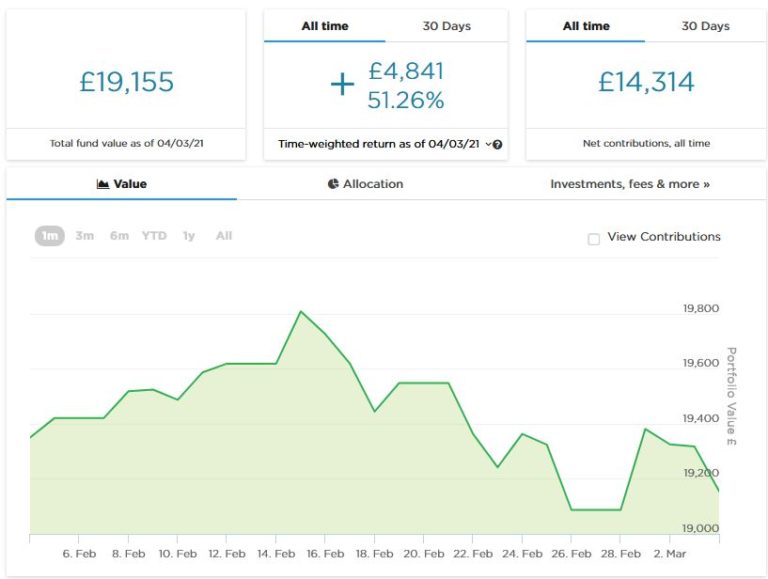
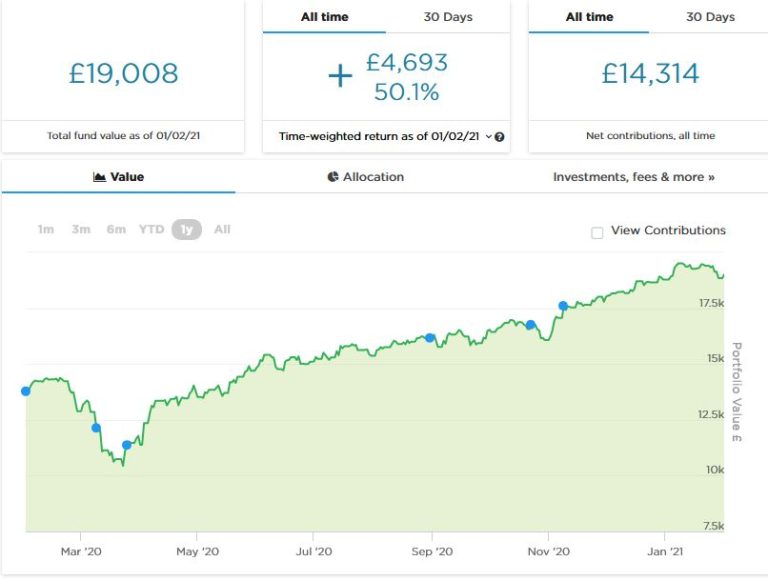
As the screenshot below shows, since last month’s update my main portfolio has continued on a generally upward trajectory and is currently valued at £18,886. Last month it stood at £18,008, so it has gone up by over £800 in value since then. Considering national and world events at the moment, I am more than happy with this.

Nutmeg January 2021

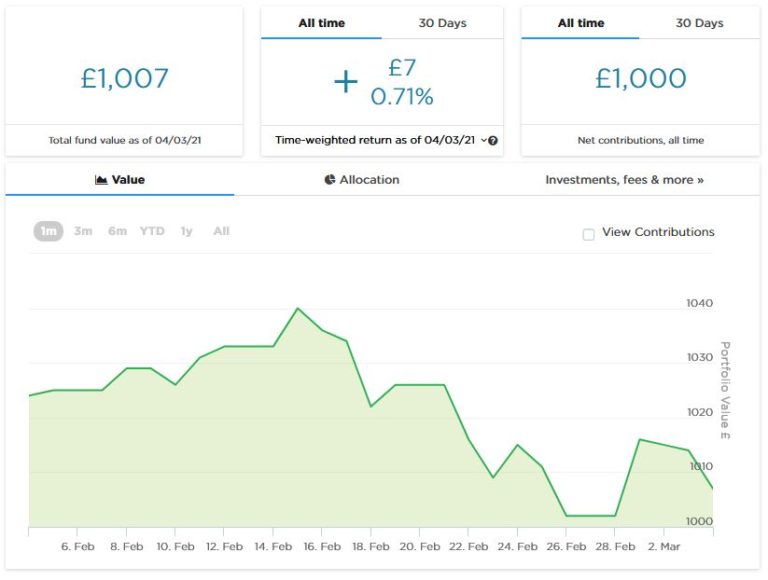
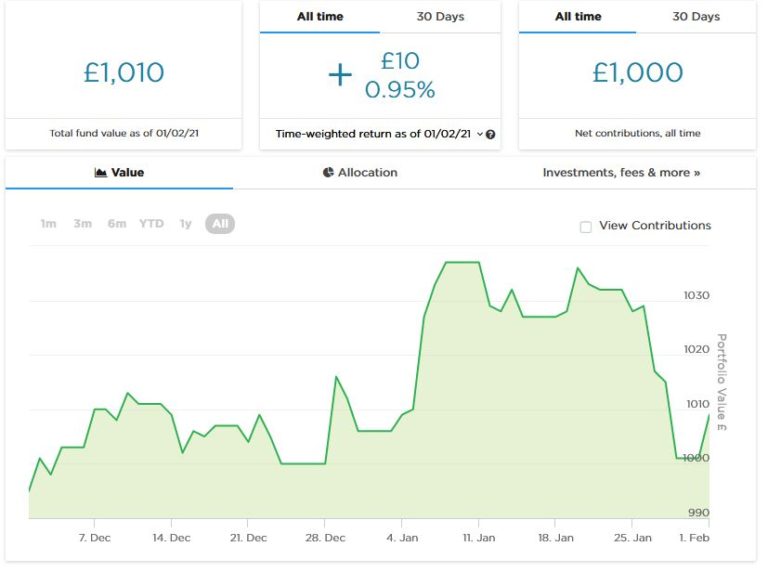
As you may recall, about a month ago I put £1,000 into a second Nutmeg pot to try out Nutmeg’s new Smart Alpha option. This pot has risen as high as £1,015 in value and currently stands at £1,007. Here is a screen capture showing performance to date, though obviously it is far too early to draw any conclusions from this.

Nutmeg Smart Alpha

You can see my in-depth Nutmeg review here (including a special offer for PAS readers). As a matter of interest I was recently asked by Nutmeg to contribute an article about my investing journey for their blog. I will add a link to the article here once it is published.

I had some bad financial news last month from Crowdlords, one of the property crowdfunding platforms I invested with. Three years ago I put £3,000 into a development project to build what was originally described as six eco-homes (it has lately been known more prosaically as Kennington Road). An update on the Crowdlords website revealed that due to a ‘perfect storm’ of problems caused directly or indirectly by the pandemic, the development had made a loss and investors would receive no returns. At a stroke I lost £3,000, which was (as you may imagine) a bitter pill to swallow.

I plan to write a more in-depth post about this soon, including lessons learned from the experience. But i will say two things now. One is that property development projects are inherently very risky and you shouldn’t invest in them unless it really is money you can afford to lose in a worst-case scenario. And second, while I don’t blame Crowdlords themselves for the failure of this project, I do think their communications about it could have been a lot better. I also think it would be a nice gesture if they were to offer modest ex-gratia compensation payments from their own profits to investors who have been hit hard (I know some people lost a lot more than I did). Events such as this clearly damage the reputation of property crowdfunding and mean investors are less likely to risk their money this way in future. I know I shall certainly be a lot more cautious now!

  • In fairness to Crowdlords I should add that I have had other investments on their platform which did deliver the promised returns, However, with the loss described above I am certainly down overall with them.

On a brighter note, a couple of the loans I invested in with Kuflink were repaid (with interest) last month, and I duly reinvested the money in other loans.

Kuflink is primarily a platform for investing in bridging loans, and generally these are safer than development projects such as the one mentioned above. There is still a risk of loss, of course, but as your investment is secured by bricks and mortar, it is unlikely you would lose all your money (though delays in repaying loans can and do happen). I have a diversified portfolio of loans with them paying annual interest rates of 6 to 7.5 percent. These days I generally invest a few hundred pounds per loan at most (and quite often under £100). My days of putting four-figure sums into any single property investment are definitely behind me now!

As you may be aware, I recently updated my full Kuflink review. You can read it here if you like. They recently passed the milestone of £100 million loaned, and say that since their launch no investor has lost money on the platform. I’d particularly draw your attention to their revised and more generous cashback offer for new investors. They are now paying cashback on new investments from as little as £500 (it used to be £1,000). And if you are looking to invest larger amounts, you can earn up to a maximum of £4,000 in cashback. That is one of the best cashback offers I have seen anywhere (though admittedly you will need to invest £100,000 or more to receive that!).

Moving on, my two Buy2LetCars investments are still delivering the promised monthly returns without any fuss. As I am semi-retired but don’t yet qualify for the state pension, the £450 or so I receive from them every month represents a major part of my monthly income currently.

As you may remember, investors with Buy2LetCars put up the money to finance a car for a key worker such as a nurse or police officer. They then receive 36 monthly capital repayments followed by a final balancing payment of interest and capital. If you are looking for an income-producing investment with a substantial lump sum payment after three years – and you like the idea of doing a bit of good with your money too – they are well worth checking out (and likewise if you’re a key worker looking for a lease car yourself). If you’d like to learn more, you can read my review of Buy2LetCars here and my more recent article about the company here. And here is a link to Wheels4Sure, their car-leasing website.

Finally, I am still getting a few queries about the low-key matched betting opportunity mentioned in some previous updates. I checked with my contact there and they are still accepting new members, but for reasons related to the pandemic have had to reduce their payouts slightly. New members now receive £50 a month for the first six months, reducing to £25 a month thereafter. Considering that this opportunity is cost-free, risk-free and hands-free, that’s still a pretty good deal, though 🙂

As I said above, this opportunity is based on matched betting, a sideline-earning opportunity I have been pursuing for several years myself. I was asked not to divulge too many details about it publicly, for good reasons I will explain privately to anyone who may be interested (and no, it’s not illegal!). As I said above, it doesn’t require any financial outlay, is entirely hands-off, and will provide a passive income of £50 a month for the first six months and £25 a month thereafter.

No knowledge of betting is required, and you won’t have to place any bets yourself (this is all done by the company’s clever software). You just have to set up a separate bank account for bets to go through, but running the account is entirely financed by the company. Please note though that this opportunity is only open to trustworthy people who haven’t done matched betting before and have no more than two accounts already with online bookmakers. For more info (and to receive a no-obligation invitation) drop me a line including your email address via my Contact Me page.

Personal

December was another strange month in a depressing year.

A week before Christmas I had my 65th birthday. Normally reaching that landmark would be cause for celebration, but inevitably in the circumstances it was low key. I did at least manage to meet up with a couple of old friends for a birthday tea (don’t tell Matt Hancock!). It was great to see them and they did their best to make the occasion feel special. We had some laughs and a very nice cake, but it still wasn’t anything like I might have imagined my 65th. I didn’t even have the small consolation of being able to start claiming my state pension, as I am in the cohort of people for whom the age has just been raised to 66.

Work-wise it has remained very quiet (as you probably know, I’m a semi-retired freelance writer/editor). I’ve had very little paid work since the pandemic started and was grateful to receive further financial support from the government’s SEISS scheme. This time round you had to state that your income had been directly affected by the pandemic. I did agonize a bit over this, as it begged the question of how much money I would have been earning if things were normal. I honestly don’t know the answer to that, but it seems to me that the pandemic and government counter-measures have stopped the economy in its tracks, meaning there is less work around generally. Anyway, I applied and was paid without quibble.

The main good news over the last few weeks has concerned the vaccines. Two are now approved, with the Pfizer vaccine being distributed since before Christmas and the Oxford-AZ version coming on stream this week. One benefit of turning 65 is that I have presumably moved up the pecking order to receive it.

The government appears to be pinning all its hopes on vaccines bringing this pandemic to an end by spring/summer. I hope they are right, as the next couple of months in particular look pretty grim. At the time of writing my area has just moved to Tier 4, which effectively means lockdown. So I will have little/no opportunity to see friends or relatives, no more swimming, no more trips away, and the prospect of sporting ‘lockdown hair’ again. But I am still lucky compared to many, I know.

In my blog post Surviving the Covid Winter I mentioned some plans I had for getting through the winter months. In December I started several of these. In particular, I began a couple of DIY jobs I had been putting off. One of these was redecorating the en suite. Initially I planned just to repaint one wall where the paintwork was fading. But the new paint colour didn’t match the old one, so I am now planning to repaint the rest of the room as well. As is so often the case with DIY, what appeared a small job at first has grown into a much bigger one!

I have also taken my first tentative steps in the world of video gaming (my experience prior to this had been limited to Space Invaders/Asteroids and the games bundled with MS Windows such as Solitaire). With some trepidation I signed up with the games platform Steam and downloaded Coffee Talk to my Windows laptop. This was a game I had read about some time ago and liked the sound of. Here’s a typical scene from it…

coffeetalk

Coffee Talk is actually more like an interactive movie or novel. You take the role of owner/barista at a late-night coffee shop in an alternative Seattle frequented by a mixture of human beings and mythological characters such as elves.

Mostly your customers chat with you and other customers about their lives and problems, while you prepare coffee and other drinks for them. This isn’t especially taxing, though I was quite pleased when one of the regulars, Freya, returned and asked for ‘the usual’ and I remembered what it was. It’s a pleasant enough way of spending a few hours, though I am thinking I might try something a little more ambitious next time 🙂

On the TV side, I finally finished the box-set of Deep Space Nine, which I very much enjoyed and recommend to any sci-fi fans among you. At the recommendation of my sister Annie (also a sci-fi aficionado) I have now purchased the box-set of Babylon Five. This is also set on a space station, though with quite a different vibe from DS9. With five (long) series, six full-length feature films, a spin-off series called Crusade, and various other extras, hopefully this will see me through to the end of the pandemic 😀

And for a change from sci-fi I also bought the box-set of Agatha Raisin, a tongue-in-cheek detective drama starring Ashley Jensen and set in the Cotswolds. I wasn’t sure about this at first, but after the first couple of episodes I thought it hit its stride, and I recommend it for a bit of amusing escapism with some gorgeous countryside settings. It’s only a shame that all three series are quite short.

Finally, as a Christmas present for myself I bought the DVD of Roger Waters’ Us + Them concert. This is an epic production, featuring a group of hugely talented musicians and some awesome visual effects (at one point a giant model of Battersea Power Station descends into the arena, accompanied – of course – by a flying pig).

Roger and his band play a selection of Pink Floyd classics alongside some of Roger’s solo compositions, all of which are excellent as well (The Last Refugee is particularly poignant). In the video below, though, they perform Time, one of my personal favourite Pink Floyd numbers. Check out Jess and Holly (aka Lucius) supplementing their backing vocal duties with some exuberant drumming!

So that’s it for now. I do hope you are staying safe and sane in these challenging times. Be kind to yourself and to others, and hopefully things will improve before too long. As ever, if you have any comments or questions, please do share them below.

If you enjoyed this post, please link to it on your own blog or social media:
Top 20 Posts 2020

My Top 20 Posts of 2020

As is customary for bloggers at this time of year, here are the top twenty posts on Pounds and Sense in 2020, based on comments, page-views and social media shares. They are in no particular order. I have excluded any posts that are no longer relevant.

I hope you will enjoy revisiting these posts, or seeing them for the first time if you are new to PAS. Don’t forget, you can always subscribe using the box on the right to be notified of new posts as soon as they appear.

All posts in the list below should open in a new tab/window when you click on the link concerned.

1. Ten Reasons Over-50s May Need an Independent Financial Adviser

2. How to Make Money From Your Old Tech

3. Save Money on Your Mortgage With Dashly

4. Twenty Ways to Make Extra Money From Home During Lockdown

5. Nutmeg Review: My Experiences With This Robo-Adviser Investment Platform

6. Why I Switched my Santander 123 Account to 123 Lite

7. How to Make Money From Affiliate Marketing

8. How to Get a Better Night’s Sleep

9. Should You Use Equity Release to Unlock the Value of Your Home?

10. What Are the Best Video Calling Tools for Older People?

11. Why I am (Still) Not a Fan of Premium Bonds

12. Get a Free Share Worth Up to £100 with Trading 212

13. Managing Your Finances and Tackling Debt – A Q & A With MoneyNerd

14. Booking a Holiday With Airbnb

15. Ten Things I Have Learned About Self-Employment Over 30 Years

16. Kuflink: My Review of This P2P Property Investment Platform

17. Looking After Your Mental Health in the Coronavirus Crisis

18. How Over-75s Can Claim Pension Credit to Keep Their Free TV Licence

19. Can You Still Make Money from Matched Betting?

20. Surviving the Covid Winter

I’ll be taking a break from blogging over the festive period (though I’ll still be around on Twitter and Facebook). I’ll therefore close by wishing you a happy, Covid-free Christmas, and for all of us a far better new year 🙂

If you have any comments or questions, of course, feel free to leave them below as usual.

If you enjoyed this post, please link to it on your own blog or social media:
Moneynerd interview

Managing Your Finances and Tackling Debt – a Q & A with MoneyNerd

Today I have a Q and A for you with my fellow money bloggers at MoneyNerd.

MoneyNerd is a UK personal finance blog that aims to help people learn to manage their finances and tackle debt. I asked a number of questions about personal finance and debt, and added my own thoughts as well. Our answers are also being shared separately on the MoneyNerd blog. I hope you find them interesting and informative.

What’s your number 1 financial tip?

MN: It’s hard to give advice that would apply for everyone, because everyone’s finances are different. But I would suggest ‘write it down’, as a fairly universal and important financial tip. Start with your financial goals, then write down the steps you’ll take to get there according to your budget. A lot of people have good financial intentions, but without having clear goals on paper, it’s easy to get led astray.

PAS: Agreed. I would also say, keep on top of your money. Know what’s going in and what’s going out every month, and budget accordingly. Always be on the lookout for ways you can maximize your income and minimize your expenditure. And try to put some money aside for the proverbial rainy day. Everyone should really have at least three months’ worth of income set aside in case of emergencies. Sorry, that’s at least three tips, I know!

What do you think are the main causes people find themselves in financial difficulty?

MN: I think financial difficulties are mainly caused by unforeseen life-events, such as bereavement, unemployment, and relationship breakdowns. These kinds of bumps-in-the-road can severely throw people off course, particularly if their financial situation was fragile in the first place. Unfortunately, all three of these examples have sky-rocketed due to the pandemic, and many people in the UK will be facing financial difficulties over the coming year.

PAS: Not much I can add to that. Although sometimes failing to monitor your income and expenditure closely enough can lead to debts mounting up before you realise it.

What personal finance tools do you currently use to track and manage your money?

MN: I’m quite old-school and still use spreadsheets for a lot of money-related things! There are some good apps out there though – Money Dashboard is a particularly good one.

PAS: I am the same and use spreadsheets a lot. I started with Microsoft Excel, but these days mainly use Google Sheets. As regards personal finance tools, I like Snoop [referral link], a relatively new app that helps you keep track of your finances and suggests easy ways you can make savings.

Any tips for people coming to financial management later in their lives?

MN: It might be a little harder to undo old habits and reinstate new ones if you’re approaching financial management from an older perspective. So start by setting simple goals, and work at them consistently. It’s probably worth taking a little time to assess what’s important to you right now, too: what range of outgoings does your money need to cover in later life that you didn’t need to consider before?

PAS: I am 64 and have friends in their seventies and eighties, so I have seen the sorts of problems older people can face. In particular, so many aspects of our personal finances are dealt with online now, from banking to applying for state benefits. The pandemic has probably accelerated this trend.

Many older people struggle with the technology and it’s often not as intuitive as it should be, especially for those whose eyesight isn’t as good as it once was. So I would say to any older people, try not to get left behind by technology, and ask younger friends and relatives for help when needed. Last year a group of us clubbed together and bought a friend (a retired builder) a Chromebook for his 80th birthday. He had never engaged with computers or the internet before and I must admit I was expecting him to struggle at first. However, he took to it like a duck to water, and was soon ordering tools and components online from a local builders merchant. So even old dogs can definitely learn new tricks!

2021 is going to be tough for many. Do you have any advice on how to keep things under control?

MN: I’d start with the obvious – plan as much as possible, in order to save as much as possible. This is so that when those ‘bumps-in-the-road’ come along, you have some kind of safety net, however small. Unfortunately, however, I imagine a lot of people will do everything right this year and still fall into difficulty. As and when that happens I would say be proactive in reaching out and seeking help. There are plenty of free services and helplines to reach out to, before matters spiral.

PAS: Yes, definitely. As I said earlier, everyone should have a financial safety net to tide them over when life throws you a curveball.

In my earlier career I worked as a debt counsellor at a citizens advice bureau, so I know that there is lots of help out there if you ask for it. And friends and family can be a good source of practical and emotional support too. Just don’t bury your head in the sand and pretend to everyone that nothing is wrong.

What would be your top tip for someone who is worried about a debt (or debts) they can’t repay?

MN: I have two tips: the first is don’t panic, the second is be proactive. If you can’t afford the repayments for a loan or credit card, contact the company and explain your situation. If you’re struggling to meet the repayment amounts, you may also need to look at whether a debt solution is appropriate for you. Having unaffordable debt can be a scary place in which to find yourself, but by taking action you can dissipate some of that anxiety by feeling you are doing something about the problem.

PAS: Yep. It’s worth bearing in mind also that if you have a debt you can’t repay, it’s not just your problem, it’s a problem for whomever you owe the money to as well. It is therefore in their best interests to work with you to find a method for paying down the debt.

What are some good ways of boosting your income?

MN: Ask yourself: do I own anything I could rent? A parking spot, a vehicle, a garden shed, even a room in your house if you own it. Then ask yourself: do I own anything I could sell? Old clothes, a bicycle, old furniture, anything in storage. Then finally, ask yourself what you could do with your spare time: dog-walking, Uber-driving, delivering takeaways/parcels, painting and decorating,completing online surveys, match betting, free-lancing, etc. I have a whole blog post which goes into this very topic in more detail: Making Money – Tips and Tricks.

PAS: Lots of great ideas there. Like MoneyNerd, I also have a section of my blog devoted to ideas for boosting your income. I like online surveys, with Prolific Academic (a website needing people to take part in academic research) a particular favourite. And I do matched betting as well, though not as much as I used to, as I’ve been restricted (or gubbed as we say in MB’ing) by many of the leading bookmakers!

What is the best way you can help a friend or family member who has debt problems?

MN: Honestly, I don’t think there’s a one-size fits all here. Everyone and everyone’s debt problems are different. But that seems like a cop-out! So I think showing genuine, non-judgemental support, and ensuring they have all the right resources (StepChange, CitizensAdvice, etc.) to hand are two good places to start.

PAS: I agree with this. But based on personal experience with a friend a few years ago, I would also advise thinking hard before lending them money, as this seldom solves the problem and may simply exacerbate it. With my friend, who lived alone, I found that acting as a lender to him changed the nature of our friendship, and not for the better. I also felt that by constantly bailing him out, I was allowing him to avoid addressing his money management issues. Eventually we had a difficult telephone conversation when he asked me to lend him money again and I refused. He took it better than I expected and our friendship actually returned to something more normal after that. He got his finances under better control, although I did on a couple of occasions afterwards send him supermarket vouchers to ensure he had enough to get food. I didn’t expect to be repaid for these, obviously!

If you had a sudden, unexpected windfall of £5,000, what would you do with it?

MN: Firstly I’d pay off any loans or outstanding credit card debts. Then I’d take my family out for a nice meal, and put what’s left-over into a tax-free ISA.

PAS: Paying off debts would be my first priority as well, though I am fortunate not to have any at the moment. I would put most of the rest in my Nutmeg stocks and shares ISA, and some in my Kuflink property loan investment account (from which I have had good results over the last three years) to provide a bit of diversification. Going out for a nice meal with family and friends sounds good too, although as I live in a Tier 3 area I might have to wait a while for that!

What was your best-ever financial decision, and what was your worst?!

MN: My best financial decision was investing in a tech based stocks and shares ISA which has done really well over the last 5 years, although don’t know if I’d recommend the same investing approach in the current economic climate.

On the other hand my worst financial decision was living in London for 10 years where rent and cost of living is exorbitant.

PAS: My best financial decision was probably paying off the mortgage when I had a windfall a few years ago. At a stroke one large item of monthly expenditure was gone, giving me greater financial flexibility as well as saving me a lot in future interest payments.

My worst decision was investing too much in property crowdfunding a few years ago when it was still new and exciting. I had money to invest at the time and liked the idea of owning stakes in a portfolio of properties across the UK. Some of my investments worked out but others didn’t, and I am currently sitting on a number I can’t access because the properties in question can’t be sold for one reason or another. The money is still there in bricks and mortar but I have no idea when or how I will be able to access it. That said, I do still believe in the property crowdfunding concept, but I do it a lot more selectively now.

About MoneyNerd

MoneyNerd.co.uk is a personal finance blog that was set up with one aim in mind: to help people learn how to manage their finances and tackle debt. The blog includes a variety of straight-talking articles that cover personal finance topics from credit card guides to mental well-being tips. These can help you understand exactly how financial products work, as well as what your rights are when dealing with debt. We want to offer authentic and truthful information that can help you deal with your situation, whatever that may be.

MoneyNerd

Many thanks again to MoneyNerd for their insights. Please do check out the MoneyNerd site for much more information about tackling debt and getting your finances under control.

As always, if you have any comments or questions about this post, please do leave them below.

If you enjoyed this post, please link to it on your own blog or social media:
My Coronavirus Crisis Experience - December Update

My Coronavirus Crisis Experience: December Update

December is here, so it’s time for another of my monthly coronavirus crisis updates. Regular readers will know I have been posting these updates since the first lockdown started (you can read my November update here if you like).

As ever, I will start by discussing financial matters and then life more generally over the last few weeks.

Financial

I’ll begin as usual with my Nutmeg stocks and shares ISA, as I know many of you like to follow this.

As the screenshot below shows, since last month’s update my portfolio has been on a generally upward trajectory and is currently valued at £18,008. Last month it stood at £16,955, so it has gone up over £1,000 in value since then. Considering national and world events at the moment, I am more than happy with this.

As you may recall, I recently put £1,000 into a second Nutmeg pot to try out Nutmeg’s new Smart Alpha option. It is too early to comment on this yet, but I will include an update about it next time.

You can read my in-depth Nutmeg review here (including a special offer for PAS readers).

Nutmeg ISA Dec 2020

The news hasn’t been so good with my Bricklane Property ISA, which I talked about last time. As stated in in my blog review, Bricklane – not be confused with Brickowner – is a REIT (Real Estate Investment Trust). Investors’ money is pooled to purchase properties. Rental income is then distributed to investors, who also stand to benefit if the value of the REIT goes up. Last month I was down by about £80 on my £5,000 investment, but this month – as you can see from the screen capture below – the figure is over £600.

Bricklane Dec 2020

This is obviously disappointing, though not unexpected. As I said last time, the pandemic has hit property investors hard, especially investors in large commercial properties (as are most in the Bricklane portfolios). But, in addition, the current price factors in the liability of Bricklane and its investors to assess and where necessary replace exterior cladding in some buildings in light of the Grenfell Tower tragedy. I understand that almost half of the properties in the Bricklane Regional Capitals fund (in which I invested) fall into this category.

About the only good thing to be said is that right now Bricklane’s price reflects its liabilities in the worst case scenario. In particular, it has been argued that lease-owners should not bear sole responsibility for paying for this work, as the rules were only changed after Grenfell and it isn’t the owners’ fault that some properties were built to different specifications which were regarded as perfectly safe (and legal) at the time. If the government accepts that argument, in whole or in part, then Bricklane will not have to set aside large sums of money for remedial work, and the share price will rise accordingly. I have written to my MP about this, of course 🙂

As I said last time, if I was braver and had a longer investment horizon, I might look at Bricklane as a value opportunity just now. As it is, I am leaving my money where it is but won’t be investing any more with them for the foreseeable future. I am not planning to sell up as I don’t currently need the money and that would only crystallize my losses. i just hope there will be some better news on this front soon.

I also wanted to say a word about Kuflink this month. This property loan investment platform is still performing well and returning the promised monthly dividends. A couple of loan terms have been extended due to the pandemic but interest continues to be paid and I am not unduly concerned about this. I also had a couple of investments repaid after the loans in question were paid off. So I decided to reinvest in a new six-month loan to help finance the construction of a children’s day nursery in Chorley. Some details of this project from my Kuflink dashboard are shown below…

Kuflink loan

As you can see, the interest rate being paid is 6.80%. When I invested yesterday the offer had only just launched, so it’s interesting to see it is already up to almost 42% funded now. Although the loan hasn’t gone live yet, as is Kuflink’s normal practice I will received cashback equivalent to the interest on offer until it does, so I am already making money from this loan 🙂

Incidentally, I am not saying this project has any special merit compared with others on the Kuflink platform. But I decided to invest on the basis that it looks reasonably secure with a loan-to-gross-development-value ratio of 36%. And from a more personal perspective, wherever possible I like to invest in projects that will have a socially beneficial outcome, and a new children’s day nursery certainly ticks that box.

i did want to mention as well that I recently updated my full Kuflink review. You can read it here if you like. I’d particularly like to draw your attention to their new and more generous cashback offer for new investors. They are now paying cashback on new investments from as little as £500 (it used to be £1,000). And if you are looking to invest larger amounts, you can actually earn up to a maximum of £4,000 in cashback. That is one of the best cashback offers I have seen anywhere (though admittedly you will need to invest £100,000 or more to receive this!).

My two Buy2LetCars investments are still delivering the promised monthly returns without any issues. As you will remember, investors with Buy2LetCars put up the money to finance a car for a key worker such as a nurse or police officer. They then receive 36 monthly capital repayments followed by a final balancing payment of interest and capital. If you are looking for an income-producing investment with a substantial lump sum payment after three years – and you like the idea of doing a bit of good with your money too – they are well worth checking out (and likewise if you’re a key worker looking for a lease car yourself). If you’d like to learn more, you can read my review of Buy2LetCars here and my more recent article about the company here. And here is a link to Wheels4Sure, their car-leasing website.

Otherwise, there is nothing especially notable to report on the financial front this month, so let’s move on to the more personal stuff…

Personal

Since my last monthly update England has been mostly in lockdown, so I haven’t been doing anything especially exciting 🙁

I went for my latest checkup at the eye clinic at Burton Hospital in the first few days of the new lockdown. As you may remember, I was diagnosed with a perforated retina after a routine eye test at my optician’s.

I wasn’t allowed to drive, as they put drops in your eyes which blur your vision for a few hours. The trip to Burton involved a bus ride, two train journeys and a one-mile walk, so it took up a whole day. The train journeys in particular felt odd and at times almost post-apocalyptic. I was literally the only person on Lichfield Station waiting for a train to Birmingham, and had the whole carriage (and possibly train) to myself. The train to Burton was a little busier, but you do start to wonder how long the railway network can go on with such minuscule passenger numbers.

It was very quiet at the hospital too, so I was seen straight away. The doctor seemed happy with what he could see, though it’s not easy to tell when he – and everyone else – was wearing a mask. I was told I will have to go back again in January, and if everything is still okay then, they will discharge me. So I guess that’s good news, although they did say that last time as well…

During the lockdown month I aimed to go for a walk every day, and apart from a couple of days of foul weather I achieved that. I have been wearing my new music hat – described in this recent post and pictured below – and enjoying listening to my choice of music. My preferred genre is prog rock (classic and current) but I enjoy jazz and blues as well. I do just find I have to be a bit careful when walking on the narrow country lanes where I live, as with my music playing I don’t always hear cars coming up behind me. Still, I haven’t had any really close calls yet!

Music hat

I was pleased to be able to go for a swim again this week at my local David Lloyd leisure centre. It was very quiet, and all the staff, including those at reception, are now wearing masks. I suppose some people would find that reassuring. I just find it rather sad and dispiriting. Still, I really enjoyed my swim, and it was great to see a couple of members I know and exchange a few words with them. Even small social interactions like that offer a welcome morsel of normal life in these strange times.

Afterwards I ordered my usual hot drink from the centre’s coffee shop, but because I’m in a Tier 3 area I was told I couldn’t sit down to drink it. I was afraid I might be forced to take it to the freezing cold car park to consume, but was informed there was no objection to me drinking it while standing up in the centre, so long as I didn’t stay in one place for too long. You might think this is barking mad – I couldn’t possibly comment.

There has of course been some good news on the virus front in the last few weeks. As I said last time, new cases (in England anyway) are on a clear downward path. The government are of course trying to spin this as a success for lockdown, but I am sceptical about that. As I said in my November update, cases were already starting to decline pre-lockdown, so what we are seeing now is simply a continuation of that welcome trend.

It’s also interesting that the – admittedly shorter – Welsh lockdown appears to have failed totally, with cases there on the rise again. So they are now imposing even harsher restrictions, including a total ban on pubs and restaurants serving alcohol. I would therefore like to extend my sincere commiserations to Welsh readers (and especially those working in tourism or hospitality) at this time. It is a shame that the four nations of the UK couldn’t have come up with a more coherent, co-ordinated policy to combat the virus – although in my view lockdowns shouldn’t ever be a part of this due to all the collateral damage they cause.

There has been good news about vaccines this week, with the first one from Pfizer/BioNTech receiving regulatory approval in the UK and due to start rolling out next week. I am not an anti-vaxxer and will (probably) accept the vaccine when it is offered. There are, though, some reasons to be sceptical about some of the claims being made for vaccines, nicely summed up in this cautionary blog post by my old friend John ‘Platinum’ Goss. In particular, we still don’t know about any possible long-term side-effects of the vaccines. And with case numbers dropping dramatically in England, you have to wonder how much Covid will still be around in a few months’ time anyway…

In my view, this pandemic will only end when some sort of herd immunity has been achieved. That will be partly through growing numbers of people achieving immunity through contracting the virus, and in addition (hopefully) people acquiring immunity through vaccination. If that is the case, the virus will have nobody left to infect and will ultimately die out (though maybe returning occasionally in milder variants, as happens with other cold and flu viruses). That’s the best-case scenario, anyhow, and I hope it plays out that way.

  • Before leaving this topic, I would just like to include a quick shout-out for the excellent Lockdown Sceptics website. This site is updated daily and is the first thing I look at when I switch on my computer in the morning. It includes articles from a wide range of academics and other commentators, and offers a sceptical slant on official policies and announcements that is often missing in the mainstream media. Even if you don’t agree with all the views expressed, it’s well worth a read.

As for Christmas, I am expecting to have an even quieter one than usual. I don’t normally socialize a lot at this time anyway. My only remaining close family consists of my three sisters, but they are all in different parts of the country and have their own families and social circles. I have put up my lights and decorations, though, and am looking forward to receiving plenty of cards and letters. I shall also ensure I have a good stock of box-sets to watch!

Well, I guess that’s it for now. I do hope you and your loved ones are staying safe and well and looking forward to the festive season. As always, if you have any comments or questions about this post, please do leave them below.

If you enjoyed this post, please link to it on your own blog or social media:
Nutmeg Launches Smart Alpha Portfolios

Nutmeg Launches ‘Smart Alpha’ Portfolios Powered by J.P. Morgan Asset Management

Updated 16 November 2023.

Regular readers of PAS will know that I am a fan of the Nutmeg robo-adviser investment platform, and have a good portion of my own money in a Nutmeg stocks and shares ISA. You can read my in-depth review of Nutmeg here.

I was interested to hear that Nutmeg had launched a new investment style for their ISA, Lifetime ISA, Junior ISA, SIPP (personal pension) and general investment account customers. Previously such customers had a choice of three options: Fixed Allocation, Fully Managed and Socially Responsible.

All Nutmeg portfolios are managed by human experts, but the Fixed Allocation ones are altered annually, whereas the others are managed more actively. The Socially Responsible portfolio aims to optimize your investments according to various environmental, social and governance (ESG) factors. So it focuses on companies with a good track record and proactive strategy in such areas as water use, pollution, greenhouse gas emissions, proportion of female board members, and so on. Currently my own stocks and shares ISA is in the Fully Managed category (which was the only option available when I originally invested with Nutmeg).

Whilst all three of these investment styles remain available, a new one was launched in 2020…

Smart Alpha Portfolios

Nutmeg’s Smart Alpha portfolio range is powered by J.P. Morgan Asset Management. It includes five risk-rated portfolios, each holding between 10 and 14 passive and active exchange traded funds (ETFs). They are run by J.P. Morgan’s multi-asset solutions team, giving Nutmeg clients access to the investment giant’s experience and expertise. Writing on the Nutmeg blog, their Chief Investment Officer James McManus explained the benefits of this approach as follows:

The name recognises the intelligent way these portfolios are designed with the potential to achieve alpha (returns above the market) for our clients in three ways. 

Firstly: The use of J.P. Morgan Asset Management’s multi-asset specialists, a team with a 50-year history of investing for institutions and professionals worldwide. These specialists inform Smart Alpha portfolios’ long-term (strategic) asset allocation. 

Secondly, Smart Alpha portfolios have the ability to be flexible around this long-term asset allocation, allowing us to manage risk and capture opportunities at different stages of the market cycle.  

Thirdly: Nutmeg and J.P. Morgan Asset Management have added to these capabilities a means to make smart security selections within active exchange traded funds (ETFs). These smart selections are made based on the insights of J.P. Morgan Asset Management’s research analysts with the aim being to capture returns in excess of the market benchmark (alpha). 

How do these smart selections seek to gain alpha? The active ETFs we use allow us to move overweight in certain positions that J.P. Morgan Asset Management’s analysts expect to perform well and underweight in those positions they expect to perform poorly. This gives us the ability to move above and below market benchmark positions, delivering greater potential returns with similar risk to the overall market. 

As well as allowing Nutmeg investors to tap into the expertise of J.P. Morgan Asset Management, these portfolios are ESG integrated, meaning that (as mentioned above) environmental, social and corporate governance considerations are factored into every research and investment decision. These portfolios are therefore suitable for the growing number of investors for whom ethical considerations are particularly important.

The terms and conditions for the new Smart Alpha portfolios are copied below, alongside the other portfolio types.

Nutmeg fees Nov 2023

The above is correct as at 16 November 2023, but may have changed subsequently. Please note also that Nutmeg has also recently introduced a new ‘thematic’ investment style. More information about this can be found about this in my full Nutmeg review and on the Nutmeg website. Remember that all investing carries a risk of loss.

My Thoughts

This is undoubtedly an interesting move by Nutmeg and gives investors the opportunity to benefit from having their portfolio actively managed by a leading investment house at no extra cost. If you are a Nutmeg investor already, you can start by investing as little as £500 to test the water. You can either use ‘new money’ from your bank account or another ISA, or you can transfer money from another pot within your Nutmeg ISA account.

Personally I am very happy with the way my Nutmeg ISA has performed during this tumultuous year and don’t want to rock the boat too much. On the other hand, I am curious to see how the new Smart Alpha portfolios perform in comparison. So I have created a new £1,000 pot within my ISA and have selected Smart Alpha as the investment style. The risk level is 4/5, which roughly corresponds with the 9/10 risk level in my Fully Managed portfolio.

I will of course report back on Pounds and Sense about how my investments perform. Obviously, if my Smart Alpha pot seems to be doing significantly better than my Fully Managed one, I will switch some or all of the latter to Smart Alpha as well. It is one of the attractions of Nutmeg that you can have multiple pots within a single ISA with different investment styles and risk levels attached to them.

  • Capital at risk. Tax treatment depends on your individual circumstances and may change in the future.

In Conclusion

I am obviously a fan of Nutmeg and – as stated above – have a significant proportion of my investments with them.

Of course, I am not a qualified financial adviser and everyone should do their own ‘due diligence’ (and/or take professional advice) before deciding to invest. In addition, you shouldn’t consider investing with Nutmeg (or anyone else) unless you have paid off any interest-charging debts and have at least three months of easily-accessible savings in case of emergencies.

Based on my personal experiences with Nutmeg, though, I am happy to recommend them. They provide a simple, easy-to-understand investment platform, the customer service is excellent, and certainly in my case the results to date have exceeded my expectations.

If you have any comments or questions about this post or Nutmeg in general, please do leave them below.

PLEASE NOTE: As with all investing, your capital is at risk. Tax treatment depends on your individual circumstances and may be subject to change in the future. The value of your portfolio with Nutmeg can go down as well as up and you may get back less than you invest. 

Note also that I am not a qualified independent financial adviser and nothing in this review should be construed as personal financial advice. You should always do your own ‘due diligence’ before investing and take professional advice if in any way uncertain how best to proceed. All investing carries a risk of loss. 

Please note also that this review includes affiliate links. If you click through and make an investment or perform some other qualifying transaction, I may receive a commission for introducing you. This will not affect in any way the terms you are offered or any fees you may be charged.

If you enjoyed this post, please link to it on your own blog or social media:
UK Bloggers Christmas Giveaway 2020

Win a Samsung 50-Inch Smart UHD TV in This UK Bloggers Christmas Giveaway!

2020 has been a stressful and difficult year, but here’s a chance to end it on a positive note. I’ve joined forces with some of my fellow UK bloggers to put together a giveaway with a Samsung 50-Inch Smart UHD TV for the lucky winner.

Read on to find out how you could win this amazing prize in time for Christmas. And please do check out the other talented bloggers who have collaborated on this giveaway.

Bloggers Taking Part

Reinventing Neesha | The Parent Game | Kayleigh Zara | Mind Over Meds | Lottie Lately | Jodetopia | Lindy Loves | Melanie’s Fab Finds | The Little Landeg | Lipgloss and Curves | Boring Mother | The Rare Welsh Bit | Wanderlust Weddings | Travel Bugs | Discover Kent | Miss L J Beauty | Pounds and Sense | Real Girls Wobble | Pretty Core | Testing Time Blog | Chilling with Lucas | Our Transitional Life | Pretty Big Butterflies | Probably Busy | Monethalia | Emily May | Skinny Spending | Lisa’s Notebook | Nishi V | The Life of Dee | Funding Her Freedom | Reality in Reverie | Afshanesque | Wotawoman Diary | The Secret Life of Me | Stapo’s Thrifty Life Hacks | Bulk Cook on a Budget | Codiekinz

The Prize

One lucky winner will win themselves a Samsung 50 Inch UE50TU7100 Smart Ultra HD TV worth a whopping £400! This smart TV is compatible with the following smart apps: Now TV, Disney+, Netflix, BBC iPlayer, Amazon Prime and YouTube. It also has its own built-in Internet browser. To quote from the sales page:

Experience crystal clear colour HDR powered by HDR10+ as the film-makers intended. Crystal Processor adapts to provide the very best 4K picture and targeted sound based on what you are watching. Works with Alexa and Google Assistant. Slim design with very narrow bezel.

How to Enter

To enter simply complete all or any of the Rafflecopter entry options below. The more you complete the more chances you have of winning.

The competition ends at midnight on Sunday 13th December and a winner will be drawn on Monday 14th December. If for any reason the chosen prize is out of stock at the time of the draw, the winner will be able to select an alternative prize up to the same value.

For full entry terms and conditions please see the Rafflecopter widget below.

a Rafflecopter giveaway

One final small point is that if a winning entry comes from following someone on social media, the organizers will check before awarding the prize that the winner is still following the account in question. If they aren’t, they will be disqualified and a new winner drawn. So, please, don’t follow and immediately unfollow, as your entry won’t then count.

Good luck, and here’s hoping we can all look forward to a happier Christmas!

If you enjoyed this post, please link to it on your own blog or social media: