Free Wills Month brings together a group of well-respected charities to offer members of the public aged 55 and over the opportunity to have their wills written or updated free using participating solicitors across the UK.
The charities involved include the NSPCC, Dogs Trust, British Heart Foundation, Mind, Age UK, The Stroke Association, PDSA, and many others. Free Wills Month happens twice a year, in March and October.
The scheme covers simple wills only, including ‘mirror wills’ for couples. In the latter case, only one member of the couple has to be 55 or over. If you need a complicated will (most people don’t) you can still have this done but may have to pay a top-up fee.
I have talked about the importance of creating a will and why you should get it done by a properly qualified solicitor previously on PAS. An up-to-date will written by a solicitor will ensure that your wishes are respected and will avoid causing legal complications for your loved ones after you are gone.
Free Wills Month means what it says. There are no catches, although the organizers hope that you will choose to leave a donation to charity in your will. There is no obligation to do this, however.
To take part in Free Wills Month click through to the website during October and fill in your details. You can then pick a solicitor from the list of companies taking part and contact them to book an appointment. Appointments are limited and on a first come, first served basis, so it’s best to apply as soon as possible to avoid disappointment.
Free Wills Month October 2026 starts officially on Thursday 1st October 2026 but you can sign up now on the FWM website to be notified when when the campaign starts in your area.
If you have any comments or questions about this subject, as ever, please do post them below.
Note: This is a revised and updated version of my original post on this subject.
If you enjoyed this post, please link to it on your own blog or social media:
UK government bonds – better known as gilts – have been attracting renewed attention from investors.
That is hardly surprising. After years when interest rates and bond yields were unusually low, gilt yields have risen substantially. In September 2026, the yield on 10-year UK government bonds recently climbed above 5.3%, its highest level since 2007. Even more strikingly, yields on 20- and 30-year gilts have reached their highest levels since 1998.
For investors looking for a relatively low-risk home for some of their money, this may look attractive.
But there is more to gilts than simply seeing a headline yield of 5% or more. Bond prices can fall as well as rise, and the return you actually receive depends on which gilt you buy, the price you pay and how long you hold it.
So, are gilts worth considering now – and what are the best ways for private investors to buy them?
What exactly is a gilt?
A gilt is essentially a loan to the UK Government.
When you buy a gilt, you are lending money to the government. In return, the government normally pays you interest (known as the coupon) twice a year and repays the face value of the gilt when it matures.
For example, suppose you buy a gilt with a nominal value of £1,000 and a 4% coupon.
You would normally receive £40 a year in interest, paid in two instalments of £20.
At maturity, assuming the gilt is held to redemption, you receive the £1,000 face value back.
Gilts are issued by HM Treasury and the UK Debt Management Office (DMO) manages the gilt issuance programme.
There are also index-linked gilts, where both the interest payments and redemption value are linked to inflation. These work somewhat differently from conventional gilts and can potentially provide useful protection against inflation.
Why have gilt yields risen so much?
Bond yields move around for several reasons, but interest-rate and inflation expectations are particularly important.
The recent rise has been driven by a combination of factors, including concerns about inflation, higher oil prices, expectations about future Bank of England interest rates and worries about government borrowing.
The latest move has been particularly pronounced at the long end of the market. On 8 September, for example, the UK Government sold 30-year gilts at a yield of 5.82%, the highest borrowing cost for a comparable issue since 1998.
This matters to investors because higher gilt yields generally mean lower gilt prices.
That may sound counter-intuitive. After all, wouldn’t a higher yield be good news?
It is – if you are buying the bond now.
But existing bonds have to adjust in price to compete with newly issued bonds offering higher yields.
Coupon versus yield – an important distinction
One of the easiest mistakes to make with gilts is to confuse the coupon with the yield.
Suppose a gilt has a 3% coupon but can currently be bought for £90 for every £100 of face value.
You still receive the coupon based on the £100 face value. But because you only paid £90, your overall return if you hold the gilt to maturity is higher than 3%.
This is where the yield to maturity comes in.
The yield to maturity takes account of:
the purchase price
the coupon payments
the time remaining until maturity
the £100 redemption value.
The DMO gives a useful example of this. A gilt bought for £90 and held to maturity can produce a yield significantly above its coupon because the investor also receives a £10 capital uplift when the government redeems it at £100.
This is why investors should generally compare gilts using their yield to maturity, rather than simply looking at the coupon.
The big attraction: relatively low credit risk
One of the main reasons people buy gilts is security.
The borrower is the UK Government, rather than a company or individual. Provided the gilt is held until maturity and the UK Government meets its obligations, the investor receives the promised interest and redemption payment.
That makes gilts considerably less risky from a credit perspective than shares or corporate bonds.
However, “low risk” does not mean “no risk”.
There are two particularly important risks to understand.
Risk 1: Gilt prices can fall
If you buy an individual gilt and hold it until maturity, short-term movements in its market price may not matter much.
But if you need to sell before maturity, they certainly do.
Suppose you buy a 20-year gilt paying a relatively attractive yield today. If interest rates subsequently rise further, newly issued bonds may offer higher yields.
Your gilt therefore becomes less attractive and its market price can fall.
The longer the maturity, the more sensitive a conventional gilt tends to be to changes in interest rates. A 20- or 30-year gilt can therefore experience quite substantial price movements.
The DMO itself warns that the market value of gilts can go down as well as up, potentially resulting in a loss if you sell before redemption.
This is one reason why investors approaching or in retirement should be cautious about automatically choosing the longest-dated gilt simply because it offers the highest yield.
Risk 2: Inflation
A gilt paying 5% might sound very attractive.
But if inflation is running at 4%, your real return is much less impressive.
And if inflation were to remain high for several years, a fixed-interest gilt could lose purchasing power.
Index-linked gilts are designed to address this particular problem because their payments and redemption value are linked to an inflation index.
They have their own complexities, though, and aren’t necessarily suitable for everyone.
So why consider gilts now?
There are several reasons why gilts may be worth a look.
1. Yields are much more attractive than they used to be
For much of the 2010s and early 2020s, investors had to accept extremely low yields on government bonds.
That situation has changed.
With longer-term gilt yields now around 5% or more, bonds can potentially make a meaningful contribution to portfolio income.
2. You can lock in a return for a known period
With an individual gilt, you know the maturity date and the payments that are due under its terms.
If you choose a gilt maturing in, say, five years and hold it to redemption, you don’t have to worry about what the market price is doing in the meantime.
That can be particularly useful for someone who knows they will need a particular amount of money at a particular time.
3. Gilts can diversify a share portfolio
Shares and government bonds behave differently.
They can both fall in value, particularly during periods of financial stress, but they are driven by different factors.
Holding some gilts alongside equities can therefore reduce the overall volatility of an investment portfolio.
4. There is a valuable tax advantage
One particularly attractive feature for UK investors is that capital gains on UK government gilts are exempt from Capital Gains Tax. HMRC confirms that gains on qualifying UK government gilts are exempt from CGT.
This can make certain gilts particularly interesting to investors who hold investments outside an ISA or pension.
For example, if you buy a gilt below its £100 redemption value and hold it until maturity, the difference between what you paid and the £100 you receive at redemption is normally a capital gain. With qualifying gilts, that gain is not subject to CGT.
There is an important catch, however: the interest you receive is still taxable income when gilts are held outside a tax wrapper.
For that reason, gilts can also be worth considering inside an ISA or pension/SIPP, where the investment income receives the relevant tax advantages of the wrapper.
How can you invest in gilts?
There are several routes.
Option 1: Buy individual gilts through an investment platform
For many private investors, this is probably the most straightforward approach.
Platforms such as Hargreaves Lansdown, AJ Bell, Interactive Investor and others allow investors to buy individual gilts through their dealing services.
You can choose a particular gilt based on:
its maturity date
its current price
its coupon
its yield to maturity.
You can then hold it until maturity or sell it beforehand.
This approach gives you considerable control over exactly what you are investing in.
It can be especially useful if your objective is something like:
“I want to invest £20,000 and have it mature in approximately five years.”
You can select gilts with a suitable maturity date rather than leaving the timing to a bond fund manager.
Option 2: Buy gilts through the DMO’s retail service
The UK Debt Management Office also operates a Purchase and Sale Service for UK retail investors.
This provides access to gilts in the secondary market and is administered by Computershare.
However, it is an execution-only service and doesn’t offer the convenience or functionality of a modern investment platform.
For many investors, a mainstream investment platform will therefore be easier.
Option 3: Invest through a gilt fund or ETF
Instead of buying individual gilts, you can invest in a gilt fund or exchange-traded fund (ETF).
This has some important advantages.
A fund can hold dozens or even hundreds of government bonds, giving you diversification without having to select individual issues.
You also don’t have to worry about choosing a particular maturity date.
However, there is an important difference.
A gilt fund does not mature.
If you buy an individual gilt and hold it to maturity, you know that the government is scheduled to repay its face value at a specified date.
A bond fund continually buys and sells bonds as part of its management. Its value can therefore continue to rise and fall indefinitely.
This means a gilt fund can be more volatile than someone might expect from the phrase “government bonds”.
Funds and ETFs can nevertheless be an excellent choice for investors who want broad exposure to the UK government bond market rather than a specific maturity.
Which is better – individual gilts or a gilt fund?
It depends on what you are trying to achieve.
If your priority is…
You might consider…
Knowing exactly when your investment matures
Individual gilt
Locking in a yield to a particular date
Individual gilt
Creating a ladder of future maturities
Individual gilts
Diversifying across many bonds
Gilt fund/ETF
Simplicity
Gilt fund/ETF
Regularly adjusting the portfolio
Gilt fund/ETF
Avoiding the need to select individual issues
Gilt fund/ETF
For someone in or approaching retirement, I think the individual gilt approach is particularly interesting when you have a known future spending requirement.
For example, if you know that £10,000 will be needed in four years’ time, buying a suitable gilt maturing around then can potentially be a useful way of matching an investment with that future liability.
What about ISAs and SIPPs?
Gilts can be held within tax-efficient wrappers such as Stocks and Shares ISAs and SIPPs, subject to the rules of the particular platform.
This can be attractive because the interest and investment gains then benefit from the tax advantages of the wrapper.
However, remember that gilts already have the unusual advantage of being exempt from CGT when held outside a wrapper.
Consequently, the tax calculation isn’t always as straightforward as it is with shares or funds.
For someone with substantial taxable investment income, keeping interest-generating investments inside an ISA or pension can still be valuable.
And for investors who have already used their ISA allowance, the CGT exemption on qualifying gilts can make them worth considering in a taxable investment account.
What about short-dated gilts?
Don’t assume that longer-dated gilts are necessarily better.
If your main objective is protecting your capital over a relatively short period, a short-dated gilt may be more appropriate.
Shorter-term bonds are generally less sensitive to changes in interest rates than long-dated ones.
There is also a growing UK Treasury-bill market. Treasury bills are very short-term government securities and are intended primarily as liquidity and cash-management instruments rather than long-term investments. The government is also expanding the range of Treasury-bill maturities available.
For an investor who simply wants somewhere relatively low-risk to park money for a year or two, these shorter-duration instruments may be worth investigating alongside conventional gilts.
Should you buy now?
This is the difficult question.
The fact that gilt yields have risen sharply doesn’t mean they cannot rise further.
Indeed, recent events demonstrate how quickly bond markets can move. On 10 September, for example, the 10-year gilt yield reached 5.378%, while 30-year yields approached 5.95%.
If inflation remains stubbornly high or interest rates rise further, gilt prices could fall and yields could rise again.
On the other hand, if inflation subsides and interest rates eventually fall, today’s relatively high yields could prove attractive. Bond prices would also tend to rise, particularly for longer-dated gilts.
In other words, nobody knows whether today’s gilt yields represent the top of the market or merely another stage in a longer-term rise.
This is why I would be wary of trying to call the exact bottom or top of the gilt market.
Instead, investors could consider spreading purchases over time, particularly if investing a substantial lump sum.
A simple gilt strategy
One approach I particularly like for cautious investors is a gilt ladder.
Rather than putting £50,000 into one long-dated gilt, for example, you might divide the money between several gilts maturing at different dates.
You could have gilts maturing in approximately:
2027
2028
2029
2030
2031
As each gilt matures, you receive the capital back and can decide what to do with it.
You could spend the money, reinvest it in another gilt, or use it for another investment.
This reduces the risk of having to make one big bet on where interest rates will be five, ten or twenty years from now.
Don’t confuse gilts with savings accounts
There is one final point worth stressing.
A gilt is not the same thing as a fixed-rate savings account.
With a savings account, you normally know exactly how much interest you will receive and how much money you will get back at the end of the fixed term.
With a gilt, you can lose money if you sell it before maturity.
For example, if you buy a long-dated gilt and interest rates subsequently rise sharply, its market value could fall considerably.
If you are certain you will need the money before maturity, this matters.
If you can hold the gilt until redemption, the interim price fluctuations are much less important.
My verdict
For many UK investors, particularly those approaching or in retirement, gilts are worth another look now that yields are substantially higher.
They can offer:
relatively low credit risk
a potentially attractive income
known maturity dates
portfolio diversification
protection from CGT on qualifying gilts
the ability to match investments with future spending needs.
But they are not risk-free.
The biggest danger is buying a long-dated gilt without appreciating how much its price can fall if interest rates rise further. And a 5% yield isn’t necessarily a 5% real return if inflation remains high.
For investors who want simplicity and diversification, a gilt fund or ETF may be the better choice.
For those who want to know exactly when their money will be returned, buying individual gilts and holding them to maturity can be particularly appealing.
With yields now at levels rarely seen in recent decades, I think gilts deserve a place on the shortlist of options for cautious investors. But, as ever, the right choice depends on your timescale, tax position, need for income and willingness to accept fluctuations in value.
And perhaps the most important lesson is this: Don’t buy a gilt simply because the headline yield looks attractive. Look at the yield to maturity, the maturity date and the risks involved before investing.
NOTE: This article is for information and education only and does not constitute personal financial advice. Investments can fall as well as rise and you may get back less than you invest. If you are in any doubt how best to proceed, I strongly recommend speaking to a professional financial adviser or financial planner.
If you enjoyed this post, please link to it on your own blog or social media:
Most of these cases of high blood pressure are shaped by how we live and what we eat. This means that making changes to your diet can have a big impact on your risk of developing high blood pressure.
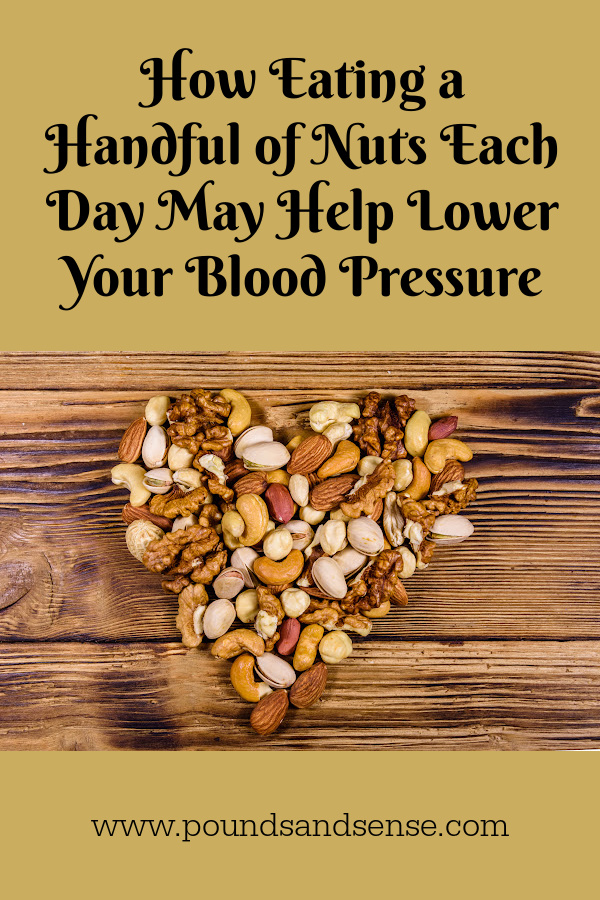
Even small changes can help, as our latest research shows. We found that adding just one serving of nuts into your daily diet is linked with lower hypertension risk.
It’s well known that eating more plant foods is associated with a lower risk of hypertension – but research on the impact of nuts has been limited to date.
Fruits and vegetables are associated with a lower risk of hypertension, with consumption of 800g (ten portions) per day reducing the risk by 11%.
Whole grains – brown rice, oats, wholemeal bread – are similarly linked to lower risk of hypertension. Our research found that the people who consumed the highest amount of whole grains each day had a roughly 26% lower risk compared to people consuming the least.
Our latest analysis published in the British Journal of Nutrition, now shows the clear impact eating nuts can have on hypertension risk.
Our study pooled data from 143,000 people – including 20,665 people who had hypertension. We found that eating around a handful of nuts daily (between 30-35g) was linked with a 26% lower risk of hypertension compared to not eating any nuts.
Why plant foods work
Plant foods share a few key characteristics, which may explain why they’re beneficial for the heart.
Plant foods also provide fibre that feeds gut bacteria so they can produce short-chain fatty acids – compounds that are linked to lower blood pressure.
Many plant foods also contain L-arginine and nitrates, which the body converts into nitric oxide in order to widen blood vessels. Plant foods are rich in polyphenols, which have also been associated with lower blood pressure.
These overlapping mechanisms all nudge blood pressure down, and help explain the link between plant-rich diets and lower risk of cardiovascular diseases.
Eating a well-balanced diet that contains plant foods will have the greatest heart health benefits.
But as tempting as it might be to call nuts a heart health “superfood,” their real power lies within a broader pattern of healthy eating. While reductions in hypertension risk are observed with intake of even just one daily serving of nuts, a diet built around several whole plant foods may provide even further benefits.
This is exactly what Dash, Mediterranean and plant-based diets prove. They all work because they put these different plant-based foods on the same plate.
However, it’s worth noting that the studies included in our analysis are observational. This means they show that people who eat more nuts tend to have lower blood pressure, but they cannot fully prove that nuts are the cause.
People who consume more plant foods in their diet also tend to follow other healthy lifestyle habits such as regular physical activity. Although our analysis adjusted for many of these factors, we cannot fully rule their impact out.
But the randomised controlled Dash diet trials, where diet is actually changed to include more vegetables, whole grains and lean protein, are what give us confidence the link is real. Similarly, intervention trials, which compared the effects of multiple different plant-based diets, also show benefits for blood pressure reduction.
There are knowledge gaps to note, too. The nut studies we included in our review did not separate salted from unsalted. Since salt raises blood pressure, the true benefit of unsalted nuts may even be larger than reported.
Most of the data also came from Europe, the Americas and East Asia. Little evidence came from Africa and India. More large studies conducted in a variety of regions will help sharpen the evidence base.
The takeaway is practical and affordable. You don’t need supplements or fads. Fill half your plate with fruit and veg, choose whole grains, build meals around beans and tofu and add a handful of unsalted nuts. These are small habits that add up to a significant reduction in one of our biggest health risks.
There has been quite a lot of discussion about the Government’s decision to reduce the annual Cash ISA allowance from £20,000 to £12,000 from April 2027. If you have money in Cash ISAs, you may therefore be wondering whether you should be doing anything differently before then.
There is, however, an important point that is sometimes missed in reports about the change:
The new £12,000 Cash ISA limit will only apply to people under the age of 65.
If you are aged 65 or over, you will continue to be able to put up to £20,000 a year into a Cash ISA.
Here’s what we know so far…
What Is Changing?
At present, the overall annual ISA allowance is £20,000. You can put this into a Cash ISA, a Stocks and Shares ISA, an Innovative Finance ISA (IFISA) or a combination of these, subject to the rules applying to each type.
For the 2026/27 tax year, the maximum you can subscribe to ISAs remains £20,000.
From 6 April 2027, however, the rules will change.
For people under 65, the annual Cash ISA subscription limit will become: £12,000
The overall ISA allowance will nevertheless remain at: £20,000
This means that the Government is not reducing the overall amount you can put into ISAs. Instead, it is restricting how much of that £20,000 can be put into a Cash ISA.
The remaining £8,000 could, for example, be put into a Stocks and Shares ISA, assuming you are happy to invest it and the relevant ISA rules are met.
The Important Exception for People Aged 65 and Over
This is particularly relevant to many Pounds and Sense readers. The £12,000 restriction does not apply to people aged 65 or over.
From April 2027, people aged 65 and over will continue to have a Cash ISA limit of £20,000 a year. There is also an interesting wrinkle here.
The Government says that entitlement to the higher £20,000 Cash ISA limit will apply from the start of the tax year in which you turn 65.
So, for example, if you turn 65 at some point during the 2027/28 tax year, you will qualify for the £20,000 Cash ISA limit for that whole tax year rather than having to wait until your 65th birthday.
This makes the age cut-off rather more generous than simply saying, “You can use £20,000 once you reach 65.”
What About Your Existing Cash ISAs?
The new £12,000 figure is an annual subscription limit. It does not mean that anyone with more than £12,000 already saved in Cash ISAs will have to withdraw the excess.
If you already have, say, £50,000 in one or more Cash ISAs, that money can remain there.
The new rules concern how much new money you can subscribe to Cash ISAs from 6 April 2027.
This is an important distinction.
Someone under 65 could therefore have considerably more than £12,000 in Cash ISAs after April 2027. They simply won’t be able to add more than £12,000 of new subscriptions to Cash ISAs during that tax year.
Can I Still Use the Full £20,000 ISA Allowance?
Yes.
For someone under 65, the overall annual ISA allowance will remain £20,000. The difference is that no more than £12,000 of this can normally be subscribed to Cash ISAs.
For example, someone could potentially put:
£12,000 into a Cash ISA
£8,000 into a Stocks and Shares ISA
That would use their full £20,000 annual ISA allowance.
Alternatively, they could put less than £12,000 into a Cash ISA and use the remainder for another type of ISA.
The Government says that the annual subscription limits for Stocks and Shares ISAs, Innovative Finance ISAs and Lifetime ISAs are not being reduced as part of this change.
Why Is the Government Doing This?
The stated aim is to encourage people to invest more of their savings rather than keeping everything in cash. The Government argues that some people hold substantial sums in Cash ISAs for many years when they might achieve better long-term returns through investments.
There is certainly a debate to be had about this. Cash has an important role in financial planning, particularly for people approaching or in retirement. It provides security and avoids the risk of investment losses.
On the other hand, money that is needed for the long term can potentially lose purchasing power if inflation is higher than the interest rate being earned. The Government’s policy is therefore intended, at least in part, to encourage more people to consider investing.
Whether that is appropriate for you is a separate question, of course.
What if I Don’t Want to Invest?
This is probably the biggest concern for many savers. Suppose you are aged 55, have £20,000 to save and don’t want to take investment risk.
From April 2027, you won’t be able simply to put the whole £20,000 into a Cash ISA. You could put £12,000 into a Cash ISA, but you would then need to decide what to do with the other £8,000.
One possibility would be an ordinary savings account. However, interest outside an ISA can be taxable, depending on your circumstances.
The Personal Savings Allowance means that many people can receive some interest tax-free, but the amount depends on your tax position.
Another possibility is to invest the remaining money through a Stocks and Shares ISA, but this is only appropriate if you are comfortable with investment risk and have a sufficiently long time horizon.
There is certainly no requirement to invest simply because the Government has made Cash ISAs less generous for under-65s.
Can I Put £20,000 Into a Stocks and Shares ISA and Then Move it Into a Cash ISA?
This is where the new rules become more complicated. Under the existing system, ISA transfers allow money to be moved between different types of ISA without losing its tax-free status, subject to the rules.
From April 2027, people under 65 will not be allowed to transfer money from a Stocks and Shares ISA or Innovative Finance ISA into a Cash ISA.
This is intended to stop people getting around the £12,000 Cash ISA limit by putting £20,000 into another type of ISA and subsequently moving the money into a Cash ISA.
Transfers in the other direction — from a Cash ISA to a non-Cash ISA — will remain possible.
What About Keeping Cash Inside a Stocks and Shares ISA?
The Government has also anticipated this potential workaround. From April 2027, people will still be able to hold some cash within a Stocks and Shares ISA.
However, there will be a 22% charge on interest paid on cash held in a non-Cash ISA. ISA managers will deal with this charge rather than the individual having to declare the interest to HMRC.
There will also be restrictions on using a Stocks and Shares ISA simply as a substitute Cash ISA. For example, an ISA portfolio consisting entirely of certain “cash-like” investments will not qualify in the same way.
The rules do, however, allow diversified Stocks and Shares ISA portfolios to contain some cash-like investments.
What Should You Do Before April 2027?
For most people, there is no need to panic.
If you are under 65 and have money that you were planning to put into a Cash ISA, however, it may be worth thinking about your plans before the new rules arrive.
For example, if you have £20,000 available and were intending to put the whole amount into a Cash ISA, you could potentially use the full £20,000 Cash ISA allowance during the 2026/27 tax year.
You should not, of course, put money into an ISA simply to beat a deadline if you don’t actually need or want the product. But if you already intended to save the money in a Cash ISA, the April 2027 change is worth bearing in mind.
What if I’m Already 65?
If you are 65 or over, the change is much less dramatic. You will continue to be able to subscribe up to £20,000 a year to a Cash ISA.
And, as mentioned earlier, if you turn 65 during a tax year, the Government says the £20,000 entitlement applies from the start of that tax year.
This means that the headline “£12,000 Cash ISA limit” is potentially rather misleading when talking to older savers.
For many Pounds and Sense readers, nothing will actually change regarding the amount they can put into a Cash ISA each year.
What About Existing ISA Savings?
Another important point is that the £20,000 annual ISA allowance is not a limit on the total amount you can have in ISAs. There is no £20,000 cap on your lifetime ISA holdings.
You could, for example, have £20,000 in an ISA from one year, another £20,000 from the following year, and so on, with the accumulated savings remaining tax-free.
The £20,000 figure is an annual subscription allowance, not a maximum ISA balance.
The new £12,000 figure works in the same way: it limits new Cash ISA subscriptions for under-65s from April 2027; it does not cap the amount you can have accumulated in Cash ISAs.
So, Is the New £12,000 Limit a Big Deal?
For some people, yes. For others, not at all.
If you are under 65 and normally put £20,000 a year into a Cash ISA, you will need to rethink what you do with the other £8,000.
If you normally save £5,000 or £10,000 a year in a Cash ISA, nothing changes.
And if you are aged 65 or over, your annual Cash ISA limit will remain £20,000.
For someone approaching 65, the rules may therefore be particularly worth understanding.
The key dates and limits
From 6 April 2027
Cash ISA limit
Overall ISA limit
Under 65
£12,000
£20,000
Aged 65 or over
£20,000
£20,000
The Government currently intends these changes to take effect on 6 April 2027. The detailed legislation is still going through the process, so some technical details could change before implementation. If that happens I will update this post accordingly and/or add a new post about it.
The Bottom Line
The most important thing to remember is that the Government is not abolishing Cash ISAs and it is not reducing the overall ISA allowance to £12,000.
From 6 April 2027:
Under 65: maximum £12,000 a year into a Cash ISA, within the overall £20,000 ISA allowance.
65 or over: maximum £20,000 a year into a Cash ISA, within the overall £20,000 ISA allowance.
Existing Cash ISA savings are not being capped at £12,000.
For many older savers, therefore, the change may have little or no direct impact. But for younger savers who prefer the safety of cash, it will mean making a decision about what to do with any amount between £12,000 and £20,000 that they would previously have put into a Cash ISA.
And that, rather than the headline figure of £12,000, is probably the most important point to understand.
As always, if you have any comments or questions about this post, please do leave them below. But note that I am not a professional financial adviser and cannot give personal financial advice. You should always do your own “due diligence” before investing and seek appropriate professional advice if in any doubt how best to proceed. All investing carries a risk of loss.
If you enjoyed this post, please link to it on your own blog or social media: