
Portable Power Stations: Could One Keep Your Home Running During a Blackout?
Most of us take our electricity supply for granted. We expect to be able to switch on the lights, charge our phones, make a cup of tea and watch television whenever we want.
But what would happen if the electricity supply to your home suddenly failed? Although prolonged power cuts are still relatively rare in the UK, storms, damaged cables, equipment failures and other unexpected events can leave households without electricity for hours or even days. And the switch to renewable energy is undoubtedly putting the grid under extra strain right now.
One possible solution is a portable power station. These increasingly popular devices are essentially large rechargeable batteries with built-in sockets and USB connections. They can provide electricity when the mains supply is unavailable, without needing to be permanently installed. Products such as the EcoFlow DELTA 3 Max [Amazon affiliate link] have attracted considerable attention, and there are now several competing manufacturers offering similar equipment.
But are these devices worth the money, and what could you realistically expect one to do during a power cut? Let’s take a closer look.
A portable power station is essentially a large battery pack with an inverter and various electrical outlets built in.
Unlike a conventional petrol or diesel generator, it produces no fumes, requires no fuel and can be operated indoors. It can be charged from an ordinary mains socket, and many models can also be charged using compatible solar panels or a vehicle’s electrical system.
Once charged, it stores electricity for later use. If the mains supply fails, you can plug suitable appliances directly into the power station and continue using them until its battery runs down.
Most modern models use lithium iron phosphate (LiFePO4 or LFP) battery technology. This is generally regarded as a durable and relatively safe type of lithium battery, with a longer cycle life than some older battery chemistries.
Portable power stations come in various sizes, from relatively small units intended mainly for charging phones and laptops to much larger models capable of supplying several kilowatt-hours of electricity.
Table of Contents
Introducing the EcoFlow DELTA 3 Max
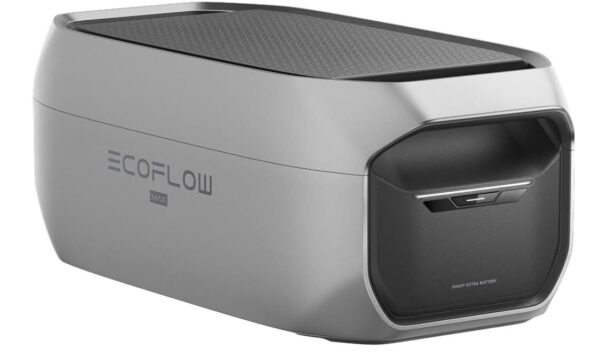
One example of this type of equipment is the EcoFlow DELTA 3 Max [Amazon affiliate link], which illustrates what a mid-range portable power station can offer.
Its main specifications include:
-
Battery capacity: 2,048 watt-hours (Wh), equivalent to just over 2 kilowatt-hours (kWh).
-
Maximum continuous AC output: 1,800 watts (W).
-
Surge output: Up to 4,800W for short periods when starting certain appliances.
-
Battery technology: LiFePO4.
-
Weight: Approximately 20.3kg.
-
Charging: From a mains socket, compatible solar panels or a vehicle charging system.
-
UPS functionality: Automatic changeover to battery power in under 10 milliseconds.
The DELTA 3 Max can also be monitored and controlled using a smartphone app.
An important point is that the DELTA 3 Max is not the only model in the range. The DELTA 3 Classic, DELTA 3 Max Plus and DELTA Pro 3 have some different features, including differences in their connections, solar charging capabilities and battery expansion options. It’s worth checking the precise specifications before purchasing.
The DELTA 3 Max has an advertised battery life of up to 4,000 charge cycles before retaining at least 80% of its original capacity. It comes with a maximum five year guarantee. That is clearly reassuring for anyone intending to keep the unit for several years.
What could you power during a blackout?
This is where portable power stations can be particularly useful.
A typical unit with around 2kWh of stored electricity could potentially keep several essential household devices running during a power cut.
For example:
| Appliance | Approximate power consumption |
|---|---|
| LED light bulb | 5–10W |
| Mobile phone charger | 5–20W |
| Wi-Fi router | 5–15W |
| Laptop | 30–90W |
| Television | 50–150W |
| Fridge | 50–150W when running |
| Electric fan | 20–60W |
These are illustrative figures rather than fixed consumption levels. Actual usage varies considerably between appliances.
Nevertheless, they give an idea of what is possible.
A portable power station could potentially keep your internet connection working, charge phones and laptops, provide lighting and allow you to watch television or listen to the radio.
It might also keep a fridge running for a period, although the actual time will depend on its energy efficiency, how frequently its compressor operates and how often the door is opened.
For many households, simply having lighting, communications and a way of keeping essential electronic devices charged would be a considerable improvement on having no electricity at all.
What can’t a portable power station realistically do?
This is arguably the most important section of this article.
Although manufacturers sometimes advertise their products as capable of powering almost any household appliance, there is an important distinction between the maximum power a device can supply and the total amount of electricity stored in its battery.
The DELTA 3 Max, for example, has a maximum continuous AC output of 2,400W but stores just 2,048Wh of electricity.
In other words, it can supply quite a powerful appliance, but it cannot necessarily run that appliance for very long.
Electric heaters
A typical portable electric heater might consume 1,500–2,500W.
Even if a 1,500W heater is within the power station’s output limit, it could theoretically exhaust a fully charged 2,048Wh battery in less than 80 minutes. In practice, inverter losses mean the actual running time would be shorter.
A 2,500W heater would exceed the DELTA 3 Max’s rated output altogether.
Consequently, these devices should not be regarded as a practical way of keeping your home warm during a prolonged winter power cut.
Electric kettles
A conventional kettle can consume around 3,000W, which is beyond the DELTA 3’s maximum continuous output.
Some smaller travel kettles use considerably less electricity and might be suitable for some power stations, but even then they would consume a substantial proportion of the available battery capacity.
Cookers and ovens
Electric cookers, ovens and induction hobs can consume large amounts of electricity. Running them from a portable power station would generally be impractical.
Washing machines and tumble dryers
Although some models might fall within the maximum output rating, their relatively high electricity consumption makes them unsuitable for extended operation from a modest portable battery.
The general lesson is that portable power stations are best suited to relatively low-power appliances. They are not a substitute for your normal household electricity supply.
- Although in general portable power stations aren’t suitable for heating, one exception might be an electric blanket or throw (such as this one). These use quite modest amounts of electricity, 50W to 150W being typical (the actual consumption is likely to vary depending on the setting used). So you could run an electric blanket for around 14 to 40 hours if nothing else was connected at the same time. This is further explained below.
How long would the battery actually last?
Battery capacity is measured in watt-hours (Wh). One kilowatt-hour is equivalent to 1,000 watt-hours.
A simple calculation can give you a rough idea of how long a portable power station might run a particular appliance.
For example, suppose you have a device that consumes 50W and want to run it from a 2,048Wh power station.
The theoretical calculation is:
2048Wh ÷ 50W = 41 hours.
However, this assumes that every last watt-hour stored in the battery is available to the appliance. In practice, some electricity is lost when converting the battery’s DC electricity into the AC electricity used by ordinary household sockets. There may also be some background consumption by the power station itself.
For planning purposes, it is sensible to allow for these losses and use a lower estimate of available energy.
Here are some illustrative running times, assuming approximately 1700Wh of usable AC electricity:
| Appliance | Assumed consumption | Approximate running time |
|---|---|---|
| LED lighting | 20W | 84 hours |
| Wi-Fi router | 10W | 170 hours |
| Laptop | 60W | 28 hours |
| Television | 100W | 17 hours |
| Small fridge (average consumption while running) | 75W | 22 hours |
| Electric heater | 1,500W | 68 minutes |
These figures are only examples. A fridge, for instance, does not normally consume its full running power continuously, while some devices use more electricity than their advertised ratings suggest.
They nevertheless illustrate why a portable power station can be useful for maintaining essential services but is less suitable for running energy-hungry appliances.
Can you recharge a portable power station using solar panels?
Yes. Many portable power stations can be connected to compatible solar panels, allowing you to replenish their batteries without relying on the mains electricity supply.
This could be particularly useful during a prolonged power cut.
Some manufacturers sell folding solar panels designed to work with their power stations. These can be placed outside in a suitable sunny position and connected using the appropriate cables.
However, there are a few qualifications.
Firstly, solar charging depends on the weather, time of year, panel orientation and available daylight. In the UK, solar generation can be very limited during gloomy winter weather, precisely when electricity outages might be most disruptive.
Secondly, the maximum solar charging capacity varies between models. The DELTA 3 Max supports up to 500W of solar input, while the new DELTA 3 Max Plus can accept up to 1,000W.
Finally, don’t assume that an existing rooftop solar panel installation can automatically recharge a portable power station. Compatibility depends on the inverter, electrical arrangement and connections involved.
If you already have solar panels at home, check with the manufacturer or installer before attempting to connect anything.
Other useful features to look for
Apart from battery capacity and maximum output, there are several other features worth considering when comparing portable power stations.
UPS functionality
Some models incorporate an uninterruptible power supply (UPS) function.
This means that if the mains supply fails, the device can switch automatically to battery power, potentially without interrupting the operation of connected equipment.
This can be useful for broadband routers, computers and other electronic equipment that you would prefer not to switch off suddenly and unexpectedly.
However, changeover times vary between products, and not every appliance is guaranteed to work with every UPS arrangement. A portable power station should not be relied upon as the sole backup for life-supporting medical equipment.
Battery expansion
Some models allow additional battery packs to be connected, increasing the total stored electricity.
This can be useful if you want to extend the length of time your essential appliances can operate during a blackout.
However, additional batteries can be expensive, so check the cost of expansion before choosing a model.
Smartphone app
An accompanying app can allow you to monitor battery levels, check power consumption and control certain functions remotely.
Some models also offer alerts relating to severe weather or impending power cuts.
Fast charging
Charging speed can be important if you have only a short period in which to recharge your power station before another outage. Some models can recharge from the mains remarkably quickly.
Portable power stations versus home battery systems
It is worth distinguishing portable power stations from permanently installed home battery systems.
A home battery such as a GivEnergy AIO (which I have) can store several kilowatt-hours of electricity and can potentially supply power to selected household circuits – or even the whole house – during an outage.
A portable power station is generally much smaller and is intended to supply individual appliances plugged directly into it.
There are advantages to both approaches.
A portable power station is relatively straightforward to use, requires no permanent installation and can be moved around the house or even taken elsewhere.
A properly configured home battery system can provide substantially more stored electricity and may be able to supply your home automatically in the event of a power cut.
However, not all domestic battery systems will provide backup power during a grid failure. This depends on the equipment concerned and how it has been configured.
If you already have a home battery, it is worth checking whether it offers backup functionality before spending money on a separate portable unit.
What should you consider before buying?
If you are thinking about purchasing a portable power station primarily for emergency use, I would suggest considering the following:
-
Work out what you actually need to power. Make a list of the appliances you would regard as essential during a blackout and check their electricity consumption.
-
Choose an appropriate battery capacity. A smaller unit may be sufficient for charging phones and running lights, while a larger model will be needed if you also want to operate a fridge or other appliances.
-
Check the maximum output. Make sure it is sufficient for the appliances you intend to connect, including any initial surge when a motor starts.
-
Consider battery technology. LiFePO4 batteries generally offer good longevity and are widely used in modern portable power stations.
-
Think about weight and portability. Even a relatively compact model can weigh 20kg or more, so consider whether you will be comfortable moving it around.
-
Check charging options. Mains charging is convenient, but solar compatibility could be valuable during a prolonged outage.
-
Compare warranties and after-sales support. These are relatively expensive purchases, so buying from an established manufacturer or reputable retailer is sensible.
-
Keep it charged and ready. A power station that has been left unused in a cupboard for months may not be much use when you suddenly need it. Follow the manufacturer’s storage and maintenance recommendations and check its condition periodically, recharging as required.
Safety considerations
Although portable power stations are generally straightforward to operate, there are a few important safety points.
Always follow the manufacturer’s instructions, use compatible charging equipment and avoid overloading the unit.
Don’t attempt to connect a portable power station to your home’s electrical wiring by plugging it into an ordinary wall socket. This can create a dangerous backfeed into the mains supply. If you want to supply household circuits, you need a properly designed and installed changeover arrangement.
Also, keep the unit dry, allow adequate ventilation and avoid exposing it to excessive heat or cold.
If you use a separate petrol or diesel generator as an alternative or supplement, remember that it must never be operated indoors, in a garage or in another enclosed space because of the risk of carbon monoxide poisoning.
Are portable power stations worth buying?
That depends largely on what you expect them to do.
If you want something that will keep your central heating, electric cooker and other major household appliances running throughout a lengthy blackout, a typical portable power station is unlikely to meet your needs.
If, however, your main concern is maintaining some basic household services, such as lighting, communications, phone charging, internet access and perhaps refrigeration for a limited period, one could be a worthwhile investment.
They are also relatively convenient. Unlike a conventional generator, they produce no exhaust fumes, are quiet in normal operation and can be used indoors.
For people who experience occasional power cuts, or simply want a little more peace of mind in an uncertain world, a portable power station could be a useful addition to their emergency preparations.
The key is to buy one with realistic expectations. Think of it as a way of keeping essential devices going rather than a replacement for the electricity supply to your entire home.
Closing thoughts
In this article I have set out some things to take into account if you are thinking of buying a portable power station.
These clever devices can undoubtedly contribute to home energy resilience in case of (increasingly probable) power cuts and blackouts. They have other potential uses as well, e.g. as a portable power source for camping trips, garden sheds, caravans and trailers, outbuildings, and so forth.
I have to be honest and say I don’t have one of these products myself. As mentioned above, I have a Givenergy AIO home battery which provides me with a decent amount of energy resilience (and helps me get the most from my solar panels). But, of course, home batteries are quite expensive (I paid around £7,000 for mine) and have to be professionally installed. Mid-range portable power stations typically cost £500 to £1,000. That’s still not cheap, but relatively they are a lot more affordable (and much more portable). You are highly unlikely to be able to power your whole home from a power station, but they are still much better than having no backup at all.
In this article I have focused on the EcoFlow Delta3 Max portable power station {Amazon affiliate link]. This is a typical mid-range model and a good example of what is available. I am not especially recommending you purchase this, as obviously I have no direct experience. There are plenty of other portable power stations you may want to investigate as well, including those from Jackery, Bluetti and Anker. As always, research the exact specifications (and customer reviews) before purchasing, as different power stations can have quite different features and benefits.
As always, if you have any comments or questions about portable power stations, please post them below. I should be particularly interested to hear from anyone who has gone ahead and bought one of these devices. What make and model did you get, how has it performed for you, and would you recommend it to others?
Affiliate disclosure: This article contains Amazon affiliate links. If you buy a product or service after clicking one of these links, I may receive a small commission. This does not affect the price you pay and helps support Pounds and Sense.
